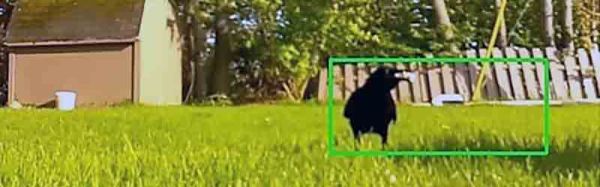
Sometimes when you need something, there is a cheap and easily obtainable product that almost fits the bill. Keyword: almost. [Micah Elizabeth Scott], also known as [scanlime], is creating a hovering camera to follow her cat around, and her Feiyu Mini3D 3-axis brushless gimbal almost did everything she’d need. After a few modifications, [Micah] now has a small and inexpensive 3-axis gimbal with a Crazyfire HZ-100P SDI camera and LIDAR-Lite distance sensor.
At thirty minutes long, [Micah’s] documenting video is rife with learning moments. We’ve said it before, and we’ll say it again: “just watch it and thank us later.” [Micah Elizabeth Scott] has a way of taking complicated concepts and processes and explaining things in a way that just makes sense (case in point: side-channel glitching) . And, while this hack isn’t exactly the most abstractly challenging, [Micah’s] natural talent as a teacher still comes through. She takes you through what goes right and what goes wrong, making sure to explain why things are wrong, and how she develops a solution.
Throughout her video, [Micah] shares small bits of wisdom gained from first-hand experience. From black hot glue to t-glase (a 3D printing filament), we learned of a few materials that could be mighty useful.
We’re no strangers to the work of [Micah Elizabeth Scott], she’s been on the scene for a while now. She’s been a Hackaday Prize Judge in 2015 and 2016 and is always making things we love to cover. She’s one of our three favorite hackers and has a beautiful website that showcases her past work.
Video after the break.



Adding the camera was the easiest part of the exercise when he found an after-market version specifically meant for his 207 model. The original non-graphical display had to make room for a new HDMI display and a fresh bezel, which cost him much more than the display. Besides displaying the camera image when reversing, the new display also needed to show all of the other entertainment system information. This couldn’t be obtained from the OBD-II port but the CAN bus looked promising, although he couldn’t find any details for his model initially. But with over 2.5 million of the 207’s on the road, it wasn’t long before [Alexandre] hit jackpot in a French University student project who used a 207 to study the CAN bus. The 207’s CAN bus system was sub-divided in to three separate buses and the “comfort” bus provided all the data he needed. To decode the CAN frames, he used an Arduino, a CAN bus shield and a python script to visualize the data, checking to see which frames changed when he performed certain functions — such as changing volume or putting the gear in reverse, for example.