Automotive airbags are key safety devices that aim to reduce injuries and mortality in the event of motor vehicle accidents. These rapidly-inflating cushions act to soften the blow of an impact, catching occupants of the vehicle and preventing them from hitting hard parts of the vehicle’s interior.
Airbags are rigorously tested to perform as faultlessly as possible under all conditions. However, no system is perfect, and every automotive component has an expected service life. The question is—how old is too old when it comes to airbags? The answer is not exactly straightforward. Continue reading “How Safe Are Old Airbags, Anyway?”→
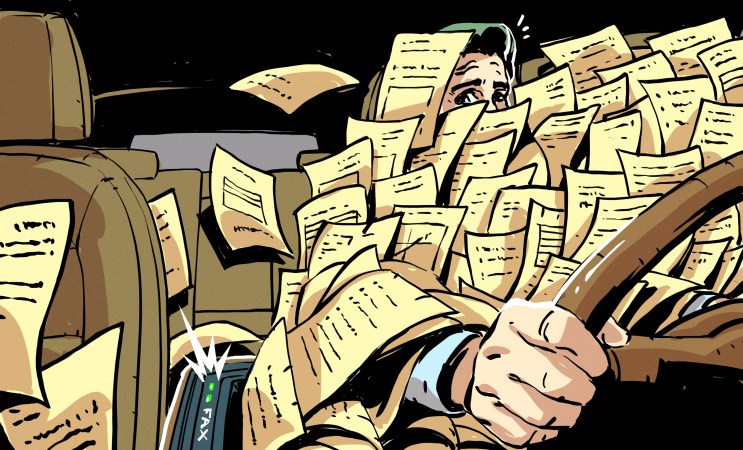
Once upon a time, a car phone was a great way to signal to the world that you were better than everybody else. It was a clear sign that you had money to burn, and implied that other people might actually consider it valuable to talk to you from time to time.
There was, however, a way to look even more important than the boastful car phone user. You just had to rock up to the parking lot with your very own in-car fax machine.
Headlights. Indicators. Trunk releases. Seatbelts. Airbags. Just about any part of a car you can think of is governed by a long and complicated government regulation. It’s all about safety, ensuring that the car-buying public can trust that their vehicles won’t unduly injure or maim them in regular operation, or in the event of accident.
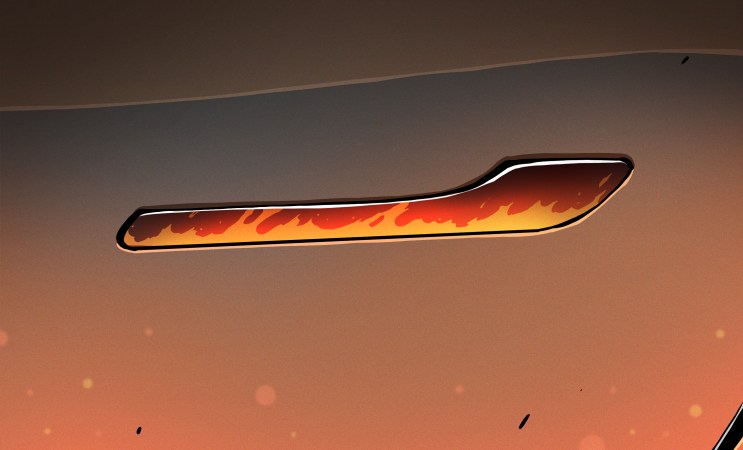
However, one part of the modern automobile has largely escaped regulation—namely, the humble door handle. Automakers have been free to innovate with new and wacky designs, with Tesla in particular making waves with its electronic door handles. However, after a series of deadly incidents where doors wouldn’t open, regulators are now examining if these door handles are suitable for road-going automobiles. As always, regulations are written in blood, but it raises the question—was not the danger of these complicated electronic door handles easy to foresee?
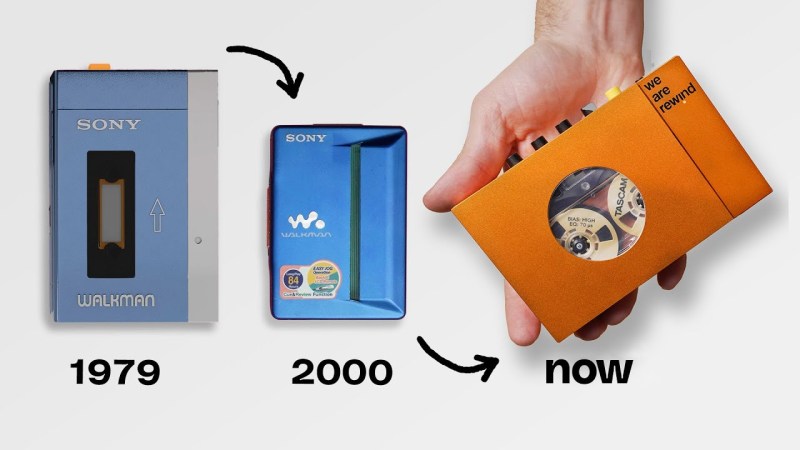
The early 2000s were the halcyon days of physical media. While not as svelte as MP3 players became, why are those early 2000s machines smaller than all the new models popping up amidst the retro audio craze?
We’ve bemoaned the end of the electromechanical era before, and the Verge recently interviewed the people at We Are Rewind and Filo to get the skinny on just why these newer cassette and CD players aren’t as small as their predecessors. It turns out that all currently produced cassette players use the same mechanism with some small tweaks in materials (like metal flywheels in these higher quality models) because the engineering required to design a smaller and better sounding alternative isn’t warranted by the niche nature of the cassette resurgence.
A similar fate has befallen the laser head of CD mechanisms, which is why we don’t have those smooth, rounded players anymore. Economies of scale in the early 2000s mean that even a cheap player from that era can outperform a lot of the newer ones, although you won’t have newer features like Bluetooth to scandalize your audiophile friends. A new Minidisc player is certainly out of the question, although production of discs only ended this February.
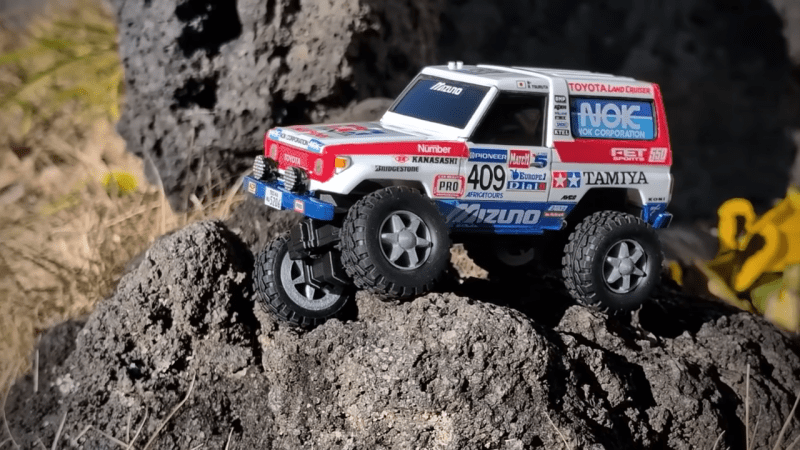
[Azpaca] purchased a fun little toy car from Tamiya, only… there was a problem. The little off-roader wasn’t up to scratch—despite its four-wheel-drive, it couldn’t get over rough ground to save its life. Thus, it was time to 3D-print a better chassis that could actually get through it!
The problem was quite obvious. With no suspension and a rigid chassis, the vehicle would tend to end up with one or more wheels on the air on rough surfaces. To rectify this, [Azpaca] created a twisting chassis which would allow the wheels to better remain in contact with the ground. The design is relatively straightforward, and reuses much of the original drivetrain, including the simple brushed motor. However, with a pivot right behind the front wheels, it has much more traction on rocks and gravel, and can traverse these terrains much more easily.
Tamiya’s motorized toys aren’t particularly well known in the West, but it’s neat to see the community that exists around modifying them around the world. Design files are available for the curious. If you’re not down with mods, perhaps you’d prefer to print your own cars from scratch. Video after the break.
Cassette tapes were a major way of listening to (and recording) music througout the 1980s and 1990s and were in every hi-fi stereo, boom box, and passenger vehicle of the era. Their decline was largely as a result of improvements in CD technology and the rise of the MP3 player, and as a result we live in a world largely absent of this once-ubiquitous technology. There are still a few places where these devices crop up, and thanks to some modern technology their capabilities as a music playback device can be greatly enhanced.
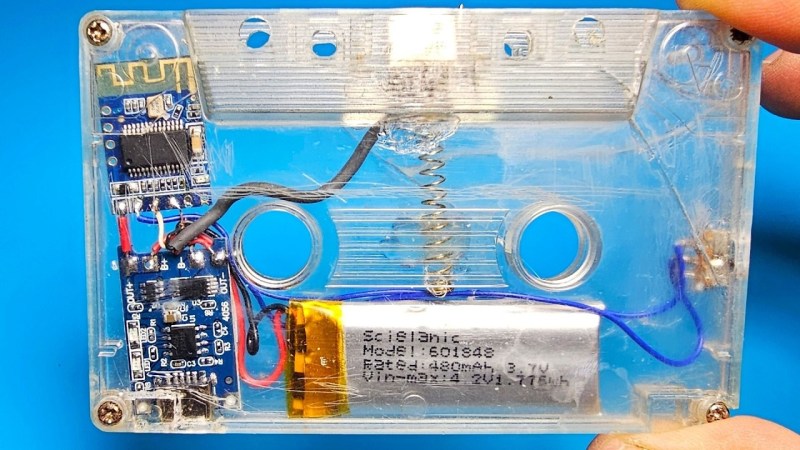
The build starts, as one might expect, by disassembling the cassette and removing the magnetic tape from the plastic casing. With the interior of the cassette empty it’s capable of holding a small battery, USB-C battery charger, and a Bluetooth module. The head of an old tape deck can be wired to the audio output of the Bluetooth module and then put back in place in the housing in place of the old tape. With the cassette casing reassembled, there’s nothing left to do but pair it to a smartphone or other music-playing device and push play on the nearest tape deck.
As smartphones continue to lose their 3.5 mm headphone jacks, builds like this can keep lots of older stereos relevant and usable again, including for those of us still driving older vehicles that have functioning tape decks. Of course, if you’re driving a classic antique auto with a tape technology even older than the compact cassette, there are still a few Bluetooth-enabled options for you as well.
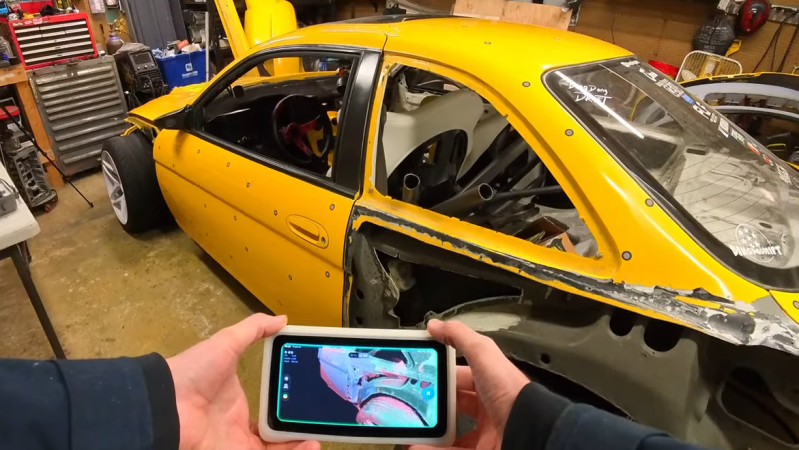
Not all 3D scanning is alike, and the right workflow can depend on the object involved. [Ding Dong Drift] demonstrates this in his 3D scan of a project car. His goal is to design custom attachments, and designing parts gets a lot easier with an accurate 3D model of the surface you want to stick them on. But it’s not as simple as just scanning the whole vehicle. His advice? Don’t try to use or edit the 3D scan directly as a model. Use it as a reference instead.
Rather than manipulate the 3D scan directly, a better approach is sometimes to use it as a modeling reference to fine-tune dimensions.
To do this, [Ding Dong Drift] scans the car’s back end and uses it as a reference for further CAD work. The 3D scan is essentially a big point cloud and the resulting model has a very high number of polygons. While it is dimensionally accurate, it’s also fragmented (the scanner only captures what it can see, after all) and not easy to work with in terms of part design.
In [Ding Dong Drift]’s case, he already has a 3D model of this particular car. He uses the 3D scan to fine-tune the model so that he can ensure it matches his actual car where it counts. That way, he’s confident that any parts he designs will fit perfectly.