Quarantine Clock Answers The Important Question

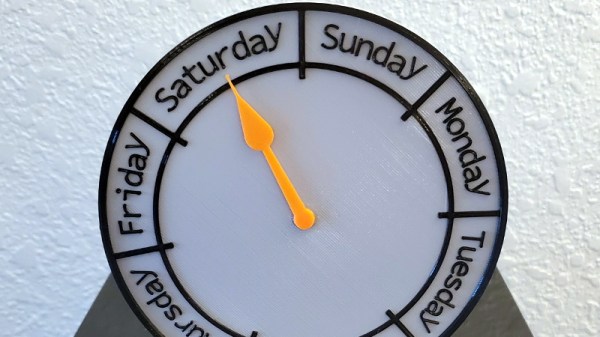
For many people, these last few weeks have been quite an adjustment. When the normal routine of work or school is suddenly removed, it’s not unusual for your internal clock to get knocked out of alignment. It might have started with struggling to figure out if it was time for lunch or dinner, but now it’s gotten to the point that even the days are starting to blur together. If it takes more than a few seconds for you to remember whether or not it’s a weekday, [whosdadog] has come up with something that might help you get back on track.
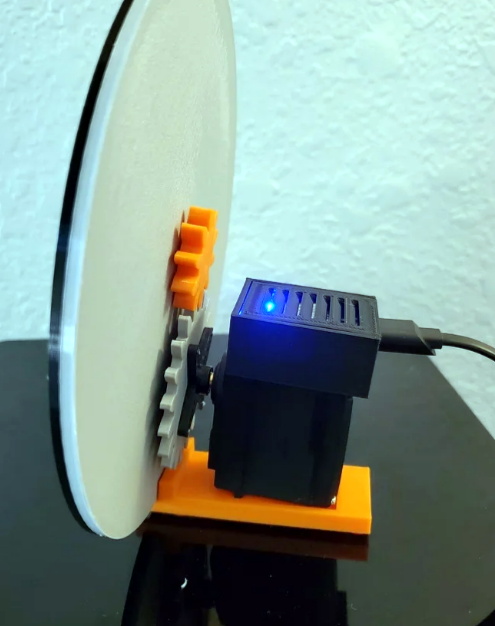
Rather than showing the time of day, this 3D printed clock tells you where you are in the current week. Each day at midnight, the hand will advance to the center of the next day. If you wanted, a slight reworking of the gearing and servo arrangement on the rear of the device could allow it to sweep smoothly through each day. That would give you an idea of your progress through each 24 hour period, but then again, if you don’t even know if it’s morning or night you might be too far gone for this build anyway.

The clock’s servo is driven by a Wemos D1 Mini ESP8266 development board, which naturally means it has access to WiFi and can set itself to the current time (or at least, day) with NTP. All you’ve got to do is put your network information into the Sketch before flashing it to the ESP, and you’re good to go.

Naturally this project is a bit tongue-in-cheek, but we do think the design has practical applications. With a new face and some tweaked code, it could be an easy way to show all sorts of data that doesn’t require a high degree of granularity. Our very own [Elliot Williams] recently built a display to help his young son understand his new at-home schedule which operates on a similar principle.

ESP32-S2 Hack Chat With Adafruit

Join us on Wednesday, May 6 at noon Pacific for the ESP32-S2 Hack Chat with Limor “Ladyada” Fried and Scott Shawcroft!

When Espressif released the ESP8266 microcontroller back in 2014, nobody could have predicted how successful the chip was to become. While it was aimed squarely at the nascent IoT market and found its way into hundreds of consumer devices like smart light bulbs, hackers latched onto the chip and the development boards it begat with gusto, thanks to its powerful microcontroller, WiFi, and lots of GPIO.

The ESP8266 was not without its problems, though, and security was always one of them. The ESP32, released in 2016, addressed some of these concerns. The new chip added another CPU core, a co-processor, Bluetooth support, more GPIO, Ethernet, CAN, more and better ADCs, a pair of DACs, and a host of other features that made it the darling of the hacker world.

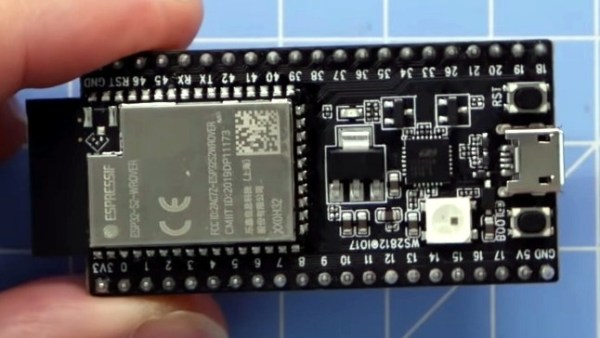
Now, after being announced in September of 2019, the ESP32-S2 is finally making it into hobbyist’s hands. On the face of it, the S2 seems less capable, with a single core and neither Bluetooth nor Ethernet. But with a much faster CPU, scads more GPIO, more ADCs, a RISC-V co-processor, native USB, and the promise of very low current draw, it could be that the ESP32-S2 proves to be even more popular with hobbyists as it becomes established.

To talk us through the new chip’s potential, Limor “Ladyada” Fried and Scott Shawcroft, both of Adafruit Industries, will join us on the Hack Chat. Come along and learn everything you need to know about the ESP32-S2, and how to put it to work for you.

join-hack-chatOur Hack Chats are live community events in the Hackaday.io Hack Chat group messaging. This week we’ll be sitting down on Wednesday, May 6 at 12:00 PM Pacific time. If time zones have got you down, we have a handy time zone converter.

Click that speech bubble to the right, and you’ll be taken directly to the Hack Chat group on Hackaday.io. You don’t have to wait until Wednesday; join whenever you want and you can see what the community is talking about.
Continue reading “ESP32-S2 Hack Chat With Adafruit”

Viewing Countrywide Weather At A Glance

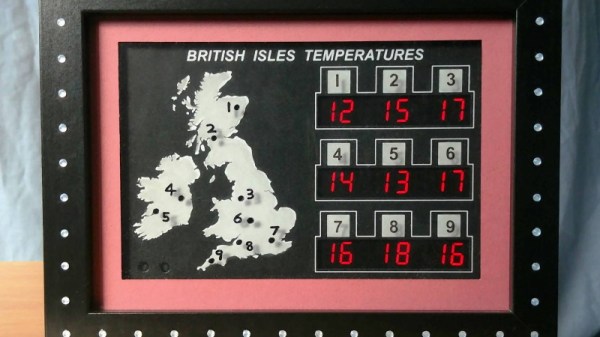
For his latest project, weather display aficionado [Richard] has put together a handsome little device that shows the temperatures recorded at nine different airports located all over the British Isles. Of course the concept could be adapted to wherever it is that you call home, assuming there are enough Internet-connected weather stations in the area to fill out the map.

The electronics are fairly minimal, consisting of a NodeMCU ESP8266 development board, a few seven segment LED display modules, and a simple power supply knocked together on a scrap of perfboard. As you might expect, the code is rather straightforward as well. It just needs to pull down the temperatures from an online API and light up the displays. What makes this project special is the presentation.

As [Richard] shows in the video after the break, the key is a sheet of acrylic that’s been sanded so it diffuses the light of 42 LEDs that have been painstakingly installed in holes drilled around the edge of the sheet. Combined with a printed overlay sheet, this illuminates the map and its legend in low-light conditions. It’s a simple technique that not only looks fantastic, but makes the display easy to read day or night. Definitely a tip worth mentally filing away, as it has plenty of possible applications outside of this particular build.

With his projects, [Richard] has shown himself to be a master of unique and data-rich weather displays, and a great lover of the iconic seven segment LED display. While his particular brand of climate data overload might not be for everyone, you’ve got to admire his knack for visualizing data.

Continue reading “Viewing Countrywide Weather At A Glance”

Breadboard Computer Plays Snake On Character Display; Also In A Browser!

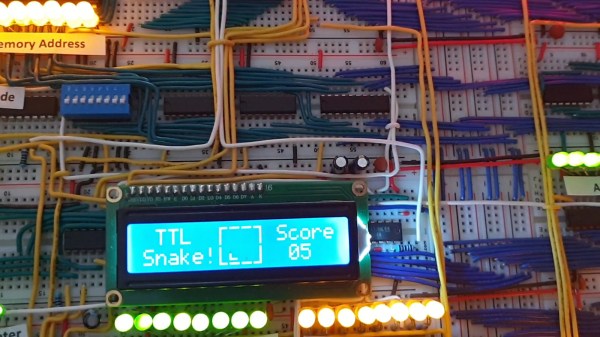
If building a homebrew computer on a breadboard is your thing, you’re most certainly familiar with [Ben Eater], whose design of using nothing but logic gates has served as inspiration for many replicas over the years. [visrealm] took the concept and expanded upon it, even adding a 16×2 LCD that let’s you play Snake by moving a single pixel on the character display!

Making the most of tiny resolution is impressive — it’s a difficult constraint for the game field. But there are other tricks at work as well. [visrealm] uses different intensities to distinguish between the snake and its food which is kind of a dark pixel in the demo shown after the break. But what stands out most is that the breadboard build is really only half of the story. In addition, [visrealm] built an entire emulator that resembles his actual breadboard design, which can be programmed and used via browser, giving WebAssembly a whole new meaning. While that’s convenient for anyone interested to play around with these breadboard computers, but lacks the patience to build one themselves, it also functions as the real one’s programming environment. In addition, an ESP8266 is used to load a new program directly via WiFi.

All the code and some build notes are available on GitHub, and if you’re looking for a nifty LCD emulator for your web site, there’s a standalone repository for that as well. But in case you need a better display option for your own breadboard computer, how about adding a VGA connector? And if you don’t build your own yet, it’s never too late to start.

Continue reading “Breadboard Computer Plays Snake On Character Display; Also In A Browser!”

LED Clock Strips Time Down To Pulses Of Light

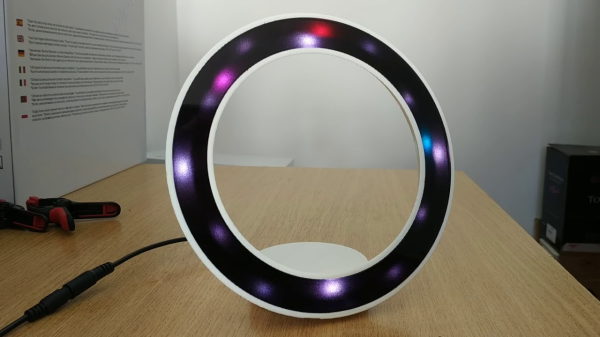
Nietzsche said (essentially) that time is a flat circle — we are doomed to repeat history whether we remember it or not. This is a stark and sobering thought for sure, but it’s bound to dissipate the longer you look at [andrei.erdei]’s literal realization of time as a flat circle.

A clock that uses nothing but RGB LEDs to give the time sounds confusing and potentially cluttered, but the result here is quite pleasing and serene. We figure it must be the combination of brighter LEDs to represent 12, 3, 6, and 9, and dimmer LEDs for the rest of the numbers, plus the diffusion scheme. The front plate is smoky acrylic topped with two layers of frosted black window foil.

Inside the printed plastic ring are two adhesive RGB LED strips running on an ESP8266 that ultimately connects to an NTP time server. The strips are two halves of an adhesive 60 LED/meter run that have been stuck together back to back so that the lights are staggered for seamless coverage. This sets up the coolest thing about this clock — the second hand, which is represented by a single pink LED zig-zagging back and forth around the ring. Confused? Watch the short demo after the break and you’ll figure it out in no time.

Now that times are strange, you might be more interested in a straightforward approach to finding out what day it is. The wait is over.

Continue reading “LED Clock Strips Time Down To Pulses Of Light”

Edge-Lit 7-Segments Clock The New Normal

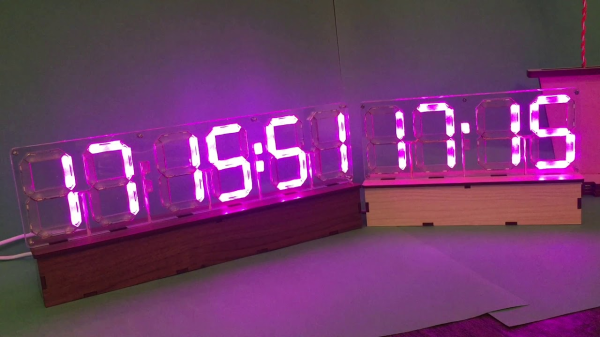
People keep saying that time has lost all meaning now, but we’re still over here divvying up the days with hacks. Most of the hacks you see here are open source. But if you want something even more transparent to meter out the meaninglessness, we invite you to make one of these clearly awesome see-through clocks, which happens to be both.

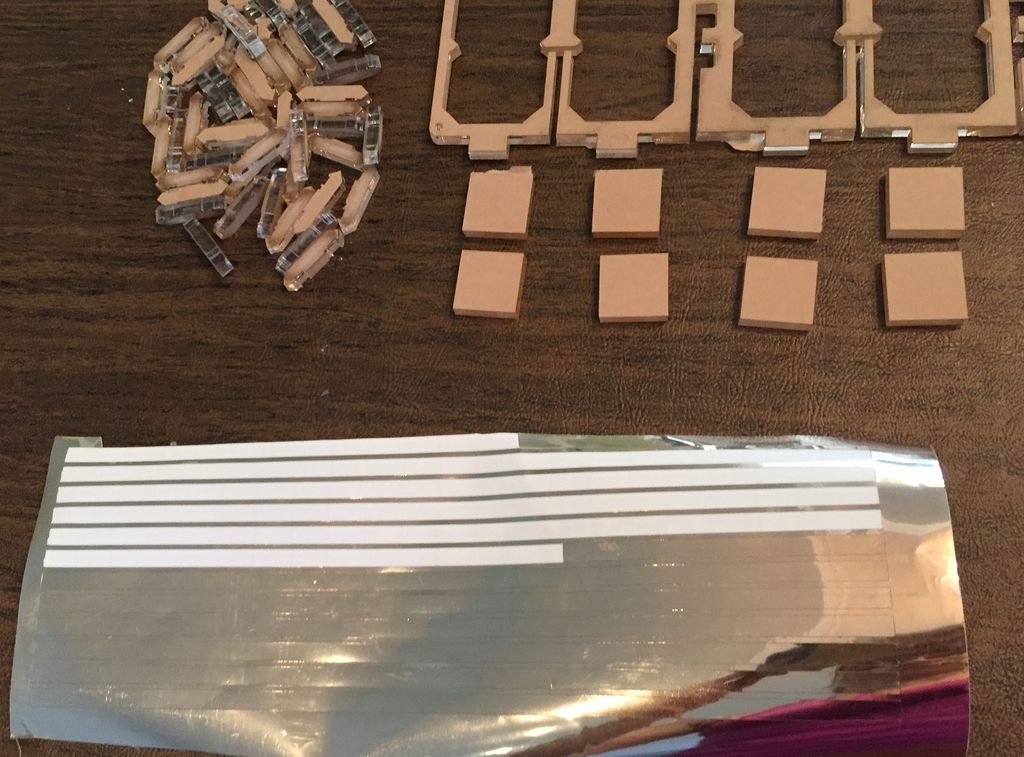
A word of warning though — according to [GeekMomProjects], this is an incredibly fiddly build with tight tolerances everywhere that acrylic meets acrylic or an LED strip. We can see how it might be like forcing fragile puzzle pieces together. Since the whole thing is crystal clear acrylic, light is going to go everywhere.

[GeekMomProjects] cleverly blocked the escaping light by painstakingly applying non-conductive adhesive foil to the edges of all the smaller pieces. In spite of all that work, we think it would be worth it to have such a fantastic timepiece glowing away the hours somewhere in the house.

Electronically speaking, this beauty is pretty simple. The lights run off of an ItsyBitsy M4 Express, and the time is separately fetched with an ESP8266. [GeekMomProjects] had so much fun that she made one with seconds and one without. Check out their RGB dance routine after the break.

If you prefer your blinky 7-segment clocks a bit more utilitarian, here’s a clock made of shelves.

Continue reading “Edge-Lit 7-Segments Clock The New Normal”

Table Tennis Ball Lamp Serves Up Style

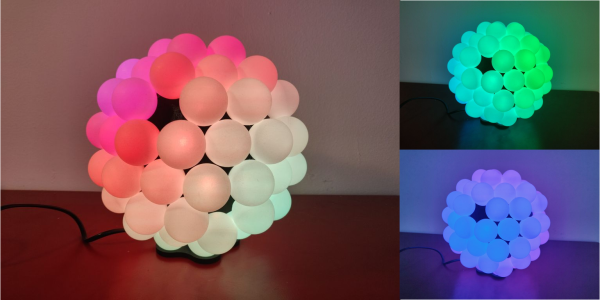
Although RGB LEDs diffused by ping pong balls will probably never stop being cool, [thomasj152] feels that flat panels of balls have become a bit of a tired concept. After a lot of effort and two complete builds, he has spun up an 80-ball spherical lamp. The results are positively glowing!

All the balls are connected together with some clever 3D printed pieces that were inspired by the classic soccer ball layout of hexagons and pentagons. [thomasj152] chose this shape because it’s fairly easy to code animation sequences for it.

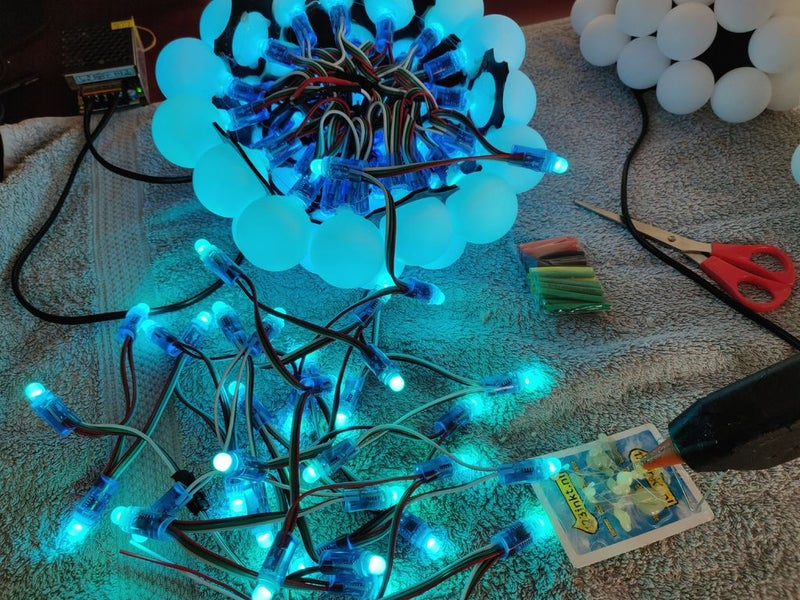
The design also breaks down nicely into two halves, which makes it easier to wire. All 80 of the balls are controlled with a single NodeMCU ESP8266 development board.

This stranded version is the second lamp [thomasj152] built. The first one used the same soccer ball style, but had RGB LED strips instead, and the balls were wrangled with laser-cut support pieces. Strips lay much flatter than strands do, leaving the inside tidy and spacious. Unfortunately, the LED strips got fried accidentally, which is extra sad because the strips version looks like way more work.

The bright spot here is that [thomasj152] can now provide instructions for both versions. He even has code that cycles through each pentagon and hexagon section, lighting them up one at a time for testing and sanity checks. Roll past the break for a walk-through video that shows both versions and explains the differences.

Got a bunch of wall space begging for blinkenlights? Apparently it’s possible to throw together a working 300-ball video wall in less than 24 hours. Who knew?

Continue reading “Table Tennis Ball Lamp Serves Up Style”