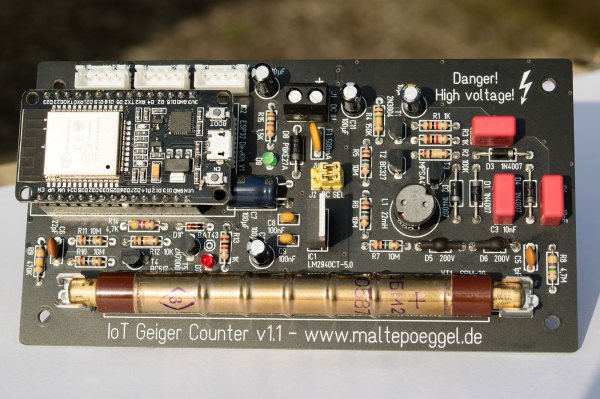
A black PCB with an ESP32 and an SBM-20 geiger counter

Flexible Radiation Monitoring System Speaks LoRa And WiFi

Radioactivity has always been a fascinating phenomenon for anyone interested in physics, and as a result we’ve featured many radioactivity-related projects on these pages over the years. More recently however, fears of nuclear disaster have prompted many hackers to look into environmental radiation monitoring. [Malte] was one of those looking to upgrade the radiation monitor on his weather station, but found the options for wireless geiger counters a bit limited.

So he decided to build himself his own Wifi and LoRa compatible environmental radiation monitor. Like most such projects it’s based on the ubiquitous Soviet-made SBM-20 GM tube, although the design also supports the Chinese J305βγ model. In either case, the tube’s operating voltage is generated by a discrete-transistor based oscillator which boosts the board’s 5 V supply to around 400 V with the help of an inductor and a voltage multiplier.

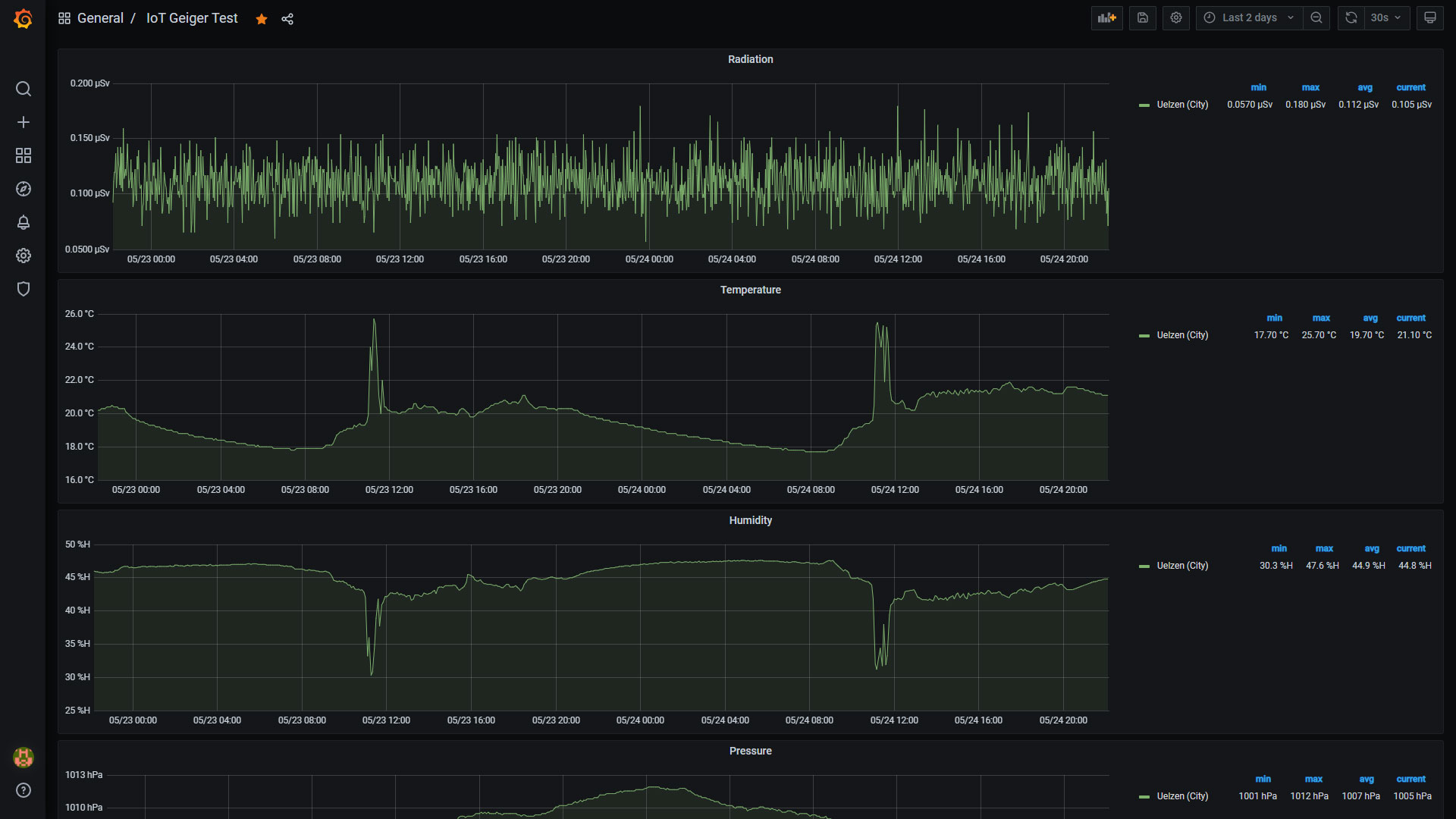
Graphs showing temperature, humidity and radiation levels
Data can be visualized in graphs, together with other data from the weather station like temperature and humidity

The tube’s output signal is converted into clean digital pulses to be counted by either an ESP32 or a Moteino R6, depending on the choice of wireless protocol. The ESP can make its data available through a web interface using its WiFi interface, while the Moteino can communicate through LoRa and sends out its data using MQTT. The resulting data is a counts-per-minute value which can be converted into an equivalent dose in Sievert using a simple conversion formula.

All design files are available on [Malte]’s website, including a PCB layout that neatly fits inside standard waterproof enclosures. Getting more radiation monitors out in the field can only be a good thing, as we found out when we tried to detect a radiation accident using community-sourced data back in 2019. Don’t like WiFi or LoRa? There’s plenty of other ways to connect your GM tubes to the internet.

Water Level Sensor Does Not Use Water Level Sensor

When interfacing with the real world, there are all kinds of sensors available which will readily communicate with your microcontroller of choice. Moisture, pH, humidity, temperature, location, light, and essentially every other physical phenomenon are readily measured with a matching sensor. But if you don’t have the exact sensor you need, it’s sometimes possible to use one sensor as a proxy for another.

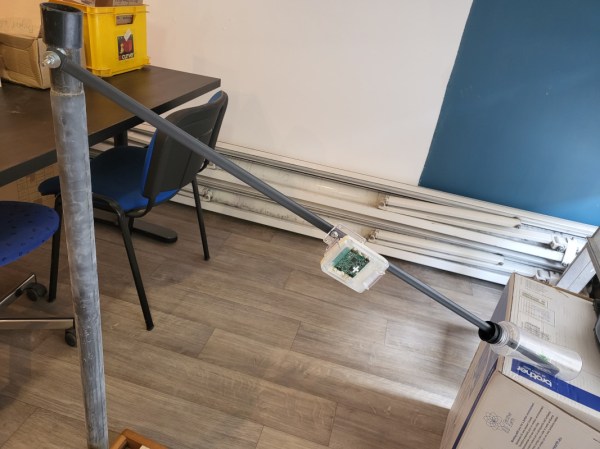
[Brian Wyld] needed a way to monitor the level of a remote body of water but couldn’t use a pressure or surface-level sensor, so he used a sensor typically intended for geolocation instead. This particular unit, an STM-type device with a built-in accelerometer, is attached to a rotating arm with a float at one end. As the arm pivots, the microcontroller reports its position and some software converts the change in position to a water level. It’s also paired with a LoRa radio, allowing it to operate off-grid.

Whether there is a design requirement to use an esoteric sensor to measure something more common, or a personal hardware limitation brought about by a shallow parts drawer, there’s often a workaround like this one that can accomplish the job. Whatever the situation, we do appreciate hacking sensors into other types of sensors just as much as anything else.

Launch And Track Your Model Rockets Via Smartphone

Building and flying model rockets is great fun. Eventually, though, the thrill of the fire and smoke subsides, and you want to know more about what it’s doing in the air. With a thirst for knowledge, [archy587] started building a project to monitor the vital stats of rockets in flight. 

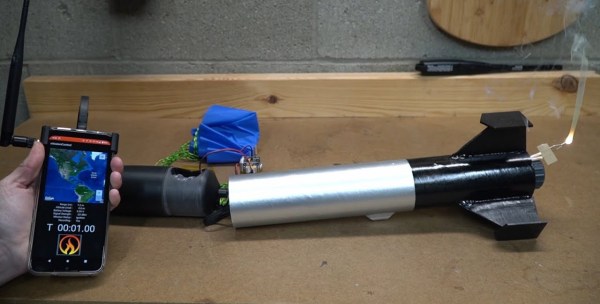
The project mounts an M0 Feather microcontroller board into the rocket, along with a 900 MHz LoRa transmitter and a GPS module. This allows the rocket’s journey to be measured and logged, and is particularly useful for when a craft floats off downrange during parachute recovery. There’s also a relay module onboard, which dumps power from a dedicated separate battery into the rocket motor igniter. This allows the rocket to be fired wirelessly.

On the ground, the setup uses an ESP32 fitted with another LoRa module to receive signals from the rocket. It’s designed to hook up to an Android smartphone over its USB-C port. This allows data received from the rocket to be displayed in an Android app, including the rocket’s GPS location overlaid on Google Maps.

Being able to remotely ignite your rockets and track their progress brings some high-tech cool to the launch pad. You’ll be upgrading your rockets with micro flight controllers and vectored thrust in no time. Just be sure whatever tech you’re using is compliant with the rules for model rocketry in your local area.

Continue reading “Launch And Track Your Model Rockets Via Smartphone”

LoRa Helps With Remote Water Tank Level Sensing

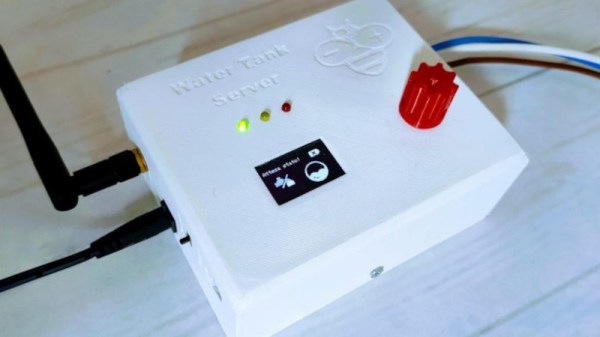
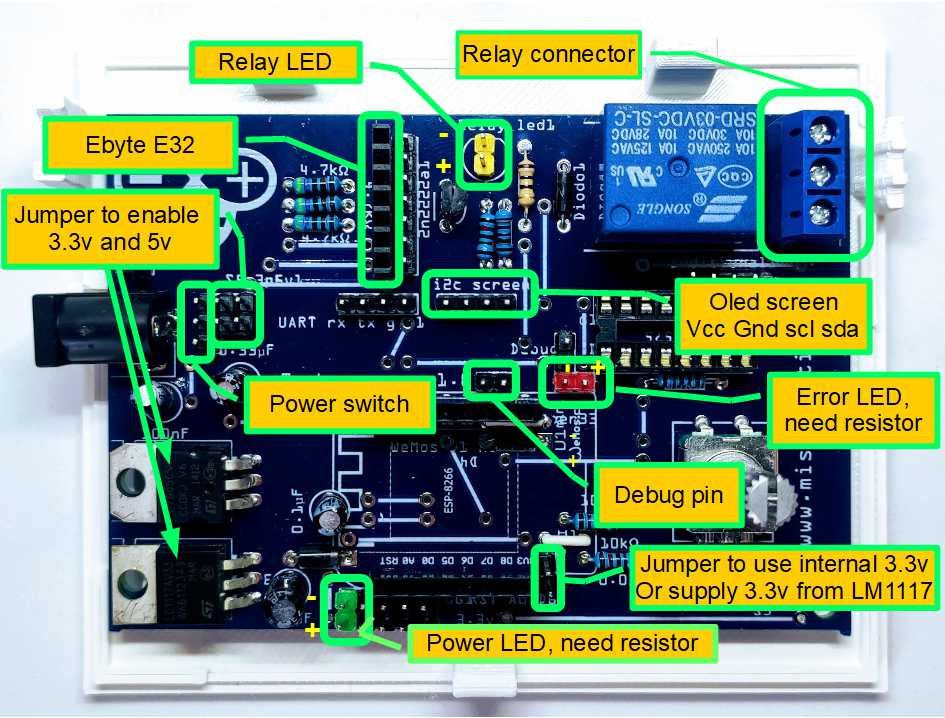
[Renzo Mischianti]’s friend has to keep a water tank topped up. Problem is, the tank itself is 1.5 km away, so its water level isn’t typically known. There’s no electricity available there either — whichever monitoring solution is to be used, it has to be low-power and self-sufficient. To help with that, [Renzo] is working on a self-contained automation project, with a solar-powered sensor that communicates over LoRa, and a controller that receives the water level readings and powers the water pump when needed.

[Renzo] makes sure to prototype every part using shields and modules before committing to a design, and has already wrote and tested code for both the sensor and the controller, as well as created the PCBs. He’s also making sure to document everything as he goes – in fact, there’s whole seven blog posts on this project, covering the already completed software, PCB and 3D design stages of this project.

These worklogs have plenty of explanations and pictures, and [Renzo] shows a variety of different manufacturing techniques and tricks for beginners along the way. The last blog post on 3D designing and printing the sensor enclosure was recently released, and that likely means we’ll soon see a post about this system being installed and tested!

[Renzo] has been in the “intricately documented worklogs” business for a while. We’ve covered his 3D printed PCB mill and DIY soldermask process before, and recently he was seen adding a web interface to a 3D printer missing one. As for LoRa, there’s plenty of sensors you can build – be it mailbox sensors, burglar alarms, or handheld messengers; and now you have one more project to draw inspiration and knowledge from. [Renzo] has previously done a LoRa tutorial to get you started, and we’ve made one about LoRaWAN!

Continue reading “LoRa Helps With Remote Water Tank Level Sensing”

DIY Low-Cost LoRa Satellite Ground Station

Embedded engineer [Alberto Nunez] has put together a compact LoRa satellite telemetry ground station that fits in your hand and can be built for around $40 USD.

The station receives signals from any of several satellites which use LoRa for telemetry, like the FossaSat series of PocketQube satellites. Even with a sub-optimal setup consisting of a magnetic mount antenna stuck outside a window, [Alberto] is able to receive telemetry from satellites over 2,000 kilometers distant. He also built a smaller variant which is battery powered for portable use.

The construction of this ground station makes use of standard off-the-shelf items with a Heltec ESP32-based LoRa / WiFi module as the heart. This module is one of several supported by the TinyGS project, which provides receiver firmware and a worldwide telemetry network consisting of 1,002 stations as of this writing. The firmware has a lot of features, including OTA updates and auto-tuning of your receiver to catch each satellite as it passes overhead.

The TinyGS project started out as a weekend project back in 2019 to use an ESP32 to receive LoRa telemetry from the FossaSat-1 satellite, and has expanded to encompass all satellites, and other flying objects, using LoRa-based telemetry. It uses Telegram to distribute data, with a message being sent to the channel anytime any station in the network receives a telemetry packet from a satellite.

If you’re interested in getting your feet wet receiving satellite signals, this is an easy project to start with that won’t break the bank.

Farm Data Relay System: Combine LoRa And 2.4 Ghz Networks Without WiFi Routers And Cloud Dependence

Setting up a wireless sensor network over a wide area can quickly become costly, and making everything communicate smoothly can be a massive headache, especially when you’re combining short range Wi-Fi with long range LoRa. To simplify this, [Timm Bogner] created Farm Data Relay System which simplifies the process of combining LoRa, 2.4Ghz modules and serial communications in various topologies over wide areas.

The FDRS uses a combination of ESP32/8266 sensor nodes for short range, and LoRa nodes for long range. The ESP nodes use Espressif’s connectionless ESP-NOW peer-to-peer protocol on which allow multiple ESP boards to communicate directly without the need for a Wi-Fi router. The ESP modules can have one of 3 roles, nodes, repeaters or gateways, and gateways and repeaters share the same code. Nodes take sensor inputs, and are configured to each have a unique READING_ID.

Relays just retransmit ESP-NOW packets to extend the network range, while gateways convert packets between ESP-NOW, MQTT over Wi-Fi, LoRa or serial messages as required. Repeaters and gateways each have a unique UNIT_MAC for addressing. The code that handles communication for the ESP devices is simple and well documented, so you only need to set a few configuration values, and then can focus your efforts on the code required for your specific application.

The hub of the system is a Raspberry Pi running Node-RED which acts as the final MQTT gateway and connects to the ESP MQTT gateways. This means that all the action happens in the local network, without being dependent on an internet connection and cloud service. However, it can still send and receive data over the internet using MQTT or any other protocol as required. Node-RED makes it particularly easy to build custom automations and interfaces.

In the video after the break, Andreas Spiess, the man with the Swiss accent, who also has a hand in the project, goes over all the features, setup and caveats.

Continue reading “Farm Data Relay System: Combine LoRa And 2.4 Ghz Networks Without WiFi Routers And Cloud Dependence”

Designing A LoRa Gateway During A Part Shortage

It’s fair to say that right now is probably the worst possible time you could choose to design a new piece of hardware. Of course the reality is that, even in the middle of a parts shortage that’s driving the cost of many components through the roof (if you can even find them), we can’t just stop building new devices. In practice, that means you’ll need to be a bit more flexible when embarking on a new design — it’s like the Stones said: “You can’t always get what you want / But if you try sometime you’ll find / You get what you need”

For [Ryan Walmsley], that meant basing his new outdoor LoRa gateway on the ubiquitous Raspberry Pi was a non-starter. So what could he use in its place? The software situation for the Nano Pi Duo looked pretty poor, and while the Onion Omega 2+ was initially compelling, a bug in the hardware SPI seemed to take it out of the running. But after more research, he found there was a software implementation that would fit the bill. Continue reading “Designing A LoRa Gateway During A Part Shortage”