Astrophotography On The Game Boy Camera

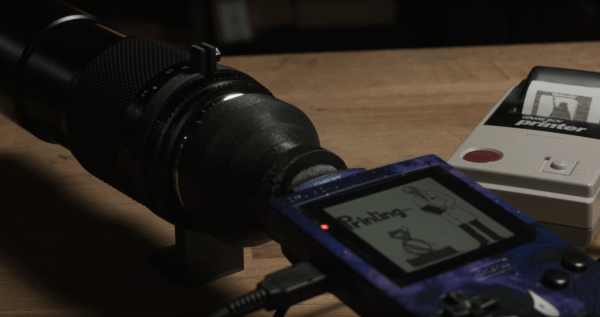
The Game Boy Camera was the first digital camera that many of us ever interacted with. At the time it was fairly groundbreaking to take pictures without film, even though the resolution was extremely low by modern standards, and it could only shoot two-bit color. It’s been long enough since its release that it’s starting to become a popular classic with all kinds of hacks and modifications, like this one which adds modern SLR camera lenses which lets it take pictures of the Moon.

The limitations of the camera make for a fairly challenging build. Settings like exposure are automatic on the Game Boy Camera and can’t be changed, and the system only allows the user to change contrast and brightness. But the small sensor size means that astrophotography can be done with a lens that is also much smaller than a photographer would need with a modern DSLR. Once a mount was 3D printed to allow the lenses to be changed and a tripod mount was built, it was time to take some pictures of the moon.

Thanks to the interchangeability of the lenses with this build, the camera can also capture macro images as well. The build went into great detail on how to set all of this up, even going as far as giving tips for how to better 3D print interlocking threads, so it’s well worth a view. And, for other Game Boy Camera builds, take a look at this one which allows the platform to send its pictures over WiFi.

Continue reading “Astrophotography On The Game Boy Camera”

How Big Is The Moon? Figure It Out Yourself

We have to confess that we occasionally send friends a link to “let me Google that for you” when they ask us something that they could have easily found online. Naturally, if someone asked us how big the moon is, we’d ask Google or another search engine. But not [Prof Matt Strassler]. He’d tell you to figure it out yourself and he would then show you how to do it.

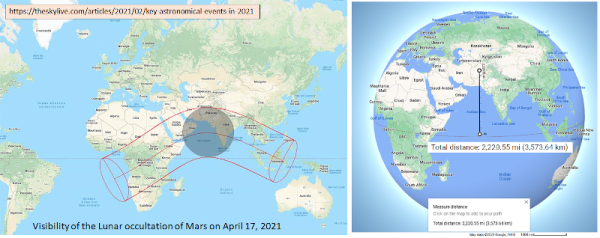
This isn’t a new question. People have been wondering about the moon since the dawn of human civilization. The ancient Greeks not only asked the question, but they worked out a pretty good answer. They knew approximately how big the Earth was and they knew the moon was far away because it is seen over a very wide area. They also knew the sun was even further away because the moon sometimes blocks the sun’s light in an eclipse. Using complex geometry and proto-trigonometry they were able to work out an approximate size of the moon. [Matt’s] method is similar but easier and relies on the moon occluding distant stars and planets.

Continue reading “How Big Is The Moon? Figure It Out Yourself”

Lego Orrery

LEGOpunk Orrery Knows Just The Right Technics

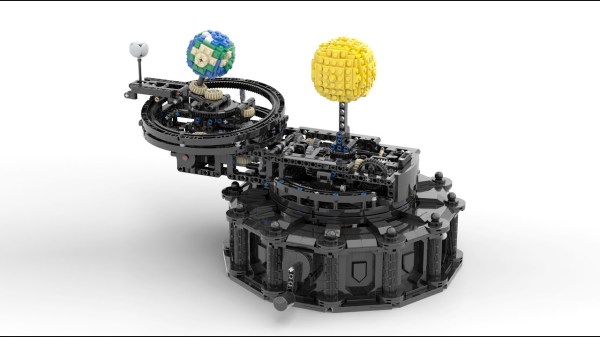
Is the unmistakable sound of the shuffling of LEGO pieces being dug through burned into your psyche? Did the catalog of ever more complex Technic pieces send your imagination soaring into the stratosphere and beyond? Judging by the artful contraption in the video below the break, we are fairly certain that [Marian] can relate to these things.

No doubt inspired by classic orreries driven by clockwork, [Marian]’s LEGO Sun-Earth-Moon orrery is instead driven by either hand cranks or by electric motors. The orrery aims to be astronomically correct. To that end, a full revolution of a hand crank produces a full day’s worth of movement.

Solar and lunar eclipses can be demonstrated, along with numerous other principals such as the tilt of the earth, moon phases, tidal locking, and more, which can be found at the project page.

While classical orreries predate the Victorian era, there seems to be an almost inexplicable link between orreries and the Steampunk aesthetic. But [Marian]’s orrery brought the term “LEGOpunk” to mind. Could it be? Given that there are 2305 pieces and 264 pages of instructions with 436 steps, we think so!

We’ve covered just a few orreries in the past, from this somewhat simple laser cut orrery to this horrifically complex and beautiful thing hereContinue reading “LEGOpunk Orrery Knows Just The Right Technics”

3D printed moon lamp

3D Printed Lithographic Moon Lamp

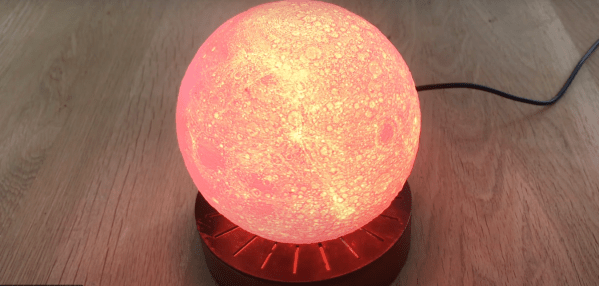
After years of being a software developer, [Chris] was excited to get back into embedded development and we’re glad he did. His 3D printed lithographic moon lamp combines a number of hacker and maker skills, and is sure to impress.

3D-printed lithographic moons have gotten pretty popular these days, so he was able to find a suitable model on Thingiverse to start with. Gotta love open-source. Of course, he needed to make a few modifications to fit his end design. Namely, he put a hole at the bottom of the moon, so he could slide the LED and heatsink inside. The 3 watt LED is pretty beefy, so he definitely needed a heat sink to make sure everything stayed cool.

Otherwise, the circuit itself is pretty straightforward. He has an ESP32 to drive the RGB LED through a transistor, and fitted the components onto a custom-designed circuit board to ensure everything stayed neat and organized. You don’t want a ton of loose wires and breadboards cluttering this build. Since he used an ESP32, he was able to create a simple web interface to control the color of the LEDs. Gotta make it connected somehow, right?

What’s great is in addition to the project write-up, [Chris] includes video tutorials, walking the readers through each individual step of the build. By doing so he really makes it easy for readers to follow along and reuse his work. If you’re still looking for ideas, one of these could make a really good Christmas present.

Continue reading “3D Printed Lithographic Moon Lamp”

There Were Almost Jet Packs On The Moon

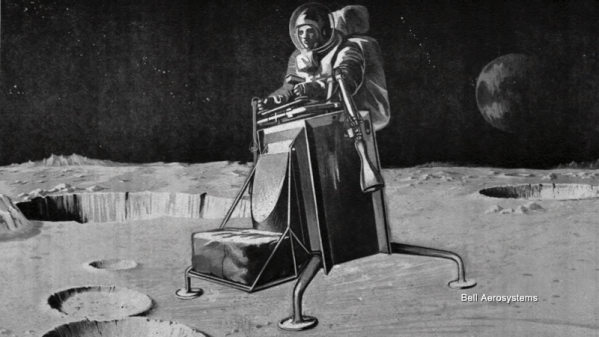
Here it is almost 2022 and we still don’t have our jet packs. But don’t feel bad. NASA astronauts wanted a lunar jetpack, but they didn’t get one either. [Amy] at The Vintage Space has an interesting video about what almost was, and you can see it below.

Of course, a jet pack on the moon would be easier than an Earthbound one. The goal was to allow the crew to range further from their lander since they couldn’t carry very much and the lander didn’t have a lot of consumables, either. In addition, if you lost sight of the lander, getting back could be a problem since navigating on the moon was an unknown skill.

In 1969 awarded exploratory contracts for lunar personal flying vehicles including one to Bell who had their Earth-bound jet pack that shows up every so often for example in Bond movies.

Continue reading “There Were Almost Jet Packs On The Moon”

Lithophane Lamp Has Us Over The Moon

Lithophanes are artistic creations which rely on the varying thickness of a material that is then backlit to reveal an image. While these were often made in porcelain in the past, these days we have the benefit of 3D printing on our side. The principle can be deftly applied to everything from flat planes to spheres, with [Tiffany Lo] demonstrating a great application of the latter with her 3D printed moon lamp.

The basic concept is to take a 2D image of the lunar surface, and then use it to generate a height mapped sphere for 3D printing. When lit from within, the sphere will appear as per the surface of the moon. The sphere geometry was generated with the Lithophane Sphere Maker online tool combined with NASA data of the moon intended for computer graphics purposes. The sphere was then printed on a typical FDM printer before being assembled upon a base with LEDs inside for backlighting.

The result is an attractive moon lamp that both recalls the heavy rock that follows us in a tidally-locked orbit, and yet can be switched off at night to make it easier to sleep. Unfortunately, it’s impractical to turn off the shine from the real moon, and we suspect nobody is working on the problem.

We’ve seen other moon lamps before; they’re a great starting point because the moon’s greyscale tones work well as a lithograph. More advanced techniques are likely necessary for those eager to create lamps of the gas giants; if you’ve done so, be sure to drop us a line.

Antique Map Of Paris With Modern Tech

There’s plenty to love about antiques, from cars, furniture, to art. While it might be a little bit of survivorship bias, it’s easy to appreciate these older things for superior quality materials, craftsmanship, or even simplicity. They are missing out on all of our modern technology, though, so performing “restomods” on classics is a popular activity nowadays. This antique map of Paris, for example, is made of a beautiful hardwood but has been enhanced by some modern amenities as well.

At first the creator of this project, [Marc], just wanted to give it some ambient lighting, but it eventually progressed over the course of two years to have a series of Neopixels hidden behind it that illuminate according to the current sun and moon positions. The Neopixels get their instructions from an ESP8266 which calculates these positions using code [Marc] wrote himself based on the current date. Due to the limitations of the ESP8266 it’s not particularly precise, but it gets the job done to great effect.

To improve on the accuracy, [Marc] notes that an ESP32 could be used instead, but we can give the ESP8266 a pass for now since the whole project is an excellent art installation even if it is slightly off on its calculations. If you need higher accuracy for tracking celestial objects, you can always grab a Raspberry Pi too.