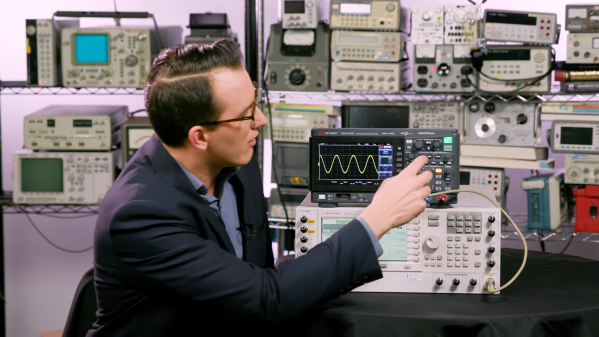
Oscilloscope bandwidth is a tricky thing. A 100 MHz scope will have a defined attenuation (70%) of a 100 MHz sine wave. That’s not really the whole picture, though, because we aren’t always measuring sine waves. A 100 MHz square wave, for example, will have sine wave components at 100 MHz, 300 MHz, and the other odd harmonics. However, it isn’t that a 100 MHz scope won’t show you something at a higher frequency — it just doesn’t get the y-axis right. [Daniel Bogdanoff] from Keysight decided to think outside of the box and made a video about using scopes beyond their bandwidth specification. You can see that video, below.
[Daniel] calls this a “spec hacks” but they aren’t really hacks to the scope. They are just methods that don’t care about the scope’s rated bandwidth. In this particular spec hack, he shows how the frequency counter using a 70 MHz scope’s trigger circuit can actually read up to 410 MHz. A 100 MHz scope was able to read almost 530 MHz.
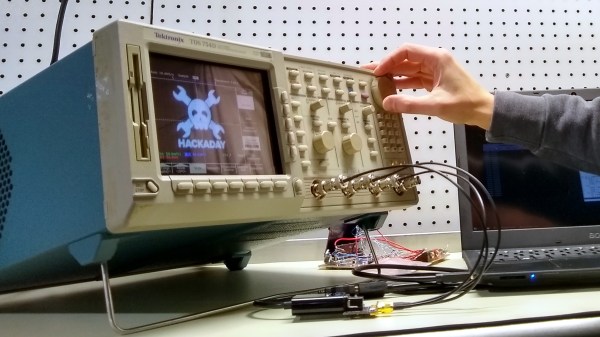

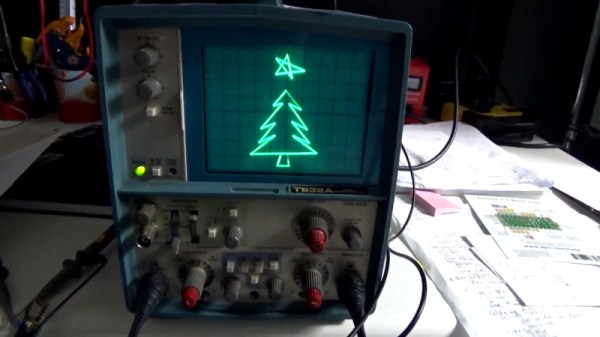
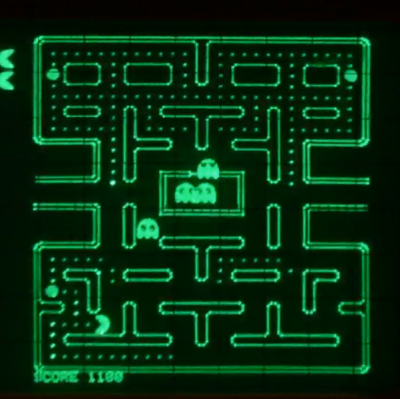 Using a CRT oscilloscope in X-Y mode as a vector display, the console faithfully reproduces some classic games, most of which, curiously enough, were not originally vector games. There are implementations of the Anaconda, RetroRacer, and AstroLander minigames from Timesplitter 2. There are also versions of Pac-Man, Tetris, and even Super Mario Brothers. Most of the games were prototyped in JavaScript before being translated into assembly and placed onto EEPROM external cartridges, to be read by the ATMega128 inside the console. Sound and music are generated using the ATMega’s hardware timers, with a little help from a reverse-biased transistor for white noise and a few op-amps.