Before the introduction of the Raspberry Pi, building robots was hard. The best solution to turning motors on a chassis was repurposing an old roomba. For the brain, maybe you could throw Linux on a router and move your rover around with an old Linksys. Before that, you could buy a crappy robotics kit, thrown together in a box and sold as an ‘educational kit’. I’m sure there are a few readers out there that built robots by wire-wrapping HC11s.
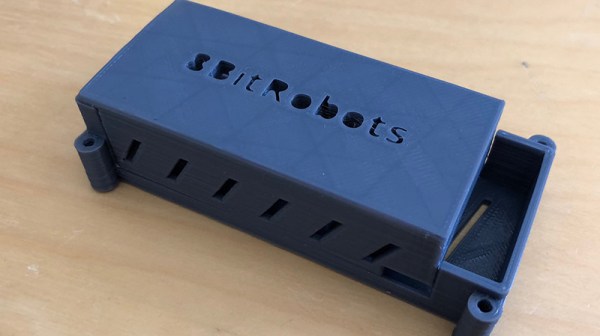
Now we have 3D printers and Raspberry Pis, and with that comes a golden age of robotics. One of the best robot brains out there is the 8BitRobots Modules from [Tim Wilkinson], an entry for this year’s Hackaday Prize.
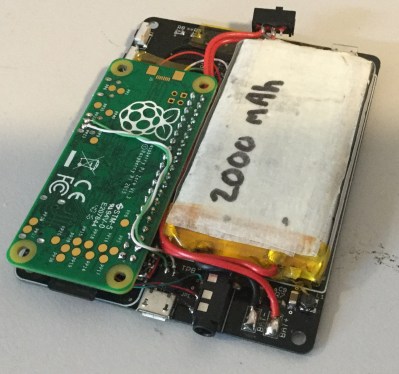
The 8BitRobots Modules are made up of a few components, not the least of which is a Pi Zero, a fantastically powerful (for its price) Linux computer that is available for five dollars. With an add-on board, cleverly named the RoBonnet, the Pi Zero gets PWM outputs for servos and ESCs, an H-bridge for motors, TTL serial, encoder inputs, a pressure and temperature sensor, an IMU, a power monitor, and everything else you need for a successful Pi robot.
But hardware is only one part of the equation. If you want to program a robot, you need a software stack that makes everything easy. That’s where the 8BitRobots distributed robot platform comes in. This is a bit of Javascript running on the Pi that allows you to program the robot in Blockly, a Scratch-like graphical programming environment that’s been adapted to run in a web browser. It’s an all-in-one solution to robotics development and programming, and an excellent addition to this year’s Hackaday Prize.





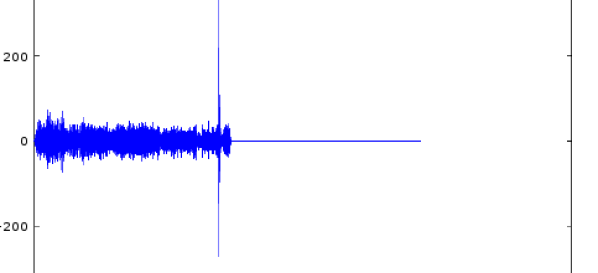
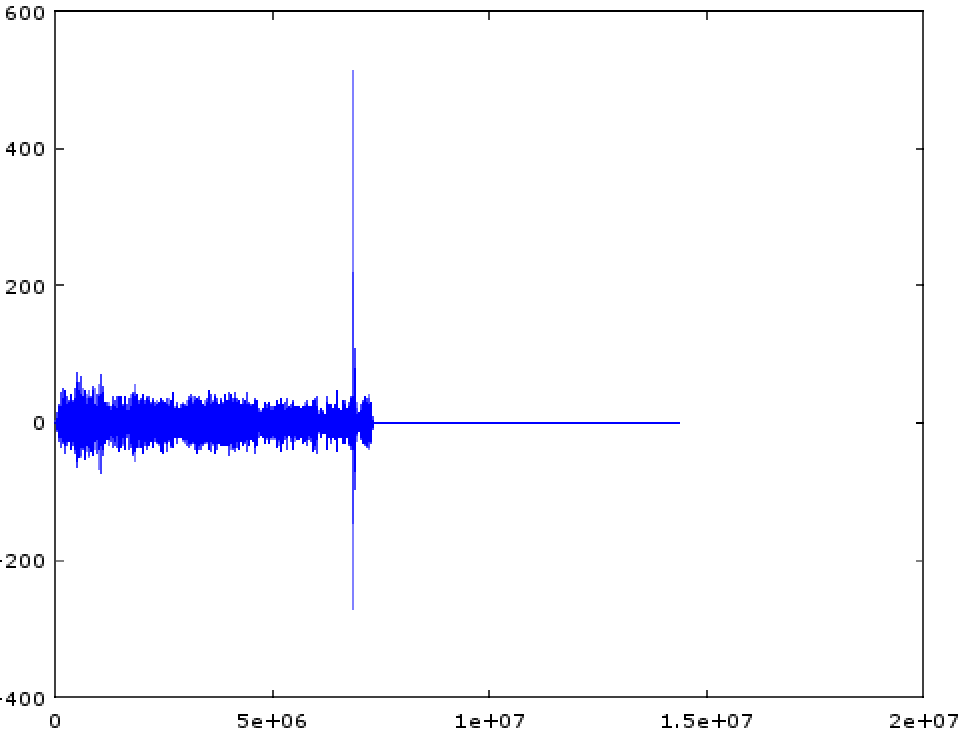 [tomek] was aware of this hip knowledge domain called Digital Signal Processing but hadn’t done any of it themselves. Like many algorithmic problems the first step was to figure out the fastest way to bolt together a prototype to prove a given technique worked. We were as surprised as [tomek] by how simple this turned out to be. Fundamentally it required a single function – cross-correlation – to measure the similarity of two data samples (audio files in this case). And it turns out that
 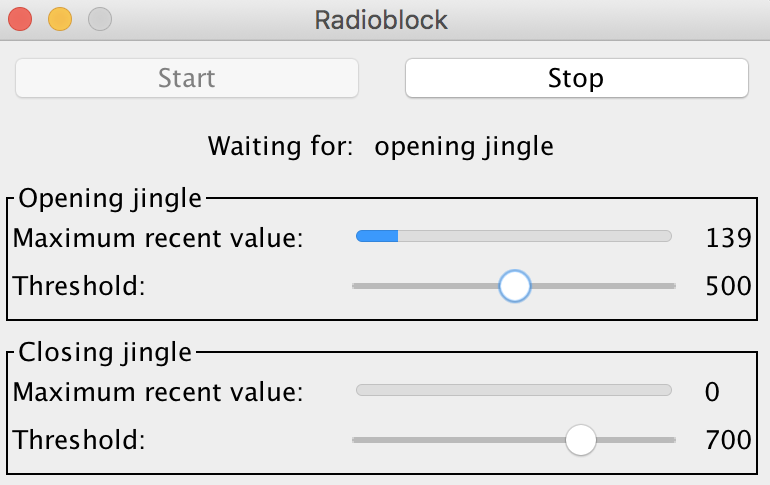 At this point all that was left was packaging it all into a one click tool to listen to the radio without loading an entire analysis package. Conveniently Octave is open source software, so [tomek] was able to dig through its sources until they found the bones of the critical xcorr() function. [tomek] adapted their code to pour the audio into a circular buffer in order to use an existing Java FFT library, and the magic was done. Piping the stream out of ffmpeg and into the ad detector yielded events when the given ad jingle samples were detected.