Robotic Eye Surgery Controlled With Magnets

If you’re in need of eye surgery you might just find yourself strapped into this contraption. It’s a magnetic field generator used to manipulate a tiny, untethered probe. It’s called OctoMag and the idea is that a robot less than half a millimeter in size is injected into your vascular system and, through the use of those coils, it busts up blood clots in the small passages inside of the eye.

Once you’ve seen the clip after the break we’re sure you’ll agree that this is amazing technology. Nonetheless it makes us cringe to think of the procedure done on a living organism but we’re sure that fear will subside given time. For now this seems more like a treatment from A Clockwork Orange.

Continue reading “Robotic Eye Surgery Controlled With Magnets”

Spy Video TRAKR: Software And First Hack

Our initial view of the Spy Video TRAKR “App BUILDR” site had us believing this would be an internet-based code editor and compiler, similar to the mbed microcontroller development tools. Delving deeper into the available resources, we’re not entirely sure that’s an accurate assessment — TRAKR may well permit or even require offline development after all. Regardless of the final plan, in the interim we have sniffed out the early documentation, libraries and standalone C compiler and have beaten it into submission for your entertainment, in order to produce our first TRAKR hack!

Continue reading “Spy Video TRAKR: Software And First Hack”

Spy Video TRAKR: The Teardown

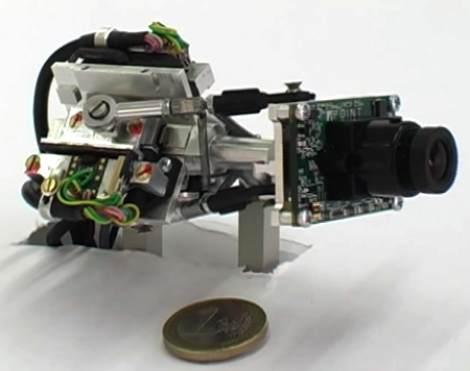
Last Friday we looked at Wild Planet’s Spy Video TRAKR programmable RC vehicle mostly from an end user perspective. Much of our weekend was spent dismantling and photographing the device’s internal works, and poring over code and documentation, in order to better gauge the TRAKR’s true hackability. Our prior review included some erroneous speculation…we can clarify a number of details now, and forge ahead with entirely new erroneous speculation!

Continue reading “Spy Video TRAKR: The Teardown”

Seaswarm: We Can Clean Up The Gulf In A Month

Want to clean up the Gulf of Mexico oil spill in one month? Seaswarm says it can be done with 5000 floating robots.

As the name implies, the project uses swarm robotics. Each unit draws power from the sun, and drags around a conveyor belt of oil absorbent nanofabric that doesn’t get wet in water. Once the fabric is saturated with crude it can be removed using heat; not a task the swarm can do by itself. But get this: after separating oil from nanofabric both can be used again. That means you get the environmental benefit of cleaning up the Gulf, not throwing away your collection medium, and the oil is once again a usable commodity. Sounds like a lot of high promises, but take a look at the video after the break and decide for yourself.

Continue reading “Seaswarm: We Can Clean Up The Gulf In A Month”

Spy Video TRAKR: First Impressions

At the Bay Area Maker Faire this past May, we had our first glimpse of Wild Planet’s Spy Video TRAKR, a $130 radio-controlled toy with some surprises under the hood.

On the surface, the Spy Video TRAKR — the latest addition to the popular Spy Gear toy line — is an R/C tank with a video camera and night vision, with the added ability to download new “apps” from the internet for extra functions. With a little detective work, one uncovers the TRAKR’s secret double life: it’s also an eminently hackable robotics platform! Prior Spy Gear toys have been popular hack targets, providing inexpensive, mass-produced sources of unusual items such as head-mounted displays. Rather than throw up barriers, Wild Planet has chosen to embrace this secondary market, with plans to release development tools and documentation making it possible to extend the device’s capabilities.

Read on for our image-heavy unboxing and initial impressions.

Mbed Robo-Rover

There are a ton of rapid prototyping available on the market these days which all cater to different niches. Todays project, a robotic rover on a 4 wheel chassis, is based on the NXP mbed. The mbed is a popular board for higher need applications, and is centered around an ARM Cortex core.

This multi-part writeup is a great place to start for people who are looking into making a robot of any kind. [Aaron] explains a lot of important concepts that are often overlooked by novices of robot building, including the importance of movement feedback such as quadrature encoders, as well as the usefulness of Inertial Measurement Units (IMUs) to maintain bearing and terrain awareness. This project is nearing completion, and promises to deliver essential material such as source code, a bill of materials, and the robot in action.

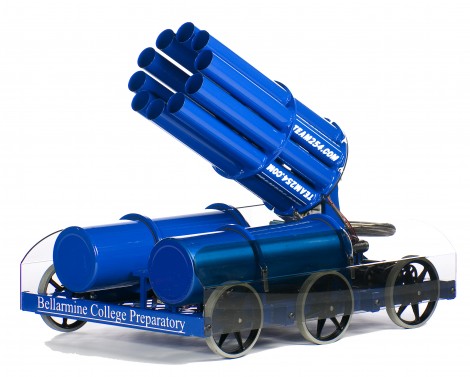
This could also be a valuable tool for any FIRST teams looking to understand some of the necessary ideas in creating a robot. Are there any Hackaday readers out there participating in or mentoring a FIRST (or any other robotic competition) team? We would love to hear from you!

Flipping Pancakes

[Petar and Sylvain] are teaching this robot to flip pancakes. It starts with some kinesthetic learning; a human operator moves the robot arm to flip a pancake while the robot records the motion. Next, motion tracking is used so that the robot can improve during its learning process. It eventually gets the hang of it, as you can see after the break, but we wonder how this will work with real batter. This is a simulated pancake so the weight and amount at of force necessary to unstick it from the pan is always the same. Still, we loved the robotic pizza maker and if they get this to work it’ll earn a special place in our hearts.

Continue reading “Flipping Pancakes”