Retrotechtacular: Old Transistors

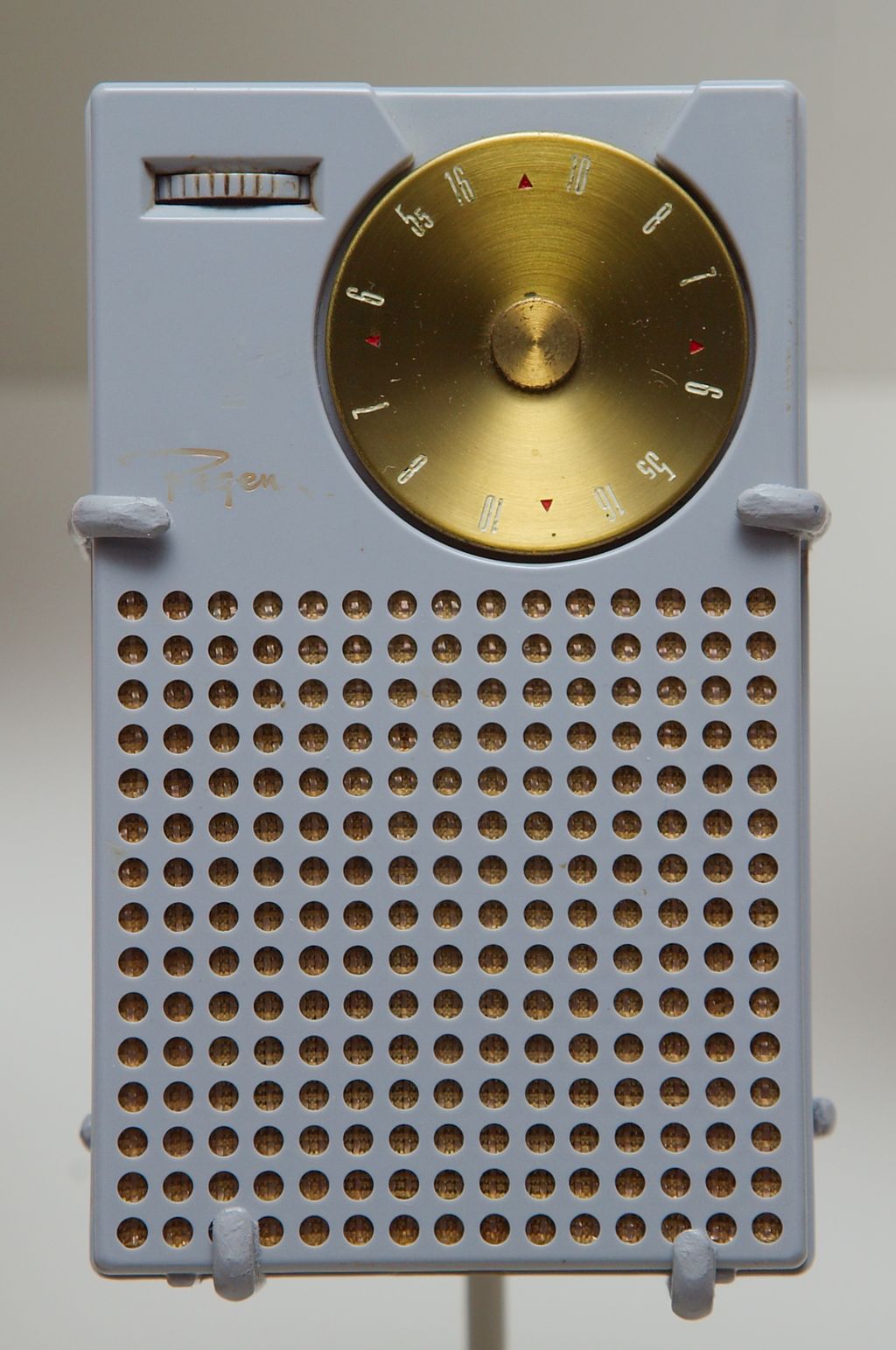
1024px-Regency_transistor_radio
Regency TR-1

Transistors have come a long way. Like everything else electronic, they’ve become both better and cheaper. According to a recent IEEE article, a transistor cost about $8 in today’s money back in the 1960’s. Consider the Regency TR-1, the first transistor radio from TI and IDEA. In late 1954, the four-transistor device went on sale for $49.95. That doesn’t sound like much until you realize that in 1954, this was equivalent to about $441 (a new car cost about $1,700 and a copy of life magazine cost 20 cents). Even at that price, they sold about 150,000 radios.

Part of the reason the transistors cost so much was that production costs were high. But another reason is that yields were poor. In some cases, 4 out of 5 of the devices were not usable. The transistors were not that good even when they did work. The first transistors were germanium which has high leakage and worse thermal properties than silicon.
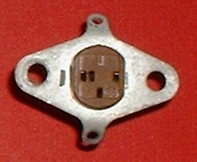
socketEarly transistors were subject to damage from soldering, so it was common to use an alligator clip or a specific heat sink clip to prevent heat from reaching the transistor during construction. Some gear even used sockets which also allowed the quick substitution of devices, just like the tubes they replaced.

When the economics of transistors changed, it made a lot of things practical. For example, a common piece of gear used to be a transistor tester, like the Heathkit IT-121 in the video below. If you pulled an $8 part out of a socket, you’d want to test it before you spent more money on a replacement. Of course, if you had a curve tracer, that was even better because you could measure the device parameters which were probably more subject to change than a modern device.

Of course, germanium to silicon is only one improvement made over the years. The FET is a fundamentally different kind of transistor that has many desirable properties and, of course, integrating hundreds or even thousands of transistors on one integrated circuit revolutionized electronics of all types. Transistors got better. Parameters become less variable and yields increased. Maximum frequency rises and power handling capacity increases. Devices just keep getting better. And cheaper.

A Brief History of Transistors

The path from vacuum tube to the Regency TR-1 was a twisted one. Everyone knew the disadvantages of tubes: fragile, power hungry, and physically large, although smaller and lower-power tubes would start to appear towards the end of their reign. In 1925 a Canadian physicist patented a FET but failed to publicize it. Beyond that, mass production of semiconductor material was unknown at the time. A German inventor patented a similar device in 1934 that didn’t take off, either.
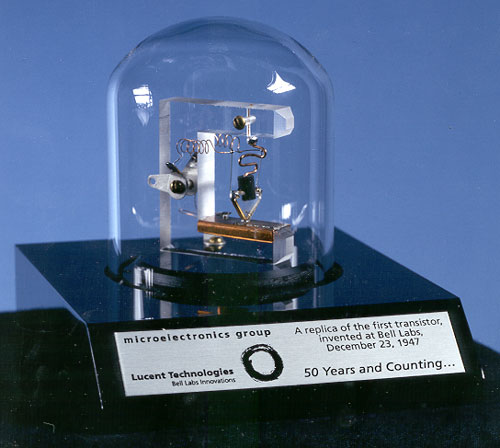
Replica-of-first-transistor
Replica of the First Transistor

Bell labs researchers worked with germanium and actually understood how to make “point contact” transistors and FETs in 1947. However, Bell’s lawyers found the earlier patents and elected to pursue the conventional transistor patent that would lead to the inventors (John Bardeen, Walter Brattain, and William Shockley) winning the Nobel prize in 1956.

Two Germans working for a Westinghouse subsidiary in Paris independently developed a point contact transistor in 1948. It would be 1954 before silicon transistors became practical. The MOSFET didn’t appear until 1959.

Of course, even these major milestones are subject to incremental improvements. The V channel for MOSFETs, for example, opened the door for FETs to be true power devices, able to switch currents required for motors and other high current devices.
Continue reading “Retrotechtacular: Old Transistors”

HardwareX Is A Scientific Journal For Open Hardware

Disruption is a basic tenet of the Open Hardware movement. How can my innovative use of technology disrupt your dinosaur of an establishment to make something better? Whether it’s an open-source project chipping away at a monopoly or a commercial start-up upsetting an industry with a precarious business model based on past realities, we’ve become used to upstarts taking the limelight.

As an observer it’s interesting to see how the establishment they are challenging reacts to the upstart. Sometimes the fragility of the challenged model is such that they collapse, other times they turn to the courts and go after the competitor or even worse, the customers, in an effort to stave off the inevitable. Just occasionally though they embrace the challengers and try to capture some of what makes them special, and it is one of these cases that is today’s subject.

A famously closed monopoly is the world of academic journals. A long-established industry with a very lucrative business model hatched in the days when its product was exclusively paper-based, this industry has come under some pressure in recent years from the unfettered publishing potential of the Internet, demands for open access to public-funded research, and the increasing influence of the open-source world in science.

Elsevier, one of the larger academic publishers, has responded to this last facet with HardwareX, a publication which describes itself as “an open access journal established to promote free and open source designing, building and customizing of scientific infrastructure“. In short: a lot of hardware built for scientific research is now being created under open-source models, and this is their response.

Some readers might respond to this with suspicion, after all the open-source world has seen enough attempts by big business to embrace its work and extend it into the proprietary, but the reality is that this is an interesting opportunity for all sides. The open access and requirement for all submissions to be covered under an open hardware licence mean that it would be impossible for this journal to retreat behind any paywalls. In addition the fact of it being published in a reputable academic journal will bring open-source scientific hardware to a new prominence as it is cited in papers appearing in other journals. Finally the existence of such a journal will encourage the adoption of open-source hardware in the world of science, as projects are released under open-source licences to fulfill the requirements for submission.

So have the publishing dinosaurs got it right, and is this journal an exciting new opportunity for all concerned? We think it has that potential, and the results won’t be confined to laboratories. Inevitably the world of hackers and makers will benefit from open-source work coming from scientists, and vice versa.

Thanks [Matheus Carvalho] for the tip.

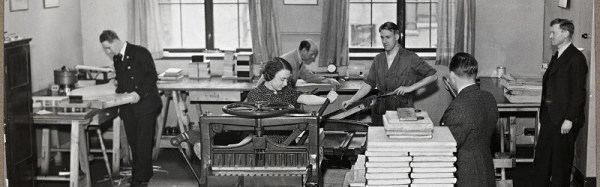
Bookbinding workshop image: By Nasjonalbiblioteket from Norway [No restrictions], via Wikimedia Commons.

The Othermill Is Something Else

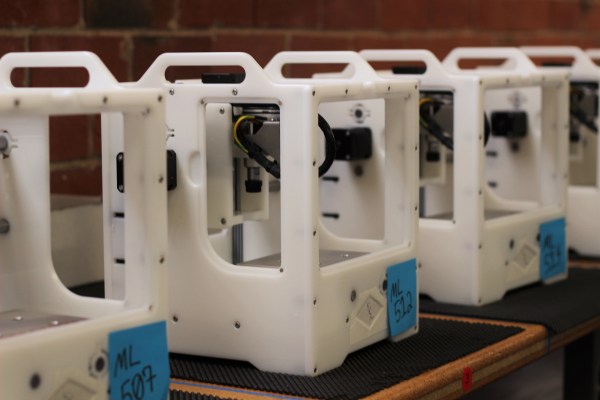
I’ll admit. When I saw the Othermill for the first time I thought it was just another mill with cheap Chinese hardware inside sold as a premium. I’m ashamed to say that I even trash talked it a little bit. It gave me another chance to relearn that I should always do my research before being a jerk, check my assumptions thoroughly, and even then it’s not recommended. Other Machine Company was kind enough to let me swing by the office in Berkeley California. [Danielle], the CEO, led me through the design of the mill as well as the challenges in running the operation.

The Othermill is a serious machine, and with the recent release of the Othermill Pro, it’s only getting better. The components are not bargain basement. This is something that could be more obvious, but it’s almost entirely made from US sourced parts, including the custom stepper motors. There aren’t any ball bearings that will start to make strange noises in a year. It can now cut 6mil traces in a PCB all day long. To put it into perspective. The Othermill Pro costs a third of the price of an equivalent machine from LPKF and has the same capabilities.

Continue reading “The Othermill Is Something Else”

Ugly Manhattan Adapters

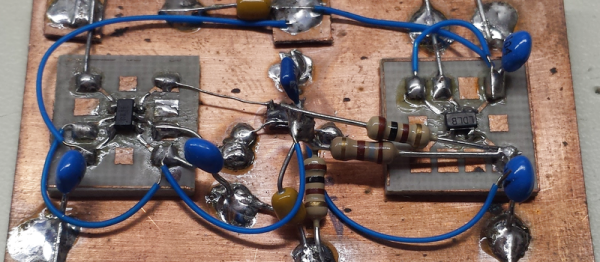
“Ugly” or “Manhattan” style circuit building is popular among ham radio folks. Basically, you solder the circuit point-to-point, using a solid copper plate as a backplane. “Manhattan” gets its name from the little pads and parts of different heights strewn all around the board — it looks like the Manhattan skyline. It’s a great one-off construction method and actually has reasonably good properties for radio/analog circuitry. It’s easy to pull off with leaded components, but gets trick with smaller surface-mount parts.

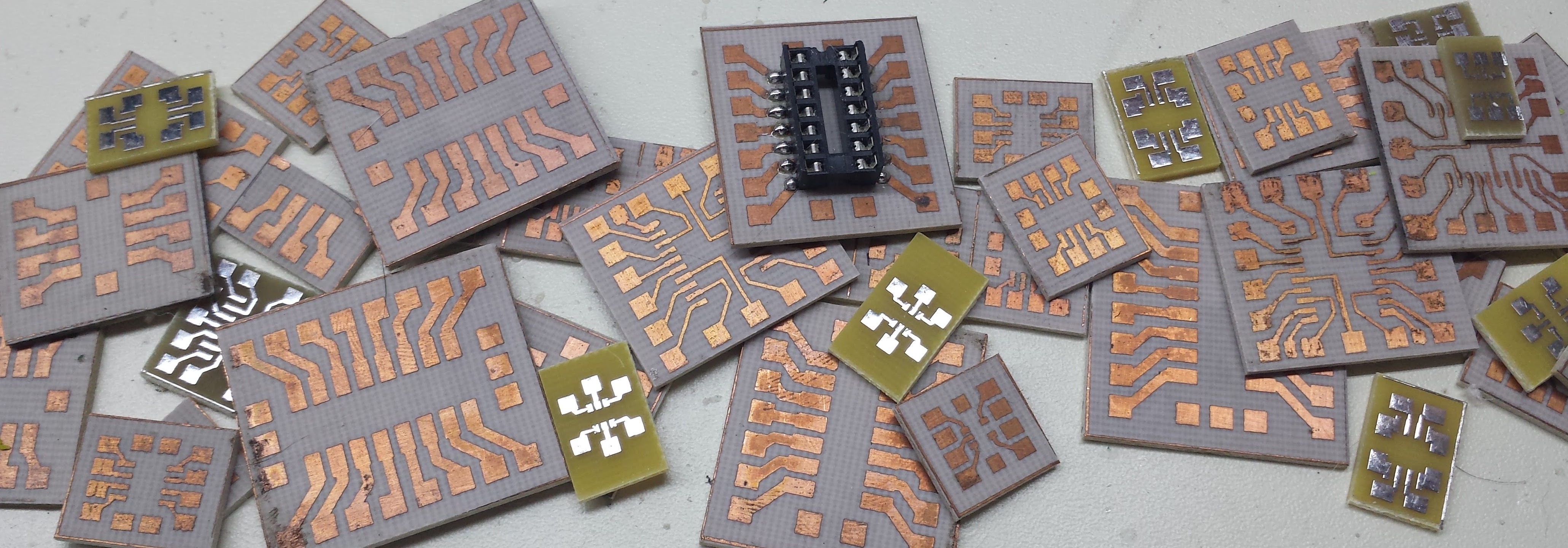
Unless you build some adapters. [Ted Yapo] has made his library of small Manhattan adapters available for us all to use. There’s also no reason to stop with SMT parts — even normal DIP parts can be easily adapted to Manhattan construction, as this teasing photo of a bunch of [Ted]’s adapters shows. And if he doesn’t have the layout you need, the source files should give you a good starting point.

If you want to get started with Manhattan (or other “ugly”) construction, we’ve got a guide for you. And in case you take the “ugly” moniker too seriously, check out this incredibly beautiful ugly build.

Microsoft Live Account Credentials Leaking From Windows 8 And Above

Discovered in 1997 by Aaron Spangler and never fixed, the WinNT/Win95 Automatic Authentication Vulnerability (IE Bug #4) is certainly an excellent vintage. In Windows 8 and 10, the same bug has now been found to potentially leak the user’s Microsoft Live account login and (hashed) password information, which is also used to access OneDrive, Outlook, Office, Mobile, Bing, Xbox Live, MSN and Skype (if used with a Microsoft account).

Continue reading “Microsoft Live Account Credentials Leaking From Windows 8 And Above”

Hackaday Prize Entry: A Visible Spectrophotometer

Spectroscopy is one of the most useful tools in all of science, and for The Hackaday Prize’s Citizen Science effort [esben] is putting spectroscopy in the hands of every high school student. He’s built a super cheap, but very good spectrophotometer.

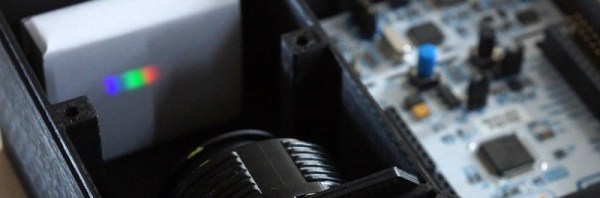
The idea of a spectrophotometer is simple enough – shine light through a sample, send that light through a diffraction grating, focus it, and shine the light onto a CCD. Implementing this simple system is all about the details, but with the right low-cost lenses and a 3D printed enclosure, [esben] has this more or less put together.

Of course, lenses and diffraction gratings are relatively simple. You need real data, and for this we can turn to another one of [esben]’s projects in the Hackaday Prize. It’s a breakout board for a linear CCD module, able to capture the spectrum coming off a sample with incredible precision. This is how real spectrophotometers are put together, but because of the difficulties in driving a CCD, not many people have put one of these together.

Both of these projects are finalists for in the Citizen Science portion of The Hackaday Prize. That’s an awesome result for what is a complete system for learning about spectroscopy with a device that’s also able to produce some high-quality data, too.

Infrared Flashlight With Screen Uncovers What’s Hidden

Flashlights are handy around the house, but what if you want a stealthier approach to illuminating the night? Infrared LED flashlights can be acquired at relatively low cost, but where’s the fun in that? To that end [johnaldmilligan] spent a couple hours building an infrared flashlight-gun with an LED display to venture into the night.

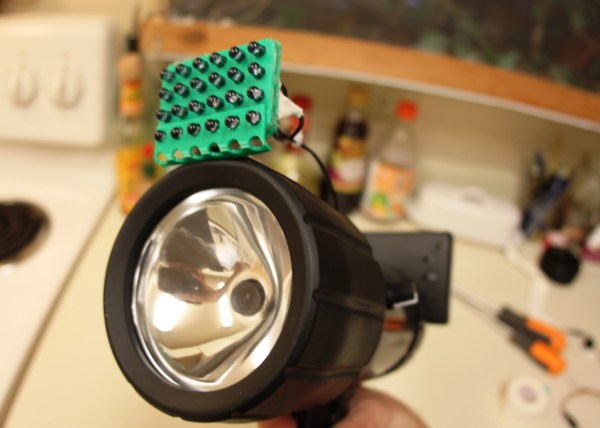
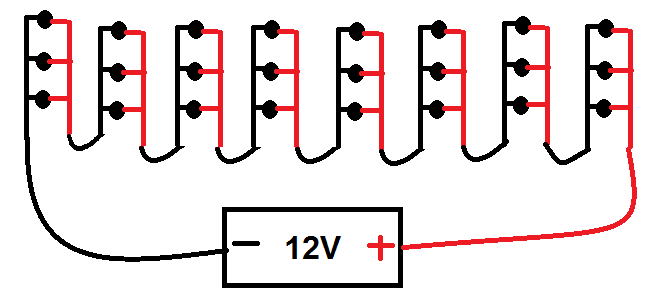
[johnaldmilligan] disassembled a handheld spotlight to use as the housing, leaving the trigger assembly and 12V DC charge port in place. A miniature camera was used as the video source after removing its infrared filter. Note: if you do this, don’t forget that you will need to manually readjust the focus! The camera was mounted where LED Array Diagramthe flashlight bulb used to be instead of the LED array since the latter was impractically large for the small space — but attaching it to the top of the flashlight works just as effectively. The infrared LEDs were wired in eight groups of three LEDs in parallel to deliver 1.5V to each bank and preventing burnout. Here is an extremely detailed diagram if that sounds confusing.

Continue reading “Infrared Flashlight With Screen Uncovers What’s Hidden”