Farming Items With RasPi-Modified Joycons

The Pokémon games have delighted legions of Nintendo gamers over the years, and show no signs of slowing down any time soon. Despite its popularity, there are certain aspects of the games that are unarguably about simply grinding your way to success. For [Mori Bellamy], this simply wouldn’t do – yet their thirst for gold bottlecaps was insatiable. What to do? Automate it, of course.

The first step was to hack the Joycons from the Nintendo Switch. A DG333A analog switch IC was hooked up to the buttons inside, and controlled by the GPIO pins of a Raspberry PI. The joystick was then controlled with an MCP4725 DAC, allowing the system to fully emulate control inputs to the console.

With the console now under control by the Raspberry Pi, the next step was to add intelligence. Google’s Tesseract OCR platform was combined with a helping of Python code. This allows the script to read dialog boxes from the game, and use this data to determine which buttons to press to farm items.

[Mori] has provided the code on GitHub for others to use, noting that it should be generalizable to other games with a little work. Fundamentally, the underlying hardware could readily be repurposed to other controllers, too. There’s plenty of other ways to automate the drudgery of gaming, even if you have to use a touch screen. Video after the break.

Continue reading “Farming Items With RasPi-Modified Joycons”

In Praise Of The App Note

When I am at a loss for an explanation in the world of electronics, I reach for my well-thumbed Horowitz & Hill. When H&H fails me which is not that often, the chances are I’ll find myself looking in an application note from a semiconductor company who is in cut-throat competition with its rivals in a bid for my attention. These companies have an extensive sales and marketing effort, part of which comes in the dissemination of knowledge.

Razor blades may be sold to young men with images of jet fighters and a subtle suggestion that a clean-shaven guy gets his girl, but semiconductor brands are sold by piquing the engineer’s interest with information. To that end, companies become publishing houses in praise of their products. They produce not only data sheets that deal with individual device, but app notes documents which cover a wider topic and tell the story of why this manufacturer’s parts are naturally the best in the world.

These app notes frequently make for fascinating reading, and if you haven’t found them yet you should head for the documentation sections of semiconductor biz websites and seek some of them out.

Continue reading “In Praise Of The App Note”

Mains Power Supply For ATtiny Project Is Probably A Bad Idea

When designing a mains power supply for a small load DC circuit, there are plenty of considerations. Small size, efficiency, and cost of materials all spring to mind. Potential lethality seems like it would be a bad thing to design in, but that didn’t stop [Great Scott!] from exploring capacitive drop power supplies. You know, for science.

The backstory here is that [Great Scott!] is working on a super-secret ATtiny project that needs to be powered off mains. Switching power supplies are practically de rigueur for such applications, but compared to the intended microcontroller circuit they are actually quite large, and they’ve just been so done before. So in order to learn a thing or two, [Scott!] designed a capacitive dropper supply, where the reactance of the cap acts like a dropping resistor to limit the current. His first try was just a capacitor in series with an LED; this didn’t end well for the LED.

To understand why, he reverse-engineered a few low-current mains devices and found that practical capacitive droppers need a few more components, chiefly a series resistance to prevent inrush current from getting out of hand, but also a bridge rectifier and a zener to clamp things down. Wiring up all that resulted in a working capacitive dropper supply, but a the cost of as much real estate as a small switcher, and with the extra bonus of being potentially lethal if the power supply is plugged in the wrong way. Side note: we thought German line cords were polarized to prevent this, but apparently not? (Ed Note: Nope!)

As always, even when [Great Scott!]’s projects don’t exactly work out, like a suboptimal 3D-printed BLDC or why not to bother building your own DC-AC inverter, we enjoy the learning that results.

Continue reading “Mains Power Supply For ATtiny Project Is Probably A Bad Idea”

Radio Free Blockchain: Bitcoin From Space

Cryptocurrencies: love them, hate them, or be baffled by them, but don’t think you can escape them. That’s the way it seems these days at least, with news media filled with breathless stories about Bitcoin and the other cryptocurrencies, and everyone from Amazon to content creators on YouTube now accepting the digital currency for payments. And now, almost everyone on the planet is literally bathed in Bitcoin, or at least the distributed ledger that makes it work, thanks to a new network that streams the Bitcoin blockchain over a constellation of geosynchronous satellites.

Continue reading “Radio Free Blockchain: Bitcoin From Space”

The Only Cassette Player Worth Owning In 2019

Vinyl has the audiophiles to keep it relevant, and CDs still have the people who are scared of streaming music, but who mourns for the cassette tape? Yesterday we would have said nobody, but now that [Igor Afanasyev] has unleashed his latest creation onto an unsuspecting world, we aren’t so sure anymore. A portable tape player that started as a $5 find from the Goodwill is now an outrageously gorgeous piece of electronic art thanks to 3D printing and a liberal application of LEDs.

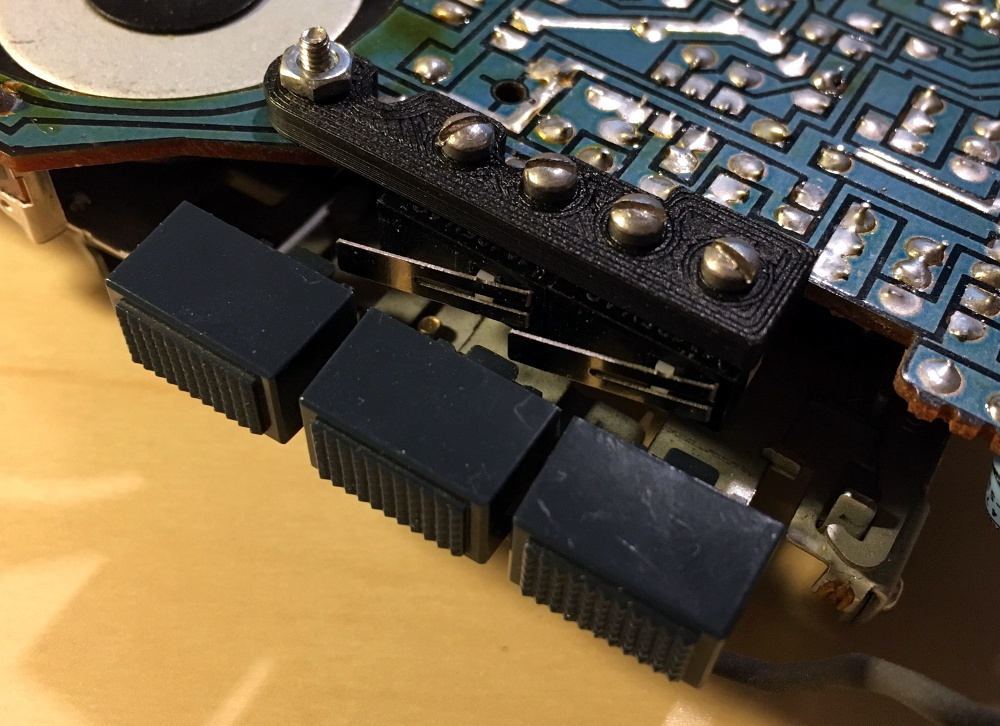
After freeing the tape mechanism from the original enclosure and extraneous electronics like the AM/FM tuner, [Igor] got to work designing a retro styled enclosure for the hardware which would show off the complex electromechanical bits which would traditionally be hidden. With the addition of a clever 3D printed holder, he was even able to add microswitches under the original player’s buttons so he could detect the player’s current state without having to modify the electronics. This lets the finished player change the color of the RGB LEDs based on what it’s currently doing.

[Igor] came up with a very clever way of integrating light-up icons into the case by placing bright LEDs behind specially crafted thin sections of the print. It looked awesome in his tests, but after the considerable sanding, priming, and painting it took to turn the 3D printed parts into a production-quality enclosure, the LEDs are no longer visible on the final product. Even though they didn’t work in this particular case, we think it’s a brilliant technique worthy of stealing further research.

The detail that [Igor] but into this build is phenomenal. Seeing all the individual components he had to design and print to make the final product come together is really nothing short of inspirational. Projects like these are where 3D printing really shines, as trying to replicate this build with traditional manufacturing techniques would be an absolute nightmare.

If you can’t quite shake the feeling that you’ve seen this name or attention to detail before, it’s for good reason. Last year we covered another build showing the knack [Igor] has for turning the ordinary into the extraordinary.

Continue reading “The Only Cassette Player Worth Owning In 2019”

Components Cut In Half Reveal Their Inner Beauty

We rarely take a moment to consider the beauty of the components we use in electronic designs. Too often they are simply commodities, bought in bulk on reels or in bags, stashed in a drawer until they’re needed, and then unceremoniously soldered to a board. Granted, little scraps of black plastic with silver leads don’t exactly deserve paeans sung to their great beauty – at least not until you cut them in half to reveal the beauty within.

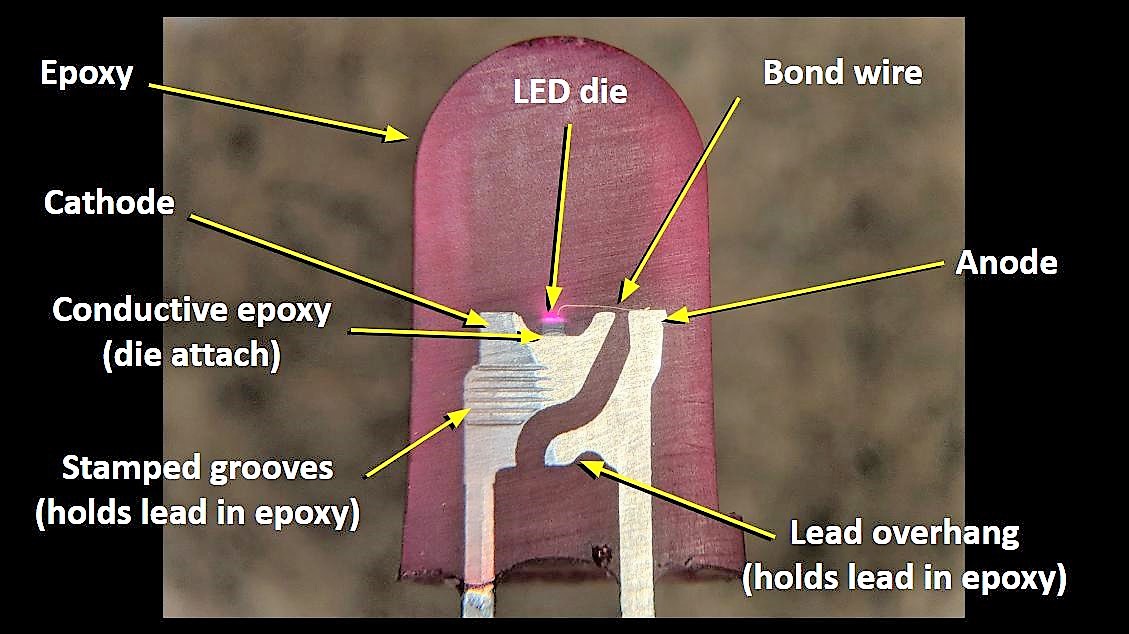
We’ve seen a little of what [Tube Time] has accomplished here; recall this lapped-down surface-mount inductor that [electronupdate] did a while back. The current work is more extensive and probably somewhat easier to accomplish because [TubeTime] focused mainly on larger through-hole components such as resistors and capacitors. It’s not clear how the sections were created, but it is clear that extreme care was taken to lap down the components with enough precision that the inner structures are clearly visible, and indeed, carefully enough that some, most notably the LED, still actually work. For our money, though, the best looking cross-sections are the capacitors, especially the electrolytic, for which [Tube Time] thoughtfully provides both radial and axial sections. The little inductor is pretty cool too. Some of the component diagrams are annotated, too, which makes for fascinating reading.

Honestly, we could look at stuff like this all day.

Thanks to [Stuart Rogers] for the tip.

Let A Dinosaur Show You The Future

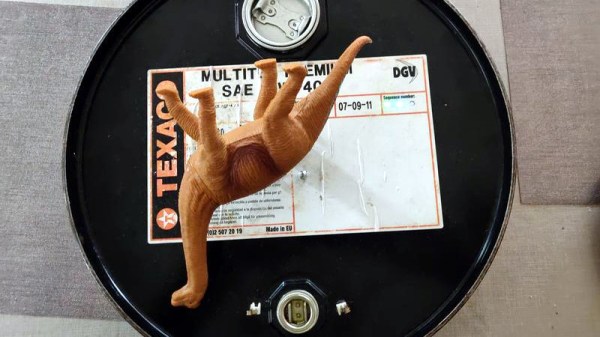
Our lives in the 21st century are in part governed by a series of systems which we rarely encounter directly but which can have a great impact upon our lives. The oil futures market, for example, for which [Igor Nikolic] has created a real-time visualisation in the form of a clock in which the “hand” is a plastic dinosaur (As ever, XKCD reminds us that oil contains homeopathic quantities of real dinosaur, but it makes a good talking point).

The clock is part of a series continuing from his previous grid balance lamp project which monitored supply and demand in the electricity grid, and takes a feed of oil futures pricing to an MQTT server which is then picked up by an ESP8266 in the clock. The dinosaur hand is attached to a stepper motor, the position of which is set according to the market movements. There are also three LEDs whose colours change according to price. The whole is mounted on a plaque made from the top of an oil drum, and placed for effect over a map of the Port of Rotterdam, one of Europe’s busiest trading hubs.

Monitoring of these invisible socio-technical systems is a fascinating subject, and in the past we have brought you news of the very real impact they can have on entire continents when international politics intrude.