Behold The Most Beautifully Ambitious Starship Simulator Yet

[Kevin Kelm] created something wondrous: Halcyon Dawn, an utterly unique and desperately challenging game that is equal parts intricate starship simulator, imposing hardware console, video game, and love letter to John Scalzi’s Old Man’s War book series. Grab a beverage for this one, because it’s chock-full of detail.

First, how is it played? The simulator represents the ship Halcyon Dawn, a stolen and renamed vessel, and the player representing its sole crew member. The ship’s new mission is to establish a home for its payload of genetically-engineered unfortunates, escaping a cruel sort of indentured military servitude. The former masters of course have a very different view of the whole situation, throwing around terms like “treason” and “theft” and in general preferring the version of the desperate protagonist they had the most control over.

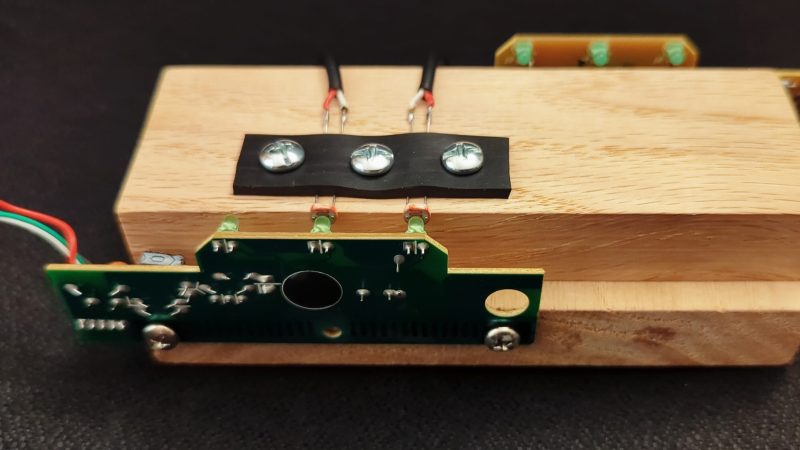
Aluminum extrusion, laser-cut panels, and custom PCBs for interfacing physical controls and displays make up the bulk of the build.

As the player is meant to be operating the ship on their own, the cockpit is imposing. All 152 controls and six screens are meaningful and will be needed to pilot the Halcyon Dawn, survive hostile actions, repel boarding attempts, mine and refine vast amounts of raw materials, and in general keep the ship running and intact until an autofactory can be deployed in orbit of a suitable planet to create a new home.

All easier said than done. It’s one thing to pilot and tweak a temperamental ship, but doing so while also performing damage control and thwarting a boarding attempt by manipulating life support is quite another. Want more details? Gameplay is documented here and the physical controls have their own library.

The product of a year of focused work, [Kevin] – now retired – pointed his decades of hardware and software experience at Halcyon Dawn after realizing one night that everything he needed to create it already existed. How this whole project came to be is also a tribute to the amazing tools and equipment that hobbyists and hackers of all kinds now have to turn an idea into something that actually exists in the world. Even so, it was a load of work he is not keen to repeat. Don’t miss the technical deep-dive and photo gallery of the build.

While the game itself — being a fan-made derivative of Scalzi’s work (and useless without the custom-made hardware console) — isn’t being released, [Kevin] has shared the underlying hardware framework it is built on. Enigma is an ESP32-based set of input and output PCBs made for integrating switches, knobs, displays, relays, and more with a Python library to make them easy to work with.

Starship simulators are a wonderful subset of projects, and every one is different from the last. Something about physical builds really works for them, and while we’ve seen a camper trailer converted to starship simulator [Kevin]’s project focuses the whole experience beautifully into the single-person console you see here. Watch a video of Halcyon Dawn running in an arcade-like “attract” mode embedded just below.

Continue reading “Behold The Most Beautifully Ambitious Starship Simulator Yet”

Building A Portable Weather Radar

If you run a large meteorology bureau, then you probably have access to a wonderful weather radar for scrying the heavens. The rest of us aren’t so lucky. If you find yourself bereft of such hardware, though, you could build your own, taking your lead from [Koakno]’s fine example.

The build uses a satellite dome salvaged from an old RV that [Koakno] scored for just $5. Specifically, a Winegard Carryout Anser GM-5000. The motorized parabolic dish was designed to track TV satellites, but here it’s been repurposed into a scanning radar antenna for X-band signals. It’s paired with a cheap SDR—you can use several on the market—which injects an 850 MHz signal, which is up-converted to 10.4 GHz by the low-noise block (LNB) in the GM-5000 and sprayed out towards the weather.

Echoes come back from rain, hail, and debris, and get down-converted by the LNB back into an 850 MHz signal that the SDR can capture. The echoes are then plotted on a Plan Position Indicator (PPI) display, showing what’s going on in the atmosphere around the dome. [Koakno] reckons detection ranges span out to 40 km for things like heavy rain, while a supercell hail core could be spotted at up to 60 km in the right conditions.

It’s worth noting something important, though. [Koakno] explains that this system is currently in violation of FCC regulations (and probably others around the world), and shouldn’t be used without the proper licenses to access given spectrum. It’s a useful study of how to build a weather radar, but perhaps not something you can just wire together and fire up without getting in a spot of bother.

If you’re a die-hard tornado chaser or you’ve just always longed to stare meaningfully at a PPI display, this could be the build for you. We’ve featured other DIY radars before, too. We’d also like to see yours, so when it’s done and written up, fire us a note on the tipsline!