Air Quality Surveillance For Whole Cities

Air quality is becoming a major issue these days, and not just for cities like Beijing and Los Angeles. It’s important for health, our environment, and our economy no matter where we live. To that end, [Radu] has been working on air quality monitors that will be widely deployed in order to give a high-resolution air quality picture, and he’s starting in his home city of Timisoara, Romania.

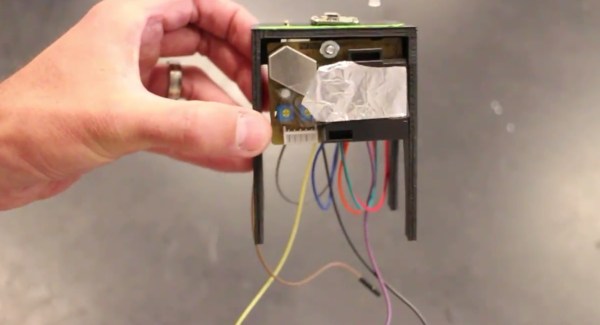
[Radu] built a similar device to measure background radiation (a 2014 Hackaday Prize Semifinalist), and another to measure air quality in several ways (a 2015 Hackaday Prize Finalist and a Best Product Finalist; winners will be announced next weekend). He is using the platforms as models for his new meter. The device will use a VOC air sensor and an optical dust sensor in a mobile unit connected to a car to gather data, and from that a heat map of air quality will be generated. There are also sensors for temperature, pressure, humidity, and background radiation. The backbone of the project is a smart phone which will upload the data to a server.

We’ve seen other air quality meters before as well, and even ones based around the Raspberry Pi,  but this one has a much broader range of data that it is acquiring. Its ability to be implemented as an array of sensors to gather data for an entire city is impressive as well. We can envision sensor networks installed on public transportation but to get to all parts of every neighborhood it would be interesting to team up with the Google Streetview Cars, Uber, or UPS.

Tricking An Ancient Protocol To Play Tunes

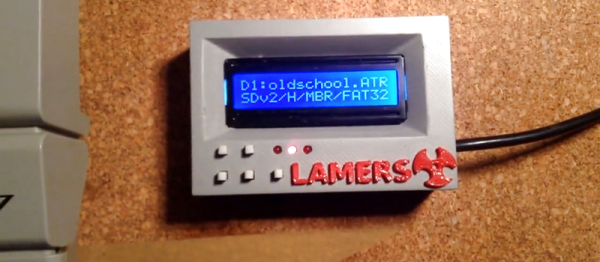
A lot of technological milestones were reached in 2007. The first iPhone, for example, was released that January, and New Horizons passed Jupiter later on that year. But even with all of these amazing achievements, Volvo still wasn’t putting auxiliary inputs on the stereo systems in their cars. They did have antiquated ports in their head units though, and [Kalle] went about engineering this connector to accommodate an auxiliary input.

The connector in question is an 8-pin DIN in the back, which in the days of yore (almost eight years ago) would have been used for a CD changer. Since CDs are old news now, [Kalle] made use of this feature for the hack. The first hurdle was that the CD changer isn’t selectable from the menu unless the head unit confirms that there’s something there. [Kalle] used an Arduino Nano to fool the head unit by simulating the protocol that the CD changer would have used. From there, the left and right audio pins on the same connector were used to connect the auxiliary cable.

If you have a nearly-antique Volvo like [Kalle] that doesn’t have an aux input and you want to try something like this, the source code for the Arduino is available on the project page. Of course, if you don’t have a Volvo, there are many other ways to go about hacking an auxiliary input into various other devices, like an 80s boombox or the ribbon cable on a regular CD player. Things don’t always go smoothly, though, so there are a few nonstandard options as well.

Spark Plug Lights The Darkness

When you have an idea, just go build it. That’s the approach that [GordsGarage] takes with most of his projects, and he’s back in the machine shop again. This time it’s with a rather unique oil candle that uses a spark plug as inspiration. We have to say, the results are on fire.

thumbThe spark plug candle was fashioned out of a single piece of 6061 aluminum. To create the scale model, first the stock metal hit the lathe to create the “insulator” section of the plug. From there, he milled in the hex bolt section, then it hit the lathe again to create the threaded section. The inside was bored out to create space for the wick and oil, and then the electrode was installed just above the flame.

This is a pretty impressive scale model and has a great finished look. The only thing that isn’t to scale is the gap for the electrode which is completely necessary to keep the candle from getting smothered. It’s an interesting, unique idea too, which is something that [GordsGarage] excels at. And, if you want to scale his model up a little bit, perhaps you can find some inspiration from this other candle.

RPiTX Turns Rasberry Pi Into Versatile Radio Transmitter

Since the discovery that some USB TV tuner dongles could be used to monitor radio waves across a huge amount of spectrum, the software-defined radio world has exploded with interest. The one limiting factor, though, has been that the dongles can only receive signals; they can’t transmit them. [Evariste Okcestbon, F5OEO] (if that is his real name! Ok c’est bon = Ok this is good) has written some software that will get you transmitting using SDR with only a Raspberry Pi and a wire.

There have been projects in the past that use a Pi to broadcast radio (PiFM), but this new software (RPiTX) takes it a couple steps further. Using just an appropriately-sized wire connected to one of the GPIO pins, the Raspberry Pi is capable of broadcasting using FM, AM, SSB, SSTV, or FSQ signals. This greatly increases the potential of this simple computer-turned-transmitter and anyone should be able to get a lot of use out of it. In the video demo below the break, [Evariste] records a wireless doorbell signal and then re-transmits it using just the Rasbperry Pi.

The RPiTX code is available on GitHub if you want to try it out. And it should go without saying that you will most likely need an amateur radio license of some sort to use most of these features, depending on your locale. If you don’t have a ham radio license yet, you don’t need one to listen if you want to get started in the world of SDR. But a ham license isn’t hard to get and at this point it shouldn’t take much convincing for you to get transmitting.

Continue reading “RPiTX Turns Rasberry Pi Into Versatile Radio Transmitter”

Strobe Light Slows Down Time

Until the 1960s, watches and clocks of all kinds kept track of time with mechanical devices. Springs, pendulums, gears, oils, and a whole host of other components had to work together to keep accurate time. The invention of the crystal oscillator changed all of that, making watches and clocks not only cheaper, but (in general) far more accurate. It’s not quite as easy to see them in action, however, unless you’re [noq2] and you have a set of strobe lights.

[noq2] used a Rigol DG4062 function generator and a Cree power LED as a high-frequency strobe light to “slow down” the crystal oscillators from two watches. The first one he filmed was an Accutron “tuning fork” movement and the second one is a generic 32,768 Hz quartz resonator which is used in a large amount of watches. After removing the casings and powering the resonators up, [noq2] tuned in his strobe light setup to be able to film the vibrations of the oscillators.

It’s pretty interesting to see this in action. Usually a timekeeping element like this, whether in a watch or a RTC, is a “black box” of sorts that is easily taken for granted. Especially since these devices revolutionized the watchmaking industry (and a few other industries as well), it’s well worthwhile to take a look inside and see how they work. They’re used in more than just watches, too. Want to go down the rabbit hole on this topic? Check out the History of Oscillators. Continue reading “Strobe Light Slows Down Time”

Tiny Radio Tracks Your Balloons

The name of the game in rocketry or ballooning is weight. The amount of mass that can be removed from one of these high-altitude devices directly impacts how high and how far it can go. Even NASA, which estimates about $10,000 per pound for low-earth orbit, has huge incentives to make lightweight components. And, while the Santa Barbara Hackerspace won’t be getting quite that much altitude, their APRS-enabled balloon/rocket tracker certainly helps cut down on weight.

Tracksoar is a 2″ x .75″ x .5″ board which weighs in at 45 grams with a pair of AA batteries and boasts an ATmega 328P microcontroller with plenty of processing power for its array of on-board sensors. Not to mention everything else you would need like digital I/O, a GPS module, and, of course, the APRS radio which allows it to send data over amateur radio frequencies. The key to all of this is that the APRS module is integrated with the board itself, which saves weight over the conventional method of having a separate APRS module in addition to the microcontroller and sensors.

As far as we can see, this is one of the smallest APRS modules we’ve ever seen. It could certainly be useful for anyone trying to save weight in any high-altitude project. There are a few other APRS projects out there as well but remember: an amateur radio license will almost certainly be required to use any of these.

Laser Rangefinder Brought To Life With Arduino

Range finders are amazing tools for doing pretty much anything involving distance calculations. Want to blink some lights when people are nearby? There’s a rangefinder for that. Need to tell how far away the next peak of a mountain range is? There’s a rangefinder for that. But if you’re new to range finders and want one that’s hackable and configurable, look no further than the SF02/F rangefinder with the Arduino shield, and [Laser Developer]’s dive into what this pair can do.

Once the rangefinder and shield have been paired is when the magic really starts to happen. Using USB, the Arduino can instantly report a huge amount of raw data coming from the rangefinder. From there, [Laser Developer] shows us how to put the device into a “settings” mode which expands the capabilities of the rangefinder even more. The data can be dumped into a graph, for example, which can show trends between distance, laser strength, and many other data sets. [Laser Developer] goes one step further and demonstrates how to use this to calculate the speed of light, but from there pretty much anything else is possible as well.

And while you can just buy a rangefinder off the shelf, they are fairly limiting in their features and can cost exponentially more. This is a great start into using a tool like this, especially if you need specific data or have a unique application. But, if laser range finding isn’t for you or if this project is too expensive, maybe this $5 ultrasonic rangefinder will work better for your application.