A Chess AI In Only 4K Of Memory

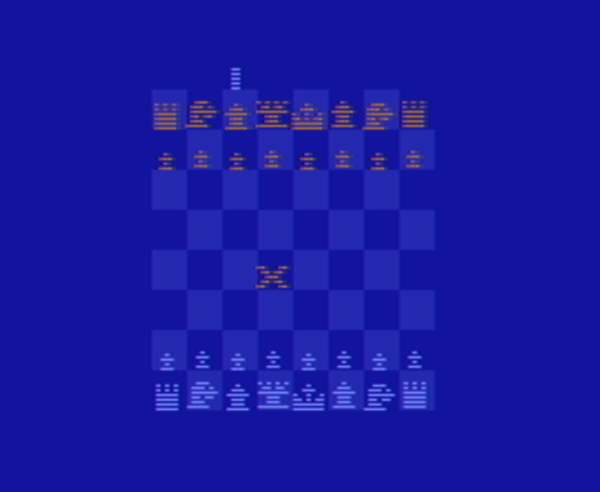
The first computer to ever beat a reigning chess world champion didn’t do so until 1996 when a supercomputer built by IBM beat Garry Kasparov. But anyone who wasn’t a chess Grandmaster could have been getting beaten by chess programs as early as 1979 when Atari released one of the first ever commercially-available chess video games for the Atari 2600. The game was called Video Chess and despite some quirky gameplay it is quite impressive that it was able to run on the limited Atari hardware at all as [Oscar] demonstrates.

The first steps of getting under the hood of this program involved looking into the mapping of the pieces and the board positions in memory. After analyzing some more of the gameplay, [Oscar] discovered that the game does not use trees and nodes to make decisions, likely due to the memory limitations, but rather simulates the entire game and then analyzes it to determine the next step. When the game detects that there are not many pieces left on the board it can actually increase the amount of analysis it does in order to corner the opposing king, and has some unique algorithms in place to handle things like castling, finishing the game, and determining valid movements.

Originally it was thought that this engine couldn’t fit in the 4K of ROM or work within the 128 bytes of system memory, and that it was optimized for the system after first developing a game with some expanded capabilities. The game also has a reputation for making illegal moves in the higher difficulty settings although [Oscar] couldn’t reproduce these bugs. He also didn’t get into any of the tricks the game employed just to display all of the pieces on the screen. The AI in the Atari game was a feat for its time, but in the modern world the Stockfish open-source chess engine allows for a much more expanded gameplay experience.

Easy Modifications For Inexpensive Radios

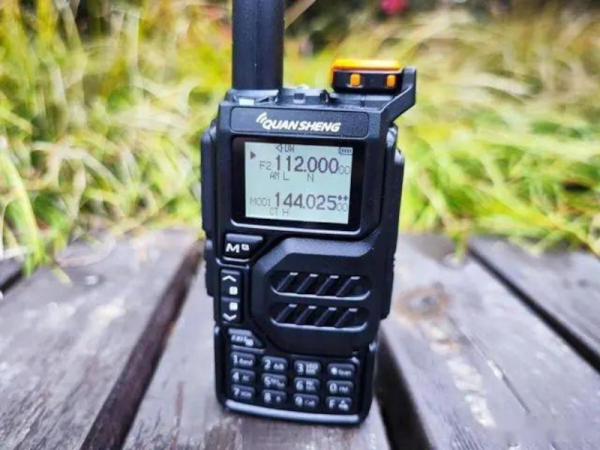
Over the past decade or so, amateur radio operators have benefited from an influx of inexpensive radios based around a much simpler design than what was typically commercially available, bringing the price of handheld dual-band or GMRS radios to around $20. This makes the hobby much more accessible, but they have generated some controversy as they tend to not perform as well and can generate spurious emissions and other RF interference that a higher quality radio might not create. But one major benefit besides cost is that they’re great for tinkering around, as their simplified design is excellent for modifying. This experimental firmware upgrade changes a lot about this Quansheng model.

With the obligatory warning out of the way that modifying a radio may violate various laws or regulations of some localities, it looks like this modified firmware really expands the capabilities of the radio. The chip that is the basis of the radio, the BK4819, has a frequency range of 18-660 MHz and 840-1300 MHz but not all of these frequencies will be allowed with a standard firmware in order to comply with various regulations. However, there’s typically no technical reason that a radio can’t operate on any arbitrary frequency within this range, so opening up the firmware can add a lot of functionality to a radio that might not otherwise be capable.

Some of the other capabilities this modified firmware opens up is the ability to receive in various other modes, such as FM and AM within the range of allowable frequencies. To take a more deep dive on what this firmware allows be sure to check out the original GitHub project page as well, and if you’re curious as to why these inexpensive radios often run afoul of radio purists and regulators alike, take a look at some of the problems others have had in Europe.

Forgotten Chemical Photography

Much to the chagrin of Eastman Kodak, the world has moved on from chemical photography into the realm of digital, thanks to the ease of use and high quality of modern digital cameras. There are a few photographers here and there still using darkrooms and various chemical processes to develop film, and the most common of these use some type of chemistry based on silver to transfer images to paper. There are plenty of alternatives to silver, though, each with their unique style and benefits, like this rarely-used process that develops film using platinum.

This process, notable for its wide tonal range, delicate highlights, and rich blacks, produces only black and white photographs. But unlike its silver analog, it actually embeds the image into the paper itself rather than holding the image above the paper. This means that photographs developed in this manner are much more resilient and can last for much longer. There are some downsides to this method though, namely that it requires a large format camera and the negatives can’t be modified to produce various sized images in the same ways that other methods allow for. Still, the results of the method are striking for anyone who has seen one of these images in person.

As to why this method isn’t more common, [Matt Locke] describes a somewhat complicated history involving the use of platinum to create commercial fertilizers, which is an identical process to that of the creation of explosives, which were needed in great numbers at the same time this photographic method was gaining in popularity. While the amount of research and development that goes into creating weapons arguably generates some ancillary benefit for society, the effects of war can also serve to divert resources away from things like this.

Is This The World’s Largest Dot Matrix Printer?

[RyderCalmDown] was watching a road painting vehicle lay down fresh stripes on the road one day and started thinking about the mechanism that lets it paint stripes in such a precise way. Effectively the system that paints the interspersed lines acts as a dot matrix printer that can only print at a single frequency. With enough of these systems on the same vehicle, and a little bit more fine control of when the solenoids activate and deactivate, [RyderCalmDown] decided to build this device on the back of his truck which can paint words on a roadway as he drives by. (Video, embedded below.)

Of course, he’s not using actual paint for this one; that might be prohibitively expensive and likely violate a few laws. Instead he’s using a water-based system which only leaves temporary lettering on the pavement. To accomplish this he’s rigged up a series of solenoids attached to a hitch-mounted cargo rack. A pump delivers water to each of the solenoids, and a series of relays wired to a Raspberry Pi controls the precise timing needed to make sure the device can print readable letters in much the same way a dot matrix printer works. There’s an algorithm running that converts the inputted text to the pattern needed for the dot matrix, and after a little bit of troubleshooting it’s ready for print.

Even though the printer works fairly well, [RyderCalmDown] had a problem thinking of things to write out on the roadways using this system, but it’s an impressive build based around a unique idea nonetheless. Dot matrix printers, despite being mostly obsolete, have a somewhat vintage aesthetic that plenty of people still find desirable and recreate them in plenty of other ways as well, like this 3D printer that was modified to produce dot matrix artwork.

Continue reading “Is This The World’s Largest Dot Matrix Printer?”

Blood Pressure Monitor For Under $1

Medical equipment is not generally known for being inexpensive, with various imaging systems usually weighing in at over a million dollars, and even relatively simpler pieces of technology like digital thermometers, stethoscopes, and pulse oximeters coming in somewhere around $50. As the general pace of technological improvement continues on we expect marginal decreases in costs, but every now and then a revolutionary piece of technology will drop the cost of something like a blood pressure monitor by over an order of magnitude.

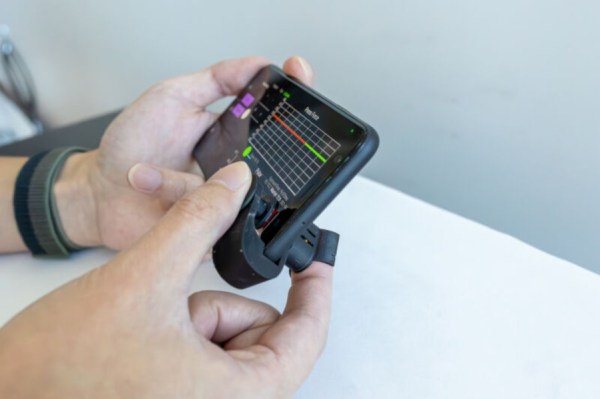
Typically a blood pressure monitor involves a cuff that pressurizes against a patient’s arm, and measures the physical pressure of the blood as the heart forces blood through the area restricted by the cuff. But there are some ways to measure blood pressure by proxy, instead of directly. This device, a small piece of plastic with a cost of less than a dollar, attaches to a smartphone near the camera sensor and flashlight. By pressing a finger onto the device, the smartphone uses the flashlight and the camera in tandem to measure subtle changes in the skin, which can be processed in an app to approximate blood pressure.

The developers of this technology note that it’s not a one-to-one substitute for a traditional blood pressure monitor, but it is extremely helpful for those who might not be able to afford a normal monitor and who might otherwise go undiagnosed for high blood pressure. Almost half of adults in the US alone have issues relating to blood pressure, so just getting information at all is the hurdle this device is attempting to overcome. And, we’ll count it as a win any time medical technology becomes more accessible, more inexpensive, or more open-source.

Modular Keyboard And Custom Game Controller

Most video games, whether on console or PC, have standardized around either a keyboard and mouse or an analog controller of some sort, with very little differences between various offerings from the likes of Sony, Microsoft, Nintendo, or even Valve. This will get most of us through almost all video games, but for those looking to take their gameplay up a notch or who are playing much more complex games, certain specialized controllers are available, but they might not meet everyone’s specific needs. Thanks to this custom, modular keyboard anyone should be able to make exactly the controller they need.

The device features a grid of 15 interfaces where modules like buttons, potentiometers, encoders, and joysticks can be placed. Each module can be customized to a significant extent on their own, and they can be placed anywhere on the grid. The modules themselves can be assigned to trigger keyboard presses or gamepad motions depending on the needs of the user. A Raspberry Pi handles the inputs and translates them to the computer, so in that regard it functions no differently than a standard keyboard or gamepad would. Programming is done by sending commands via a USB serial port, with the ability to save various configurations as well.

The modular controller is open-source in terms of hardware and software, with easy assembly using through-hole components and a customizable 3D printed cover for anyone looking to make their own. The project’s creator [Daniel] had flight simulators in mind when designing the device, which often benefit from having more specialized controllers, but any game with lots of specific inputs from Starcraft to League of Legends could benefit from a custom controller or keyboard like this. Flight simulators are more often the targets of specialized and unique controls, though, like this custom yoke or this physical control panel.

Bringing Back The Minitel

If you didn’t live in France in the 80s or 90s, it’s likely you missed out on one of the most successful computer networks in existence prior to the modern Internet. Known as Minitel, it was an online service available over existing phone lines that offered a connected computer terminal for users to do most things we associate with the modern world, such as booking travel, viewing news, looking up phone numbers, and plenty of other useful activities. While a lot of the original system was never archived, there are still some efforts to restore some of its original functionality like this MiniMit.

The build requires either an original or a recreation of a Minitel terminal in all its 80s glory, but pairs an ESP32 to support modern network connectivity. The ESP32 interfaces with the Minitel’s DIN socket and provides it with a translation layer between WiFi and the networking type that it would have originally expected to see from the telephone lines. Two of the original developers of Minitel are working on restoring some of the services that would have been available originally as well, which means that the entire system is being redeveloped and not just the original hardware.

We’ve mentioned that this system was first implemented in the 80s, but the surprising thing is that even well after broadband Internet would have been available to most people in France, the Minitel system still had widespread use, not being fully deactivated until 2012. They remain popular as inspiration for other projects as well, like this one which was brought a little more up-to-date with the help of a modern display and Raspberry Pi.