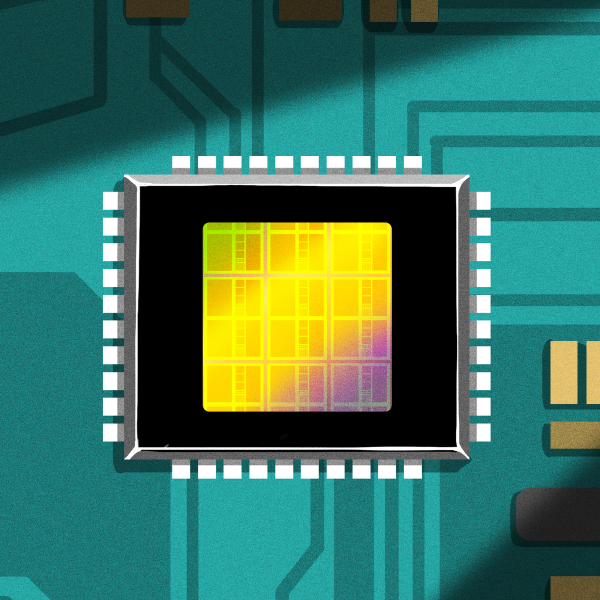
Jan Czochralski And The Silicon Revolution

If you were to travel back in time to the turn of the previous century and try to convince the average person that the grains of sand on just about any beach would be the basis of an industry worth hundreds of billions of dollars within 100 years, they’d probably have thought you were crazy. Aside from being coarse, rough, and irritating, sand is everywhere, and convincing anyone of its value would be a hard sell, unless your interlocutor was a real estate visionary with an appreciation of the future value of seaside property and a lot of patience.

Fast forward to our time, and we all know the value of the material that comes from common quartz sand: silicon, specifically the ultra-purified crystals of silicon that end up as the wafers we depend on to build the circuitry of life. The trip from beach to chip foundry is a long and non-obvious one which would not have been possible without the insights of an undistinguished Polish student and one-time druggist who discovered the process that made the Information Age possible: Jan Czochralski.

Continue reading “Jan Czochralski And The Silicon Revolution”

Ubuntu Update Hack Chat

Join us on Wednesday, July 22 at noon Pacific for the Ubuntu Update Hack Chat with Rhys Davies and Alan Pope!

Everyone has their favorite brands, covering everything from the clothes they wear to the cars they drive. We see brand loyalty informing all sorts of acquisition decisions, not only in regular consumer life but in technology, too. Brand decisions sort people into broad categories like Mac versus PC, or iPhone versus Android, and can result in spirited discussions of the relative merits of one choice over the others. It’s generally well-intentioned, even if it gets a bit personal sometimes.

Perhaps no choice is more personal in hacker circles than which Linux distribution to use. There are tons to choose from, each with their various features and particular pros and cons. Ubuntu has become a very popular choice for Linux aficionados, attracting more than a third of the market. Canonical is the company behind the Debian-based distro, providing editions that run on the desktop, on servers, and on a variety of IoT devices, as well as support and services for large-scale users.

To fill us in on what’s new in the world of Ubuntu, Canonical product manager Rhys Davies and developer advocate Alan Pope will stop by the Hack Chat this week. They’ll be ready to answer all your questions about the interesting stuff that’s going on with Ubuntu, including the recently announced Ubuntu Appliances, easy to install, low maintenance images for Raspberry Pis and PCs that are built for security and simplicity. We’ll also talk about snaps, desktops, and whatever else crops up.

join-hack-chatOur Hack Chats are live community events in the Hackaday.io Hack Chat group messaging. This week we’ll be sitting down on Wednesday, July 22 at 12:00 PM Pacific time. If time zones have you down, we have a handy time zone converter.

Click that speech bubble to the right, and you’ll be taken directly to the Hack Chat group on Hackaday.io. You don’t have to wait until Wednesday; join whenever you want and you can see what the community is talking about. Continue reading “Ubuntu Update Hack Chat”

Hackaday Links Column Banner

Hackaday Links: July 19, 2020

Care to flex your ethical hacker muscles? The Defense Advanced Research Projects Agency, better known as DARPA, is running its first-ever bug-bounty program. The event is called “Finding Exploits to Thwart Tampering”, or FETT — get it? Bounty hunter? Fett? — and is designed to stress-test security hardware developed through DARPA’s System Security Integration Through Hardware and Firmware, or SSITH. Tortured backronyms and pop culture references aside, FETT will start this month and go through September. This is not an open challenge per se; rather, the Red Team will be coordinated by crowdsourced security research company Synack, who has called for security researchers to sign on.

The Linux kernel development team has decided to join the trend away from insensitive terminology like “master/slave” and “blacklist/whitelist” in coding style. A July 4 proposal by kernel maintainer Dan Williams goes into some detail on the logic of making the change, and it’s quite convincing stuff. It’s hard to argue with the fact that code reviewers can easily be distracted by coding style changes, so replacing terms that have become lightning rods only makes sense. Linus himself has signed off on the changes for all future code; the current terminology will only be allowed for purposes of maintaining older code.

Some stories just leap off the screen when you’re scanning headlines, and a story with the term “narco-antennas” practically begs further investigation. It turns out that the drug cartels in Mexico (and probably elsewhere, but the story focused on Mexico) are quite sophisticated in terms of communications technology. Eschewing cell phones for some of their communication needs for obvious reasons, they still apparently leverage the cell system by installing their own transceivers at cell sites. This can lead to some tense moments for the engineers who maintain legitimate gear at these sites; the story above recounts one hapless tech who powered down a site to make some repairs only to be confronted by armed men upset about the loss of their radios. It’s a fascinating look at the underworld and their technology, and we can’t help but feel for the men and women who have to face down these criminals just to do their jobs.

Way back in January — remember January? — we kicked off the 2020 Hack Chat series with a fellow named Alberto Caballero, principal investigator of the Habitable Exoplanet Hunting Project. At the time, I was blown away by the fact that the tiny changes in intensity caused by planets transiting across their star’s face were detectable on Earth with instruments an amateur astronomer could easily afford. And now, the project’s crowdsourced planet hunters have hit pay dirt, with the discovery of a Saturn-sized exoplanet in orbit within the habitable zone around star GJ 3470, also known as Gliese 3470, a red dwarf about 30 parsecs away in the constellation Cancer. Their paper is still in preprint and hasn’t been peer-reviewed yet, but it’s exciting to see this kind of citizen science being done, and we’d like to congratulate the team on their achievement and wish them continued luck in their search for “Earth 2.0”

And finally, if you can’t stand the idea that future archaeologists may someday pore over your code in an attempt to understand the digital lives of their long-dead forebears, then you might want to skip this story about how GitHub shipped 21 terabytes of open-source code to cold storage. The destination for the data, contained on reels of archive film and shipped on two pallets, is the world’s long-term memory: the Artic World Archive on the island of Svalbard. Perhaps better known for the Svalbard Seed Vault, where the genetic diversity of the world’s plants is stored, the Artic Code Vault is in a nearby abandoned coal mine and set deep within the permafrost. The rationale for making the effort to preserve code makes for some interesting reading, but we can’t help but feel that like the graffitists of Pompeii, if we’d known someone would be reading this stuff in a thousand years, we might have edited out a few things.


A Tin Can Modem, Just For Fun

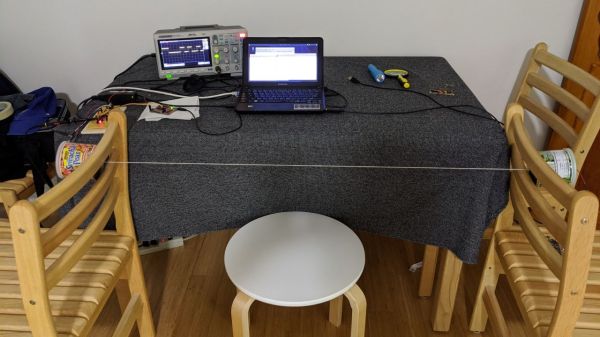
Anyone old enough to fondly recall the “bleep-burp-rattle” sequence of sounds of a modem negotiating a connection over a phone line probably also remembers the simple “tin-can telephone” experiment, where a taut string transmits sound vibrations from the bottom of one tin can to another.  This tin can modem experiment puts both of those experiences together in a single project.

As [Mike Kohn] notes, this project was harder than it would seem that it should be. He actually had a much harder time getting the tin can phone part of the project optimized than getting the electronics sorted out, resulting in multiple tries with everything from the canonical tin cans to paper coffee cups before eventually settling on a pair of cardboard nut cans, the kinds with the metal bottoms. Linked together with a length of kite string — dental floss didn’t work — [Mike] added a transmitter on one end and a receiver on the other.

The transmitter used an ATtiny 2313 and everyone’s favorite audio amplifier, the LM386, while the receiver sported an electret mike preamp board, an LM566 tone decoder, and an MSP430 microcontroller. The modulation scheme was as simple as possible — a 400 Hz tone whose length varies whether it’s a one or a zero, or a stop or start bit. Connected to a pair of terminal programs, [Mike] was able to send his name over the wire string at what he calculates to be six or seven baud.

This project has all the hallmarks of lockdown boredom, but we don’t care because it’s good fun and a great learning opportunity, particularly for the young ones. There’s plenty of room for optimization, too — maybe it could even get fast enough for the Hackaday Retro 300-baud challenge.

Continue reading “A Tin Can Modem, Just For Fun”

The Mother(board) Of All CNC Controllers

If you’re building a CNC machine from scratch, the number of decisions you have to make is nearly boundless. Metal or wood construction? Welded or bolted? Timing belts or lead screws? And even once the mechanical bits are sorted, you still face a universe of choices in terms of control electronics. That’s where something like this modular CNC controller could really prove to be a game-changer.

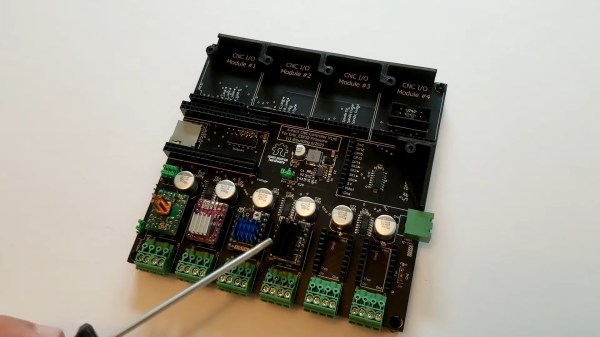
The idea behind [Barton Dring]’s latest creation started with his port of GRBL to the ESP32. In fact, the current controller bears a strong family resemblance to his version 1.0 dev board, with a few conspicuous and intriguing additions. First, everything is modular — the main PCB is basically a motherboard with little more than a 5-volt power supply and some housekeeping electronics, plus a lot of headers. There’s support for up to six channels of steppers, either directly on the board with Pololu-style modules or as external drivers using pluggable screw terminal blocks. There’s also room for five IO modules; the current collection of modules includes a four-channel switch input, a relay output, an RS-485 module and a 0-10-V interface for talking to a variable frequency drive (VFD) spindle controllers, and buffered 5-V output module. The best part is that the IO module spec is completely open, so designing custom modules should be a snap.

The video below gives a quick tour of the controller. We’re really impressed with the thought that went into this, and we’ll venture a guess that having something like this available is going to kickstart a lot of stalled CNC machine projects. We can think of one shop that finally lost its last excuse for making the move.

Continue reading “The Mother(board) Of All CNC Controllers”

No Assembly Required For This Compliant Mechanism Dial Indicator

If you’ve ever had the good fortune — or, after a shop mishap, the misfortune — to see the insides of a dial indicator, you’ll know the workings of these shop essentials resemble nothing so much as those of a fine Swiss watch. The pinions, gears, and springs within transmit the slightest movement of the instrument’s plunger to a series of dials, making even the tiniest of differences easy to spot.

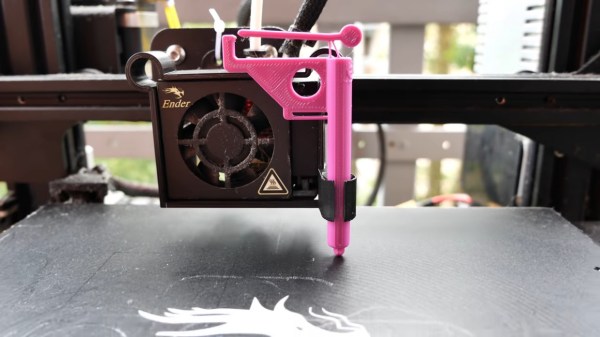
Not every useful dial indicator needs to have those mechanical guts, nor even a dial for that matter. This compliant mechanism 3D-printed dial-free indicator is perfect for a lot of simple tasks, including the bed leveling chores that [SunShine] designed it for. Rather than print a bunch of gears and assemble them, [SunShine] chose to print the plunger, a fine set of flexible linkage arms, and a long lever arm to act as a needle. The needle is attached to a flexible fulcrum, which is part of the barrel that houses the plunger. Slight movements of the plunger within the barrel push or pull on the needle, amplifying them into an easily read deflection. When attached to the head of a 3D-printer and scanned over the bed, it’s easy to see even the slightest variation in height and make the corresponding adjustments. Check it out in the video below.

We’re big fans of compliant mechanisms, seeing them in everything from robot arms and legs to thrust vectoring for an RC plane. This might look like something from a cereal box, and it certainly doesn’t have the lasting power of a Starrett or Mitutoyo, but then again it costs essentially nothing, and we like that too.

Continue reading “No Assembly Required For This Compliant Mechanism Dial Indicator”

Exposing Computer Monitor Side-Channel Vulnerabilities With TempestSDR

Having been endlessly regaled with tales of side-channel attacks and remote exploits, most of us by now realize that almost every piece of gear leaks data like a sieve. Everything from routers to TVs to the power supplies and cooling fans of computers can be made to give up their secrets. It’s scary stuff, but it also sounds like a heck of a lot of fun, and with an SDR and a little software, you too can get in on the side-channel action.

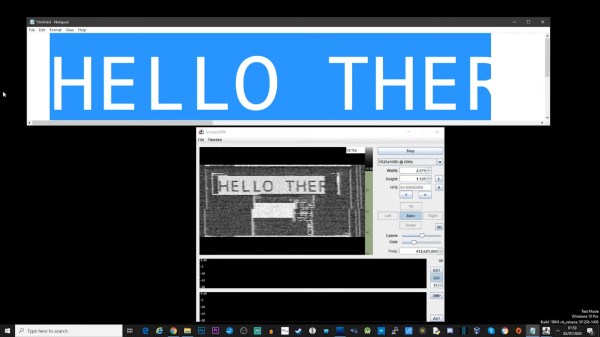
Coming to us via software-defined radio buff [Tech Minds], the video below gives a quick tour of how to snoop in on what’s being displayed on a monitor for almost no effort or expense. The software that makes it possible is TempestSDR, which was designed specifically for the job. With nothing but an AirSpy Mini and a rubber duck antenna, [Tech Minds] was able to reconstruct a readable black and white image of his screen at a range of a few inches; a better antenna and some fiddling might improve that range to several meters. He also shares a trick for getting TempestSDR set up for all the popular SDRs, including SPRplay, HackRF, and RTL-SDR.

Learning what’s possible with side-channel attacks is the key to avoiding them, so hats off to [Tech Minds] for putting together this simple, easy-to-replicate demo. To learn even more, listen to what [Samy Kamkar] has to say about the subject, or check out where power supplies, cryptocurrency wallets, and mixed-signal microcontrollers are all vulnerable.

Continue reading “Exposing Computer Monitor Side-Channel Vulnerabilities With TempestSDR”