Arduino Nano Runs Battery Spot Welder

Soldering might look like a tempting and cheap alternative when building or repairing a battery pack, but the heat of the iron could damage the cell, and the resulting connection won’t be as good as a weld. Fortunately, though, a decent spot welder isn’t that tough to build, as [KaeptnBalu] shows us with his Arduino-controlled battery spot welder.

spot_welder_zoomWhen it comes to delivering the high currents necessary for spot welding, the Arduino Nano is not necessarily the first thing that comes to mind. But the need for a precisely controlled welding pulse makes the microcontroller a natural for this build, as long as the current handling is outsourced. In [KaeptnBalu]’s build, he lets an array of beefy MOSFETs on a separate PCB handle the welding current. The high-current wiring is particularly interesting – heavy gauge stranded wire is split in half, formed into a U, tinned, and each leg gets soldered to the MOSFET board. Welding tips are simply solid copper wire, and the whole thing is powered by a car battery, or maybe two if the job needs extra amps. The video below shows the high-quality welds the rig can produce.

Spot welders are a favorite on Hackaday, and we’ve seen both simple and complicated builds. This build hits the sweet spot of complexity and functionality, and having one on hand would open up a lot of battery-hacking possibilities.

Continue reading “Arduino Nano Runs Battery Spot Welder”

What Lies Beneath: The First Transatlantic Communications Cables

For some reason, communications and power infrastructure fascinates me, especially the long-haul lines that move power and data over huge distances. There’s something about the scale of these projects that really gets to me, whether it’s a high-tension line marching across the countryside or a cell tower on some remote mountain peak. I recently wrote about infrastructure with a field guide that outlines some of the equipment you can spot on utility poles. But the poles and wires all have to end at the shore. Naturally we have to wonder about the history of the utilities you can’t see – the ones that run under the sea.

Continue reading “What Lies Beneath: The First Transatlantic Communications Cables”

Tiny Tea Timer For Your Perfect Cuppa

If you’re serious about your tea, you know that the line between a perfect brew and over-steeped dreck is a fine one. Seconds can make a difference, and for the tinkering tea drinker, this might lead you to build a tiny timer with just the features it needs to achieve tea perfection.

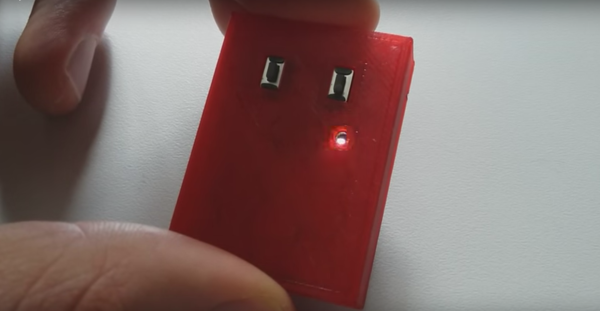
The circuit that tea-loving [acidbourbon] came up with for his timer is simplicity itself. It’s just an ATtiny25, an  LED, two pushbutton switches and a piezo buzzer on one side of the PCB, with a coin battery on the flip side. The battery holder is an interesting design – a couple of rows of pin headers and a bit of springy metal. The user interface is as simple as the circuit – the buttons increment the time either one or ten minutes. The timer starts right away, the LED heartbeat counts down the seconds, and a distinctly British tune announces when it’s time for tea.

One possible improvement might be to have the LED flash the number of minutes remaining rather than just a single pulse heartbeat. That would be good feedback that you entered the right time in the first place. Other than that, it’s small enough to be handy, does just one job, and does it well – sounds like good design to us. Of course, if you want to complicate it a bit, you could always automate the tea steeping process.

Continue reading “Tiny Tea Timer For Your Perfect Cuppa”

Tiny Raspberry Pi Shield For High-Quality RF Signals

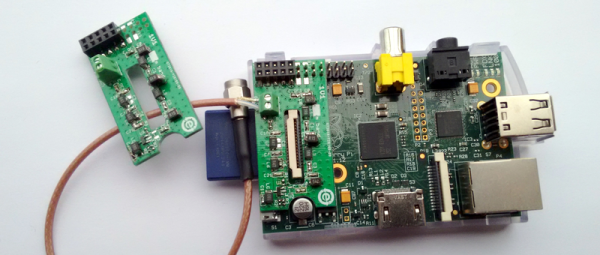
Among its many tricks, the Raspberry Pi is capable of putting clock signals signal out on its GPIO pins, and that turns out to be just the thing for synthesizing RF signals in the amateur radio bands. What [Zoltan] realized, though, is that the resulting signals are pretty dirty, so he came up with a clever Pi shield for RF signal conditioning that turns a Pi into a quality low-power transmitter.

[Zoltan] stuffed a bandpass filter for broadband noise, a low-pass filter for harmonics, and a power amplifier to beef up the signal a bit into a tiny shield that is cleverly engineered to fit any version of the Pi. Even with the power amplifier, the resulting transmitter is still squarely in the realm of QRP, and the shield is optimized for use as a WSPR beacon on the 20-meter band. But there’s plenty of Pi software available to let hams try other modes, including CW, FM, SSB, and even SSTV, and other signal conditioning hardware for different bands.

Yes, these are commercially available products, but even if you’re not in the market for a shield like this, or if you want to roll your own, there’s a lot to learn from [Zoltan]’s presentation at the 2015 TAPR Digital Communications Conference (long video below). He discusses the difficulties encountered getting a low-profile shield to be compatible with every version of the Pi, and the design constraints that led to the decision to use SMT components.

Continue reading “Tiny Raspberry Pi Shield For High-Quality RF Signals”

Hacker Straightens Own Teeth

So you say your wonky smile has you feeling a bit self-conscious? And that your parents didn’t sock away a king’s ransom for orthodontia? Well, if you have access to some fairly common fab-lab tools, and you have the guts to experiment on yourself, why not try hacking your smile with DIY braces?

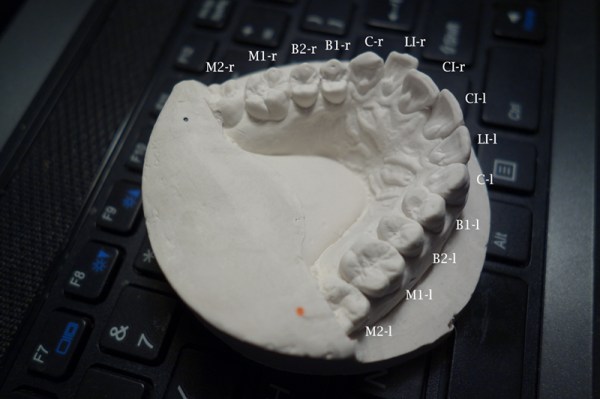
First of all: just – don’t. Really. But if you’re curious about how [Amos Dudley] open-sourced his face, this is one to sink your teeth into. A little research showed [Amos] how conventional “invisible” braces work: a 3D model is made of your mouth, each tooth is isolated in the model, and a route from the current position to the desired position is plotted. Clear plastic trays that exert forces on the teeth are then 3D printed, and after a few months of nudging teeth around, you’ve got a new smile. [Amos] replicated this hideously expensive process by creating a cast of his teeth, laser scanning it, manipulating the teeth in 3D modeling software, and 3D printing a series of intermediate choppers. The prints were used to vacuum mold clear plastic trays, and with a little Dremel action they were ready to wear. After 16 weeks of night and day wear, the results are pretty amazing – a nicely aligned smile, and whiter teeth to boot, since the braces make great whitening trays.

Considering how badly this could have turned out, we’ve got to hand it to [Amos] for having the guts to try this. And maybe he’s onto something – after all, we’ve advocated for preemptive 3D scanning of our bodies recently, and what [Amos] did with this hack is a step beyond that.

[LupusMechanicus], thanks for the tip!

Stretchable Traces For Flexible Circuits

Electronic components are getting smaller and smaller, but the printed circuit boards we usually mount them on haven’t changed much. Stiff glass-epoxy boards can be a limiting factor in designing for environments where flexibility is a requirement, but a new elastic substrate with stretchable conductive traces might be a game changer for wearable and even implantable circuits.

qxMo1DResearchers at the Center for Neuroprosthetics at the École Polytechnique Fédérale de Lausanne are in the business of engineering the interface between electronics and the human nervous system, and so have to overcome the mismatch between the hardware and wetware. To that end, [Prof. Dr. Stéphanie P. Lacour]’s lab has developed a way to apply a liquid metal to polymer substrates, with the resulting traces capable of stretching up to four times in length without cracking or breaking. They describe the metal as a partially liquid and partially solid alloy of gallium, with a gold added to prevent the alloy from beading up on the substrate. The applications are endless – wearable circuits, sensors, implantable electrostimulation, even microactuators.

Looks like progress with flexibles is starting to pick up, what with the conductive silicone and flexible phototransistors we’ve covered recently. We’re excited to see where work like this leads.

Continue reading “Stretchable Traces For Flexible Circuits”

Machine Shop Soaps Are Good, Clean Learning Fun

At first glance, it’s easy to dismiss the creation of custom bath soaps as far outside the usual Hackaday subject matter, and we fully expect a torrent of “not a hack” derision in the comments. But to be able to build something from nothing, a hacker needs to be able to learn something from nothing, and there is plenty to learn from this hack.

On the face of it, [Gord] is just making kitschy custom bath soaps for branding and promotion. Cool soaps, to be sure, and the drop or two of motor oil and cutting fluid added to each batch give them a little machine shop flair. [Gord] experimented with different dyes and additives over multiple batches to come up with a soap that looked like machined aluminum; it turns out, though, that adding actual aluminum to a mixture containing lye is not a good idea. Inadvertent chemical reactions excepted, [Gord]’s soaps and custom wrappers came out great.

So where’s the hack? In stepping way outside his comfort zone of machining and metalwork, [Gord] exposed himself to new materials, new techniques, and new failure modes. He taught himself the basics of mold making and casting, how to deal with ultra-soft materials, the chemistry of the soap-making process, working out packaging and labeling issues, and how to deal with the problems that come from scaling up from prototype to production. It may have been “just soap”, but hacks favor the prepared mind.