Even DOOM Can Now Run DOOM!

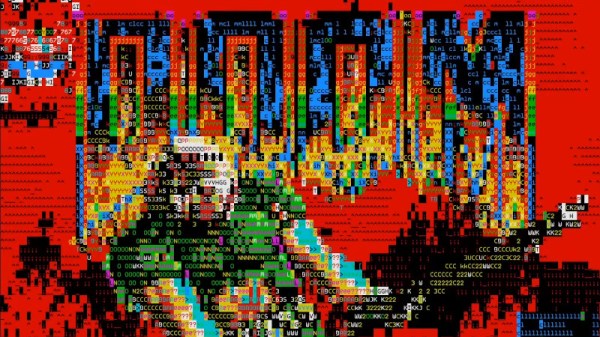
For years now, the standard test of any newly hacked piece of hardware has been this: can it run DOOM? id Software’s 1993 classic first-person shooter has appeared on everything, but here’s one from [kgsws] that’s a bit special. It’s DOOM, running inside DOOM itself.

So how has this feat been achieved? There’s a code execution exploit inside the original DOS DOOM II executable, and that has been used to run the more modern Chocolate Doom within the original. It appears as an in-game texture, giving an odd effect as if it’s being watched in a cinema.

The video below the break shows the game-in-game in action, but the real value lies in its in-depth description of the exploit, that takes us through some of the inner workings of the game and ably explains what’s going on. It finishes up with a specially made cinema WAD in which to play DOOM-in-DOOM, and even Hexen-in-DOOM. Pick up your trusty chainsaw, it’s going to be a long night.

Continue reading “Even DOOM Can Now Run DOOM!”

Burn Pictures On A CD-R, No Special Drive Needed

When we routinely carry devices holding tens or hundreds of gigabytes of data, it’s sometimes a shock to remember that there was once a time when 650 MB on a CD was a very big deal indeed. These now archaic storage media came first as silver pre-recorded CD-ROMs, then later as recordable CD-Rs. Most people eventually owned CD writer drives, and some fancy ones came with the feature of etching pictures in the unused portions of the disc.

Haven’t got a fancy drive and desire an etched CD-R? No worries, [arduinocelentano] has a solution, in software which writes a disk image for a standard CD writer whose data makes the visible image on the disc.

CD-Rs have a thin layer of phthalate dye sandwiched between the polycarbonate disc and a silvered layer of lacquer. They’re often gold coloured, but the silvering is in fact just aluminium. The data is encoded as a series of pits and lands crested by the laser vapourising small portions of the dye to make holes.

The code creates a data structure of a standard CD-ROM session which doesn’t contain any usable data, instead whose pits and lands are arranged to form the image. You can find it all in a GitHub repository, and have a go at creating your own offerings. We would have made a Wrencher disc for our pictures, but sadly for some of us who were once in the thick of it we don’t have any CD-Rs any more.

Your Console, Your Cartridge, You Choose? Nintendo Faces A Challenge

If you read our articles, you’ll notice that we will usually feature images related to the subjects we talk about. If they came from another source and they’re not CC-licensed or similar then they are the property of someone else but we are using them under a doctrine known as fair use. Excerpts of copyrighted material may be used under fair use for the purposes of such things as journalistic reporting, so for example we can use a copyrighted picture of Captain America were we to write about Marvel superheroes. Some content owners still try to stop this, and it’s one of them that [Linus Tech Tips] has in their sights as they have published a guide to running Nintendo Switch games on a Steam Deck without they believe giving any justifiable cause for the notoriously litigious game giant to take action. It’s full of carefully blurred Nintendo IP, and there is no coverage of pirate software downloads.

On one hand it’s about a heavy-handed console developer taking down small online content producers, but there’s another angle which is far more relevant to the hardware community who read Hackaday. It also has application in the field of software emulation, because while the console manufacturer would prefer to stop all but their own unmodified hardware running a game there should be nothing to stop a legally owned piece of software or hardware being run in any way its owner chooses. This is the central thesis explored at the end of the video, and the gimmick of trying to draw Nintendo into the open on the matter is their way of bringing publicity to it.

Even though [Linus Tech Tips] is probably one of the most viewed technology YouTube channels, it’s clear that Nintendo will have the deeper pockets should they choose to rise to the bait. So we’re sure their lawyers are all over this as we write, but we’d be interested to see whether the claims made in the video are enough to see it stay up. It would be nice to think that it might cause Nintendo to reconsider some of their policies, but we’re not holding our breath. Continue reading “Your Console, Your Cartridge, You Choose? Nintendo Faces A Challenge”

Badges Of 2022: EMF TiDAL

As we slowly return to a summer of getting together in fields for our festivals of hackery, it’s time to look at another of this year’s crop of badges. The UK’s Electromagnetic Field, or EMF, is normally a two-yearly event, but its return this year comes after a four year absence due to the pandemic. The EMF 2022 badge is a departure from previous outings, gone is the handheld game console form factor and in its place is a svelte USB-C stick with a nod to the first generation of EMF badges in its wave shape.

Physically the badge is formed of two PCBs that plug together with the LiPo battery sandwiched between them, the upper one carrying the display and battery while the lower holds the ESP32-S3 MCU and the various peripherals. These include a QMA7981 accelerometer, a QMC7983 magnetometer, and perhaps most intriguingly, an ATECC108A cryptographic accelerator. This last component gives it the potential to be a 2-factor authentication key, which we think is probably a first for a badge.

In use, the TFT display and joystick interface is usable, but hard to read for a Hackaday scribe whose eyes maybe aren’t as sharp as they used to be. Programming is via MicroPython, using an app format through the same online hatchery system that will be familiar to owners of other European badges. There are already quite a few apps, which we hope will help this badge have some longevity.

This is just the latest of a long line of EMF badges, of which the 2016 version is probably our favourite.

Badges Of 2022: BornHack

While the rest of the world’s hacker camps shut their doors through the pandemic there was one which managed through a combination of careful planning and strict observation of social distancing to keep going. The Danish hacker community gather every August for BornHack, a small and laid-back event in a forest on the isle of Fyn that has us coming back for more every year. They always have an interesting badge thanks to the designs of [Thomas Flummer], and this year looks to be no exception as they’ve dropped some details of the upcoming badge.

In short, it’s a beautifully designed hand-held games console with a colour screen, powered by the ubiquitous-in-the-chip-shortage RP2040 microcontroller. On board are the usual interfaces and a prototyping area plus CircuitPython for easy coding, and we expect it to sprout some addictive and playable gaming action. It’s the sort of PCB that we could imagine coming as a product from the likes of Pimoroni, but for now the only way to get your hands on one is to go to the event. We’ll being you a review when we have one. Meanwhile you can take a look at a previous year’s badge.

A Mostly Fair Deal For All With A Raspberry Pi

To be a professional card dealer takes considerable skill, something that not everybody might even have the dexterity to acquire. Fortunately even for the most ham-fisted of dealers there’s a solution, in the form of the Dave-O-matic, [David Stern]’s automated card dealer using a Raspberry Pi 4 with a camera and pattern recognition.

It takes the form of a servo-controlled arm with a sucker on the end, which is able to pick up the cards and present them to the camera. They can then be recognized by value, and pre-determined hands can be dealt or alternatively a random hand. It seems that the predetermined hands aren’t an aid in poker cheating, but a part of the bridge player’s art. You can see it in action in the video below the break.

We like the project, but sadly at this point we must take [Dave] to task, because while tantalizing us with enough detail to get us interested he’s slammed the door in our faces by failing to show us the code. it would be nice to think that the clamor from disaffected Hackaday readers might spur him into throwing us a crumb or two.

It probably won’t surprise you to find that this isn’t the first Raspberry Pi to find itself dealing cards.

Continue reading “A Mostly Fair Deal For All With A Raspberry Pi”

TensorFlow Lite – On A Commodore 64

TensorFlow is a machine learning and AI library that has enabled so much and brought AI within the reach of most developers. But it’s fair to say that it’s not for the less powerful computers. For them there’s TensorFlow Lite, in which a model is created on a larger machine and exported to a microcontroller or similarly resource-constrained one. [Nick Bild] has probably taken this to its extreme though, by achieving this feat on a Commodore 64. Not just that, but he’s also done it using Commodore BASIC.

TensorFlow Lite works by the model being created as a C array which is then parsed and run by an interpreter on the microcontroller. This is a little beyond the capabilities of the mighty 64, so he has instead created a Python script that does the job of the interpreter and produces Commodore BASIC code that can run on the 64. The trusty Commodore was one of the more powerful home computers of its day, but we’re fairly certain that its designers never in their wildest dreams expected it to be capable of this!

If you’re interested to know more about TensorFlow Lite, we’ve covered it in the past.

Header: MOS6502, CC BY-SA 3.0.