A Broken Inductor As A Bike Chain Sensor

If you have ever broken the ferrite core of an inductor, you’ll probably sympathize with [Oliver Mattos]. He accidentally stood on a ferrite-cored component, breaking it and rendering it useless. But utility is in the eye of the beholder, and instead of throwing it away he’s repurposed it as a chain sensor for his electric bicycle.

The broken inductor was positioned on the rear frame of the machine such that the chain passed through the area where the broken half of its core would once have been. As each link passes through the magnetic field it causes the inductance to change, and from this the speed, direction, and tension of the chain can be read.

Adding a 180 nF capacitor in parallel with the inductor creates a tuned circuit, and measuring the inductance is as straightforward as firing a single pulse at it and measuring the time it takes to go negative. Chain speed can be read by sensing the change in inductance as each link passes, tension by sensing the change in inductance as the chain is closer or further away, and direction by whether the chain is slack or not. It’s an ingenious and simple solution to measuring a bicycle chain, and we like it.

A lot of bicycle measurement systems have passed our way over the years, but it’s fair to say they have been more concerned with displays than sensors.

A Hoverboard As An Assistive Device

Assistive devices for people with disabilities can make an inestimable difference to their lives, but with a combination of technology, complexity, and often one-off builds for individual needs, they can be eye-wateringly expensive. When the recipient is a young person who may grow out of more than one device as they mature, this cost can be prohibitive. Some way to cut down on the expense is called for, and [Phil Malone] has identified the readily available hoverboard as a possible source of motive power for devices that need it.

Aside from being a children’s toy, hoverboards have been well and truly hacked; we’ve featured them in Hacky Racers, and as hacker camp transport. But this is an application which demands controllability and finesse not needed when careering round a dusty field. He’s taken that work and built upon it to produce a firmware that he calls HUGS, designed to make the hoverboard motors precisely controllable. It’s a departure from the norm in hoverboard hacking, but perhaps it can open up new vistas in the use of these versatile components.

There is much our community can do when it comes to improving access to assistive technologies, and we hope that this project can be one of the success stories. We would however caution every reader to avoid falling into the engineer savior trap.

An FPGA And A Few Components Can Make A Radio

There was a time when making a radio receiver involved significant work, much winding of coils, and tricky alignment of circuitry. The advent of Software Defined Radio (SDR) has moved a lot of this into the domain of software, but there is of course another field in which a radio can be created via code. [Alberto Garlassi] has created a radio receiver for the AM and HF bands with a Lattice MachXO2 FPGA and minimal external components.

He describes it as an SDR, which given that it’s created from Verilog, is a term that could be applied to it. But instead of using an SDR topology of ADC and digital signal processing, it implements a surprisingly traditional direct conversion receiver.

It has a quadrature AM demodulator which has a passing similarity to an SDR with I and Q phased signals, but that’s where the similarity ends. Frequency selection is via an oscillator controlled from a serial port, and there is even a PWM amplifier on board that can drive a speaker. The result can be seen in the video below, and as you can hear the direct conversion with quadrature demodulator approach makes for a very effective AM receiver.

If this is a little much but you still fancy a radio with minimal components, you should have a look at the Silicon Labs range of receiver chips.

Continue reading “An FPGA And A Few Components Can Make A Radio”

Fixing An Agilent Oscilloscope Power Supply

We should all be so lucky as [Salvaged circuitry], who scored a cheap Agilent oscilloscope from an online auction. Of course, its low price had a reason behind it, the ‘scope didn’t work. At fault was its power supply, the repair of which was documented in the video below.

These ‘scopes have relatively straightforward 12 V power supplies, extremely similar to off-the-shelf parts. The video is an interesting primer in switch-mode power supply repair, as the obvious failure of the filter capacitor and a MOSFET is traced further to the PSU controller chip. We see a new capacitor mounted proud of the board to reduce the risk of heat damage, and then some careful solder rework to save some lifted pads.

The result, a working oscilloscope. Maybe we’d have hacked in another 12 V supply, but given that this is a piece of test equipment perhaps it’s best to stay as close to the original spec as possible. As a parting shot he shows us an equivalent power supply, and promises us a side-by-side test in a future video.

These ‘scopes aren’t as popular in our circles as the cheaper Rigol range, but it’s worth remembering that they also have a budget model.

Continue reading “Fixing An Agilent Oscilloscope Power Supply”

How Can Heavy Metal Fly?

Scientists found a surprising amount of lead in a glacier. They were studying atmospheric pollution by sampling ice cores taken from Alpine glaciers. The surprising part is that they found more lead in strata from the late 13th century than they had in those deposited at the height of the Industrial Revolution. Surely mediaeval times were supposed to be more about knights in shining armour than dark satanic mills, what on earth was going on? Why was the lead industry in overdrive in an age when a wooden water wheel represented high technology?

The answer lies in the lead smelting methods used a thousand miles away from that glacier, and in the martyrdom of a mediaeval saint.

Continue reading “How Can Heavy Metal Fly?”

Nintendo Switch Built Completely From Replacement Parts

It seems that everybody around us is playing Animal Crossing New Horizons, and we’re not alone in this. But a new Nintendo Switch can’t be had for love nor money, and second hand ones have fallen victim to price gouging. It seems if you’re not playing the game, you’re out of luck, or are you?

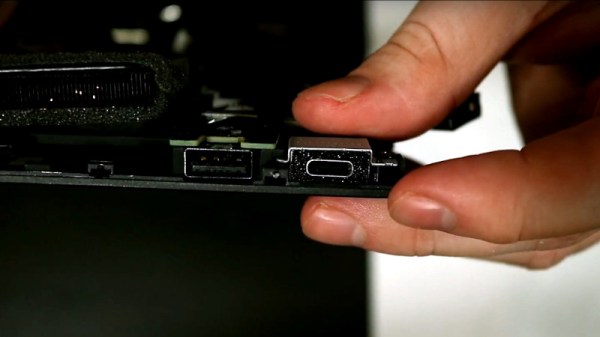
What’s to be done? [Sarbaaz37] found the hardware hacker’s solution to that question: Build a Nintendo Switch entirely from spare parts, of course! It took a month to source the parts and it’s not a project for the fainthearted, but it provides us with a look at all the parts they pack into the handheld. All told, there’s about 22 part numbers in the bill of materials.

Anyone who has peeked inside a laptop recently will be familiar with the arrangement of this type of device. An array of extremely snug-fitting and fragile electronics laid out like a TV dinner has to be carefully assembled in a specific order and this is no different. Along the way [Sarbaaz37] has some pro tips, like cleaning off the stock thermal compound and using a higher quality. The eventual result is a working Switch, which for $200 is not a bad deal, though they do note that the pandemic has since led to a price rise in Nintendo parts as well as consoles.

This is, we think, the first home-made Switch we’ve seen, but it’s not the first desirable piece of consumer electronics made from grey market parts we’ve seen. Who could forget the Shenzhen electronics markets adventure of sourcing all the parts that go into an iPhone?

Thanks [Roel] for the tip.

A Tidy Little OBD Display For Your Car

It’s likely that many readers will have an OBD dongle through which they can peer into the inner workings of their car, but the chances are that most of us will have restricted our curiosity to the Bluetooth or USB interface it was supplied with. Not [Frederico Souza Sant’ana] though, because he’s modified his OBD dongle to expose the serial lines between its ELM327 OBD chip and its Bluetooth chip. These go to an Arduino, which powers a small information display to supplement the car’s dashboard. This can display a range of readings as can be seen in the video below the break, he has it monitoring the battery, the various temperatures in the engine bay, and the ignition parameters.

All the software and hardware details can be found in a GitHub repository. In hardware terms it’s a surprisingly simple unit, but it serves to remind us that OBD sniffer dongles are more versatile than we might at first imagine, and good for a bit more than hooking up our smartphones via Bluetooth. If OBD is something you’d like to visit in more depth, in the past we’ve featured an open-source OBD interface, and a retrospective look at the protocol.

Continue reading “A Tidy Little OBD Display For Your Car”