Laser Augmented Reality Glasses Show You The Way

Tech companies like Google and Microsoft have been working on augmented reality (AR) wearables that can superimpose images over your field of view, blurring the line between the real and virtual. Unfortunately for those looking to experiment with this technology, the devices released so far have been prohibitively expensive.

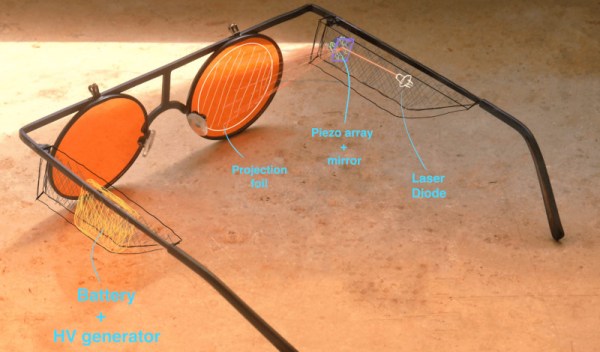
While they might not be able to compete with the latest Microsoft HoloLens, these laser AR classes from [Joel] promise to be far cheaper and much more approachable for hackers. By bouncing a low-power laser off of a piezo-actuated mirror, the hope is that the glasses will be able to project simple vector graphics onto a piece of reflective film usually used for aftermarket automotive heads-up displays (HUDs).
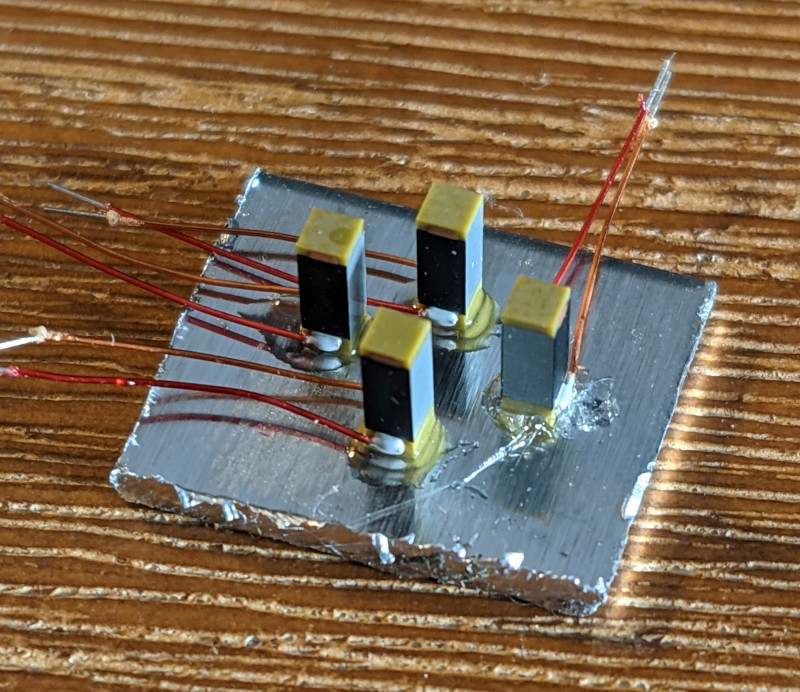
Piezo actuators are used to steer the mirror.

[Joel] has put together a prototype of what the mirror system might look like, but says driving the high-voltage piezo actuators poses some unique challenges. The tentative plan is to generate the vector data with a smartphone application, send it to an ESP32 microcontroller within the glasses, and then push the resulting analog signals through a 100 V DC-DC boost converter to get the mirror moving.

We’ve seen the ESP32 drive a laser galvanometer to play a game of Asteroids, but recreating such a setup in a small enough package to fit onto a pair of glasses would certainly be an impressive accomplishment. Early tests look promising, but clearly [Joel] has quite a bit of work ahead of him. As a finalist for the Rethink Displays challenge of the 2021 Hackaday Prize, we’re looking forward to seeing the project develop over the coming months.


What’s Chia, And Why Is It Eating All The Hard Drives?

At this point the average Hackaday reader is likely familiar with so-called “Proof of Work” (PoW) cryptocurrencies, such as Bitcoin, Ethereum, and Dogecoin. In the most basic of terms, these cryptocurrencies allow users to earn money by devoting computational power to the network. Unfortunately, it’s well past the point where your standard desktop CPU is moving enough bits to earn anything worthwhile. Individuals looking to turn a profit have therefore resorted to constructing arrays of high-end graphics cards for the express purpose of “mining” their cryptocurrency of choice.

These miners, combined with ongoing chip shortages, have ravaged the GPU market. Anyone who’s looked at building or upgrading a computer recently will know that new video cards are in short supply, and even old models that would otherwise be considered budget options, are commanding outrageous prices. In an effort to appease their core customers, NVIDIA has even introduced cryptocurrency-specific cards that lack video output. The hope was that professional miners would buy these Cryptocurrency Mining Processors (CMPs) instead of the traditional video cards, freeing up the latter for purchase by gamers. But due to the limited availability and relatively high cost of CMPs, they’ve done little to improve the situation.

Now if you don’t use your computer for gaming, this probably seems like a distant problem. You could even be forgiven for thinking of this as little more than two largely frivolous pursuits at loggerheads with each other. After all, in a community that still holds decades-old Thinkpads as the high water mark in portable computing, a certain ambivalence about cutting edge video cards is perhaps to be expected.

But there’s a new form of cryptocurrency on the rise which threatens more than just the hardcore gamers. With “Proof of Space” (PoS) cryptocurrencies, it’s not about having the fastest CPU or the highest number of GPUs; the commodity being traded is storage space, and the player with the most hard drives wins.

Continue reading “What’s Chia, And Why Is It Eating All The Hard Drives?”

E-Paper Pocket Map Goes Where Your Phone Can’t

It’s easy to take for granted the constantly-connected, GPS-equipped, navigation device most of us now carry in our pockets. Want to know how to get to that new restaurant you heard about? A few quick taps in Google Maps, and the optimal route given your chosen transportation method will be calculated in seconds. But if you ever find yourself lost in the woods, you might be in for a rude awakening. With no cell signal and a rapidly dwindling battery, that fancy smartphone can quickly end up being about as useful as a rock.

Enter the IndiaNavi, a modernization of the classic paper map that’s specifically designed to avoid the pitfalls that keeps your garden variety smartphone from being a reliable bushcraft tool. The color electronic paper display not only keeps the energy consumption low, but has unbeatable daylight readability. No signal? No problem, as the relevant maps are pre-loaded on the device.

Besides the 5.65 inch e-paper display from Waveshare, the India Navi features a L96 M33 GPS receiver and ESP32-WROOM-32 microcontroller. The 3D printed enclosure that holds the electronics and the lithium pouch battery that powers them is still in the early stages, but we like the book-style design. The focus on simplicity and reliability doesn’t end with the hardware, either. The software is about a straightforward as it gets: just boot the IndiaNavi and you’re presented with a map that shows your current position.

With the rise of easily hackable e-paper displays, we’re excited to see more concepts like the IndiaNavi which challenge our ideas on how modern electronics have to function and be used.

Vintage Remote Control Gets Bluetooth Upgrade

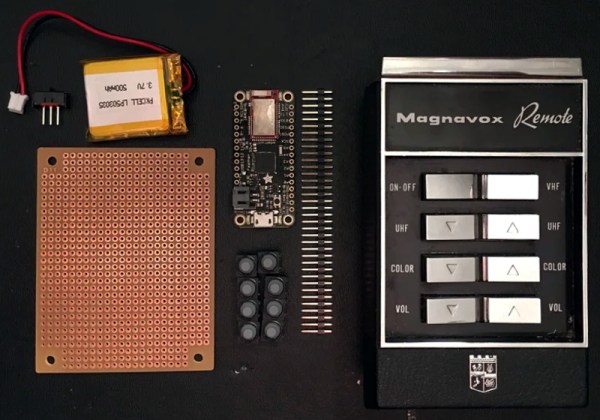
This swanky Magnavox remote is old enough to predate the use of infrared, and actually relies on ultrasound to communicate with the television. It’s a neat conversation starter, but not terribly useful today. Which is why [Chad Lawson] decided to gut the original electronics and replace it with a Adafruit Feather 32u4 Bluefruit LE that can actually talk to modern devices.

We know, we know. Some in the audience will  probably take offense to such a cool gadget being unceremoniously torn apart, but to be fair, [Chad] does say he has a second one that will remain in its original state. Plus a quick check on eBay shows these old remotes don’t seem to be particularly rare or valuable. In fact, after some browsing through the recently concluded auctions, we’re fairly sure he paid $27 USD for both of these remotes.

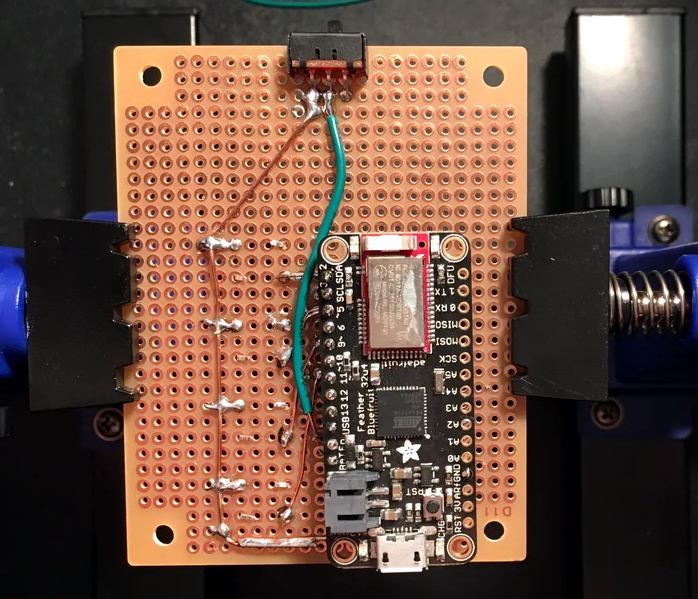
Anyway, [Chad] found that a piece of perfboard in his collection just happened to be nearly the same size as the PCB from the remote, which made the rest of the conversion pretty straightforward. He simply had to mount tactile switches on one side of the perfboard so the remote’s original buttons would hit them when pressed, and then wire those to the Adafruit on the other side. We know there’s a 3.7 V 500 mAh pouch battery in there someplace as well, though it’s not immediately clear where he hid it in the images.

The code [Chad] came up with tells the Adafruit to mimic a Bluetooth Human Interface Device (HID) and send standard key codes to whatever device pairs with it. That makes it easy to use as a media remote on the computer, for example. We’ve seen something similar done with the ESP32, if you’ve already got one in the parts bin and are looking to revamp a remote control of your own.

At the end of the write-up, [Chad] mentions he may try developing an ultrasonic receiver that can pick up the signals from the unmodified remote control. That would be a nice way to bring this whole thing full circle, and should appease even the most hardcore vintage remote control aficionados.

WiFiWart Linux Pentesting Device Gets First PCBs

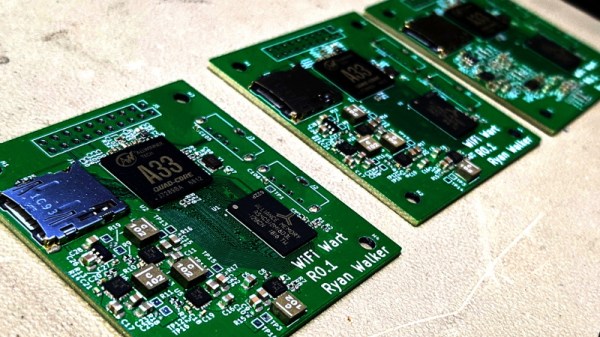
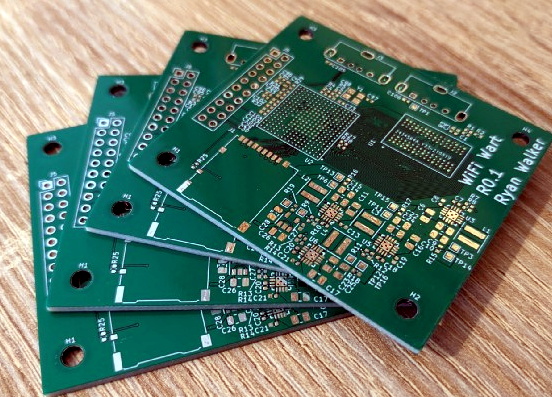
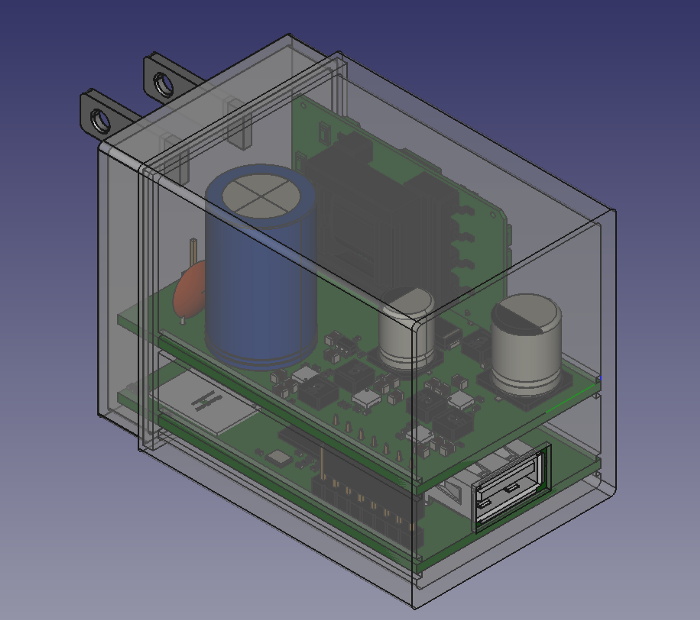
When we last checked in on the WiFiWart, an ambitious project to scratch-build a Linux powered penetration testing drop box small enough to be disguised as a standard phone charger, it was still in the early planning phases. In fact, the whole thing was little more than an idea. But we had a hunch that [Walker] was tenacious enough see the project through to reality, and now less than two months later, we’re happy to report that not only have the first prototype PCBs been assembled, but a community of like minded individuals is being built up around this exciting open source project.

Now before you get too excited, we should probably say that the prototypes didn’t actually work. Even worse, the precious Magic Smoke was released from the board’s Allwinner A33 ARM SoC when a pin only rated for 2.75 V was inadvertently fed 3.3 V. The culprit? Somehow [Walker] says he mistakenly ordered a 3.3 V regulator even though he had the appropriate 2.5 V model down in the Bill of Materials. A bummer to be sure, but that’s what prototypes are for.

Even though [Walker] wasn’t able to fire the board up, the fact that they even got produced shows just how much progress has been made in a relatively short amount of time. A lot of thought went into how the 1 GB DDR3 RAM would get connected to the A33, which includes a brief overview of how you do automatic trace length matching in KiCad. He’s also locked in component selections, such as the RTL8188CUS WiFi module, that were still being contemplated as of our last update.

Multiple boards make better use of vertical space.

Towards the end of the post, he even discusses the ultimate layout of the board, as the one he’s currently working on is just a functional prototype and would never actually fit inside of a phone charger. It sounds like the plan is to make use of the vertical real estate within the plastic enclosure of the charger, rather than trying to cram everything into a two dimensional design.

Want to get in on the fun, or just stay updated as [Walker] embarks on this epic journey? Perhaps you’d be interested in joining the recently formed Open Source Security Hardware Discord server he’s spun up. Whether you’ve got input on the design, or just want to hang out and watch the WiFiWart get developed, we’re sure he’d be happy to have you stop by.

The first post about this project got quite a response from Hackaday readers, and for good reason. While many in the hacking and making scene only have a passing interest in the security side of things, we all love our little little Linux boards. Especially ones that are being developed in the open.

An OSHW IR Remote Control Powered By The ATtiny13A

The new hotness in consumer electronics might be RF remotes based on protocols like Bluetooth Low Energy, but there’s still plenty of life left in the classic infrared remote. Especially with projects like TinyRemoteXL from [Stefan Wagner], which let you build and program an IR “clicker” of your own. Whether you want to spin up your own custom universal remote or create a beefed up version of the TV-B-Gone, this open source effort is a great place to start.

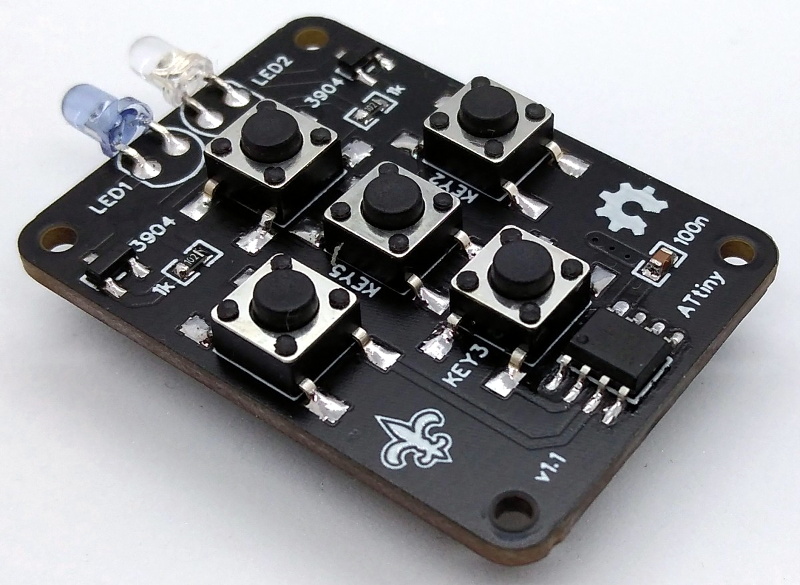
The original TinyRemote.

As you might have guessed from the name, this project is actually a larger version of the TinyRemote that [Stefan] put together previously. The documentation for that project goes a bit more into the nuts and bolts of talking IR, and is definitely worth a read if you’re into the low level stuff. For the original five button TinyRemote, the hardware consists of little more than a ATtiny13A microcontroller, a pair of IR LEDs, and the transistors to drive them.

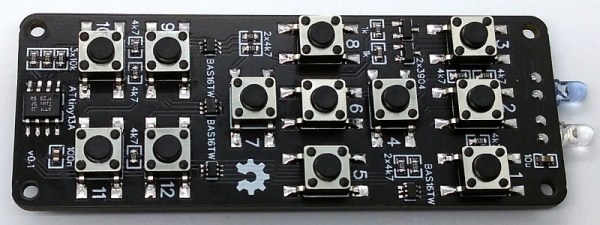
But on the XL, things are a bit trickier as there are now twelve buttons for the ATtiny13A to read. Obviously there aren’t enough pins to read so many buttons directly, but with a combination of BAS16TW diode arrays and resistors, [Stefan] is able to detect what button was pressed using the chip’s interrupt pin and ADC. Certainly a handy trick to have in the back of your mind, and the open source nature of this project gives you a great chance to see how it’s implemented.

Between this project and the impressive development board [Djordje Mandic] released recently, it seems we’re looking at something of an infrared hacking revival. Earlier this year we even saw the commercial release of an IR-equipped ESP8266 board.

This Horrifying Robot Is Here To Teach You A Lesson

No, despite what it might look like, this isn’t some early Halloween project. The creepy creation before you is actually a tongue-in-cheek “robot” created by the prolific [Nick Bild], a topical statement about companies asking their remote workers to come back into the office now that COVID-19 restrictions are being lifted. Why commute every day when this ultra realistic avatar can sit in for you?

OK, so maybe it’s not the most impressive humanoid creation to ever grace the pages of Hackaday. But if you’re looking to spin up a simple telepresence system, you could do worse than browsing through the Python source code [Nick] has provided. Using a Raspberry Pi 4, a webcam, and a microphone, his client-server architecture combines everything the bot sees and hears into a simple page that can be remotely accessed with a web browser.

Naturally this work from home (WFH) bot wouldn’t be much good if it was just a one-way street, so [Nick] has also added a loudspeaker that replays whatever he says on the client side. To prevent a feedback loop, his software includes a function that toggles which direction the audio stream goes in by passing the appropriate commands to the bot over SSH; a neat trick to keep in mind for your own, less nightmarish, creations.

If you’re looking for something a bit more capable and have some cardboard laying around, this DIY telepresence mount for your phone might be a good place to start.

Continue reading “This Horrifying Robot Is Here To Teach You A Lesson”