Winners Of Hackaday’s Data Loggin’ Contest: Bluetooth Gardening, Counting Cups, And Predicting Rainfall

The votes for Hackaday’s Data Loggin’ Contest have been received, saved to SD, pushed out to MQTT, and graphed. Now it’s time to announce the three projects that made the most sense out of life’s random data and earned themselves a $100 gift certificate for Tindie, the Internet’s foremost purveyor of fine hand-crafted artisanal electronics.

First up, and winner of the Data Wizard category, is this whole-garden soil moisture monitor by [Joseph Eoff]. You might not realize it from the picture at the top of the page, but lurking underneath the mulch of that lovely garden is more than 20 Bluetooth soil sensors arranged in a grid pattern. All of the data is sucked up by a series of solar powered ESP32 access points, and ultimately ends up on a Raspberry Pi by way of MQTT. Here, custom Python software generates a heatmap that indicates possible trouble spots in the garden. With its easy to understand visualization of what’s happening under the surface, this project perfectly captured the spirit of the category.
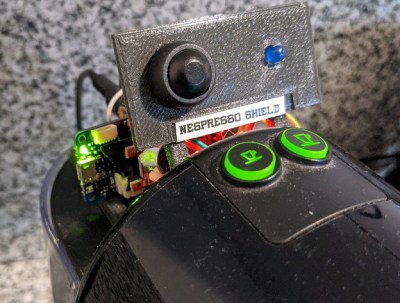

Next up is the Nespresso Shield from [Steadman]. This clever gadget literally listens for the telltale sounds of the eponymous coffee maker doing its business to not only estimate your daily consumption, but warn you when the machine is running low on water. The clever non-invasive method of pulling data from a household appliance made this a strong entry for the Creative Genius category.

Last but certainly not least is this comprehensive IoT weather station that uses machine learning to predict rainfall. With crops and livestock at risk from sudden intense storms, [kutluhan_aktar] envisions this device as an early warning for farmers. The documentation on this project, from setting up the GPRS-enabled ESP8266 weather station to creating the web interface and importing all the data into TensorFlow, is absolutely phenomenal. This project serves as a invaluable framework for similar DIY weather detection and prediction systems, which made it the perfect choice for our World Changer category.

There may have only been three winners this time around, but the legendary skill and creativity of the Hackaday community was on full display for this contest. A browse through the rest of the submissions is highly recommended, and we’re sure the creators would love to hear your feedback and suggestions in the comments.

Continue reading “Winners Of Hackaday’s Data Loggin’ Contest: Bluetooth Gardening, Counting Cups, And Predicting Rainfall”

3D Printer Control Board Packs A Raspberry Pi Compute Module 4

Traditionally, 3D printer control boards have used simplistic 8-bit microcontrollers to command the stepper drivers and ultimately move the machine where it needs to go. Newer boards have switched over to 32-bit microcontrollers, but they’re still relatively limited computationally. Because of this, a Raspberry Pi running OctoPrint is usually used to provide more complex features such as remote management and live video.

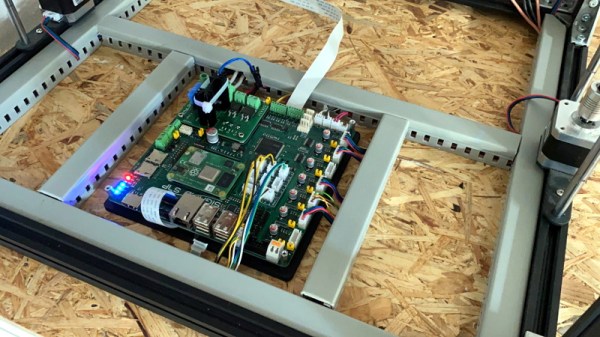
Looking to combine these different devices into a single all-in-one board, [pkElectronics] developed the Sigmoid S7P. With an STM32 microcontroller, TMC2209 stepper drivers, a Raspberry Pi Compute Module 4, and plenty of room for expansion, it promises to be a drop-in upgrade for essentially any 3D printer running on an open source firmware that could be ported over.

An earlier concept for the Sigmoid

According to [pkElectronics], the idea for the Sigmoid had been floating around for several years, but never got off the ground due to the difficulties in dealing with the SO-DIMM interface used by previous iterations of the Compute Module. But with the switch to smaller and denser connector for the CM4, the board finally started to take shape.

Whether you just used it as a convenient way to integrate OctoPrint into your printer, or want to get into something more advanced like Klipper, the Sigmoid S7P looks like a very exciting project. [pkElectronics] says they are considering producing the board commercially if there’s interest, so if you want one of these for your own custom 3D printer build, let them know.

Look Out Below! China’s Heavy-Lift Rocket Due For Uncontrolled Reentry Within Days

On April 28th, China successfully put the core module of their Tianhe space station into orbit with the latest version of the Long March 5B heavy-lift booster. This rocket, designed for launching large objects into low Earth orbit, is unique in that the 33.16 m (108.8 ft) first stage carries the payload all the way to orbit rather than separating at a lower altitude. Unfortunately, despite an international effort to limit unnecessary space debris, the first stage of the Long March 5B booster is now tumbling through space and is expected to make an uncontrolled reentry sometime in the next few days.

The massive booster has been given the COSPAR ID 2021-035-B, and ground tracking stations are currently watching it closely to try and determine when and where it will reenter the Earth’s atmosphere. As of this writing it’s in a relatively low orbit of 169 x 363 km, which should decay rapidly given the object’s large surface area. Due to the variables involved it’s impossible to pinpoint where the booster will reenter this far out, but the concern is that should it happen over a populated area, debris from the 21 metric ton (46,000 pound) booster could hit the ground.

The Tianhe core module.

This is the second launch for the Long March 5B, the first taking place on May 5th of 2020. That booster was also left in a low orbit, and made an uncontrolled reentry six days later. During a meeting of the NASA Advisory Council’s Regulatory and Policy Committee, Administrator Jim Bridenstine claimed that had the rocket reentered just 30 minutes prior, debris could have come down over the continental United States. Objects which were suspected of being remnants of the Long March 5B were discovered in Africa, though no injuries were reported.

China’s first space station, Tiangong-1, made an uncontrolled reentry of its own back in 2018. It’s believed that most of the 8,500 kg (18,700 lb) burned up as it streaked through the atmosphere, and anything that was left fell harmlessly into the South Pacific Ocean. While small satellites are increasingly designed to safely disintegrate upon reentry, large objects such as these pose a more complex problem as we expand our presence in low Earth orbit.

RGB LED Rings Teach Old Dash New Tricks

We’ve seen several so-called “digital dash” upgrades over the years that either augment, or completely replace, a vehicle’s original dashboard indicators with new displays. Whether its seven segment LEDs or a full-on graphical interface powered by the Raspberry Pi, the end result is the same: a dashboard that looks wildly different than it did when the car rolled off the assembly line.

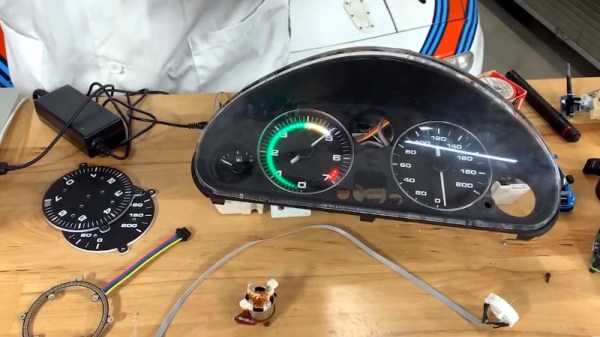
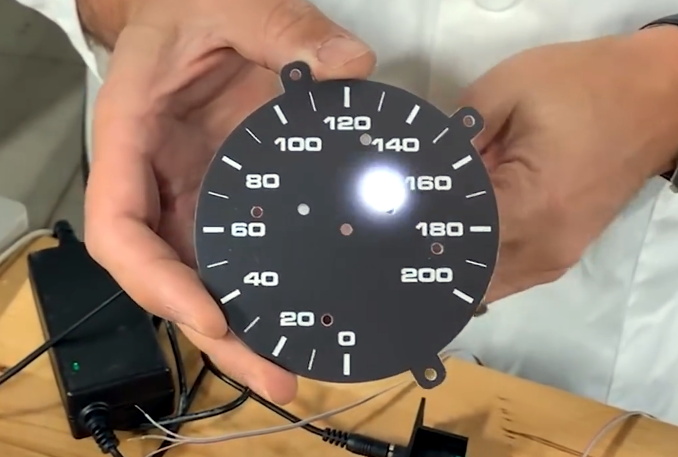
But this LED dashboard project from [Flyin’ Miata] takes a slightly different approach. Rather than replace the analog gauges entirely, rings of RGB LEDs of the same diameter were placed behind their matte black faces. When the LEDs are off you’d never notice them, but once they kick on, the light is clearly visible through the material.

LEDs can easily shine through the gauge face.

So far, it looks like most of the work seems to have been put into the tachometer. The firmware running on the CAN equipped Adafruit Feather M4 can do things such as light up a dynamic redline based on current engine temperature. It will also light up the LEDs to follow the analog gauge as it moves around, which might not have much practical application, but certainly looks cool.

On the speedometer side, the LEDs seem to be used primarily as warning indicators. As demonstrated in the video below, the whole gauge can light up bright red to indicate a critical situation such as low oil pressure. If you wanted to, the system could also be configured with different colors corresponding to various possible fault conditions.

Compared to some of the more aggressive dashboard updates we’ve seen, this is an interesting compromise that helps retain the look of the original instrumentation. Of course, depending on the make and model of the car, you might be able to sneak in a small LCD screen without anyone noticing.

Continue reading “RGB LED Rings Teach Old Dash New Tricks”

Open Source Pizza Compass Will Show You The Way

In Pirates of the Caribbean, Captain Jack Sparrow has an enchanted compass that points to what the holder wants most in life. The Pizza Compass created by [Joe Grand] is basically the same thing, except it’s powered by a Particle Boron instead of a voodoo spell. Though depending on who’s holding the thing, we imagine they’d even point in the same direction.

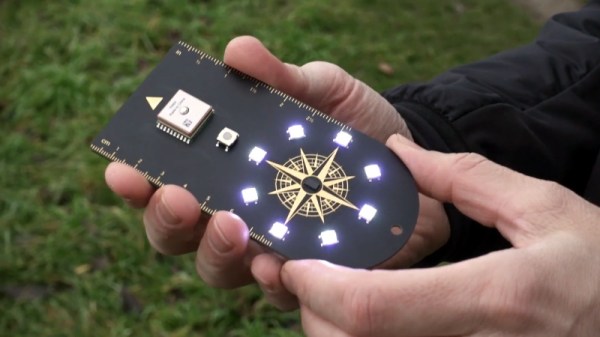
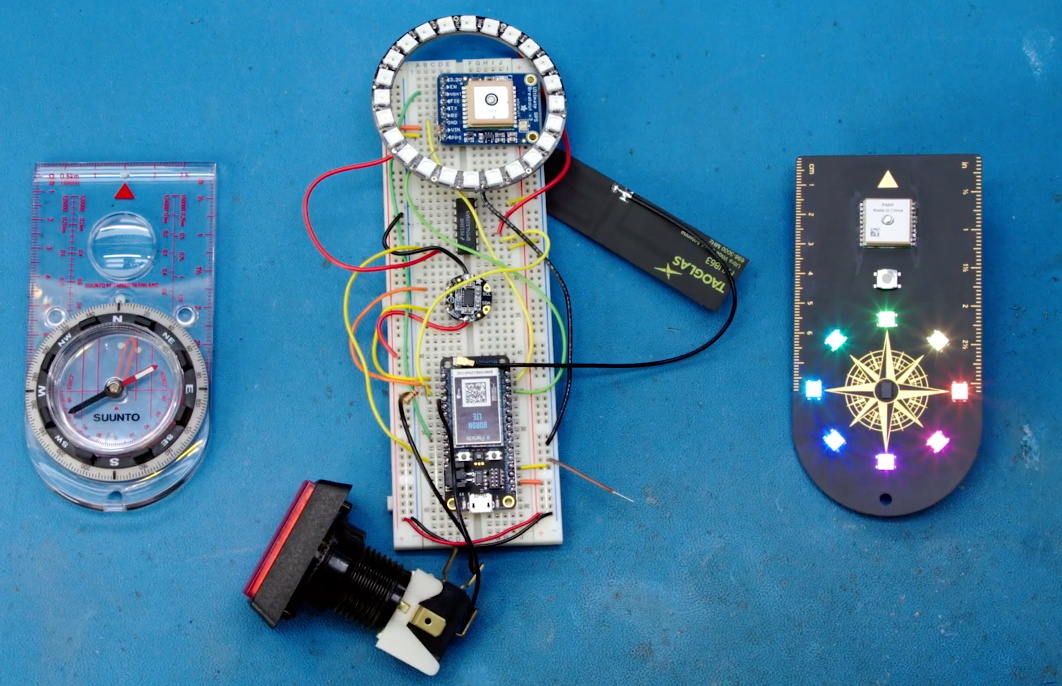
[Joe] was tasked by Wired to design and produce the Pizza Compass in three weeks, a process which was documented in the video below. Being the Badgelife luminary that he is, the final product looks far more attractive than it has any business being. In addition to the Particle Boron that slots in on the back of the handheld PCB, there’s a GlobalTop PA6H GPS module, a LSM303DLHC compass, and eight NeoPixels that correspond to the points on the silkscreen compass.

From prototype to final product.

Using the device is simple, just press the button and then walk around trying to keep the top-most LED lit. Behind the scenes, the Boron is pulling down the coordinates of the closest pizza place as reported by Google’s API, and comparing that to the user’s current GPS location. In practice that means the Pizza Compass isn’t concerned with nuances like streets or buildings, so its up to the user to figure out how best to stay on the desired heading. So rather than just following some turn-by-turn directions, there’s some proper navigation involved if you want that fresh slice.

If you don’t like pizza, you could reprogram the compass to point to whatever quest-worthy resource you wish. As explained at the end of the video, [Joe] wanted this to be an open source project so it could easily be adapted for different tasks by the community. Though honestly, it’s pretty weird if you don’t like pizza.

We’ve actually covered a very similar device in the past that would point the user to the closest White Castle or Five Guys, but with all due respect to that project, the Pizza Compass is in another league. When you’ve got the talent and experience of [Joe Grand] on the team, even the most mundane of gadgets ends up looking like a piece of art.

Continue reading “Open Source Pizza Compass Will Show You The Way”

Lamps Double As Secret Surround Sound Speakers

Combined with today’s massive flat panel displays, a nice surround sound system can provide an extremely immersive environment for watching movies or gaming. But a stumbling block many run into is speaker placement. The front speakers generally just go on either side of the TV, but finding a spot for the rear speakers that’s both visually and acoustically pleasing can be tricky.

Which is why [Peter Waldraff] decided to take a rather unconventional approach and hide his rear surround sound speakers in a pair of functioning table lamps. This not only looks better than leaving the speakers out, but raises them up off the floor and into a better listening position. The whole thing looks very sleek thanks to some clever wiring, to the point that you’d never suspect they were anything other than ordinary lamps.

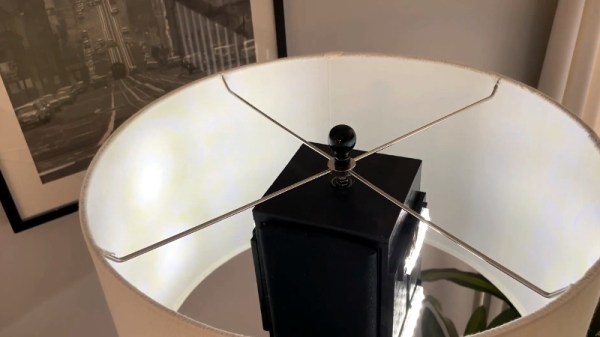
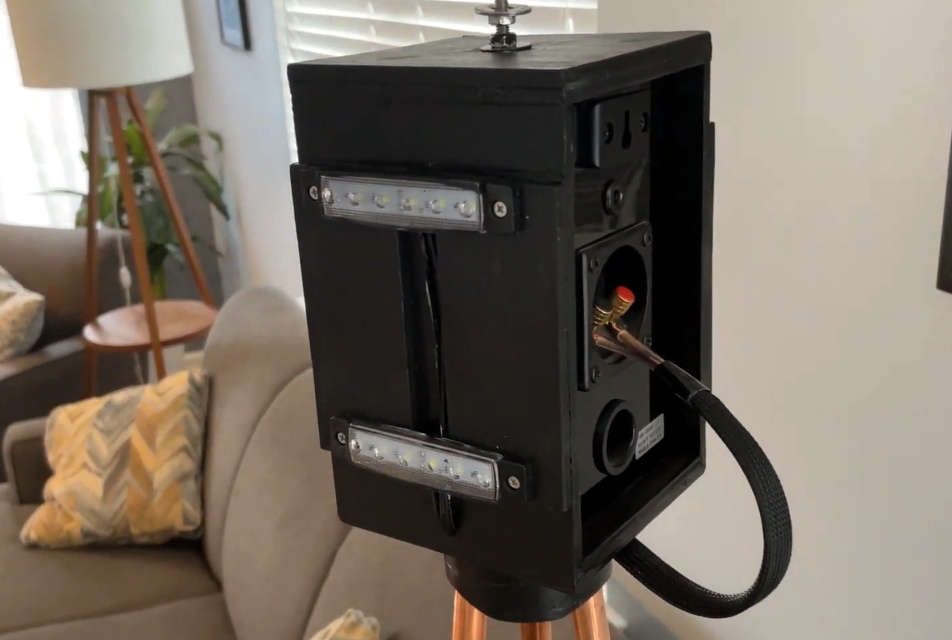
The trick here is the wooden box located at the apex of the three copper pipes that make up the body of the lamp. [Peter] mounted rows of LEDs to the sides of the box that can be controlled with a switch on the bottom, which provides light in the absence of a traditional light bulb. The unmodified speaker goes inside the box, and connects to the audio wires that were run up one of the pipes.

In the base, the speaker and power wires are bundled together so it appears to be one cable. Since running the power and audio wires together like this could potentially have resulted in an audible hum, [Peter] only ran 12 VDC up through the lamp to the LEDs and used an external “wall wart” transformer. For convenience, he also put a USB charging port in the center of the base.

When speakers or surround sound systems pass our way, it’s usually because some hacker has either made  a set from scratch, or has added some new and improved capabilities to their existing gear. This project may be a bit low-tech compared to some that have graced these pages, but it’s undoubtedly a clever and unexpected solution to the problem, and that’s a hack in our book.

Continue reading “Lamps Double As Secret Surround Sound Speakers”

VCF Swap Meet Takes Step Back To Move Forward

When computers were the sort of thing you ordered from a catalog and soldered together in your garage, swap meets were an invaluable way of exchanging not just hardware and software, but information. As computers became more mainstream and readily available, the social aspect of these events started to take center stage. Once online retail started really picking up steam, it was clear the age of the so-called “computer show” was coming to a close. Why wait months to sell your old hardware at the next swap when you could put it on eBay from the comfort of your own home?

Of course, like-minded computer users never stopped getting together to exchange ideas. They just called these meets something different. By the 2000s, the vestigial remnants of old school computer swap meets could be found in the vendor rooms of hacker cons. The Vintage Computer Festival (VCF) maintained a small consignment area where attendees could unload their surplus gear, but it wasn’t the real draw of the event. Attendees came for the workshops, the talks, and the chance to hang out with people who were passionate about the same things they were.

Consignment goods at VCF East XIII in 2018.

Then came COVID-19. For more than a year we’ve been forced to cancel major events, suspend local meetups, and in general, avoid one another. Some of the conventions were revamped and presented virtually, and a few of them actually ended up providing a unique and enjoyable experience, but it still wasn’t the same. If you could really capture the heart and soul of these events with a video stream and a chat room, we would’ve done it already.

But this past weekend, the folks behind VCF East tried something a little different. As indoor gatherings are still strongly discouraged by New Jersey’s stringent COVID restrictions, they decided to hold a computer swap meet in the large parking lot adjacent to the InfoAge Science and History Museum. There were no formal talks or presentations, but you could at least get within speaking distance of like-minded folks again in an environment were everyone felt comfortable.

Continue reading “VCF Swap Meet Takes Step Back To Move Forward”