Everything You Always Wanted To Know About Radioactive Lenses

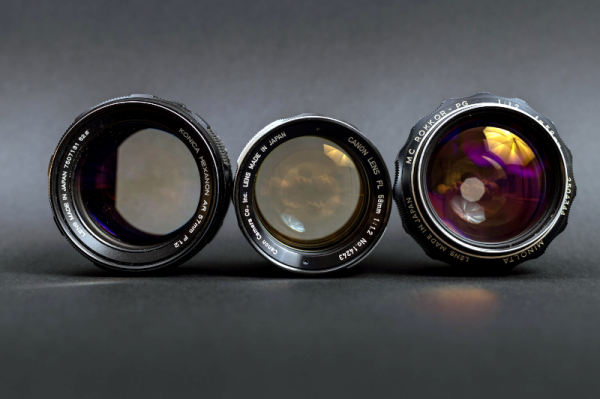
We think of radioactive material as something buried away in bunkers with bombs, power plants, and maybe some exotic medical equipment. But turns out, there are little bits of radiation in the water, our soil, bananas, granite countertops, smoke detectors, and even some camera lenses. Camera lenses? A few decades ago, camera companies added rare elements like thorium to their glass to change the optical properties in desirable ways. The downside? Well, it made the lenses somewhat radioactive.  A post by [lenslegend] explains it all.

Exotic elements such as Thorium, Lanthanum and Zirconium are added to glass mixtures to create the high refractive indexes necessary in sophisticated lens designs. Selection of premium quantities of glass from the large glass pots, stringent spectrophotometric tests after stress and strain checks provide the valuable raw glass for ultimate use in lens elements.
Konica Hexanon Lens Guide, Konica Camera Company, 1972

According to [lenslegend] the practice started in 1945 with Kodak. However, by the 1980s, consumer distaste for radioactive things and concern for factory workers ended the production of hot camera lenses.

Continue reading “Everything You Always Wanted To Know About Radioactive Lenses”
Pen Plotter Is About As Simple As It Can Get

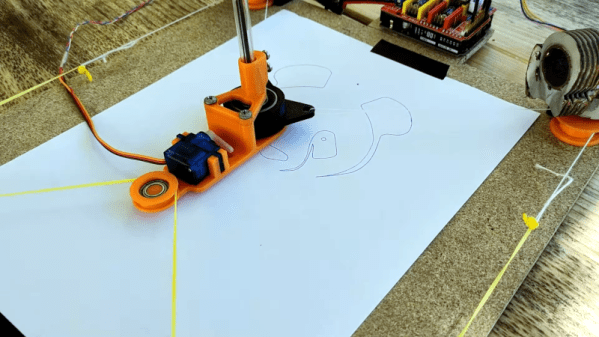
Sure, we see quite a few plotters and other motion machines, but the one from [DAZ Projects] has the virtual of looking dead simple. The Arduino and CNC shield are old hat, of course. But some 3D printed pulleys and a very simple-looking core XY arrangement looks like this could be a pretty quick build.

You might ask; if you have a 3D printer, why you wouldn’t just mount a pen on it and call it a day? Well, you could do that, of course, but what fun is that? Besides, that will tie up your printer, too. You can see a video of the project, below.

Continue reading “Pen Plotter Is About As Simple As It Can Get”

Linux Fu: The Windows X11 Connection

The life of a Linux user can be a bit difficult. Sometimes you have to — or want to — run Windows. Why Windows? Sometimes you have a work computer or a laptop that Linux doesn’t support well. Or it might be software. Although there are plenty of programs that can edit, say, Word documents, there’s always that one document that doesn’t quite translate correctly. Things like videoconferencing software sometimes works on Linux but might have fewer features.

So what do you do? You can dual boot, of course, but that’s not very handy. You can run Windows in a virtual machine if you have enough horsepower. There’s also Wine, but that often has its own set of problems with features and stability of complex programs. However, recent versions of Windows provide the Windows Subsystem for Linux (WSL).

With WSL, you can have most of what you like about Linux inside your Windows session. You just have to know how to set it up, and I’m going to show you one way that works for me with reasonably stable versions of Windows 10. Continue reading “Linux Fu: The Windows X11 Connection”

Phase Coherent Beamforming SDR

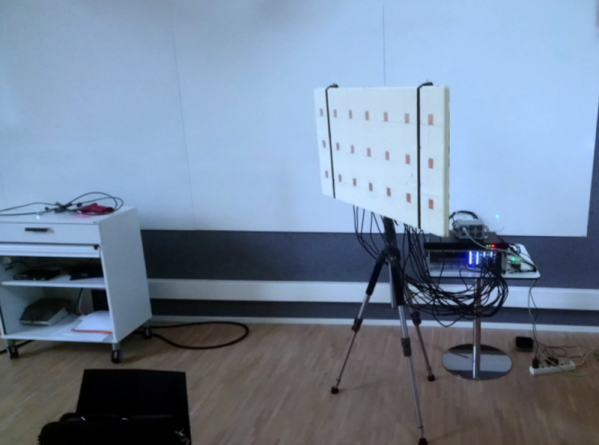
The days when software defined radio techniques were exotic are long gone, and we don’t miss them one bit. A case in point: [Laakso Mikko’s] research group has built a multichannel receiver using 21 cheap RTL-SDR dongles to create a phase coherent array. This is useful for everything from direction finding and passive radar or beam forming. The code is also available on GitHub.

The phase coherence does require the dongle’s tuner can turn off dithering. That means the code only works with dongles that use the R820T/2. The project modifies the dongles to use a common clock and a switchable reference noise generator.

Continue reading “Phase Coherent Beamforming SDR”

Better Mousetraps (or Screw Drives) Don’t Always Win

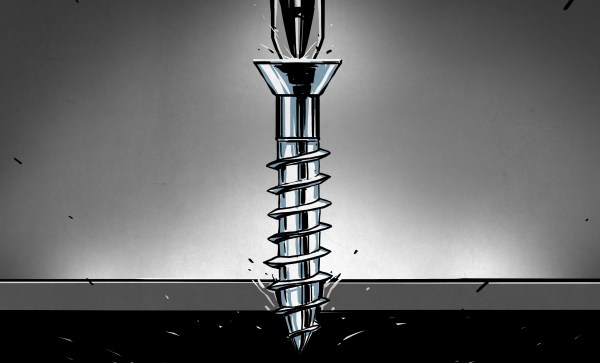
I’ve noticed, lately, that slotted screw heads are all but gone on new equipment. The only thing that I find remarkable about that is that it took so long. While it is true that slotted heads have been around for ages, better systems are both common and have been around for at least a century.

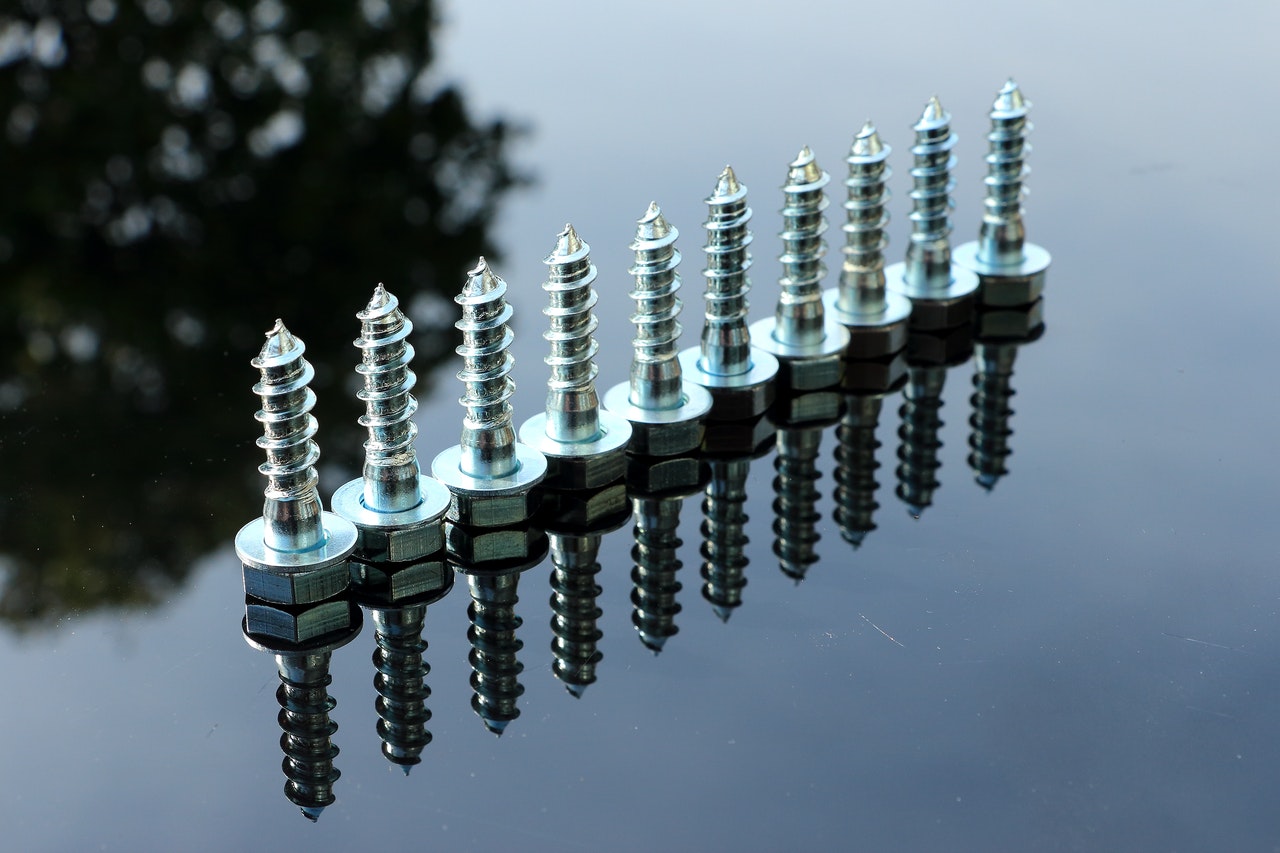
Check out those cool threads.

The reason slotted heads — technically known as the drive — are so common is probably because they are very easy to make. A hacksaw is sufficient for the job and there are other ways to get there, too. The only advantages I know of for the user is that you can easily clean a slotted drive and — possibly — use field expedient items like butter knives and quarters to turn the screw. I’ve heard people claim that it also is a feature that the screwdriver can pry things like paint can lids, but that’s a feature of the tool, not the screw drive.

The disadvantages, though, are significant. It is very hard to apply lots of torque to a slotted screw drive without camming it out or snapping the head off the screw. The screwdriver isn’t self-centering either, so applying force off-axis is common and contributes to the problem.

Continue reading “Better Mousetraps (or Screw Drives) Don’t Always Win”

Raspberry Pi Crammed Into Old Film Camera

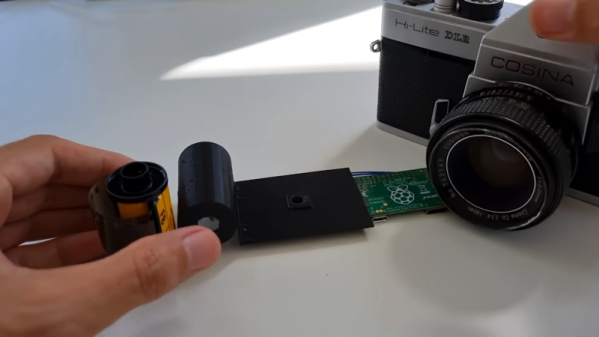
If you wanted an expensive film camera when you were a kid, you are in luck. Used film SLRs are super cheap now that everyone wants digital cameras. Of course, in reality, you want a digital camera, too. So do what [befinitiv] did. Make a film cartridge out of a Raspberry Pi that can convert your camera to digital. (Video, embedded below.)

In theory, this sounds like a genius idea. The practical aspect isn’t perfect, though. For one thing, the small image sensor used means that the camera is zoomed in quite a bit. Also, the shutter button isn’t integrated, so the shutter is open all the time. You may think that doesn’t matter, but don’t forget that the way an SLR works means if the shutter is open, there’s no viewfinder.

Continue reading “Raspberry Pi Crammed Into Old Film Camera”

3D Printing May Disprove Lord Kelvin

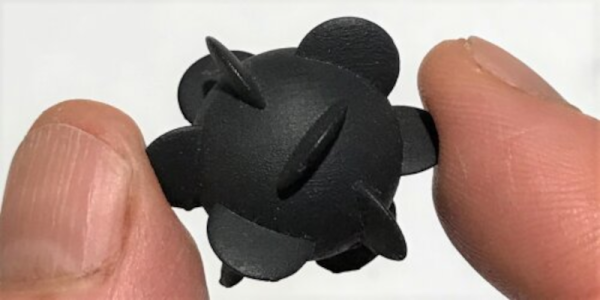
If you think 3D printing is only good for benchies, key chains, and printer parts, you might enjoy the paper by two physicists from Wesleyan University and the University of Gothenburg. Lord Kelvin — also known as William Thomson — hypothesized a shape known as an isotropic helicoid. As its name implies, the shape would look the same from any angle. Kelvin predicted that such a shape would spin as it sank in a liquid. Turns out, 3D printing proves it wrong. (The actual paywalled paper is available.)

It might seem strange that scientists are only now getting around to disproving a 150-year old hypothesis. However, the paper’s authors think Kelvin may have built the structures — he provided precise instructions — and simply dropped it when it proved incorrect.

Continue reading “3D Printing May Disprove Lord Kelvin”