Qt Arrives For Small Computers

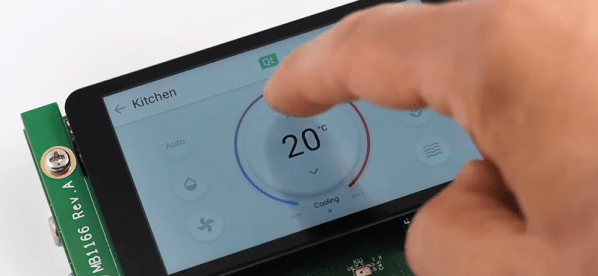
There was a time when writing embedded systems meant never having to deal with graphical user interfaces, and spending long hours trying to free up a dozen bytes of ROM to add a feature. Nowadays, an embedded system is likely to have a screen and what would have been a huge amount of memory even for a PC a scant decade ago. Qt has long been a popular choice for building software on desktop platforms, and — while not as popular — has even run on phones for a while. Now there’s Qt for MCUs which is clearly targeting the IoT market that everyone is trying to capture. You can see the glitzy video for the new product, below.

We generally like Qt, and the move recently has been towards an HTML-like markup language called QML instead of directly manipulating widgets. We guess that’s a good thing. However, Qt isn’t just for user interfaces. It provides a wide range of services in a straightforward way
Continue reading “Qt Arrives For Small Computers”

Largest Chip Ever Holds 1.2 Trillion Transistors

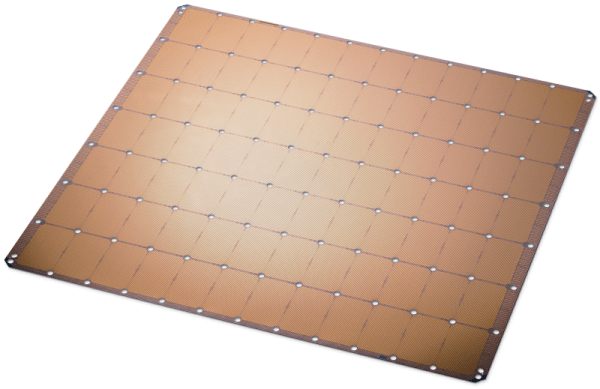
We get it, press releases are full of hyperbole. Cerebras recently announced they’ve built the largest chip ever. The chip has 400,000 cores and contains 1.2 trillion transistors on a die over 46,000 square mm in area. That’s roughly the same as a square about 8.5 inches on each side. But honestly, the WSE — Wafer Scale Engine — is just most of a wafer not cut up. Typically a wafer will have lots of copies of a device on it and it gets split into pieces.

According to the company, the WSE is 56 times larger than the largest GPU on the market. The chip boasts 18 gigabytes of storage spread around the massive die. The problem isn’t making such a beast — although a normal wafer is allowed to have a certain number of bad spots. The real problems come through things such as interconnections and thermal management.

Continue reading “Largest Chip Ever Holds 1.2 Trillion Transistors”

Russian Robot To Visit Space Station

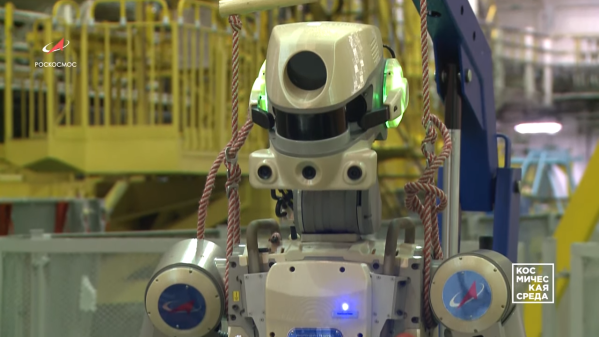
The Russians were the first to send a dog into space, the first to send a man, and the first to send a woman. However, NASA sent the first humanoid robot to the International Space Station. The Russians, though, want to send FEDOR and proclaim that while Robonaut flew as cargo, a FEDOR model — Skybot F-850 — will fly the upcoming MS-14 supply mission as crew.

Defining the term robot can be tricky, with some thinking a proper robot needs to be autonomous and others seeing robotics under human control as enough. The Russian FEDOR robot is — we think — primarily a telepresence device, but it remains an impressive technical achievement. The press release claims that it can balance itself and do other autonomous actions, but it appears that to do anything tricky probably requires an operator. You can see the robot in ground tests at about the one minute mark in the video below.

Continue reading “Russian Robot To Visit Space Station”

Sushi Roll Helps Inspect Your CPU Internals

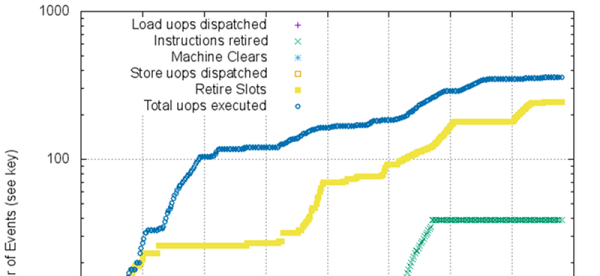
[Gamozolabs’] post about Sushi Roll — a research kernel for monitoring Intel CPU internals — is pretty long. While we were disappointed at the end that the kernel’s source is not exactly available due to “sensitive features”, we were so impressed with the description of the modern x86 architecture and some of the work done with Sushi Roll, that we just had to post it. If the post gets you wanting to actually try some of this, you can check out another [Gamozolabs] creation, Orange Slice.

While you probably know that a modern Intel CPU bears little resemblance to the old 8086 processor it emulates, it is surprising, sometimes, to realize just how far it has gone. The very first thing the CPU does is to break your instruction up into microoperations. The execution engine uses some sophisticated techniques for register renaming and scheduling that allow you to run instructions out of order and to run more than one instruction per clock cycle.

Continue reading “Sushi Roll Helps Inspect Your CPU Internals”

Dirty Tricks For 6502 Programming

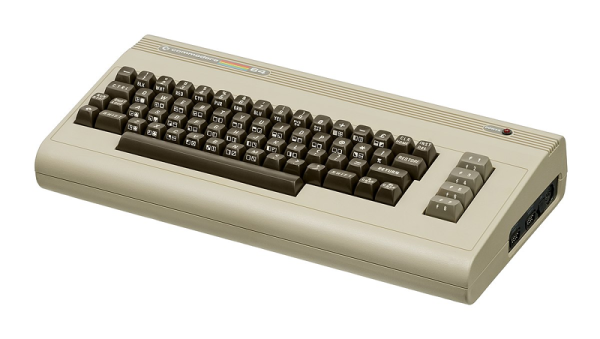
We know the 6502 isn’t exactly the CPU of choice for today’s high-performance software, but with the little CPU having appeared in so many classic computers — the Apple, the KIM-1, The Commodores, to name a few — we have a real soft spot for it. [Janne] has a post detailing the eight best entries in the Commodore 64 coding competition. The goal was to draw an X on the screen using the smallest program possible. [Janne] got 56 bytes, but two entrants clocked in at 34 bytes.

In addition to the results, [Janne] also exposes the tricks people used to get these tiny programs done. Just looking at the solution in C and then 6502 assembly is instructive. Naturally, one trick is to use the existing ROM code to do tasks such as clearing the screen. But that’s just the starting point.

Continue reading “Dirty Tricks For 6502 Programming”

Circuit VR: Advanced Falstad Logic With Geniac

I find that if I’m trying to make a point with a student or a colleague about a circuit, sometimes the Falstad online simulator is worth a few thousand words. You can draw the circuit, play with the values, and even see the current flow in an intuitive way as well as make traditional measurements. The simulator not only handles analog but also digital circuits. At first glance, though, the digital functions appear limited, but if you dig deeper, there is a custom logic block that can really help. I dug into this — and into how switches work in the simulator — the other day in response to a Hackaday post. If you use Falstad, read on!

Continue reading “Circuit VR: Advanced Falstad Logic With Geniac”

Sensor Lets Gestures And An Arduino Control The Tunes

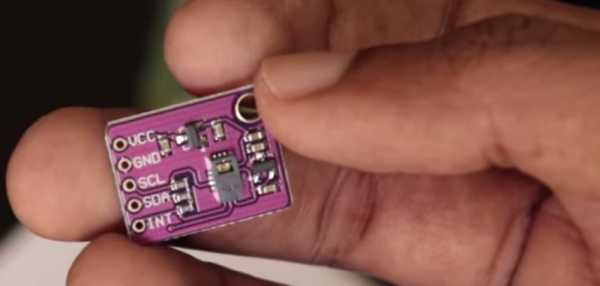
Every time we watch Minority Report we want to make wild hand gestures at our computer — most of them polite. [Rootsaid] wanted to do the same and discovered that the PAJ7620 is an easy way to read hand gestures. The little sensor has a serial interface and can recognize quite a bit of hand waving. To be precise, the device can read nine different motions: up, down, left, right, forward, backward, clockwise, anticlockwise, and wave.

There are plenty of libraries to read it for common platforms. If you have an Arduino that can act as a keyboard for a PC, the code almost writes itself. [Rootsaid] uses a specific library for the PAJ7620 and another — Nicohood — for sending media keys.

Continue reading “Sensor Lets Gestures And An Arduino Control The Tunes”