2.5D Printing?

Casio — the company famous for calculators, watches, and calculator watches — is touting a 2.5D printer. We aren’t sure we are impressed with the marketing hype name, but it is an interesting innovation for people prototyping new designs. The printer can create material that appears to be leather, fabric, and other materials. With some additional work, the printer can even mimic hard materials like stone or wood. You can see a video about the machine below.

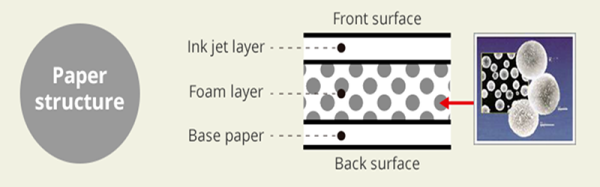
The Mofrel printer uses special “digital sheets” that appear to be thick paper or PET plastic, but are really a sandwich of different materials. When you heat an area of the sheet, particles inside the sandwich expand allowing the printer to apply a texture.

Continue reading “2.5D Printing?”

Addition On The Strangest Vacuum Tube

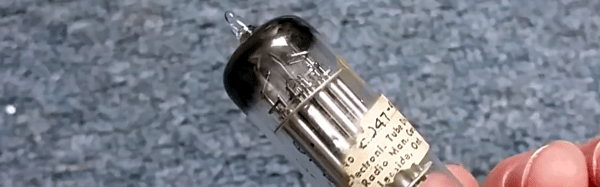
[Uniservo] made a video of a tube he’s been trying to acquire for a long time: a Rogers 6047 additron. Never heard of an additron? We hadn’t either. But it was a full binary adder in a single vacuum tube made in Canada around 1950. You can see the video below.

The unique tubes were made for the University of Toronto Electronic Computer (UTEC). A normal tube-based computer would require several tubes to perform an addition, but the additron was a single tube that used beam switching to perform the addition in a single package. [Uniservo] points out how the tube could have revolutionized tube computing, but before it could really appear in real designs, transistors — and later, integrated circuits — would take over.

Continue reading “Addition On The Strangest Vacuum Tube”

Apple II FPGA

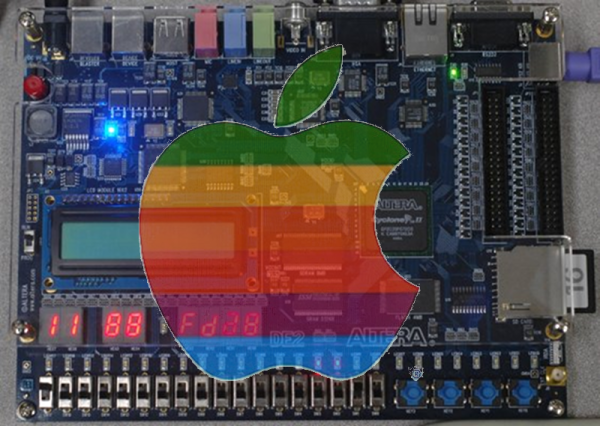
[Stephen Edwards] had some time one Christmas. So he took a DE2 FPGA board and using VHDL built a pretty faithful reproduction of an Apple II+ computer. He took advantage of VHDL modules for the 6502 CPU and PS/2 keyboard, and focused more on the video hardware and disk emulation.

According to [Stephen], you can think of the Apple II as a video display that happens to have a computer in it. The master clock is a multiple of the color burst frequency, and the timing was all geared around video generation. [Stephen’s] implementation mimics the timing, although using more modern FPGA-appropriate methods.

Continue reading “Apple II FPGA”

Global Thermonuclear War: Tweeted

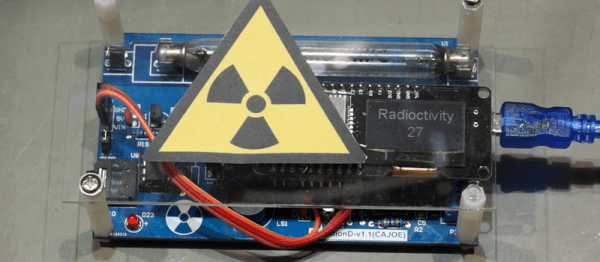
[Andreas Spiess] did a video earlier this year about fallout shelters. So it makes sense now he’s interested in having a Geiger counter connected to the network. He married a prefabricated counter with an ESP32. If it were just that simple, it wouldn’t be very remarkable, but [Andreas] also reverse-engineered the schematic for the counter and discusses the theory of operation, too. You can see the full video, below.

We often think we don’t need a network-connected soldering iron or toaster. However, if you have a radiological event, getting a cell phone alert might actually be useful. Of course, if that event was the start of World War III, you probably aren’t going to get the warning, but a reactor gas release or something similar would probably make this worth the $50.

Continue reading “Global Thermonuclear War: Tweeted”

Retrotechtacular: Hacking Wartime Mail

I’m guessing you got quite a few e-mails today. But have you ever had a v-mail? That sounds like some new term for video e-mail, but it actually dates back to World War II. If you are in Europe, the term was Airgraph — not much more descriptive.

If you make a study of war, you’ll find one thing. Over the long term, the winning side is almost always the side that can keep their troops supplied. Many historians think World War II was not won by weapons but won by manufacturing capability. That might not be totally true, but supplies are critical to a combat force. Other factors like tactics, doctrine, training, and sheer will come into play as well.
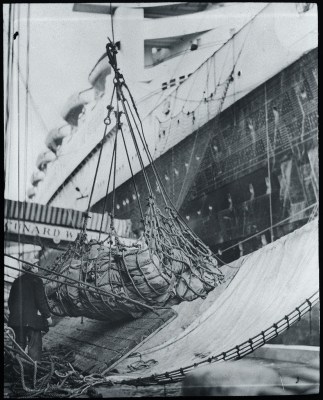
On the other hand, morale on the front line and the home front is important, too. Few things boost morale as much as a positive letter from home. But there’s a problem.

While today’s warfighter might have access to a variety of options to communicate with those back home, in World War II, communications typically meant written letters. The problem is ships going from the United States to Europe needed to be full of materials and soldiers, not mailbags. With almost two million U.S. soldiers in the European Theater of Operations, handling mail from home was a major concern.

British Mail Hack

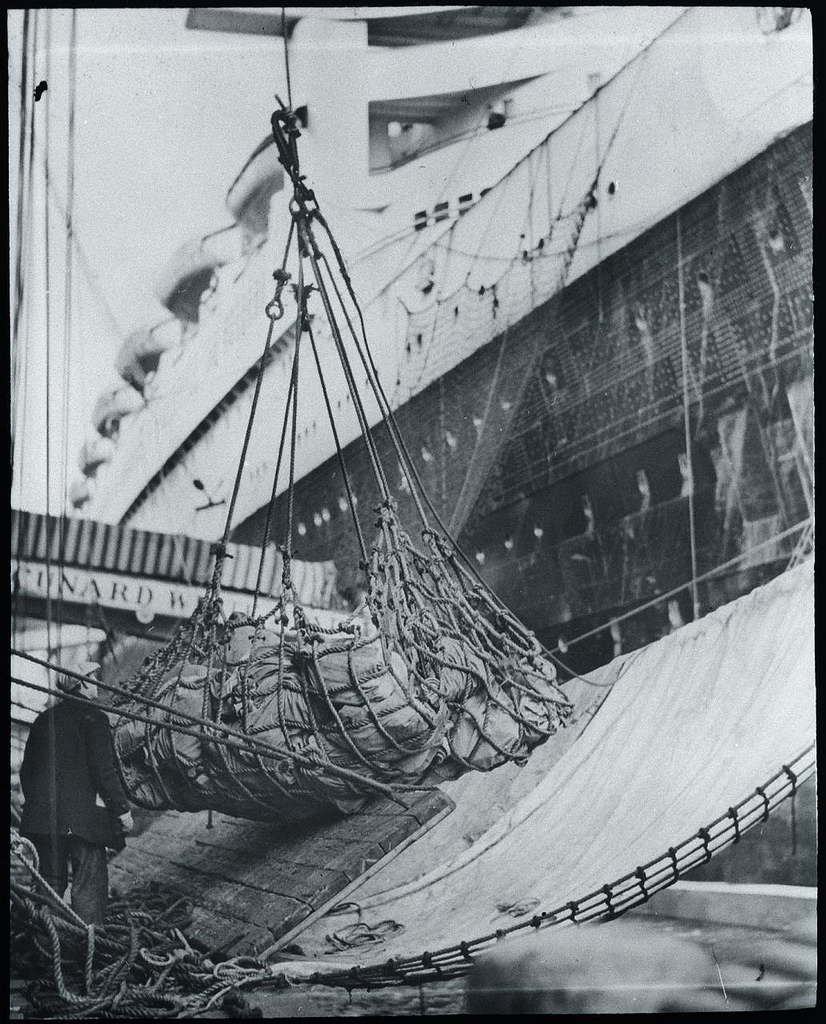
The British already figured out the mail problem in the 1930s. Eastman Kodak and Imperial Airways (which would later become British Airways) developed the Airgraph system to save weight on mail-carrying aircraft.  Airgraph allowed people to write soldiers on a special form. The form was microfilmed and sent to the field. On the receiving end, the microfilm was printed and delivered as regular mail.

Continue reading “Retrotechtacular: Hacking Wartime Mail”

Dumbo Never Forgets To Fill Your Glass

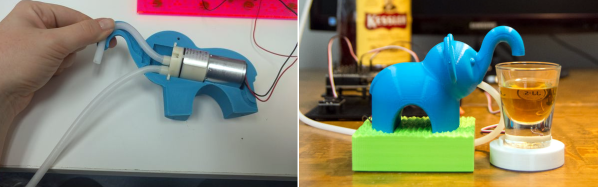
What do you get if you have a 3D printer, some booze (or any beverage), a pump, and an Arduino? If you are [RobotGeek] you wind up with an elephant that will pour you a shot on demand. The project was inspired by the ShotBot, but we have to admit the elephant sells it.

Conceptually, the device is pretty simple. A pump and a light sensor do all the real work. When you cover the sensor with a shot glass, the pump dispenses liquid. What we found of interest, though, was the process of starting with an elephant model and then modifying it for the purpose at hand. In addition to making it larger, they also cut off the trunk and replaced it with a spout. The steps show Fusion 360, but you could apply the same concepts using your choice of CAD programs.

Continue reading “Dumbo Never Forgets To Fill Your Glass”

Learn FPGA Programming From The 1940s

We often think that not enough people are building things with FPGAs. We also love the retrotechtacular posts on old computer hardware. So it was hard to pass up [karlwoodward’s] post about the Chip Hack EDSAC Challenge — part of the 2017 Wuthering Bytes festival.

You might recognize EDSAC as what was arguably the first operational computer if you define a computer as what we think of today as a computer. [Maurice Wilkes] and his team invented a lot of things we take for granted today including subroutines (Wheeler jumps named after a graduate student).

The point to the EDSAC challenge was to expose people to creating designs with FPGAs, particularly using the Verilog hardware description language (HDL). If you want to follow along or run your own Chip Hack, the materials are available on the Web. You can see an FPGA driving a tape punch to create souvenir tapes in the video, below.

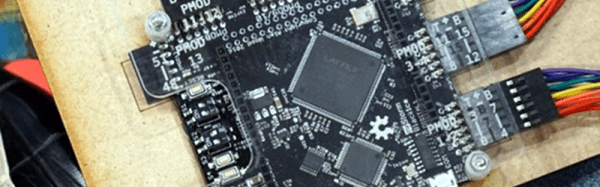
Some of the exercises are pretty simple and that’s perfect if you are starting out. The challenge uses a board with a Lattice ice40 FPGA and the open source toolchain for Lattice we’ve covered before. In fact, we’ve even done our own tutorials on the same basic device (but not the same board). Our final project generated PWM, not paper tape.

For the record, EDSAC was awesome. The execution unit was serial and processed bits that marched in one at a time over a mercury delay line. There is quite a bit of documentation and even some simulators, so if you ever wanted to get your hands into an old computer, this one isn’t a bad one to try.

Continue reading “Learn FPGA Programming From The 1940s”