A Cold Hard Look At FPGAs

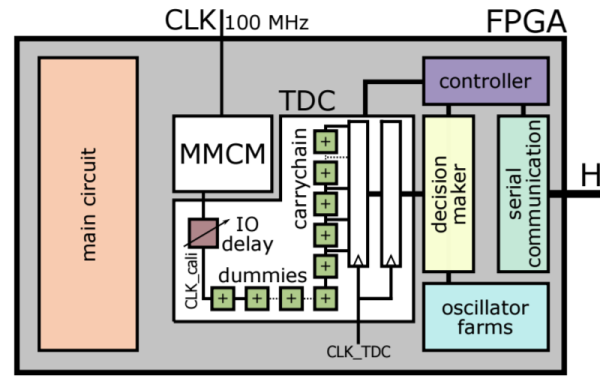
Researchers at the Delft University of Technology wanted to use FPGAs at cryogenic temperatures down around 4 degrees Kelvin. They knew from previous research that many FPGAs that use submicron fabrication technology actually work pretty well at those temperatures. It is the other components that misbehave — in particular, capacitors and voltage regulators. They worked out an interesting strategy to get around this problem.

The common solution is to move the power supply away from the FPGA and out of the cold environment. The problem is, that means long wires and fluctuating current demands will cause a variable voltage drop at the end of the long wire. The traditional answer to that problem is to have the remote regulator sense the voltage close to the load. This works because the current going through the sense wires is a small fraction of the load current and should be relatively constant. The Delft team took a different approach because they found sensing power supplies reacted too slowly: they created an FPGA design that draws nearly the same current no matter what it is doing.
Continue reading “A Cold Hard Look At FPGAs”

DIY LiPo Protectors

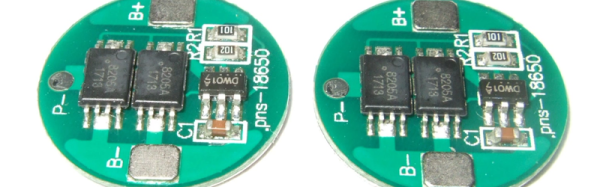
Spiderman’s Uncle Ben was known to say, “With great power comes great responsibility.” The same holds true for battery power. [Andreas] wanted to use protected 18650 cells, but didn’t want to buy them off the shelf. He found a forty cent solution. Not only can you see it in the video, below, but he also explains and demonstrates what the circuit is doing and why.

Protection is important with LiPo technology. Sure, LiPo cells have changed the way we use portable electronics, but they can be dangerous. If you overcharge them or allow them to go completely dead and then charge them, they can catch fire. Because they have a low source resistance — something that is usually desirable — short-circuiting them can also create a fire hazard. We’ve covered the chemistry in depth, but to prevent all the badness you’ll want a charger circuit.

Continue reading “DIY LiPo Protectors”

Reverse Engineering Guitar Hero

What do you do when a ten-year-old video game has a bug in it? If you are [ExileLord] you fix it, even if you don’t have the source code. Want to know how? Luckily, he produced a video showing all the details of how he tracked the bug down and fixed it. You can see the video below. You may or may not care about Guitar Hero, but the exercise of reverse engineering and patching the game is a great example of the tools and logic required to reverse engineer any binary software, especially a Windows binary.

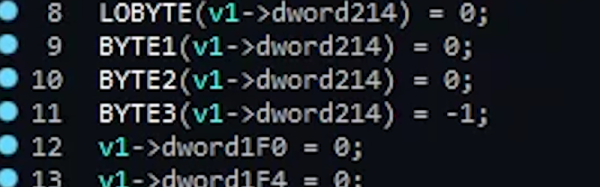
The tool of choice is IDA, an interactive debugger and disassembler. The crash thows an exception and since [ExileLord] has done some work on the game before, he was able to find a function that was creating a screen element that eventually led to the crash.

Continue reading “Reverse Engineering Guitar Hero”

3D Printing Aluminum With Nanoparticles

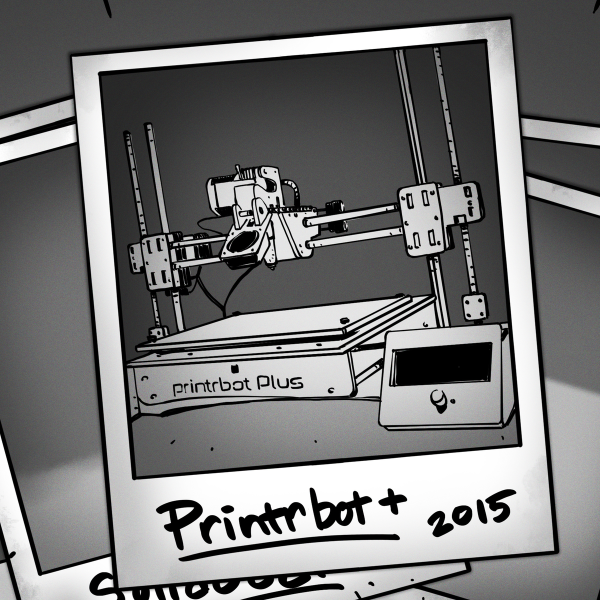
We love our 3D printers. But sometimes we really wish we could print in metal. While metal printing is still out of reach for most of us, HRL Labs announced a powdered aluminum printing process that they claim is a breakthrough because it allows printing (and welding) of high-strength aluminum alloys that previously were unprintable and unweldable.

The key is treating the metal with special zirconium-based nanoparticles. The nanoparticles act as nucleation sites that allow the aluminum to form the correct microstructure. The full paper on the process appears in Nature.

Continue reading “3D Printing Aluminum With Nanoparticles”

Datalogger Uses ESP32 And ESP8266 Low Power Modes

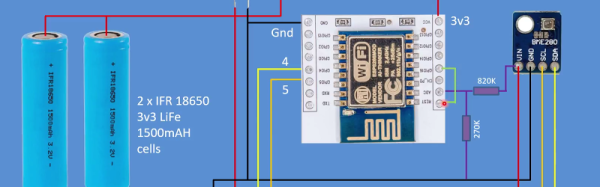
[G6EJD] wanted to design a low power datalogger and decided to look at the power consumption of an ESP32 versus an ESP8266. You can see the video results below.

Of course, anytime someone does a power test, you have to wonder if there were any tricks or changes that would have made a big difference. However, the relative data is interesting (even though you could posit situations where even those results would be misleading). You should watch the videos, but the bottom line was a 3000 mAh battery provided 315 days of run time for the ESP8266 and 213 days with the ESP32.

Continue reading “Datalogger Uses ESP32 And ESP8266 Low Power Modes”

Arduino And Pi Breathe New Life Into Jukebox

What do you do when someone gives you a Wurlitzer 3100 jukebox from 1969, but keeps all the records? If you are like [Tijuana Rick], you grab an Arduino and a Rasberry Pi and turn it into a really awesome digital music player.

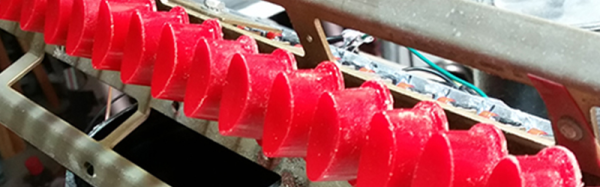
We’ll grant you, making a music player out of a Raspberry Pi isn’t all that cutting edge, but restoration and integration work is really impressive. The machine had many broken switches that had been hastily repaired, so [Rick] had to learn to create silicone molds and cast resin to create replacements. You can see and hear the end result in the video below.

[Rick] was frustrated with jukebox software he could find, until he found some Python code from [Thomas Sprinkmeier]. [Rick] used that code as a base and customized it for his needs.

There’s not much “how to” detail about the castings for the switches, but there are lots of photos and the results were great. We wondered if he considered putting fake 45s in the machine so it at least looked like it was playing vinyl.

Of course, you don’t need an old piece of hardware to make a jukebox. Or, you can compromise and build out a replica.

Continue reading “Arduino And Pi Breathe New Life Into Jukebox”

FPGA Clocks For Software Developers (or Anyone)

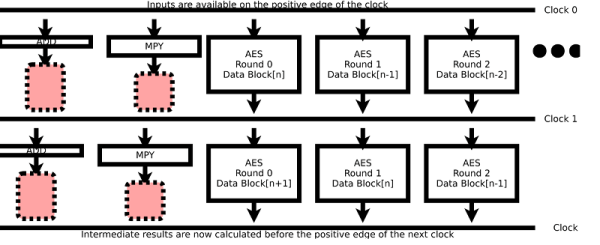
It used to be that designing hardware required schematics and designing software required code. Sure, a lot of people could jump back and forth, but it was clearly a different discipline. Today, a lot of substantial digital design occurs using a hardware description language (HDL) like Verilog or VHDL. These look like software, but as we’ve pointed out many times, it isn’t really the same. [Zipcpu] has a really clear blog post that explains how it is different and why.

[Zipcpu] notes something we’ve seen all too often on the web. Some neophytes will write sequential code using Verilog or VHDL as if it was a conventional programming language. Code like that may even simulate. However, the resulting hardware will — at best — be very inefficient and at worst will not even work.

Continue reading “FPGA Clocks For Software Developers (or Anyone)”