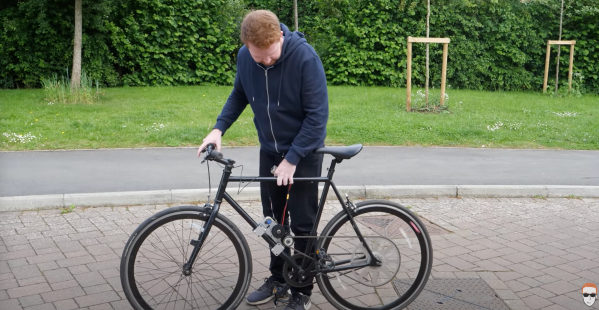
It sounds like a rhetorical question that a Midwestern engineer might ask, something on the order of ‘can you fix this bad PCB spin?’ [Tom Stanton] sets out to answer the title question and ends up building a working e-bike with a drone motor.
You might be thinking, a motor is a motor; what’s the big deal? But a drone motor and a regular e-bike motor are made for very different purposes. Drone motors spin at 30,000 RPM, and an e-bike hub motor typically does around 200-300 RPM while being much larger. Additionally, a drone motor goes in short spurts with a large fan blowing right on it, and an e-bike motor can run almost continuously.
The first step was to use gears and pulleys to reduce the RPM on the motor to provide more torque. A little bit of CAD and 3D printing later, [Tom] had a setup ready to try. However, the motor quickly burned out. With a slightly bigger motor and more gear reduction, version 2 performed remarkably well. After the race between a proper e-bike and the drone bike, the coils were almost melted.
If you’re thinking about making your bike electric, we have some advice. We’ll throw in a second piece of advice for free: use a larger motor than the drone motor, even though it technically works. Video after the break.
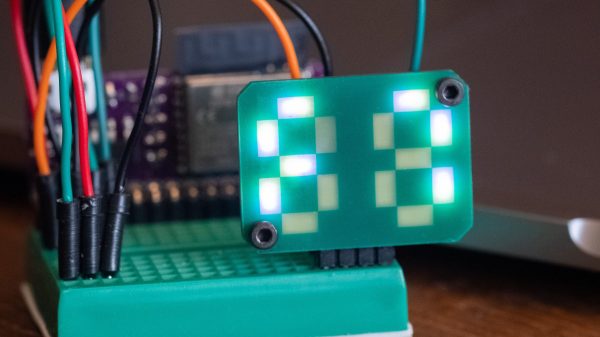
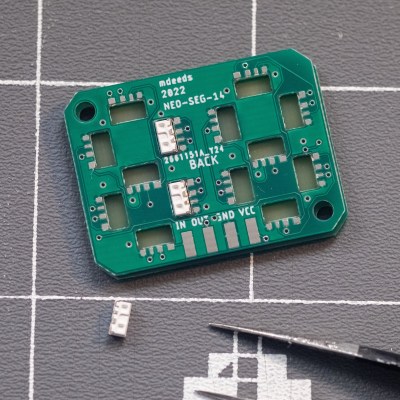 [Matt’s] build consists of a PCB filled with SK6812 side-mount LEDs, laid out in a typical 7-segment pattern. Each PCB features two 7-segment digits. The SK6812 LEDs can be driven in the same way as the famous WS2812B addressable LEDs, though they have the benefit of being more stable in color and brightness over a range of supply voltages.