The Bit79 Was A Famicom Clone That Took The “Family Computer” Name Seriously

While the original name of what much of the world knows as the NES was the Nintendo Family Computer, or Famicom for short, it was very rarely used as a family computer. Sure, there was a basic cartridge and an add-on keyboard sold in Japan, but it was always a sideshow to the games.

Nintendo recognized that when they brought their Entertainment System overseas. Most of the various famiclones — which date back to the mid-80s — are the same. BIT in Taiwan had a different idea: their Bit 79 would be a full home computer. Picture a C=64 that plays Nintendo games, and you might not be too far off. [Inkbox] tells the full story in his latest YouTube video, and it’s a must-watch for anyone interested in the history of 8-bit machines that are totally unknown in the West.

Continue reading “The Bit79 Was A Famicom Clone That Took The “Family Computer” Name Seriously”

Ultra-Long Range Flights To Ease Australian Air Travel

Pity the poor Australians. Isolated on a jagged hunk of land far from everywhere else, these industrious people have to take two-legged flights (or more) to reach a great many destinations in the northern hemisphere. It’s expensive, time consuming, and makes planning a trip a complete headache when wars break out around popular hub airports.

One airline is trying to solve this problem. The nation’s flag carrier, Qantas, has been hard at work on Project Sunrise. The goal is to run some of the longest non-stop commercial passenger flights ever, with great effort going into solving the technical and economic challenges involved.

Continue reading “Ultra-Long Range Flights To Ease Australian Air Travel”

A man in a black shirt with the word "Mutiny" in yellow letters next to a short set of red, orange, and yellow stripes like a 1970s truck graphics package guestures to the camera while holding a sketch of a blurple truck consisting of a tube frame cab, flat loading deck, orange seat, and a silvery front bumper.

A New Challenger Approaches The Open Source Vehicle

Cheap vehicles are thin on the ground in 2026, but [Andy Didorosi] thinks he has the answer for low-speed applications with an open source kei truck.

Still in the early design phase, [Didorosi] has an old factory in Detroit that has been home to his bus transportation business for the last several years, as well as the Sendpai kei truck project to make the world’s fastest kei truck. His vision is to make an affordable kit car truck that anyone can build in the comfort of their own garage. The current plan includes hub motors, which have so far not made it into any production EVs in the US, likely due to the problem with high unsprung weight.

Continue reading “A New Challenger Approaches The Open Source Vehicle”

Hackaday Europe 2026: Is Your Blood Pressure Monitor Lying To You?

Blood pressure is one of the so-called “vital signs” that medical practitioners use to determine the basic state of a patient in any given moment. It’s exactly what it sounds like—a measurement of the pressure of the blood flowing through the body, with some complications to account for the pulsatile nature of human blood flow.

You might think measuring blood pressure is a solved concern, and it mostly is. With that said, some blood pressure monitors out there aren’t quite doing their job properly, and [Milos Rasic] came to Hackaday Europe 2026 to spell out the problem.

Continue reading “Hackaday Europe 2026: Is Your Blood Pressure Monitor Lying To You?”

Gluing 8192 MCUs Together To Make A GPU

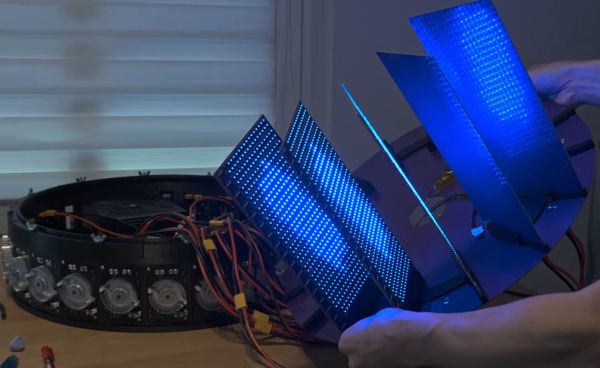
What do you get when you take 8,192 CH570 MCUs, put them on custom PCBs, and write firmware for this interconnected gaggle of cores? In the case of [bitluni]’s project, you get something that’s decidedly cluster-shaped.
These cheap MCUs feature a QingKe 32-bit RISC-V core that’s clocked at a maximum of 100 MHz, with an RV32IMBC instruction set. This means that they support integers, integer multiplication and division, bit manipulation, and compressed instructions, but no atomic, vector, or floating-point instructions.

The basic concept was to use a single MCU per pixel, but once you start scaling up a measly 10 mA and ~$0.10 per MCU to literally tens of thousands of them, you’re suddenly talking about thousands of dollars in hardware as well as a cool 655.36A at 3.3V – or 2 kW –  for something close to QVGA resolution at 320×200. Clearly this would be a rather crazy project to implement, which is why each MCU also got its own RGB LED to immediately create the pixel.

Continue reading “Gluing 8192 MCUs Together To Make A GPU”

He Comes To Bury Segmented Memory, Not To Praise It

[BillPg] has been designing a fantasy 1980s-era home computer. As part of the exercise, he’s reevaluating all the assumptions that have grown organically over time in the small computer landscape. Hindsight is, so they say, 20/20, but sometimes hindsight can also be colored by modern thinking. Sometimes an idea that seems stupid today made sense in the context of its time. In particular, [Bill] has thoughts on the much-maligned 8086 memory segments.

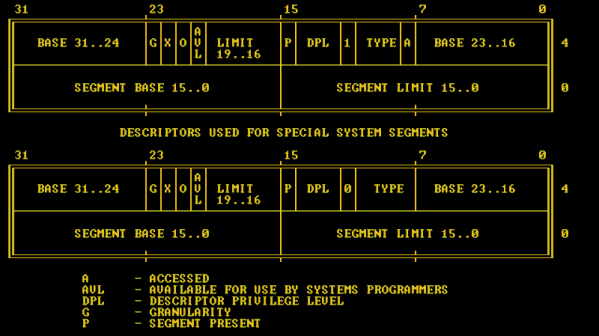
If you haven’t run into it before, the 8086/8088 had a problem. It wanted to be more or less conceptually software compatible with the 8080 and Z80 computers, which had 16-bit addresses, leading to a limit of 64K of memory. When Intel was designing the next generation of chips, it knew that 64K had to go, but telling developers that code would require huge reengineering was a non-starter. So the idea was to provide multiple 64K spaces broken up into segments.

Continue reading “He Comes To Bury Segmented Memory, Not To Praise It”

Extract Fumes In Midcentury Style With Nixie Tubes And Military Surplus

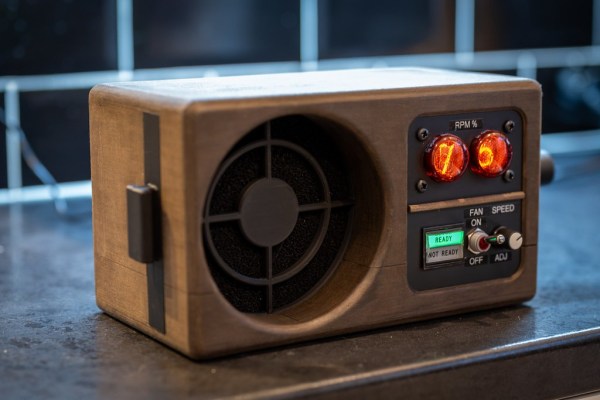
Nobody wants to breathe solder fumes; that’s a given. For most of us, an industrial-looking fan-and-filter made in China and picked up cheap feels like more than enough to keep our lungs clear. Other people, people like [George Conneely], have more refined tastes. Why have a fume extractor when you can have a work of art?

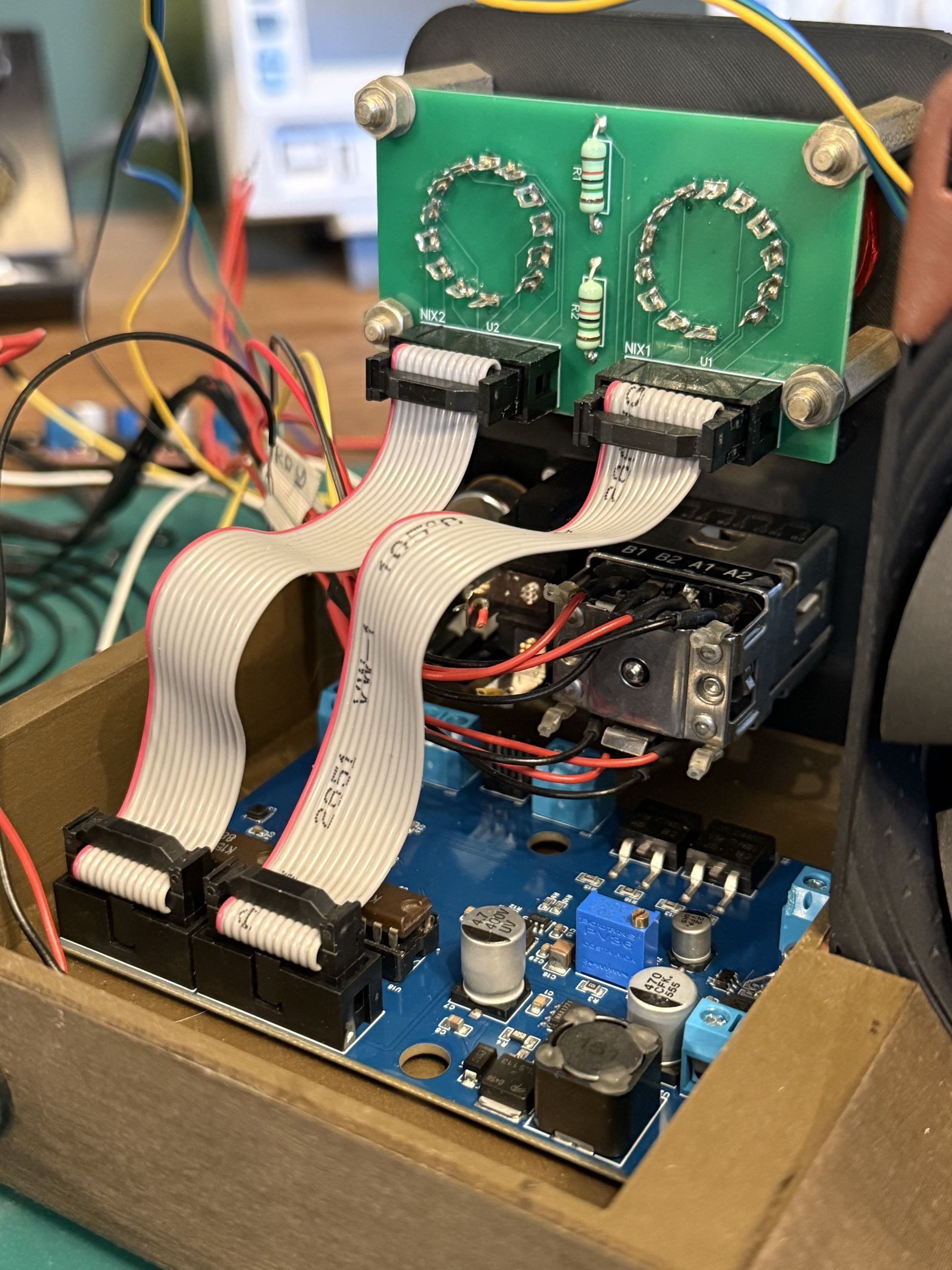
The insides aren’t quite as pretty as the outside, but it’s a clean build.

This is one of those projects where the images really speak for themselves, because the whole point is to be beautiful. Sure, the wooden case is lovingly sculpted by a—wait, it’s 3D-printed!? Yes, with the right stain and care applying it, it seems Wood PLA can fool the eye, or at least the camera. Inside that PLA case there’s a custom PCB with an ATMega microcontroller and some MOSFETS to drive the Nixie tubes. The two digits represent the fan’s set RPM as a percentage of maximum, as is clearly labeled. Using a READY/NOT READY indicator pulled from a Panvia Tornado to show whether the fan has actually spun up to its set speed is an amazing touch.

The only problem with this build is that it is too nice. We’d almost rather see it on Don Draper’s desk than risk dirtying it on a lab bench. Evidently, [George] ascribes to the philosophy that one should surround oneself with beauty whenever possible. Your tastes may differ, but to many, nixie tubes certainly qualify– whether on a desk clock or in a car’s dashboard, there’s just something about that incandescent glow.

Thanks to [George] for the tip.