David Williams Is “FPGA-Curious”

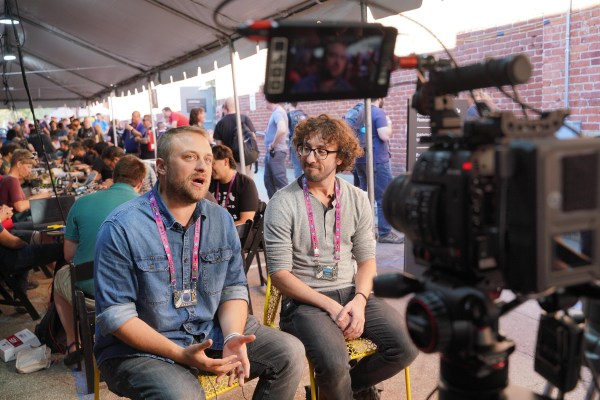
If you hadn’t noticed, we had a bit of an FPGA theme running at this year’s Superconference. Why? Because the open-source FPGA toolchain is ripening, and because many of the problems that hackers (and academics) are tackling these days have become complex enough to warrant using them. A case in point: David Williams is a university professor who just wanted to build a quadruped robotics project. Each leg has a complex set of motors, motor drivers, sensors, and other feedback mechanisms. Centralizing all of this data put real strains on the robot’s network, and with so many devices the microcontrollers were running out of GPIOs. This lead him to become, in his words, “FPGA-curious”.

If you’re looking for a gentle introduction to the state of the art in open-source FPGAs, this is your talk. David covers everything, from a bird’s eye view of hardware description languages, through the entire Yosys-based open-source toolchain, and even through to embedding soft-CPUs into the FPGA fabric. And that’s just the first 18 minutes. (Slides for your enjoyment, and you can watch the talk embedded below the break.)
Continue reading “David Williams Is “FPGA-Curious””

Chandrayaan-2 Found By Citizen Scientist; Reminds Us Of Pluto Discovery

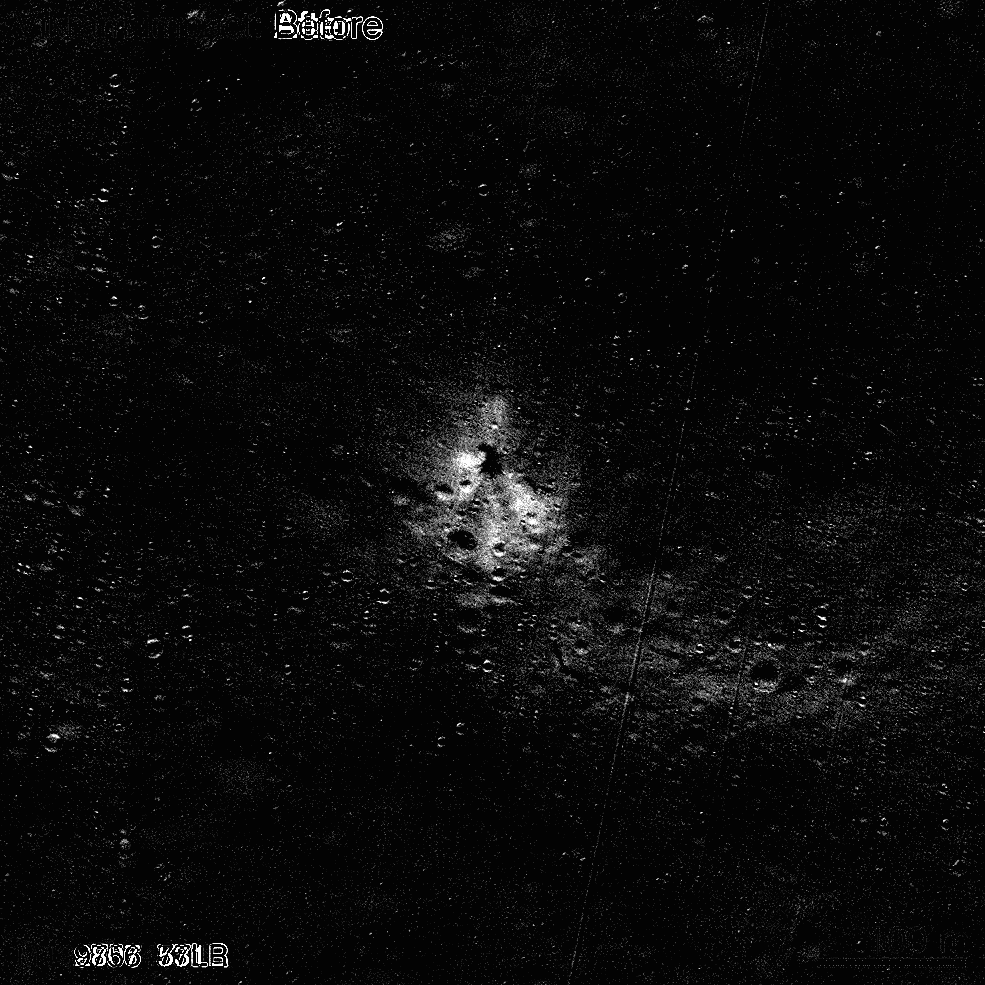
What does Pluto — not the dog, but the non-Planet — have in common with the Vikram lunar lander launched by India? Both were found by making very tiny comparisons to photographs. You’d think landing something on the moon would be old hat by now, but it turns out only three countries have managed to do it. The Chandrayaan-2 mission would have made India the fourth country. But two miles above the surface, the craft left its planned trajectory and went radio silent.

India claimed it knew where the lander crashed but never revealed any pictures or actual coordinates. NASA’s Lunar Reconnaissance Orbiter took pictures several times of the landing area but didn’t see the expected scar like the one left by the doomed Israeli lander when it crashed in April. A lot of people started looking at the NASA pictures and one Indian computer programmer and mechanical engineer, Shanmuga Subramanian, seems to have been successful.

Continue reading “Chandrayaan-2 Found By Citizen Scientist; Reminds Us Of Pluto Discovery”

Hackaday Podcast 045: Raspberry Pi Bug, Rapidly Aging Vodka, Raining On The Cloud, And This Wasn’t A Supercon Episode

Hackaday editors Mike Szczys and Elliot Williams talk over the last three weeks full of hacks. Our first “back to normal” podcast after Supercon turns out to still have a lot of Supercon references in it. We discuss Raspberry Pi 4’s HDMI interfering with its WiFi, learn the differences between CoreXY/Delta/Cartesian printers, sip on Whiskey aged in an ultrasonic jewelry cleaner, and set up cloud printing that’s already scheduled for the chopping block. Along the way, you’ll hear hints of what happened at Supercon, from the definitive guide to designing LEDs for iron-clad performance to the projects people hauled along with them.

Take a look at the links below if you want to follow along, and as always tell us what you think about this episode in the comments!

Take a look at the links below if you want to follow along, and as always, tell us what you think about this episode in the comments!

Direct download (60 MB or so.)

Continue reading “Hackaday Podcast 045: Raspberry Pi Bug, Rapidly Aging Vodka, Raining On The Cloud, And This Wasn’t A Supercon Episode”

Tuning Up The ThinkGeek Star Trek Intercom Panel

On Star Trek, all Kirk and friends had to do was snap the button on the always conveniently located intercom panel, start talking, and the intended recipient would immediately respond no matter where they were in the ship. How did it work? Who knows. In spite of, or perhaps even because of, the lightly-explained nature of the technology, the cherry-red wall intercoms still hold a certain charm for fans of the groundbreaking show.

A viewer sent [Fran Blanche] a scaled down replica of the intercom from ThinkGeek, and while it certainly looks fairly close to the original prop, it has a couple of annoying design elements. When triggered by the side-mounted motion sensors, the panel will play either the iconic swoosh of the automatic doors or the “Red Alert” sound effect. It’s a cute idea for a kid’s bedroom maybe, but not exactly ideal for somebody who regularly records YouTube videos.

Peak 23rd century technology

So the first order of business was to cut the motion sensors out of the circuit and replace them with a push button. [Fran] draws up a quick diagram to explain how these sensors work, and shows that they can easily be bypassed with a momentary switch since they normally bring the line high when triggered. She then converted the indicator light on the right side of the panel into a button to enable the alert sound effect, which is more accurate to how it worked in the show anyway.

The other issue, and perhaps the most egregious to Star Trek fans, is that the “Red Alert” indicator on the top of the panel didn’t actually flash like it did in the show. To design and build this panel and not put a few LEDs behind that piece of frosted plastic seems a bit like producing a Matchbox car and forgetting to make the wheels spin. With a couple of red LEDs and a bit of new wiring, the oversight was quickly rectified.

While it might not be perfect, at least ThinkGeek actually produced a functional product this time. It could have ended up like one of their April Fool’s “products” that never get put into production, forcing a desperate Trekkie to begrudgingly build his own version.

Continue reading “Tuning Up The ThinkGeek Star Trek Intercom Panel”

This Week In Security: Tegra Bootjacking, Leaking SSH, And StrandHogg

CVE-2019-5700 is a vulnerability in the Nvidia Tegra bootloader, discovered by [Ryan Grachek], and breaking first here at Hackaday. To understand the vulnerability, one first has to understand a bit about the Tegra boot process. When the device is powered on, a irom firmware loads the next stage of the boot process from the device’s flash memory, and validates the signature on that binary. As an aside, we’ve covered a similar vulnerability in that irom code called selfblow.

On Tegra T4 devices, irom loads a single bootloader.bin, which in turn boots the system image. The K1 boot stack uses an additional bootloader stage, nvtboot, which loads the secure OS kernel before handing control to bootloader.bin. Later devices add additional stages, but that isn’t important for understanding this. The vulnerability uses an Android boot image, and the magic happens in the header. Part of this boot image is an optional second stage bootloader, which is very rarely used in practice. The header of this boot image specifies the size in bytes of each element, as well as what memory location to load that element to. What [Ryan] realized is that while it’s usually ignored, the information about the second stage bootloader is honored by the official Nvidia bootloader.bin, but neither the size nor memory location are sanity checked. The images are copied to their final position before the cryptographic verification happens. As a result, an Android image can overwrite the running bootloader code. Continue reading “This Week In Security: Tegra Bootjacking, Leaking SSH, And StrandHogg”

Not-Quite-So-Hot Stuff: A Thermal Exam On The Latest Raspberry Pi

When the Raspberry Pi 4 was first launched, one of its few perceived flaws was that it had a propensity to get extremely hot. It’s evidently something the Pi people take very seriously, so in the months since they have addressed the problem with a set of firmware updates. Now they’ve taken a look at the effect of the fixes in a piece on the Raspberry Pi web site, and it makes for an interesting comparison.

The headline figure is that all updates together remove about a watt of power from the load, a significant quantity for what is still a board that can run from a capable phone charger. Breaking down the separate parts of the updates is where the meat of this story lies though, as we see the individual effects of the various USB, memory, power management and clocking updates. In temperature terms they measure an on-load drop from 72.1 °C to 58.1 °C, which should be a significant improvement for any Pi 4 owner.

There is a debate to be had over in what role a computer such as a Pi should serve. As successive revisions become ever more desktop-like in their capabilities, do they run the risk of abandoning the simplicity of a cheap Linux box as a component that makes us come back for more? It’s a possibility, but one they have very well addressed by developing the Pi Zero. They have also successfully avoided the fate of the Arduino — inexorably tied to its ATmega powered original line despite newer releases. As we have frequently said when reviewing Raspberry Pi competitors, it’s the software support that sets them apart from the herd, something this power-draw story demonstrates admirably.

Gameslab: The Other FPGA Game Console Badge

Anyone who was at Supercon will no doubt remember the badges that dangled around everyone’s neck. Some were reasonable, while some were neck-straining monsters that added anything and everything to hack the badge into something cool. We saw everything from AI cameras to a fully autonomous vehicle being worn with pride.

Sadly, one that we missed was Gameslab, [Craig J. Bishop]’s FPGA-based portable game console. No, not that FPGA-based game console; in an example of great minds thinking alike, [Craig] had actually been toying with his own handheld console design for quite some time. And we have to say the results are stunning.

The FPGA at the heart of this is a Xilinx Zynq FPGA-ARM Cortex A9 combo SoC, normally a prohibitively expensive monster of a chip. When [Craig] found “refurbished” Zynq chips on eBay for less than 10% of the cost of new units, it was literally game-on for the build. The console required a six-layer PCB to support the big BGA chip and the hundreds of support components around it. There’s a 5″ TFT touchscreen with a video controller implemented in the FPGA, a stereo sound system, and all the buttons and thumbsticks you’d expect on a modern console.

For our money, the best part is the case, about which [Craig] has yet to share any details. But it looks like a machined aluminum plate with wide chamfers around each cutout that contrast nicely with the brushed surface. We’ll be looking forward to more details on that and on progress with Gameslab.