It’s NICER In Orbit

Given the sheer volume of science going on as the International Space Station circles above our heads every 90 minutes or so, it would be hard for any one experiment to stand out. ISS expeditions conduct experiments on everything from space medicine to astrophysics and beyond, and the instruments needed to do the science have been slowly accreting over the years. There’s so much stuff up there that almost everywhere you turn there’s a box or pallet stuck down with hook-and-loop fasteners or bolted to some bulkhead, each one of them doing something interesting.

The science on the ISS isn’t contained completely within the hull, of course. The outside of the station fairly bristles with science, with packages nestled in among the solar panels and other infrastructure needed to run the spacecraft. Peering off into space and swiveling around to track targets is an instrument with the friendly name NICER, for “Neutron Star Interior Composition Explorer.” What it does and how it does it is interesting stuff, and what it’s learning about the mysteries of neutron stars could end up having practical uses as humanity pushes out into the solar system and beyond.

Continue reading “It’s NICER In Orbit”

Soak Up The Sun With This 3D Printed Solar Harvester

At first glance, adding solar power to your project might seem easy. Get a photovoltaic panel, point it towards the big ball of burning gas in the sky, and off you go. But in reality, there’s a bit more to it than that. Especially when you’re trying to do something on a small scale. Without a rooftop full of panels pumping out power, you’ve got to take what you can get.

If you’re looking to power small electronic devices such as sensors with a single solar panel, [Vadim Panov] has put together a very concise write-up and video on building a low-cost solar harvester. It combines a relatively small photovoltaic panel, a charging circuit, and a battery for energy storage into a easily mountable package. He’s provided all the details necessary to create your own version, all you have to do now is come up with the application for it.

As far as the electronics go, this project is about as straightforward as it gets. The three watt panel is connected up to a simplistic charging circuit, which in turn feeds into a single 18650 cell. You might be wondering why a charge controller is even necessary in such a simple set up. One problem is that the output voltage of the panel is higher than that of the battery. You also need a blocking diode that will prevent the battery from discharging into the cell during the night or in cloudy conditions.

While the electronics might seem elementary to some readers, we think the 3D printed case alone is worth taking a look at. Not only has [Vadim] come up with a design that perfectly encloses the fragile solar panel and associated electronics, but in the video after the break, he also explains how the entire thing can be made waterproof with an epoxy coating. As 3D prints can have a tendency to be porous, this technique is definitely something you should file away mentally if you’ve been thinking of deploying a printed enclosure outdoors.

Whether you’re looking to power environmental sensors for as near a century as is technically possible or a portable OpenWRT router for mobile anonymity, these small solar panels hold a lot of promise if you know how to work around their limitations.

Continue reading “Soak Up The Sun With This 3D Printed Solar Harvester”

The Saga Of 32-Bit Linux: Why Going 64-Bit Raises Concerns Over Multilib

The story of Linux so far, as short as it may be in the grand scheme of things, is one of constant forward momentum. There’s always another feature to implement, an optimization to make, and of course, another device to support. With developer’s eyes always on the horizon ahead of them, it should come as no surprise to find that support for older hardware or protocols occasionally falls to the wayside. When maintaining antiquated code monopolizes developer time, or even directly conflicts with new code, a difficult decision needs to be made.

Of course, some decisions are easier to make than others. Back in 2012 when Linus Torvalds officially ended kernel support for legacy 386 processors, he famously closed the commit message with “Good riddance.” Maintaining support for such old hardware had been complicating things behind the scenes for years while offering very little practical benefit, so removing all that legacy code was like taking a weight off the developer’s shoulders.

The rationale was the same a few years ago when distributions like Arch Linux decided to drop support for 32-bit hardware entirely. Maintainers had noticed the drop-off in downloads for the 32-bit versions of their distributions and decided it didn’t make sense to keep producing them. In an era where even budget smartphones are shipping with 64-bit processors, many Linux distributions have at this point decided 32-bit CPUs weren’t worth their time.

Given this trend, you’d think Ubuntu announcing last month that they’d no longer be providing 32-bit versions of packages in their repository would hardly be newsworthy. But as it turns out, the threat of ending 32-bit packages caused the sort of uproar that we don’t traditionally see in the Linux community. But why?

Continue reading “The Saga Of 32-Bit Linux: Why Going 64-Bit Raises Concerns Over Multilib”

New Part Day: The $15 ESP32 With Cellular

Cruise around AliExpress for long enough and you’ll find some interesting new hardware. The latest is the TTGO T-Call, an ESP32 breakout board that also has a cellular modem. Yes, it’s only a 2G modem, but that still works in a lot of places, and the whole thing is $15.

On board the TTGO T-Cal is the ESP-WROVER-B, the same module you all know and love that features a dual-core ESP running at 240 MHz with 4 MB of Flash and 8 MB of SRAM. Add to this WiFi and Bluetooth, and you have a capable microcontroller platform. Of note is that this board includes a USB-C port, ostensibly wired so that it behaves like a normal USB micro port. That’s neat, 2019 is the year USB C connectors became cheaper than USB micro connectors.

In addition to the ESP32 module, there’s also cellular in the form of a SIM800 module. This module has been around for a while and used in many, many cellular-connected projects and products like the ZeroPhone. This module is only a 2G module, and that’ll be going away shortly (if not already) in built-up areas, but this can serve as a building block for modules that have more Gees than a 2G module. That said, if you’re looking for a WiFi and cellular bridge for fifteen bucks, you could do a lot worse for a lot more money.

Rock, Paper, Neural Net

You might think the game of Rock Paper Scissors is just the random chance, but that’s not true. There is a strategy for Rock Paper Scissors, multiple ones in fact, and the best human players can consistently beat any Joe Schmoe off the street. But what about computers? [Paul] answered that question with a tiny little keychain dongle that can beat you at Rock Paper Scissors.

This is a neural network, and you need to train a neural network, so where did [Paul] get all that data? roshambo.me offers thousands of paper rock scissor games, and trained the network on more than 85,000 human games, along with about 10,000 simulated games. Rock Paper Scissors isn’t a complicated game at all, and the entire neural network is stored on an ATtiny1614 microcontroller. The calculations are done as floats, even. That’s how non-computationally intensive this project is.

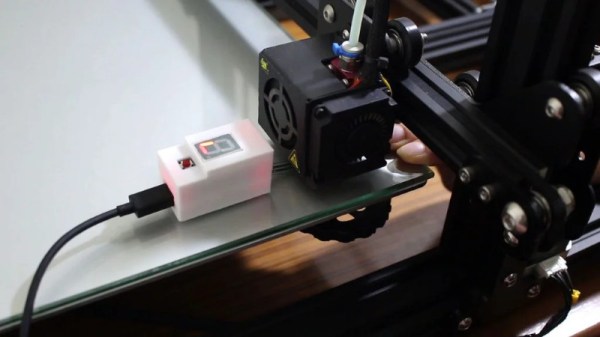
Building a neural network is one thing, but putting it in a handy keychain enclosure is something else. This handsome device fits on a PCB just larger than a 2032 coin cell battery and is enclosed in a 3D printed case. The buttons are 3D printed as well, with some clever application of fiber optic as light pipes for the LEDs. The end result is something that is slightly better than random chance at Rock Paper Scissors and shows off some matrix programming skills. Check out the video below.

Continue reading “Rock, Paper, Neural Net”

Hacking The Pocket Operator

The number of easily usable and programmable microcontrollers is small, so when selecting one for a project there are only a handful of very popular, well documented chips that most of us reach for. The same can be said for most small companies selling electronics as well, so if you reach for a consumer device that is powered by a microcontroller it’s likely to have one of these few in it. As a result, a lot of these off-the-shelf devices are easy to hack, reprogram, or otherwise improve, such as the Robot Pocket Operator.

The Pocket Operator is a handheld, fully-featured synthesizer complete with internal speaker. It runs on a Cortex M3, a very popular ARM processor which has been widely used for many different applications, and features everything you would need for a synthesizer in one tiny package, including a built-in speaker. It also supports a robust 24-bit DAC/ADC and all the knobs and buttons you would need. And now, thanks to [Frank Buss] there is a detailed teardown on exactly how this device operates.

Some of the highlights from the teardown include detailed drawings of how the display operates, all of the commands for controlling the device, and even an interesting note about how the system clock operates even when the device has been powered off for a substantial amount of time. For a pocket synthesizer this has a lot to offer, even if you plan on using it as something else entirely thanks to the versatility of the Cortex M3.

Continue reading “Hacking The Pocket Operator”

Wimbledon 2019: IBM’s Slammtracker AI Technology Heralds The Demise Of The Human Player

Whilst we patiently wait for the day that Womble-shaped robots replace human tennis players at Wimbledon, we can admire the IBM powered AI technology that the organisers of the Wimbledon tennis tournament use to enhance the experience for TV and phone viewers.

As can be expected, the technology tracks the ball, analyses player gestures, crowd cheers/booing but can’t yet discern the more subtle player behaviour such as serving an ace or the classic John McEnroe ‘smash your racket on the ground’ stunt. Currently a large number of expert human side kicks are required for recording these facets and manually uploading them into the huge Watson driven analytics system.

Phone apps are possibly the best places to see the results of the IBM Slammtracker system and are perfect for the casual tennis train spotter. It would be interesting to see the intrinsic AI bias at work – whether it can compensate for the greater intensity of the cheer for the more popular celebrities rather than the skill, or fluke shot, of the rank outsider. We also wonder if it will be misogynistic – will it focus on men rather than women in the mixed doubles or the other way round? Will it be racist? Also, when will the umpires be replaced with 100% AI?

Finally, whilst we at Hackaday appreciate the value of sport and exercise and the technology behind the apps, many of us have no time to mindlessly watch a ball go backwards and forwards across our screens, even if it is accompanied by satisfying grunts and the occasional racket-to-ground smash. We’d much rather entertain ourselves with the idea of building the robots that will surely one day make watching human tennis players a thing of the past.