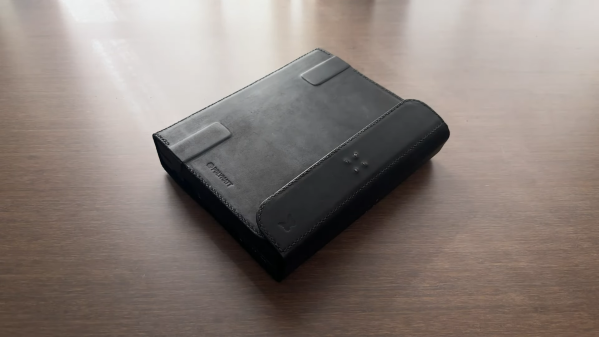
Once upon a time, laptops and other computer hardware often came with a fancy leather case for protection. That’s not really the case anymore, but it was in the golden era of the IBM ThinkPad. [polymatt] found a rare example, but wanted another one, so he decided to try and replicate it from scratch.
Leathercraft was a new discipline for [polymatt], and so the whole build was a learning experience. He started out by measuring the existing design and creating a diagram to guide his own work. He then traced the design on to a large piece of quality leather, carefully rounding the edges and adding a plastic stiffening plates to support the laptop where needed. Additional layers of leather were added to seal these in, and the leather was formed over guides to take the right shape. A slight misstep resulted in the case being too long, but a cut-and-shut job rectified the problem.
The finished result is a clean, impressive thing. Throughout the build, [polymatt] showed a certain mastery of the leatherworking tools that belied his lack of experience, too. The project should serve as a great inspiration to any other aspiring crafters who have contemplated creating their own custom leather goods for protecting their electronics. Video after the break.