History Of The Capacitor – The Pioneering Years

The history of capacitors starts in the pioneering days of electricity. I liken it to the pioneering days of aviation when you made your own planes out of wood and canvas and struggled to leap into the air, not understanding enough about aerodynamics to know how to stay there. Electricity had a similar period. At the time of the discovery of the capacitor our understanding was so primitive that electricity was thought to be a fluid and that it came in two forms, vitreous electricity and resinous electricity. As you’ll see below, it was during the capacitor’s early years that all this changed.

The history starts in 1745. At the time, one way of generating electricity was to use a friction machine. This consisted of a glass globe rotated at a few hundred RPM while you stroked it with the palms of your hands. This generated electricity on the glass which could then be discharged. Today we call the effect taking place the triboelectric effect, which you can see demonstrated here powering an LCD screen.

Continue reading “History Of The Capacitor – The Pioneering Years”

Don Eyles Walks Us Through The Lunar Module Source Code

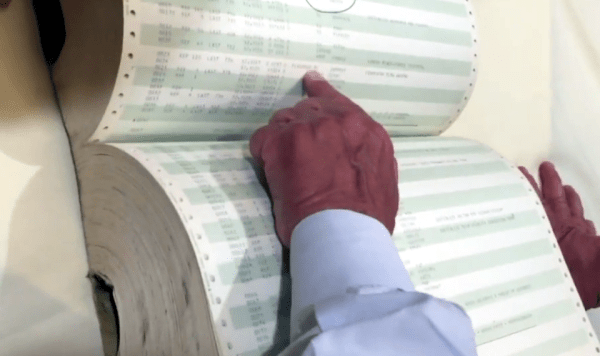
A couple weeks ago I was at a party where out of the corner of my eye I noticed what looked like a giant phone book sitting open on a table. It was printed with perforated green and white paper bound in a binder who’s cover looked a little worse for the wear. I had closer look with my friend James Kinsey. What we read was astonishing; Program 63, 64, 65, lunar descent and landing. Error codes 1201, 1202. Comments printed in the code, code segments hastily circled with pen. Was this what we thought we were looking at? And who brings this to a party?

Continue reading “Don Eyles Walks Us Through The Lunar Module Source Code”

EV History: The Lightning Precedes The Thunder

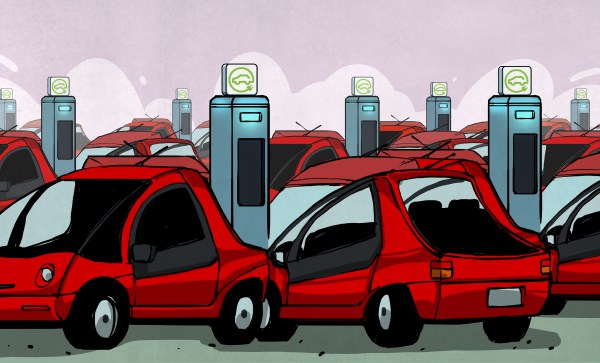
In 1988, a bunch of engineers from Hotzenwald, Germany, came together and decided that it is time for the future of mobility: A new, more modern and environmentally friendly car should put an end to fossils and emissions while still being fun to drive. “It should become a new kind of car. Smaller, lighter, cleaner – and more beautiful” is how future CEO Thomas Albiez described his mission. For the first time in automotive history, this series car would be designed as an all-electric vehicle from the start and set a new standard for mobility. The project was given the codename “Hotzenblitz” (“Hotzen Bolt”) to indicate how the idea came to them: Like a lightning bolt. The snarky regional term also came with a double meaning: Imaginary lightning bolts, used for insurance fraud.

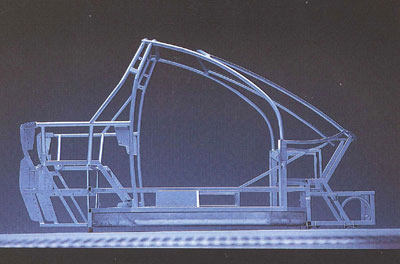
hotzenblitz_chassis
Hotzenblitz frame construction (origin unknown, image source)

Unnoticed by the rest of the world, they founded Hotzenblitz Mobile. Industrial Designer Harold Schurz was contracted to design the chassis for the Hotzenblitz, which was then modeled into a prototype chassis. The self-funded team moved fast. An external motorsports company helped to develop the tubular steel frame, and soon their vision took on shape. After the team had fitted a motor and transmission into the frame, CEO Thomas Albiez himself installed the traction battery and drive train. The team felt confident with the result, and in July 1990, during an open house day in the office, they somewhat spontaneously decided to call Green Tech entrepreneur and chocolate mogul Alfred Ritter.

Alfred Ritter had experienced financial losses after the Chernobyl Disaster. Many agricultural regions, including several hazelnut plantations that were vital to Alfred’s chocolate business, were irreversibly lost to the fallout contamination. It was then when he turned to the green energy business, founding the Paradigma group to manufacture solar collector systems and pellet heaters. When Thomas and the team called, Alfred jumped on the idea of an electric car. In the same year, Alfred Ritter and his sister Marli Hoppe-Ritter became shareholders in the company and helped to finance the future of the Hotzenblitz.

Continue reading “EV History: The Lightning Precedes The Thunder”

The Man Who Didn’t Invent The Personal Computer

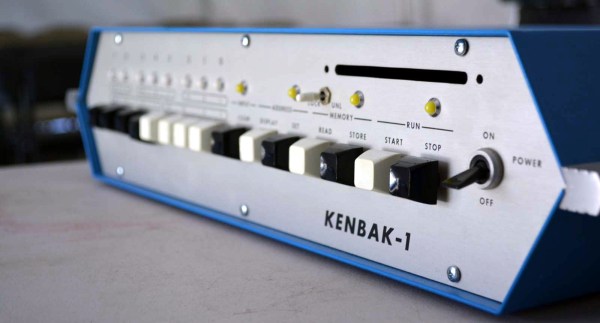
[John Blankenbaker] did not invent the personal computer. Museums, computer historians, and authors have other realities in mind when they say [John]’s invention, the KENBAK-1, was the first electronic, commercially available computer that was not a kit, and available to the general population.

In a way, it’s almost to the KENBAK’s detriment that it is labelled the first personal computer. It was, after all, a computer from before the age of the microprocessor. It is possibly the simplest machine ever sold and an architecturally unique machine that has more in common with the ENIAC than any other machine built in the last thirty years..

The story of the creation of this ancient computer has never been told until now. [John], a surprisingly spry octogenarian, told the story of his career and the development of the first personal computer at the Vintage Computer Festival East last month. This is his story of not inventing the personal computer.

Continue reading “The Man Who Didn’t Invent The Personal Computer”

Volkswagen Beetle – The Most Hackable Car

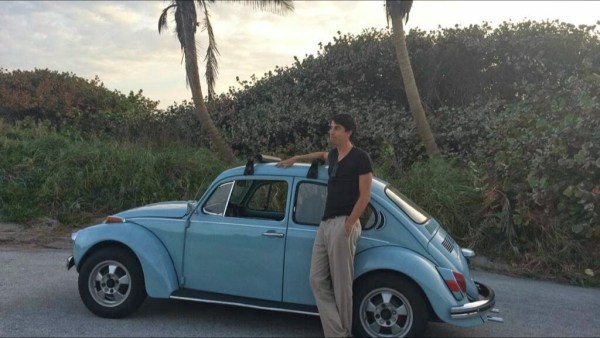
If you build a better mousetrap, the world will beat a path to your door. Of course it helps if your mousetrap is reliable, simple, cheap, and easy to work on. In the car world, look no further than arguably the most successful, and most hackable, car in history: the Volkswagen Type 1, more commonly known as the Beetle. The ways in which this car was modified to suit the needs of a wide range of people over its 65-year-long production run proves that great design, ease of use, and simplicity are the keys to success, regardless of the project or product.

Built by Ferdinand Porsche in 1930’s Germany, the Beetle was designed to be a car for anyone and everyone. Its leader at the time wanted a true “people’s car” (i.e. “Volkswagen”) that was affordable for a German family, could reliably travel at sustained highway speeds on the new German autobahns, and easily be repaired by its owners. The car features an air-cooled engine for simplicity and cost savings: no radiator, water pump, or coolant, plus reduced overall complexity. The engine can be easily removed by disconnecting the fuel line, the throttle cable, and the four bolts that hold it to the transaxle. The entire body is held on to the chassis by eighteen bolts and is also easy to remove by today’s standards. There’s no air conditioning, no power steering, and a rudimentary heater of sorts for the passenger cabin that blows more hot air depending on how fast the engine is running. But possibly the best example of its simplicity is the fact that the windshield washer mechanism is pressurised with air from the over-inflated spare tire, eliminating the need to install another piece of equipment in the car.

It’s not too big of a leap to realize how easily hackable this car is. Even Volkswagen realized this and used the platform to build a number of other vehicles: the Type 2 (otherwise known as the bus, van, hippie van, Kombi, etc.) the eclectic Karmann Ghia, and the Types 3 and 4. Parts of the Type 1 were used to build the Volkswagen 181, commonly referred to as “the Thing”. Ferdinand Porsche also used design elements and other parts of the Type 1 to build the first Porsche, essentially making a souped-up Beetle. The rear-engine, rear-wheel drive layout of modern Porsches is a relic of this distant Beetle cousin. But the real magic is what people started doing to the Beetles in their backyards in the ’60s and 70s: turning them into buggies, off road machines, race cars, and hot rods that are still used today.

At some point around this time, a few people realized that the Beetle was uniquely suited to off-road racing. The type of suspension combined with the rear-engine, rear-wheel-drive layout meant that even without four-wheel drive, this car could excel in desert racing. There are still classes in this race for stock Beetles and modified Beetles called Baja Bugs.

Continue reading “Volkswagen Beetle – The Most Hackable Car”

Blue Ribbon Microphone

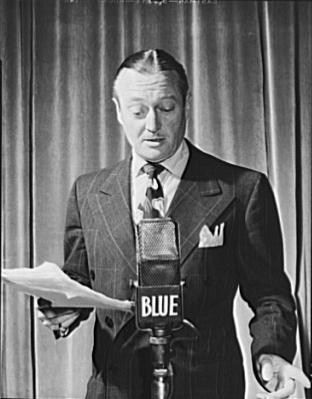
Edmund_Lowe_fsa_8b06653If you’ve ever seen an old movie or TV show where there was a radio announcer, you’ve probably seen a ribbon microphone. The RCA 44 (see Edmund Lowe, on right) had exceptional sound quality and are still valued today in certain applications. The name ribbon microphone is because the sound pickup is literally a thin strip of aluminum or other conductive material.

Unlike other common microphones, ribbons pick up high frequencies much better due to the high resonant frequency of the metallic ribbon. This is not only better in general, but it means the ribbon mic has a flatter frequency response even at lower frequencies. Another unique feature is that the microphone is bidirectional, hearing sounds from the front or back equally well. It is possible to build them with other directional patterns, although you rarely see that in practice.

Invention

In the early 1920s, Walter Schottky and Erwin Gerlach developed the ribbon microphone (and, coincidentally, the first ribbon loudspeaker). Harry Olson at RCA developed a ribbon mic that used coils and permanent magnets which led to the RCA Photophone Type PB-31 in 1931. Because of their superior audio response, they were instant hits and Radio City Music Hall started using the PB-31 in 1932. A newer version appeared in 1933, the 44A, which reduced reverberation.

Continue reading “Blue Ribbon Microphone”

Centennial Birthday Of Claude E. Shannon The Math And EE Pioneer

Dr. Claude E. Shannon was born 100 years ago tomorrow. He contributed greatly to the fields of engineering, communications, and computer science but is not a well known figure, even to those in the field. However, his work touches us all many times each day. The network which delivered this article to your computer or smartphone was designed upon important theories developed by Dr. Shannon.

Shannon was born and raised in Michigan. He graduated from the University of Michigan with degrees in Mathematics and Electrical Engineering. He continued his graduate studies at Massachusetts Institute of Technology (MIT) where he obtained his MS and PhD. He worked for Bell Laboratories on fire-control systems and cryptography during World War II and in 1956 he returned to MIT as a professor.

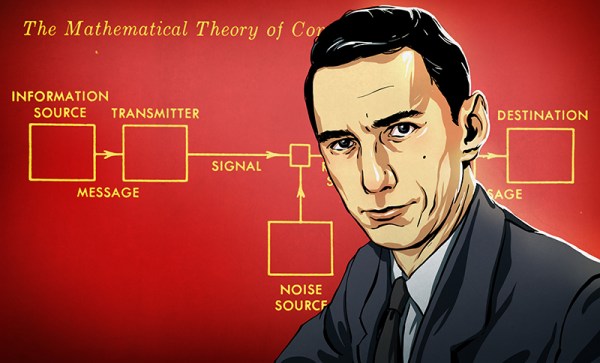
shannon-0Shannon’s first impactful contribution was his masters thesis which took the Boolean Algebra work of George Boole and applied it to switching circuits (then made up of relays). Before his work there was no formal basis for the analysis of switching systems, like telephone networks or elevator control systems. Shannon’s thesis developed the use of symbolic notation to represent networks and applied simplifying rules to optimize the system. These same rules later translated to vacuum tube and transistor logic aiding in the development of today’s computer systems. The thesis — A Symbolic Analysis of Relay and Switching Circuits — was completed in 1937 and subsequently published in 1938 in the Transactions of the American Institute of Electrical Engineers.

Shannon’s doctoral work continued in the same vein of applying mathematics someplace new, this time to genetics. Vannevar Bush, his advisor, commented, “It occurred to me that, just as a special algebra had worked well in his hands on the theory of relays, another special algebra might conceivably handle some of the aspects of Mendelian heredity”. Shannon’s work again is revolutionary, providing a mathematical basis for population genetics. Unfortunately, it was a step further than geneticists of time could take. His work languished, although interest increased over time.

Continue reading “Centennial Birthday Of Claude E. Shannon The Math And EE Pioneer”