Holey Moley: Fixing The Mars InSight Mole

In the early 1990s, NASA experienced a sea change in the way it approached space exploration. Gone were the days when all their programs would be massive projects with audacious goals. The bulk of NASA’s projects would fall under the Discovery Project and hew to the mantra “faster, better, cheaper,” with narrowly focused goals and smaller budgets, with as much reuse of equipment as possible.

The idea for what would become the Mars InSight mission first appeared in 2010 and was designed to explore Mars in ways no prior mission had. Where Viking had scratched the surface in the 1970s looking for chemical signs of life and the rovers of the Explorer program had wandered about exploring surface geology, InSight was tasked with looking much, much deeper into the Red Planet.

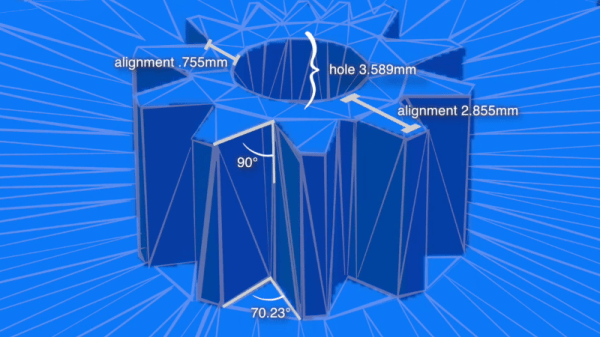
Sadly, InSight’s primary means of looking at what lies beneath the regolith of Mars is currently stuck a few centimeters below the surface. NASA and JPL engineers are working on a fix, and while it’s far from certain that that they’ll succeed, things have started to look up for InSight lately. Here’s a quick look at what the problem is, and a potential solution that might get the mission back on track.

Continue reading “Holey Moley: Fixing The Mars InSight Mole”

A Trillion Trees – How Hard Can It Be?

Data from 2016 pegs it as the hottest year since recording began way back in 1880. Carbon dioxide levels continue to sit at historical highs, and last year the UN Intergovernmental Panel on Climate Change warned that humanity has just 12 years to limit warming to 1.5 C.

Reducing emissions is the gold standard, but it’s not the only way to go about solving the problem. There has been much research into the field of carbon sequestration — the practice of capturing atmospheric carbon and locking it away. Often times, this consists of grand plans of pumping old oil wells and aquifers full of captured CO2, but there’s another method of carbon capture that’s as old as nature itself.

As is taught in most primary school science courses, the trees around us are responsible for capturing carbon dioxide, in the process releasing breathable oxygen. The carbon becomes part of the biomass of the tree, no longer out in the atmosphere trapping heat on our precious Earth. It follows that planting more trees could help manage carbon levels and stave off global temperature rises. But just how many trees are we talking? The figure recently floated was 1,000,000,000,000 trees, which boggles the mind and has us wondering what it would take to succeed in such an ambitious program.

Continue reading “A Trillion Trees – How Hard Can It Be?”

Retrotechtacular: The OSCAR 7 Satellite Died And Was Reborn 20 Years Later

If I were to ask you what is the oldest man-made orbiting satellite still in use, I’d expect to hear a variety of answers. Space geeks might mention the passive radar calibration spheres, or possibly one of the early weather satellites. But what about the oldest communication satellite still in use?

The answer is a complicated one. Oscar 7 is an amateur radio satellite launched on November 5th 1974, carrying two transponders and four beacons, all of which operate on bands available to amateur radio operators. Nearly 45 years later it still provides radio amateurs with contacts just as it did in the 1970s. But this bird’s history is anything but ordinary. It’s the satellite that came back from the dead after being thought lost forever. And just as it was fading from view it played an unexpected role in the resistance to the communist government in Poland.

Continue reading “Retrotechtacular: The OSCAR 7 Satellite Died And Was Reborn 20 Years Later”

Abraham Wald’s Problem Solving Lesson Is To Seek What’s Not There

You may not know the name Abraham Wald, but he has a very valuable lesson you can apply to problem solving, engineering, and many other parts of life. Wald worked for the Statistical Research Group (SRG) during World War II. This was part of a top secret organization in the United States that applied elite mathematical talent to help the allies win the war. Near Columbia University, mathematicians and computers — the human kind — worked on problems ranging from how to keep an enemy plane under fire longer to optimal bombing patterns.

One of Wald’s ways to approach problem was to look beyond the data in front of him. He was looking for things that weren’t there, using their absence as an additional data point. It is easy to critique things that are present but incorrect. It is harder to see things that are missing. But the end results of this technique were profound and present an object lesson we can still draw from today.

Continue reading “Abraham Wald’s Problem Solving Lesson Is To Seek What’s Not There”

Automate The Freight: When The Freight Is People

Before I got a license and a car, getting to and from high school was an ordeal. The hour-long bus ride was awful, as one would expect when sixty adolescents are crammed together with minimal supervision. Avoiding the realities going on around me was a constant chore, aided by frequent mental excursions. One such wandering led me to the conclusion that we high schoolers were nothing but cargo on a delivery truck designed for people. That was a cheery fact to face at the beginning of a school day.

What’s true for a bus full of students is equally true for every city bus, trolley, subway, or long-haul motorcoach you see. People can be freight just as much as pallets of groceries in a semi or a bunch of smiling boxes and envelopes in a brown panel truck. And the same economic factors that we’ve been insisting will make it far more likely that autonomous vehicles will penetrate the freight delivery market before we see self-driving passenger vehicles are at work with people moving. This time on Automate the Freight: what happens when the freight is people?

Continue reading “Automate The Freight: When The Freight Is People”

USB-C: One Plug To Connect Them All, And In Confusion Bind Them

USB stands for Universal Serial Bus and ever since its formation, the USB Implementers Forum have been working hard on the “Universal” part of the equation. USB Type-C, which is commonly called USB-C, is a connector standard that signals a significant new chapter in their epic quest to unify all wired connectivity in a single specification.

Many of us were introduced to this wonder plug in 2015 when Apple launched the 12-inch Retina MacBook. Apple’s decision to put everything on a single precious type-C port had its critics, but it was an effective showcase for a connector that could handle it all: from charging, to data transfer, to video output. Since then, it has gradually spread to more devices. But as the recent story on the Raspberry Pi 4’s flawed implementation of USB-C showed, the quest for a universal connector is a journey with frequent setbacks.

Continue reading “USB-C: One Plug To Connect Them All, And In Confusion Bind Them”

Retrotechtacular: The Floppy Disk Orphaned By Linux

About a week ago, Linus Torvalds made a software commit which has an air about it of the end of an era. The code in question contains a few patches to the driver for native floppy disc controllers. What makes it worthy of note is that he remarks that the floppy driver is now orphaned. Its maintainer no longer has working floppy hardware upon which to test the software, and Linus remarks that “I think the driver can be considered pretty much dead from an actual hardware standpoint“, though he does point out that active support remains for USB floppy drives.

It’s a very reasonable view to have arrived at because outside the realm of retrocomputing the physical rather than virtual floppy disk has all but disappeared. It’s well over a decade since they ceased to be fitted to desktop and laptop computers, and where once they were a staple of any office they now exist only in the “save” icon on your wordprocessor. The floppy is dead, and has been for a long time.

The save icon in LibreOffice and other desktop software is probably the last place the floppy exerts a hold over us.

Still, Linus’ quiet announcement comes as a minor jolt to anyone of A Certain Age for whom the floppy disk and the computer were once inseparable. When your digital life resided not in your phone or on the cloud but in a plastic box of floppies, those disks meant something. There was a social impact to the floppy as well as a technological one, they were a physical token that could contain your treasured ephemeral possessions, a modern-day keepsake locket for the digital age. We may have stopped using them over a decade ago, but somehow they are still a part of our computing DNA.

So while for some of you the Retrotechtacular series is about rare and unusual technology from years past, it’s time to take a look at something ubiquitous that we all think we know. Where did the floppy disk come from, where is it still with us, and aside from that save icon what legacies has it bestowed upon us?

Continue reading “Retrotechtacular: The Floppy Disk Orphaned By Linux”