Recycling Will Be Key To The Electric Vehicle Future

Electric vehicles have become a mainstay in the global automotive marketplace, taking on their gasoline rivals and steadily chewing out their own slice of market share, year after year. Government mandates to end the sale of polluting internal combustion engine vehicles and subsidies on cleaner cars promise to conspire to create an electric vehicle boom.

The result should be much cleaner air, as generating electricity in even the dirtiest power plants is far cleaner and more efficient than millions of individual engines puttering about the place. However, if the electric car is to reign supreme, they’ll need to be built in ever greater numbers. To do that is going to take huge amounts of certain materials that can be expensive and sometimes in very limited supply. Thus, to help support the EV boom, recycling of these materials may come to play a very important role.

Continue reading “Recycling Will Be Key To The Electric Vehicle Future”

Black Starts: How The Grid Gets Restarted

Gripped as we are at the time of this writing by a historic heatwave, it’s hard for those of us in the western United States to picture a time when cold and ice reigned across the land. But really, it was only about four months back that another bit of freakish weather was visited across most of the country, including places ill-equipped to deal with the consequences. The now-fabled “February Freeze” left millions, mostly in Texas, scrabbling about in the dark and cold as a series of cascading engineering failures took apart their electrical grid, piece by piece, county by county.

The event has been much discussed and dissected, as an event with such far-reaching impact should be. Like much discussion these days, precious little of it is either informed or civil, and that’s not good news for those seeking to understand what happened and how to prevent it from happening again, or at least to mitigate the effects somewhat. Part of that is understandable, given the life-disrupting and often life-threatening situations the disaster forced people to suddenly face. It’s also difficult for people to discuss an event so widespread in its scope and impact — there’s just too much for anyone to wrap their head around.

To make the present discussion a little easier, we’ll be focusing on one aspect of the February grid crash that’s often bandied about but rarely explained: that the Texas grid was mere minutes away from collapsing completely, and that it would have taken weeks or months to restore had it been able to slip away. Is that really possible? Can the power grid just “go away” completely and suddenly? The answer, sadly, is yes, but thankfully a lot of thought has been put into not only preventing it from happening but also how to restart everything if it does happen, by performing what’s known as a “Black Start.”

Continue reading “Black Starts: How The Grid Gets Restarted”

End Of An Era: NTSC Finally Goes Dark In America

A significant event in the history of technology happened yesterday, and it passed so quietly that we almost missed it. The last few remaining NTSC transmitters in the USA finally came off air, marking the end of over seven decades of continuous 525-line American analogue TV broadcasts. We’ve previously reported on the output of these channels, largely the so-called “FrankenFM” stations left over after the 2009 digital switchover whose sound carrier lay at the bottom of the FM dial as radio stations, and noted their impending demise. We’ve even reported on some of the intricacies of the NTSC system, but we’ve never taken a look at what will replace these last few FrankenFM stations.

If you are an American you may have heard of ATSC 3.0, perhaps by its marketing name of NextGen TV. Just like the DVB-T2 standard found in other parts of the world, it’s an upgrade to digital TV standards to allow for more recent video compression technologies and higher definition broadcasts. It has an interesting backwards compatibility feature absent in previous ATSC versions; there is the option of narrowing the digital bandwidth from 6 MHz to 5.5 MHz, and transmitting an analogue FM subcarrier where the old NTSC sound carrier on the same channel would have sat. Thus the FrankenFM stations have the option of upgrading to ATSC 3.0 and transmitting a digital channel package alongside their existing FM radio station. It’s reported that this switchover is happening, with one example given in the Twitter thread linked above.

The inexorable march of technology has thus given better quality TV alongside the retention of the FrankenFMs. We have to admit to being sorry to see the passing of analogue TV, it was an intricate and fascinating system that provided a testbed for plenty of experimentation back in the day. Perhaps as we see it slip over the horizon it’s worth pondering whether its digital replacement will also become an anachronism in an age of on-demand streaming TV, after all it shouldn’t have escaped most people’s attention that in 2021 the good TV content no longer comes to your screen via an antenna socket. Meanwhile we’ll keep our CRTs running, just in case we ever want to relive a 1980s night in with a VHS tape of Back To The Future.

Header image: Mysid, Public domain.

The Case Of The Mysterious Driveline Noise

Spend enough time on the automotive classifieds and you’ll end up finding a deal that’s too good to pass up. The latest of these in one’s own case was a Mercedes-Benz sedan, just past its twentieth birthday and in surprisingly tidy condition. At less than $3,000, the 1998 E240 was too good to pass up and simply had to be seen.

The car in question. Clean bodywork is too tempting to resist, even if there are mechanical issues.

The car was clean, too clean for asking price. Of course, a test drive revealed the car had one major flaw – an annoying hum from the drivetrain that seemed to vary with speed. Overall though, mechanical problems are often cheaper and easier to fix than bodywork, so a gamble was taken on the German sedan. The first order of business was to diagnose and rectify the issue.

Characterise, Research, Investigate

The first step to hunting down any noise is to characterise it as much as possible. In this case, the noise was most noticeable when the car was traveling at speeds from 40 km/h – 60 km/h, present as a vibrational humming noise. The location of the noise source was unclear. Importantly, the noise varied with the speed of the car, raising in pitch at higher speeds and dropping as speeds decreased. Engine speed had no effect on noise whatsoever, and the noise was present regardless of gear selected in the transmission, including neutral. Continue reading “The Case Of The Mysterious Driveline Noise”

Muse Group Continues Tone Deaf Handling Of Audacity

When we last checked in on the Audacity community, privacy-minded users of the free and open source audio editor were concerned over proposed plans to add telemetry reporting to the decades old open source audio editing software. More than 1,000 comments were left on the GitHub pull request that would have implemented this “phone home” capability, with many individuals arguing that the best course of action was to create a new fork of Audacity that removed any current or future tracking code that was implemented upstream.

For their part, the project’s new owners, Muse Group, argued that the ability for Audacity to report on the user’s software environment would allow them to track down some particularly tricky bugs. The tabulation of anonymous usage information, such as which audio filters are most commonly applied, would similarly be used to determine where development time and money would best be spent. New project leader Martin “Tantacrul” Keary personally stepped in to explain that the whole situation was simply a misunderstanding, and that Muse Group had no ill intent for the venerable program. They simply wanted to get a better idea of how the software was being used in the real-world, but after seeing how vocal the community was about the subject, the decision was made to hold off on any changes until a more broadly acceptable approach could be developed.

Our last post on the subject ended on a high note, as it seemed like the situation was on the mend. While there was still a segment of the Audacity userbase that was skeptical about remote analytics being added into a program that never needed it before, representatives from the Muse Group seemed to be listening to the feedback they were receiving. Keary assured users that plans to implement telemetry had been dropped, and that should they be reintroduced in the future, it would be done with the appropriate transparency.

Unfortunately, things have only gotten worse in the intervening months. Not only is telemetry back on the menu for a program that’s never needed an Internet connection since its initial release in 2000, but this time it has brought with it a troubling Privacy Policy that details who can access the collected data. Worse, Muse Group has made it clear they intend to move Audacity away from its current GPLv2 license, even if it means muscling out long-time contributors who won’t agree to the switch. The company argues this will give them more flexibility to list the software with a wider array of package repositories, a claim that’s been met with great skepticism by those well versed in open source licensing.

Continue reading “Muse Group Continues Tone Deaf Handling Of Audacity”

As Chinese Wheels Touch Martian Soil And Indian Astronauts Walk Towards The Launch Pad, Can We Hope For Another Space Race?

If you were born in the 1960s or early 1970s, the chances are that somewhere in your childhood ambitions lay a desire to be an astronaut or cosmonaut. Once Yuri Gagarin had circled the Earth and Neil Armstrong had walked upon the Moon, millions of kids imagined that they too would one day climb into a space capsule and join that elite band of intrepid explorers. Anything seems possible when you are a five-year-old, but of course the reality remains that only the very fewest of us ever made it to space.

Did You Once Dream Of The Stars?

The Soviet cosmonaut Yuri Gagarin in Finland in 1961. Arto Jousi, Public domain.

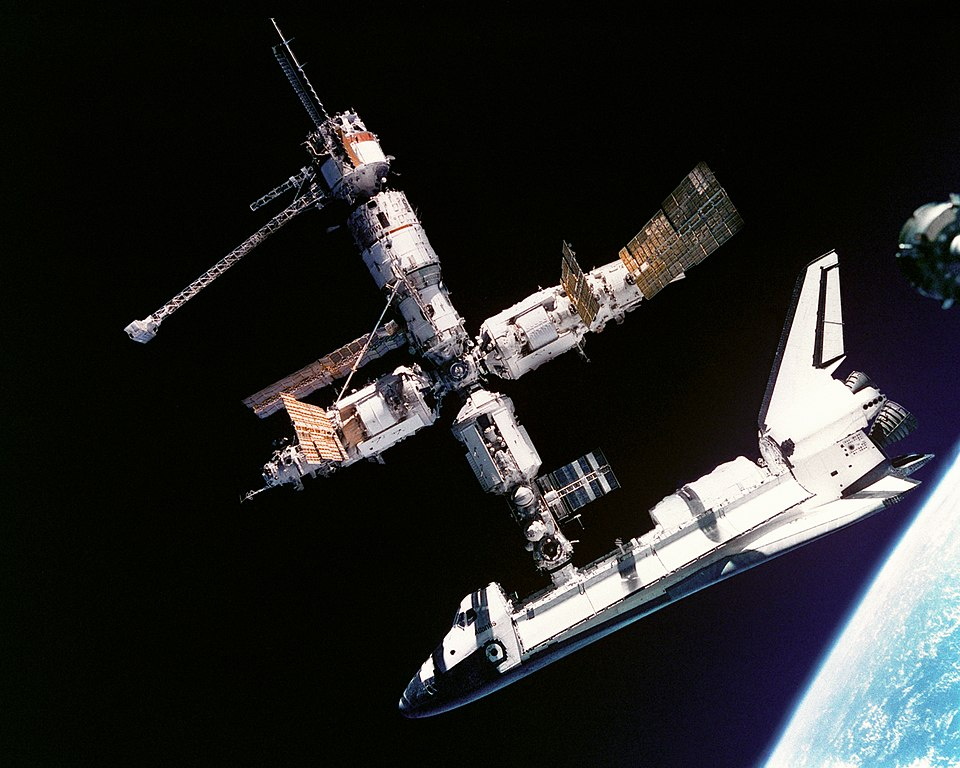
The picture may be a little different for the youth of a few decades later though, did kids in the ’90s dream of the stars? Probably not. So what changed as Shuttle and Mir crews were passing overhead?

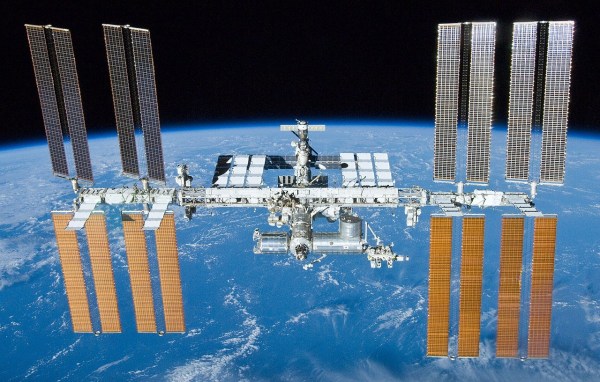
The answer is that the Space Race between the USA and Soviet Union which had dominated extra-terrestrial exploration from the 1950s to the ’70s had by then cooled down, and impressive though the building of the International Space Station was, it lacked the ability to electrify the public in the way that Sputnik, Vostok, or Apollo had. It was immensely cool to people like us, but the general public were distracted by other things and their political leaders were no longer ready to approve money-no-object budgets. We’d done space, and aside from the occasional bright spot in the form of space telescopes or rovers trundling across Mars, that was it. The hit TV comedy series The Big Bang Theory even had a storyline that found comedy in one of its characters serving on a mission to the ISS and being completely ignored on his return.

A few years ago a Chinese friend at my then-hackerspace was genuinely surprised that I knew the name of Yang Liwei, the Shenzhou 5 astronaut and the first person launched by his country into space. He’s a national hero in China but not so much on the rainy edge of Europe, where the Chinese space programme for all its progress at the time about a decade after Yang’s mission had yet to make a splash beyond a few space watchers and enthusiasts in hackerspaces. But this might be beginning to change.

Continue reading “As Chinese Wheels Touch Martian Soil And Indian Astronauts Walk Towards The Launch Pad, Can We Hope For Another Space Race?”

Checking Up On Earth’s Sister Planet: NASA’s Upcoming Venus Missions

Even as we bask in the knowledge that our neighboring planet Mars is currently home to a multitude of still functional landers, a triplet of rovers and with an ever-growing satellite network as well as the first ever flying drone on another planet, our other neighboring planet Venus is truly playing the wallflower, with Japan’s Akatsuki orbiter as the lone active Venusian mission right now.

That is about to change, however, with NASA having selected two new missions that will explore Venus by the end of this decade. The DAVINCI+ and VERITAS missions aim to respectively characterize Venus’ atmosphere and map its surface in unprecedented detail. This should provide us information about possible tectonic activity, as well as details about the Venusian atmosphere which so far have been sorely missing.

Despite Venus being the closest match to our planet Earth, how is it possible that we have been neglecting it for so long, and what can we expect from future missions, including and beyond these two new NASA missions?

Continue reading “Checking Up On Earth’s Sister Planet: NASA’s Upcoming Venus Missions”