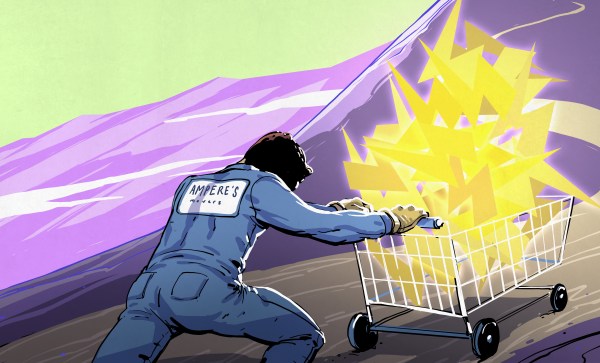
The popular press was recently abuzz with sad news from the planet Mars: Opportunity, the little rover that could, could do no more. It took an astonishing 15 years for it to give up the ghost, and it took a planet-wide dust storm that blotted out the sun and plunged the rover into apocalyptically dark and cold conditions to finally kill the machine. It lived 37 times longer than its 90-sol design life, producing mountains of data that will take another 15 years or more to fully digest.
Entire careers were unexpectedly built around Opportunity – officially but bloodlessly dubbed “Mars Exploration Rover-B”, or MER-B – as it stubbornly extended its mission and overcame obstacles both figurative and literal. But “Oppy” is far from the only long-duration success that NASA can boast about. Now that Opportunity has sent its last data, it seems only fitting to celebrate the achievement with a look at exactly how machines and missions can survive and thrive so long in the harshest possible conditions.
Super glue, or cyanoacrylate as it is formally known, is one heck of a useful adhesive. Developed in the 20th century as a result of a program to create plastic gun sights, it is loved for its ability to bond all manner of materials quickly and effectively. Wood, metal, a wide variety of plastics — super glue will stick ’em all together in a flash.
It’s also particularly good at sticking to human skin, and therein lies a problem. It’s bad enough when it gets on your fingers. What happens when you get super glue in your eyes?
Today, we’ll answer that. First, with the story of how I caught an eyeful of glue. Following that, I’ll share some general tips for when you find yourself in a sticky situation.
Blacksmiths were the high technologists of fabrication up until the industrial revolution gained momentum. At its core, this is the art and science of making any needed tool or mechanism out of metal. Are you using the correct metal? Is the tool strong where it needs to be? And how can you finish a project quickly, efficiently, and beautifully? These are lessons Blacksmiths feel in their bones and it’s well worth exploring the field yourself to appreciate the knowledge base that exists at any well-used forge.
I had an unexpected experience a few days ago at the Hacker Hotel weekend hacker camp in the Netherlands. At the side of the hotel our friends at RevSpace in The Hague had set up a portable forge. There was the evocative coal fire smell of burning coke from the hearth, an anvil, and the sound of hammering. This is intensely familiar to me, because I grew up around it. He may be retired now, but my dad is a blacksmith whose work lay mostly in high-end architectural ironwork.
Working the RevSpace forge at Hacker Hotel, in not the most appropriate clothing for the job.
The trouble is, despite all that upbringing, I don’t consider myself to be a blacksmith. Sure, I am very familiar with forge work and can bash metal with the best of them, but I know blacksmiths. I can’t do everything my dad could, and there are people we’d encounter who are artists with metal. They can bend and shape it to their will in the way I can mould words or casually solder a tiny surface-mount component, and produce beautiful things in doing so. My enthusiastic metal-bashing may bear the mark of some experience at the anvil but I am not one of them.
It was a bit of a surprise then to see the RevSpace forge, and I found myself borrowing a blacksmith’s apron to protect my smart officewear and grabbing a bit of rebar. I set to and made a pretty simple standard of the dilletante blacksmith, a poker with a ring on one end. Hammer one end of the rebar down to a point, square off the other end for just over 3 times the diameter of the ring, then bend a right angle and form the ring on the pointy end of the anvil. Ten minutes or so of fun in the Dutch sunshine. Working a forge unexpectedly brought with it a bit of a revelation. I may not be a smith of a high standard, but I have a set of skills by virtue of my upbringing that I had to some extent ignored.
Where others might have put effort into learning them, they’re things I just know. It had perhaps never occurred to me that maybe all my friends in this community didn’t learn how to do this by hanging round the forge next to the house they grew up in. If I have this knowledge merely by virtue of my upbringing, perhaps I should share some of it in a series of articles for those in our community who’ve always fancied a go at a forge but have no idea where to start.
It’s never been harder to repair your electronics. When the keyboard in your shiny new MacBook dies, you’ll have to send it to a Genius. When the battery in your iPhone dies, you’ll have to break out the pentalobe screwdrivers. Your technology does not respect your freedom, and this is true all the way down to the source code: the Library of Congress is thankfully chipping away at the DMCA in an effort that serves the Right to Repair movement, but still problems remain.
The ability — or rather, right — to repair will inevitably mean using electronics longer, and keeping them out of the garbage. That’s less e-waste, but it’s also older, potentially slower and less powerful portable workstations. This is the question: how long should you keep your electronics running? When do you start getting into the false economy of repairing something just because you can? What is the minimally viable laptop?
Just when you though it was safe to venture out, the National Oceanic and Atmospheric Administration released an unexpected update. Magnetic North is on the move — faster than expected. That’s right, we know magnetic north moves around, but now it’s happened at a surprising rate. Instead of waiting for the normal five year interval before an update on its position, NOAA have given us a fresh one a bit earlier.
There are some things that we can safely consider immutable, reliable, they’llĀ always be the same. You might think that direction would be one of them. North, south, east, and west, the points of the compass. But while the True North of the Earth’s rotation has remained unchanged, the same can not be said of our customary method of measuring direction.
Earth’s magnetic field is generated by a 2,000 km thick outer core of liquid iron and nickel that surrounds the planet’s solid inner core. The axis of the earth’s internal magnet shifts around the rotational axis at the whim of the currents within that liquid interior, and with it changes the readings returned by magnetic compasses worldwide.
The question that emerged at Hackaday as we digested news of the early update was this: as navigation moves inexorably towards the use of GPS and other systems that do not depend upon the Earth’s magnetic field, where is this still relevant beyond the realm of science?
Security researchers have found that it is possible to alter a digitally signed PDF without invalidating its signatures. To demonstrate it, they produced a fake document “refund order” of $1,000,000,000,000 dollars, with a valid signature from Amazon. This sparked my attention, since I was quite sure that they didn’t use some sort of quantum device to break the cryptography involved in the signing process. So what exactly is going on?
The researchers claim to found at least three different ways to, in their words:
… use an existing signed document (e.g., amazon.de invoice) and change the content of the document arbitrarily without invalidating the signatures. Thus, we can forge a document signed by invoicing@amazon.de to refund us one trillion dollars.
That’s not good news if you take into account that the main purpose of digitally signing a document is, well, prevent unauthorized changes in that document. The good news is that you can update your software to fix this flaws because of this research; the main PDF readers companies were given time to fix the issues. The bad news is that if you rely on the signature verification for any sensitive process, you likely want to go back and see if you were using vulnerable software previously and check that documents were correctly validated. I’m thinking about government institutions, banks, insurance companies and so on.
The implications are yet to be seen and probably won’t even be fully known.
There are three classes of attacks that work on different software. I’ll try to go into each one from what I could tell from reading the research.
Oddly, there’s been a few recent outbreaks of measles. It struck me how when I was a kid, a few hundred kids getting measles wouldn’t have been news at all. However, even a handful makes the news now, since in 2000 the Center for Disease Control declared measles eradicated in the United States.
So how can an eradicated disease come back? How did we eradicate it to start with? The answers tell a pretty interesting tale of science applying to everyday life.