Hackaday guide to Lathes

Lathe Headstock Alignment: Cutting A Test Bar

Let’s say you’ve recently bought a lathe and set it up in your shop. Maybe you’ve even gone and leveled it like a boss. You’re ready to make chips, right? Well, not so fast. As real machinists will tell you, you can use all the levels and lasers and whatever that you want, but the proof is in the cut. Precision leveling gets your machine in the ballpark (machinists have very small ballparks) but the final step to getting a machine to truly perform well is to cut a test bar. This is a surefire way to eliminate any last traces of twist in the bed.

There are two types of test bars. One is for checking headstock-to-ways alignment, which is what we’re doing here. There’s another type used for checking tailstock alignment, but that’s a subject for another day.

Continue reading “Lathe Headstock Alignment: Cutting A Test Bar”

Feeling The Heat Of High-Frequency Trading

It’s high summer here in North America, and for a lot of us, this one has been a scorcher. Media reports have been filled with coverage of heat wave after heat wave, with temperature records falling like dominoes.

But as they say, it’s not the heat, it’s the humidity, and that was painfully true in the first week of July as a slug of tropical air settled into the northeast United States. With dewpoints well into the 70s (25°C plus) and air temperatures pushing the century-mark (38°C), people suffered and systems from transportation to the electrical grid strained under the load. But as punishing as such soupy conditions are for people, there are other effects that are less well known but of critical importance to financial markets, where increased humidity can lead to billion-dollar losses for markets. Welcome to the weird world of high-frequency trading.

Continue reading “Feeling The Heat Of High-Frequency Trading”

When Is Wrought Iron Not Wrought Iron?

I grew up with a blacksmith for a parent, and thus almost every metalworking processes seems entirely normal to have as part of everyday life throughout my childhood. There seemed to be nothing we owned that couldn’t be either made or repaired with the application of a bit of welded steel. Children of blacksmiths grow up with a set of innate heavy hardware hacker or maker skills that few other young people acquire at that age. You know almost from birth that you should always look away from the arc when dad is welding, and you also probably have a couple of dictionary definitions ready to roll off the tongue.

The first is easy enough, farrier. A farrier makes and fits horseshoes. Some blacksmiths are farriers, many aren’t. Sorry, my dad made architectural ironwork for upmarket houses in London when he wasn’t making improvised toys for me and my sisters, he didn’t shoe horses. Next question.

The second is a bit surprising. Wrought iron. My dad didn’t make wrought iron.

But… Hang on, you say, don’t blacksmiths make wrought iron? At which point the floodgates open if you are talking to a blacksmith, and you receive the Wrought Iron Lecture.

Continue reading “When Is Wrought Iron Not Wrought Iron?”

The Photo Lab That Flew To The Moon

When planning a trip by car these days, it’s pretty much standard practice to spin up an image of your destination in Google Maps and get an idea of what you’re in for when you get there. What kind of parking do they have? Are the streets narrow or twisty? Will I be able to drive right up, or will I be walking a bit when I get there? It’s good to know what’s waiting for you, especially if you’re headed someplace you’ve never been before.

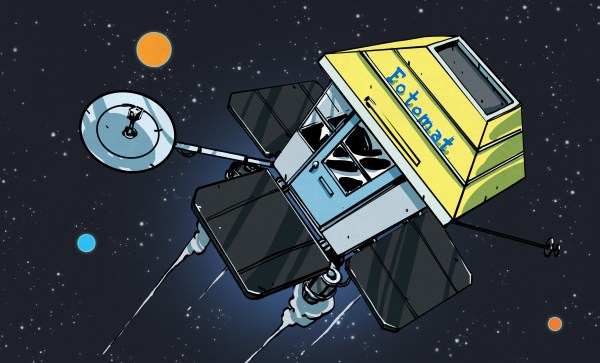
NASA was very much of this mind in the 1960s, except the trip they were planning for was 238,000 miles each way and would involve parking two humans on the surface of another world that we had only seen through telescopes. As good as Earth-based astronomy may be, nothing beats an up close and personal look, and so NASA decided to send a series of satellites to our nearest neighbor to look for the best places to land the Apollo missions. And while most of the feats NASA pulled off in the heyday of the Space Race were surprising, the Lunar Orbiter missions were especially so because of how they chose to acquire the images: using a film camera and a flying photo lab.

Continue reading “The Photo Lab That Flew To The Moon”

DefCAD Triggers HTTP 451

Depending on where you live, pointing your browser to Defcad.com yesterday may have shown you something you’d never seen before. It certainly did for me. That’s because I live in one of the two states (as of this writing) in the United States which have scrambled to block access to the online repository of firearm CAD files after they were approved for release by the US State Department.

Anyone using the internet in those states was presented with HTTP status code 451: “Unavailable For Legal Reasons”. This code was named for Ray Bradbury’s dystopian novel “Fahrenheit 451″, in which books are burned to censor the information they contain. Rather than simply returning the traditional 403 error, 451 can be used to signal that the server is willing to serve the user the information, but is being prevented from doing so by court order.

Whatever your personal feelings are on the public having unfettered access to technical information on firearms, this is still a worrying development. The First Amendment covers more than literal speech: source code and technical data is a form of expression just as much as a poem or song, and are equally protected. If the federal government believes the files that Cody Wilson’s Defense Distributed offers up are not restricted by International Traffic in Arms Regulations (ITAR), then how can a citizen of the United States not view them? The question remains unanswered and overnight a federal judge granted a restraining order to restrict the website for the remaining states.

Continue reading “DefCAD Triggers HTTP 451”

Retrotechtacular: Apex Radio — The Forgotten HiFi

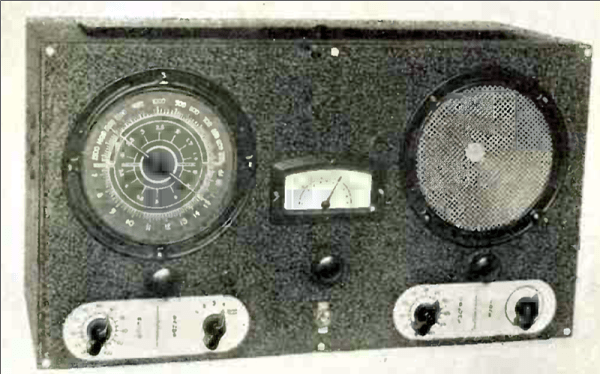
Broadcasting has changed a lot in the last few decades. We have satellite radio, internet streaming, HD radio all crowding out the traditional AM and FM bands. FM became popular because the wider channels and the modulation scheme allowed for less static and better sound reproduction. If you’ve never tried to listen to an AM radio station at night near a thunderstorm, you can’t appreciate how important that is. But did you know there was another U.S. broadcast band before FM that tried to solve the AM radio problem? You don’t hear about it much, but Apex or skyscraper radio appeared between 1937 and 1941 and then vanished with the onslaught of FM radio.

If you’ve heard of Apex radio — or if you are old enough to remember it — then you are probably done with this post. For everyone else, consider what radio looked like in 1936. The AM band had 96 channels between 550 and 1500 kHz. Because those frequencies propagate long distances at night, the FCC had a complex job of ensuring stations didn’t interfere with each other. Tricks like carefully choosing the location of stations, reducing power at night, or even shutting a station down after dark, were all used to control interference.

Continue reading “Retrotechtacular: Apex Radio — The Forgotten HiFi”

Kepler Planet Hunter Nears End Of Epic Journey

The Kepler spacecraft is in the final moments of its life. NASA isn’t quite sure when they’ll say their last goodbye to the space telescope which has confirmed the existence of thousands of exoplanets since its launch in 2009, but most estimates give it a few months at best. The prognosis is simple: she’s out of gas. Without propellant for its thrusters, Kepler can’t orient itself, and that means it can’t point its antenna to Earth to communicate.

Now far as spacecraft failures go, propellant depletion isn’t exactly unexpected. After all, it can’t pull into the nearest service station to top off the tanks. What makes the fact that Kepler will finally have to cease operations for such a mundane reason interesting is that the roughly $600 million dollar space telescope has already “died” once before. Back in 2013, NASA announced Kepler was irreparably damaged following a series of critical system failures that had started the previous year.

But thanks to what was perhaps some of the best last-ditch effort hacking NASA has done since they brought the crew of Apollo 13 home safely, a novel way of getting the spacecraft back under control was implemented. While it was never quite the same, Kepler was able to continue on with modified mission parameters and to date has delivered so much raw data that scientists will be analyzing it for years to come. Not bad for a dead bird.

Before Kepler goes dark for good, let’s take a look at how NASA managed to resurrect this planet hunting space telescope and greatly expand our knowledge of the planets in our galaxy.

Continue reading “Kepler Planet Hunter Nears End Of Epic Journey”