PipeWire, The Newest Audio Kid On The Linux Block

Raise your hand if you remember when PulseAudio was famous for breaking audio on Linux for everyone. For quite a few years, the standard answer for any audio problem on Linux was to uninstall PulseAudio, and just use ALSA. It’s probably the case that a number of distros switched to Pulse before it was quite ready. My experience was that after a couple years of fixing bugs, the experience got to be quite stable and useful. PulseAudio brought some really nice features to Linux, like moving sound streams between devices and dynamically resampling streams as needed.

Continue reading “PipeWire, The Newest Audio Kid On The Linux Block”

Graphene lattice

How Graphene May Enable The Next Generations Of High-Density Hard Drives

After decades of improvements to hard disk drive (HDD) technology, manufacturers are now close to taking the next big leap that will boost storage density to new levels. Using laser-assisted writes, manufacturers like Seagate are projecting 50+ TB HDDs by 2026 and 120+ TB HDDs after 2030. One part of the secret recipe is heat-assisted magnetic recording (HAMR).

One of the hurdles with implementing HAMR is finding a protective coating for the magnetic media that can handle this frequent heating while also being thinner than current coatings, so that the head can move even closer to the surface. According to a recent paper by N. Dwivedi et al. published in Nature Communications, this new protective coating may have been found in the form of sheets of graphene.

Continue reading “How Graphene May Enable The Next Generations Of High-Density Hard Drives”

Human Google: Ruth Freitag, Isaac Asimov, And Bibliographies

You don’t often turn on a light and think, “That power company is sure on the ball!” You generally only think of them when the lights go out without warning. I think the same is true of search. You don’t use Google or DuckDuckGo or any of the other search engines and think “Wow! How awesome it is to have this much information at your fingertips.” Well. Maybe a little, but it is hard to remember just how hard it was to get at information in the pre-search-engine age.

I were thinking about this the other day when I read that Ruth Freitag had died last year. Ruth had the unglamorous but very important title of reference librarian. But she wasn’t just an ordinary librarian. She worked for the Library of Congress and was famous in certain circles, counting among her admirers Isaac Asimov and Carl Sagan.

Ruth Freitag in 1985

You might wonder why a reference librarian would have fans. Turns out, high-powered librarians do more than just find books on the shelves for you. They produced bibliographies. If you wanted to know about, say, Halley’s comet today, you’d just do a Google search. Even if you wanted to find physical books, there are plenty of places to search: Google Books, online bookstores, and so on. But in the 1970s your options were much more limited.

Turns out, Ruth had an interest and expertise in astronomy, but she also had a keen knowledge of science and technology in general. By assembling comprehensive annotated bibliographies she could point people like Asimov and Sagan to the books they needed just like we would use Google, today.

Continue reading “Human Google: Ruth Freitag, Isaac Asimov, And Bibliographies”

Teardown: Franz Crystal Metronome

I wish I could tell you that there’s some complex decision tree at play when I select a piece of hardware to take apart for this series, but ultimately it boils down two just two factors: either the gadget was something I was personally interested in, or it was cheap. An ideal candidate would check both boxes, but that’s not always the case. This time around however, I can confidently say our subject doesn’t fall into either category.

Now don’t get me wrong, at first glance I found the Franz Crystal Metronome to be intriguing in its own way. With that vintage look, how could you not? But I’m about as far from a musician as one can get, so you’d hardly find a metronome on my wish list. As for the cost, a check on eBay seems to show there’s something of a following for these old school Franz models, with ones in good condition going for $50 to $80. Admittedly not breaking the bank, but still more than I’d like to pay for something that usually ends up as a pile of parts.

That being the case, why are you currently reading about it on Hackaday? Because it exploits something of a loophole in the selection process: it doesn’t work, and somebody gave it to me to try and figure out why. So without further ado let’s find out what literally makes a Franz Crystal Metronome tick, and see if we can’t get it doing so gain.

Continue reading “Teardown: Franz Crystal Metronome”

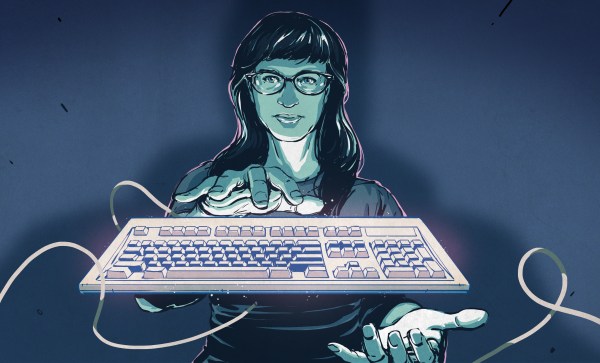
Illustrated Kristina with an IBM Model M keyboard floating between her hands.

Keebin’ With Kristina: The One With The Chinese Typewriter

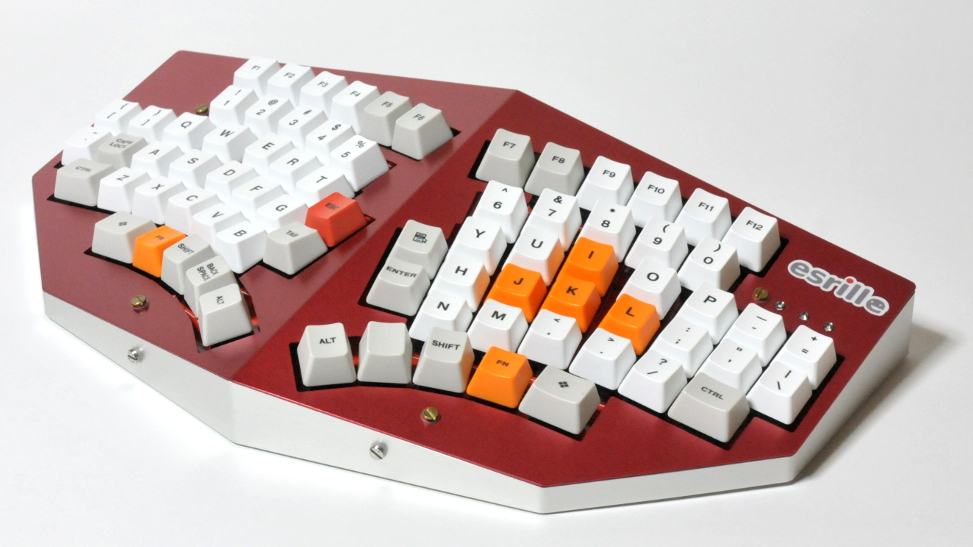
As much as I’d like to devote an article to each and every bit of keyboard-related what-have-you that I come across in my travels through the intertubes, there just aren’t enough hours. And after all, this isn’t Clack-a-Day. To that end, I gained editorial approval to bring you a periodic round-up of news and other tidbits on the keyboard and keyboard accessories front, and here we are. So let’s get to it!

Continue reading “Keebin’ With Kristina: The One With The Chinese Typewriter”

Review: Inkplate 6PLUS

While the price of electronic paper has dropped considerably over the last few years, it’s still relatively expensive when compared to more traditional display technology. Accordingly, we’ve seen a lot of interest in recovering the e-paper displays used in electronic shelf labels and consumer e-readers from the likes of Amazon, Barnes & Noble, and Kobo. Unfortunately, while these devices can usually be purchased cheaply on the second hand market, liberating their displays is often too complex a task for the average tinkerer.

Enter the Inkplate. With their open hardware ESP32 development board that plugs into the e-paper displays salvaged from old e-readers, the team at e-radionica is able to turn what was essentially electronic waste into a WiFi-enabled multipurpose display that can be easily programmed using either the Arduino IDE or MicroPython. The $99 Inkplate 6 clearly struck a chord with the maker community, rocketing to 926% of its funding goal on Crowd Supply back in 2020. A year later e-radionica released the larger and more refined Inkplate 10, which managed to break 1,000% of its goal.

For 2021, the team is back with the Inkplate 6PLUS. This updated version of the original Inkplate incorporates the design additions from the Inkplate 10, such as the Real-Time-Clock, expanded GPIO, and USB-C port, and uses a display recycled from newer readers such as the Kindle Paperwhite. These e-paper panels are not only sharper and faster than their predecessors, but also feature touch support and LED front lighting; capabilities which e-radionica has taken full advantage of in the latest version of their software library.

With its Crowd Supply campaign recently crossing over the 100% mark, we got a chance to go hands-on with a prototype of the Inkplate 6PLUS to see how e-radionica’s latest hacker friendly e-paper development platform holds up.

Continue reading “Review: Inkplate 6PLUS”

Growing Up With Computers

My son is growing up with computers. He’s in first grade, and had to list all of the things that he knows how to do with them. The list included things like mousing around, drawing ghosts with the paint program, and — sign of the times — muting and unmuting the microphone when he’s in teleconferences. Oh yeah, and typing emojis. He loves emojis.

When I was just about his age, I was also getting into computers. But home computers back then were in their early years as well. And if I look back, I’ve been getting more sophisticated about computers at just about the same pace that they’ve been getting more sophisticated themselves. I was grade school during the prime of the BASIC computers — the age of the Apple II and the C64. I was in high school for the dawn of the first Macs and the Amiga. By college, the Pentiums’ insane computational abilities just started to match my needs for them to solve numerical differential equations. And in grad school, the rise of the overclockable multi-cores and GPUs powered me right on through a simulation-heavy dissertation.

We were both so much younger then.

When I was a kid, they were playthings, and as a grownup, they’re powerful tools. Because of this, computers have never been intimidating. I grew up with computers.

But back to my son. I don’t know if it’s desirable, or even possible, to pretend that computers aren’t immensely complex for the sake of a first grader — he’d see right through the lie anyway. But when is the right age to teach kids about voice recognition and artificial neural networks? It’s a given that we’ll have to teach him some kind of “social media competence” but that’s not really about computers any more than learning how to use Word was about computers back in my day. Consuming versus creating, tweeting versus hacking. Y’know?

Of course every generation has its own path. Hackers older than me were already in high-school or college when it became possible to build your own computer, and they did. Younger hackers grew up with the Internet, which obviously has its advantages. Those older than me made the computers, and those younger have always lived in a world where the computer is mature and taken for granted. But folks about my age, we grew up with computers.