Retro Gadgets: Nintendo R.O.B Wanted To Be Your Friend

Too busy playing video games to have a social life? No worries. In 1985, Nintendo introduced R.O.B. — otherwise known as the Robotic Operating Buddy. It was made to play Nintendo with you. In Japan, apparently, it was the Family Computer Robot. We suppose ROB isn’t a very Japanese name. The robot was in response to the video game market crash of 1983 and was meant to keep the new Nintendo Entertainment System (NES) from being classified as a video game, which would have been a death sentence at the time of its release.

Since you might not have heard of R.O.B., you can probably guess it didn’t work out very well. In fact, the whole thing tanked in two years and resulted in only two games.

Continue reading “Retro Gadgets: Nintendo R.O.B Wanted To Be Your Friend”

Stadia Controller’s Two Extra Buttons Get Seen With WebHID

The Google Stadia game streaming service relied on a proprietary controller. It was a pretty neat piece of hardware that unfortunately looked destined for landfills when Google announced that Stadia would discontinue. Thankfully it’s possible to use them as normal gamepads, and related to that, [Thomas Steiner] has a developer blog post about how to talk to the Stadia controller via WebHID. Continue reading “Stadia Controller’s Two Extra Buttons Get Seen With WebHID”

With ChatGPT, Game NPCs Get A Lot More Interesting

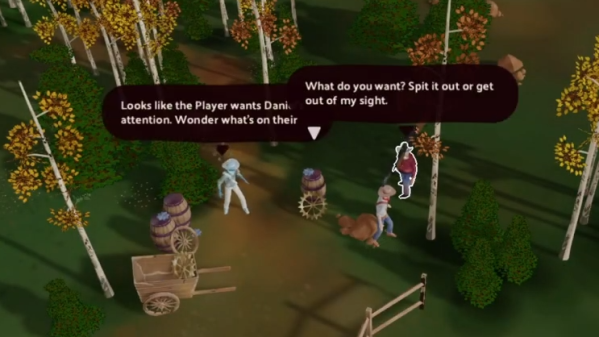
Not only is AI-driven natural language processing a thing now, but you can even select from a number of different offerings, each optimized for different tasks. It took very little time for [Bloc] to mod a computer game to allow the player to converse naturally with non-player characters (NPCs) by hooking it into ChatGPT, a large language model AI optimized for conversational communication.

If you can look past the painfully-long loading times, even buying grain (7:36) gains a new layer of interactivity.

[Bloc] modified the game Mount & Blade II: Bannerlord to reject traditional dialogue trees and instead accept free-form text inputs, using ChatGPT on the back end to create more natural dialogue interactions with NPCs. This is a refinement of an earlier mod [Bloc] made and shared, so what you see in the video below is quite a bit more than a proof of concept. The NPCs communicate as though they are aware of surrounding events and conditions in the game world, are generally less forthcoming when talking to strangers, and the new system can interact with game mechanics and elements such as money, quests, and hirelings.

Starting around 1:08 into the video, [Bloc] talks to a peasant about some bandits harassing the community, and from there demonstrates hiring some locals and haggling over prices before heading out to deal with the bandits.

The downside is that ChatGPT is currently amazingly popular. As a result, [Bloc]’s mod is stuck using an overloaded service which means some painfully-long load times between each exchange. But if you can look past that, it’s a pretty fascinating demonstration of what’s possible by gluing two systems together with a mod and some clever coding.

Take a few minutes to check out the video, embedded below. And if you’re more of a tabletop gamer? Let us remind you that it might be fun to try replacing your DM with ChatGPT.

Continue reading “With ChatGPT, Game NPCs Get A Lot More Interesting”

OG DOOM Shows Off The Origins Of Multi-Monitor

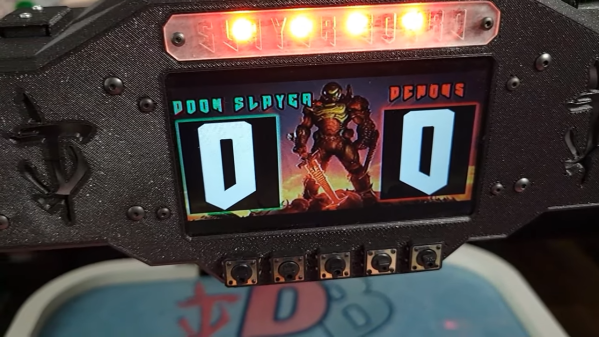
We have a thing for DOOM, and we admit it. The source was released, and clever hackers have ported the engine to every system imaginable. It’s a right of passage, when hacking a machine, to run DOOM on it — be it a VoIP phone, or tractor. But the original 1993 release does have a few notable tricks, and there’s something to be said for recreating that experience on period hardware. And that’s what we’re covering today: [Tech Tangents] discovered DOOM’s multi-monitor support, and built a 4-computer cluster to show it off.

There is a catch, of course. DOOM 1.1 has the multi-monitor support, and under-the-hood, it works by running a copy of the game on individual computers, and controlling the drones over the network. As the game’s network code was updated for version 1.2, the multi-monitor feature was axed to make the network code easier to maintain. So, find a 1.1 shareware release, install it on a DOS machine with IPX drivers, and start each iteration with a -net flag. Use -left and -right to set the drones to the appropriate view. And that view is ninety degrees left and right.

Maybe not ideal, but at the time it was one of the first games to have any sort of multi-monitor support at all. Likely inspired by a commercial flight simulator setup. Either way, it’s a neat feature, and kudos to [Tech Tangents] for showing off this obscure feature of a beloved classic!

Continue reading “OG DOOM Shows Off The Origins Of Multi-Monitor”

Electronic Shoe Explores Alleged Chess Misbehavior

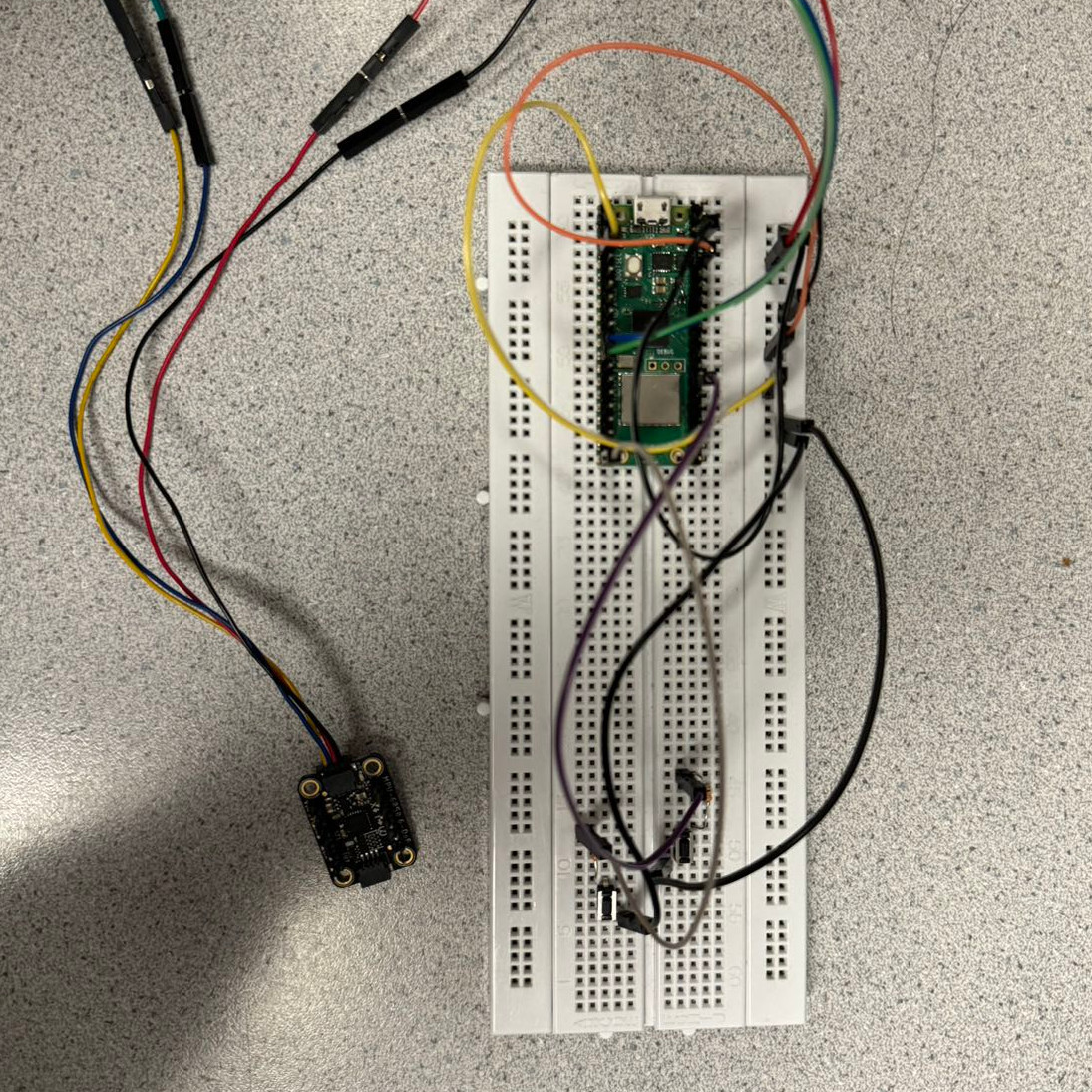
A few months ago, a scandal erupted in the chess world which led to some pretty wild speculation around a specific chess player. We won’t go into any of the details except to say that there is virtually no physical evidence of any method this player allegedly used to cheat in a specific in-person chess match. But [Teddy Warner] and partner [Jack Hollingsworth] were interested in at least providing a proof-of-concept for how this cheating could have been done, though, and came up with this device which signals a chess player through a shoe.

The compact device is small enough to fit in the sole of one of the player’s shoes, and is powered by an ATtiny412 microcontroller paired with a HC-06 Bluetooth module. The electronics are fitted into a 3D printed case along with a small battery which can then be placed into the sole of a shoe, allowing the wearer to feel the vibrations from a small offset-weight motor. With a second person behind a laptop and armed with a chess engine, the opponent’s moves can be fed into the computer and the appropriate response telegraphed through the shoe to the player.

While [Teddy] and [Jack] considers the prototype a success in demonstrating the ease at which a device like this could be used, and have made everything related to this build open source, this iteration did have a number of issues including that the motor buzzing was noticeable during play, and that his chess engine made some bizarre choices in the end game. It also requires the complicity of a second person, which is something this other chess cheating machine does away with. They also note that it’s unlikely that any chess players at the highest levels use devices like these, and that other chess experts have found no evidence of any wrongdoing in this specific scandal.

Continue reading “Electronic Shoe Explores Alleged Chess Misbehavior”

Wizards Get Creative, Maybe Save The World

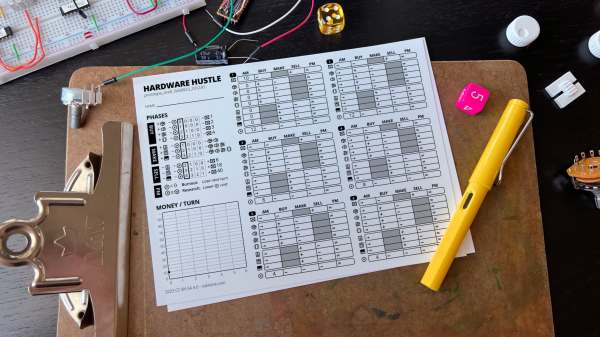
While it’s not normal Hackaday fare, we’ve covered the Dungeons & Dragons licensing kerfuffle, partially because we’re all nerds at heart, and also because it’s worrying that an Open Source styled license could be “deauthorized”. I did touch base with the Open Source Initiative, and got a telling comment that this issue was outside their purview, as the OGL 1.0a didn’t rise to the definition of an OSI approved license, and the update looked to be a disaster.

Since our coverage was published, Wizards of the Coast released part of the Fifth Edition System reference Document (SRD) under a Creative Commons license, removed the profit sharing language from the OGL update, but notably left the language in place about deauthorizing the 1.0a version of the license. As you can imagine, fans were still unamused, and we informed WotC of our displeasure when they launched a survey, asking fans their thoughts on the new license.

And the outpouring was overwhelming, with over 15,000 survey responses in just over a week. The vast majority (90% for some questions) informed WotC that they had lost their collective minds. That response, combined with a plummeting subscription count on DND Beyond, Paizo’s explosion of popularity and new ORC license announcement, and the plethora of publishers jumping ship, has finally shone the light of reason upon management at WotC.

The latest announcement is a win in basically every regard. The OGL 1.0a will not be deauthorized, and the entire 5e SRD has been released under the Creative Commons 4.0 By Attribution license. That’s an interesting choice, as CC-BY-4.0 is a very permissive license. It’s not “viral”, as it does not place any licensing restrictions on derivative works, and there are no restrictions on commercial use. The only restriction is that attribution must be included. The latest SRD is now available under both licenses, you pick your preference. So as a reward for going through the trauma, we get a sizable chunk of the game under an even less restrictive license. Bravo.

Continue reading “Wizards Get Creative, Maybe Save The World”

Original Controller Ports In Custom Case Means Retro Gaming In Style

Some careful measuring and a little extra effort can be all that separates what looks like a hack job from a slick end product, and that is apparent in [Eric Sorensen]’s classy retrogaming rig, complete with ports for original console controllers.

Neatly housing these components in a case makes all the difference.

[Eric] likes his vintage gaming, and was terrifically pleased with MiSTer, an open-source project that recreates various classic computers, game consoles and arcade machines using modern FPGA-based hardware. Of course, what makes retro gaming even better is using a platform’s genuine original controllers, which just takes a little extra hardware and wiring.

But [Eric] found that all the required accessories and peripherals started to look awfully cluttered. He solved this issue by packing everything carefully into a specialty PC case called the Checkmate A1500 Plus, which gives off a strong 80s design vibe. As a bonus, the front panels are all removable and that’s where [Eric] decided to house the custom controller ports.

First [Eric] carefully measured each controller connector to create CAD models, then designed matching front panels to house the connectors and 3D printed them. Once that was done, post-processing the panels was a long process of apply Bondo, sand, paint, and repeat as needed. The results looks fantastic, and this project is a prime example of how aesthetics and finish can matter.

Find yourself in a similar situation? [Tom Nardi] has shown us all that 3D prints don’t have to look 3D-printed, and careful application of paint and primer can really put the ‘pro’ in prototyping.