Beer Pong Difficulty Level: 10

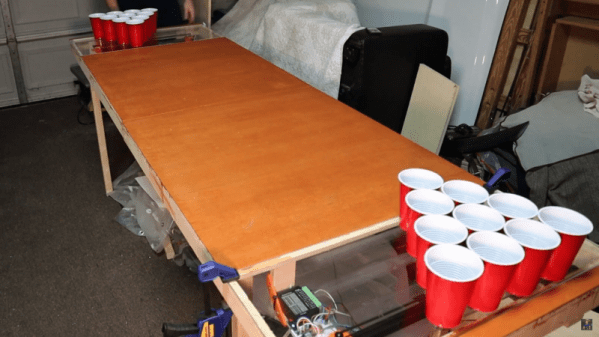
Beer pong is a fun enough game for those of a certain age, but one thing that it lacks is a way of cranking up the difficulty setting independent of the amount of beer one has consumed. At least, that was the idea [Ty] had when he came up with this automated beer pong table which allows the players to increase the challenge of this game by sliding the cups around the top of the table.

The build uses a belt-driven platform under a clear cover with a set of magnets attached. Each of the cups on the table has a corresponding magnet, which allows them to slide fairly easily back and forth on the table. The contraption is controlled by an Arudino Nano with a small screen and dial that allows the players to select a difficulty level from 1 to 10. The difficulty levels increase the speed that the cups oscillate on the table, which certainly adds another layer of complexity to this already challenging game.

While we hope to eventually see a beer pong table that can automatically arrange the cups as the game is played, we do appreciate the effort to make an already difficult game even more difficult. Of course, if you have problems with the difficulty level you might want to pick up a PongMate CyberCannon Mark III to help with those clutch beer pong shots.
Continue reading “Beer Pong Difficulty Level: 10”

Among Us Emergency Meeting Button Becomes Reality

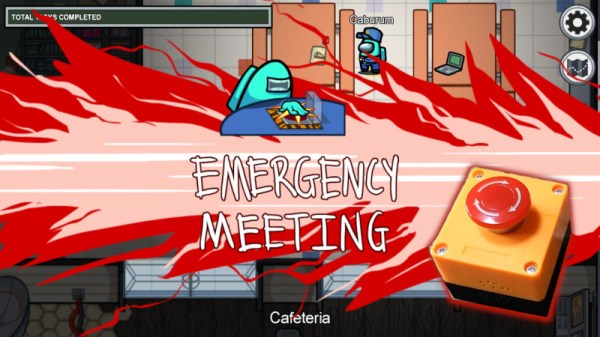
Among Us has been an indie gaming success story. A game built by a small team has, after several years on the market, become a worldwide sensation. Gameplay consists of players attempting to find the imposter amongst their ranks and an “Emergency Meeting” can be called if players need to speak to each other. [john lemme] wanted to be able to do the same with his roommates, and set about building the real thing.

The build relies on an ESP32, which reads the state of a big red emergency button. When pressed, the ESP32 uses its WiFi connection to trigger a Discord conference call containing all the roommates. Naturally, it also plays the buzzer sound from the actual game, too – via a small amplifier and a speaker yanked from some headphones.

It’s a fun build, though [john] notes it has its limits. The call takes 10 seconds to initiate after the button press, and the audio hardware doesn’t do a great job of recreating the buzzer noise from the game. However, it’s a good starting point, and we think the concept could actually prove useful with some refinement. Video after the break.

Continue reading Among Us Emergency Meeting Button Becomes Reality”

Xbox Series S Teardown Photo

Xbox Series S Teardown Shows A Glimpse At The Future

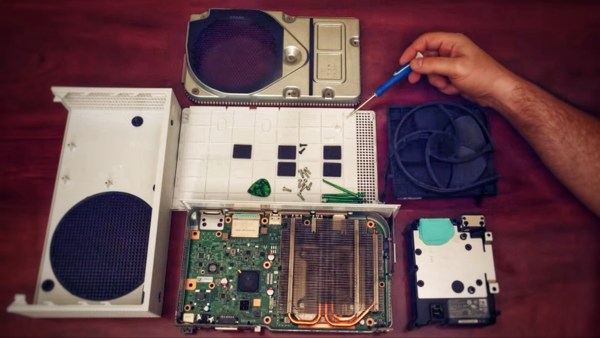
Console launch season is upon us. A time for billion dollar corporations ingratiate themselves with “Johnny Consumer” by promising the future of entertainment is finally available to one-and-all. The focus of this new generation of consoles has been the battle for 4K supremacy between Xbox Series X and PlayStation 5. Interestingly, Microsoft also created another iteration of their Xbox Series for those satisfied with games in 1080p, and thanks to [Dimitris] we have been able to see the internals of the Xbox Series S (XSS).

Xbox Series S Teardown SSD Photo
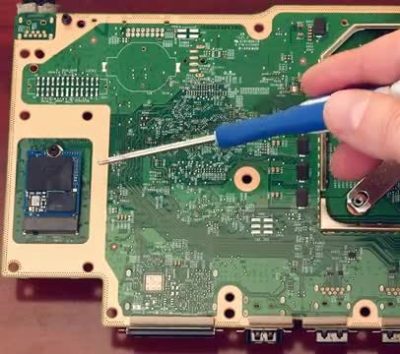
The Xbox Series S features standard m.2 slot that could be used for future storage expansion.

Microsoft’s choice to produce an all-digital console has greatly affected the internal design of the XSS. With the lack of a disc-drive there is only a single cable, the fan cable, tying the components together. The heat sink covering the 197mm² AMD APU takes up nearly 60% of the motherboard surface area. Though the XSS may be diminutive by modern console standards, its cooling fan is huge, somewhere in the 140 mm range. What little space is left by the heat sink and fan assembly is taken up by the internal power supply. As a fun nod, the PSU sports a Master Chief insignia to denote the location of the two-pronged connector beneath.

On the underside of the motherboard lies the biggest surprise of the “little brother” console. The system storage SSD is socketed rather than directly soldered to the board itself. The primary design goal of the XSS was to provide a cheaper alternative for players, but this standard m.2 slot reveals that Microsoft has plans for future expansion. This SSD, while not user-accessible in a traditional sense, will likely provide an alternative method to expanding storage outside of Microsoft’s proprietary external offerings. For a look at the teardown in process, [Dimitris’] video from his Modern Vintage Gamer YouTube channel is below.

Continue reading “Xbox Series S Teardown Shows A Glimpse At The Future”

Dad Scores Big With DIY Indoor Hockey Game

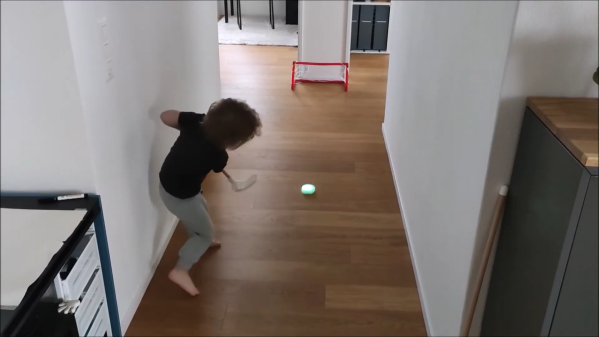
We suppose it’s a bit early to call it just yet, but we definitely have a solid contender for Father of the Year. [DIY_Maxwell] made a light-up hockey game for his young son that looks like fun for all ages. Whenever the puck is hit with the accompanying DIY hockey stick (or anything else), it lights up and produces different sounds based on its acceleration.

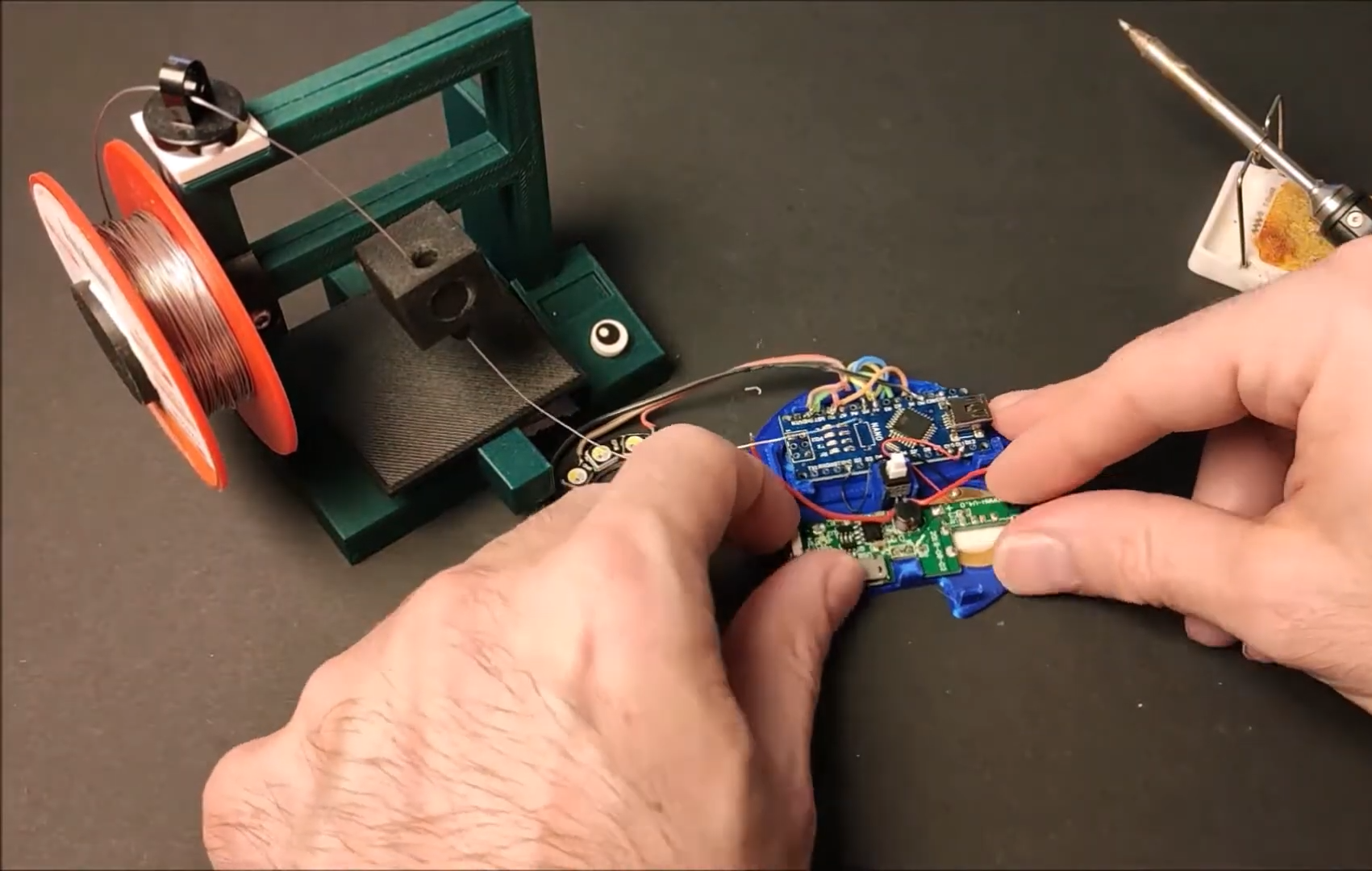
Inside the printed puck is an Arduino Nano running an MPU6050 accelerometer, a 12-NeoPixel ring, and a piezo buzzer. [DIY_Maxell] reused a power bank charging circuit to charge up the small LiPo battery.

The original circuit used a pair of coin cells, but the Arduino was randomly freezing up, probably because of the LEDs’ current draw. Be sure to check out the video after the break, which begins with a little stop motion and features a solder stand in the shape of a 3D printer.

Got a house full of carpet or breakables? You could always build an air hockey table instead.

Continue reading “Dad Scores Big With DIY Indoor Hockey Game”

Nerf Blaster Becomes Light Gun Controller

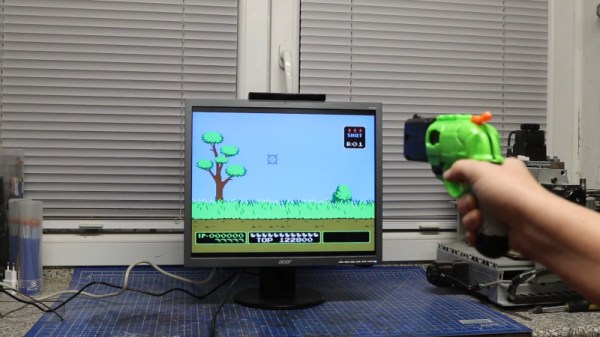
Traditional light guns rely on quirks of CRT technology, and thus don’t play well with modern LCD televisions and monitors. However, die hard retro gamers aren’t known for moving on from the classics, and have persevered to build new hardware to suit the games of old. In just this vein, [BrittLiv] grabbed some Nerf blasters, and built a pair of light guns that work with today’s hardware.

The build relies on Ultramarc’s light gun kits, which work in a similar way to the original Wiimote. A camera inside the blaster is used to triangulate an LED bar placed on top of the screen for clean and accurate tracking. [BrittLiv] combined the Ultramarc kit with some clever hacks to a Nerf DoubleStrike blaster, stealthily hiding the buttons inside to interface with the original trigger and cocking mechanism, as well as the locking tab in the rail.

There’s both a wired and wireless version, and the setup looks to be a great way to enjoy classics like Duck Hunt and Point Blank. The blasters work great with common platforms like MAME and RetroPi as the Ultramarc hardware emulates a standard USB mouse.

We’ve seen some wild light gun hacks before, like this build that uses cameras and maths to make things work without an LED bar at all! Video after the break.

Continue reading “Nerf Blaster Becomes Light Gun Controller”

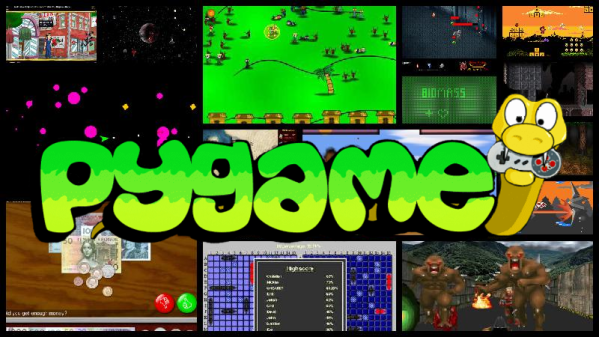
PyGame Celebrates 20 Years By Releasing PyGame 2.0

Python is an absolutely fantastic language for tossing bits of data around and gluing different software components together. But eventually you may find yourself looking to make a program with an output a bit more advanced than the print() statement. Once you’ve crossed into the land of graphical Python programming, you’ll quickly find that the PyGame library is often recommended as a great way to start pushing pixels even if you’re not strictly making a game.

Today, the project is celebrating an incredible milestone: 20 years of helping Python developers turn their ideas into reality. Started by [Pete Shinners] in 2000 as a way to interface with Simple DirectMedia Layer (SDL), the project was quickly picked up by the community and morphed into a portable 2D/3D graphics library that lets developers deploy their code on everything from Android phones to desktop computers.

Things haven’t always gone smoothly for the open source library, and for awhile development had stalled out. But the current team has been making great progress, and decided today’s anniversary was the perfect time to officially roll out PyGame 2.0. With more than 3,300 changes committed since the team started working on their 2.0 branch in July of 2018, it’s a bit tough to summarize what’s new. Suffice to say, the library is more capable than ever and is ready to tackle everything from simple 2D art up to 4K GPU-accelerated applications.

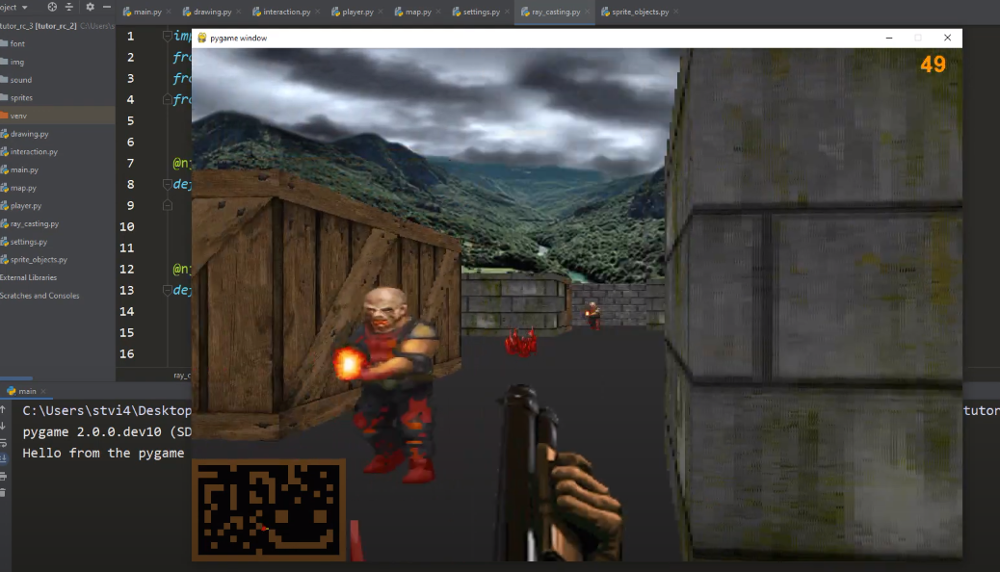
Rip and tear in PyGame 2.0

If you haven’t given PyGame a try in awhile, don’t worry. The team has put special effort into making the library as backwards compatible as possible, so if you’ve got an old project kicking around that you haven’t touched in a decade, it should still run against the latest and greatest version. If you’ve never used it before, the team says they’ll soon be releasing new tutorials that show you how to get the most out of this new release.

Whether you’re putting together your own implementation of Conway’s “Game of Life” or creating the graphical front-end for your own Linux distribution, PyGame is a powerful tool to have in your collection. Our sincere congratulations to all PyGame developers, past and present, for making it to this auspicious occasion. We can’t wait to see what the next decade will bring.

[Thanks to deshipu for the tip.]

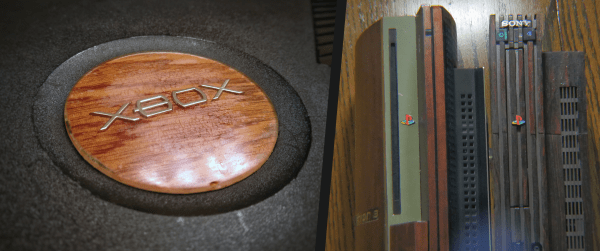
Xbox PlayStation Logos Wood Grain

Console Identity In The Age Of PlayStation 5 And Xbox Series

Consoles are obsolete the minute they are released. The onward march of silicon innovation ensures that consoles never are able to keep up with the times, but technical superiority rarely results in being remembered. That kind of legacy is defined by the experiences a device provides. A genre defining game, a revolutionary approach to media, or a beloved controller can be enough to sway popular opinion. But really…it all boils down to a box. All the spurious promises of world-class hardware specs, all the overly ambitious software ship dates, and even the questionable fast-food crossover promotions exist in service to the box. The boxes vying for attention in 2020 A.D. are the PlayStation 5 (PS5) and Xbox Series X/S/Seriessss (XSX or whatever the common nomenclature eventually shakes out to be). These boxes likely represent the minimum spec for the next decade in big-budget video games, however, it is the core identity of those consoles that will define the era.

Continue reading “Console Identity In The Age Of PlayStation 5 And Xbox Series”