My Beef With Ham Radio

My amateur radio journey began back in the mid-1970s. I was about 12 at the time, with an interest in electronics that baffled my parents. With little to guide me and fear for my life as I routinely explored the innards of the TVs and radios in the house, they turned to the kindly older gentleman across the street from us, Mr. Brown. He had the traditional calling card of the suburban ham — a gigantic beam antenna on a 60′ mast in the backyard – so they figured he could act as a mentor to me.

Mr. Brown taught me a lot about electronics, and very nearly got me far enough along to take the test for my Novice class license. But I lost interest, probably because I was an adolescent male and didn’t figure a ham ticket would improve my chances with the young ladies. My ham ambitions remained well below the surface as life happened over the next 40 or so years. But as my circumstances changed, the idea of working the airwaves resurfaced, and in 2015 I finally took the plunge and earned my General class license.

The next part of my ham story is all-too-familiar these days: I haven’t done a damn thing with my license. Oh, sure, I bought a couple of Baofeng and Wouxun handy-talkies and lurked on the local repeaters. I even bought a good, solid HF rig and built some antennas, but I’ve made a grand total of one QSO — a brief chat with a ham in Texas from my old home in Connecticut on the 10-meter band. That’s it.

Continue reading “My Beef With Ham Radio”

Hackaday Links: December 11, 2016

We have a contest going on right now challenging you to do the most with 1 kB of data. If you want to get into this, here’s how you do it for a dollar. Use the PIC12C508A. It’s an 8-pin DIP, has 768 bytes of program ROM and 25 bytes of data RAM. [Shaos] is trying to generate NTSC on this thing.

Remember that Internet of Cookie Oven Kickstarter from the links post a few weeks ago? It was funded. It has a heating element that is ‘more energy efficient than traditional electric elements’, and there’s still no consensus over how a resistive heating element can be more efficient. It’s either 100% efficient, or 0% efficient, depending on how you look at it.

[Matthias Wandell], master of wood gears recently built a 20″ bandsaw from scratch. It’s a wood frame, wood wheels, a (currently) underpowered motor, and a few bits of metal and rubber. The video build log is fantastic, so start here and work your way forward.

Way back in the day, Sparkfun sold a Bluetooth rotary phone. Yes, at some point in the past, phones didn’t have touchscreens or even buttons. In any event, Sparkfun hasn’t sold these phones for quite a long time. Now there’s a new hotness: giving these rotary phones a GSM module.

Here’s a little Hackaday Events housekeeping. On January 23rd, we’re going to have a meetup in NYC. We’ll also have a meetup in LA sometime in January as well. Also in January I’ll be attending CES, reporting on the latest Internet of Toasters. A week later, Hackaday will be at ShmooCon in Washington, DC. At ShmooCon last year, we had a breakfast meetup in the DC Hilton. This year, I want to do something similar. If you have an idea of what to do, leave a note in the comments.

This DIY Wearable Assist Goes Beyond Traditional Therapy

Bodo Hoenen and his family had an incredible scare. His daughter, Lorelei, suddenly became ill and quickly went from a happy and healthy girl to one fighting just to breathe and unable to move her own body. The culprit was elevated brain and spinal pressure due to a condition called AFM. This is a rare polio-like condition which is very serious, often fatal. Fortunately, Lorelei is doing much better. But this health crisis resulted in nearly complete paralysis of her left upper arm.

Taking an active role in the health of your child is instinctual with parents. Bodo’s family worked with health professionals to develop therapies to help rehabilitate Lorelei’s arm. But researching the problem showed that success in this area is very rare. So like any good hacker he set out to see if they could go beyond the traditional to build something to increase Lorelei’s odds.

What resulted is a wearable prosthesis which assists elbow movement by detecting the weak signals from her bicep and tricep to control an actuator which moves her arm. Help came in from all over the world during the prototyping process and the project, which was the topic of Bodo Hoenen’s talk at the Hackaday SuperConference, is still ongoing. Check that out below and the join us after the break for more details.

Continue reading “This DIY Wearable Assist Goes Beyond Traditional Therapy”

Creating A PCB In Everything: KiCad, Part 2

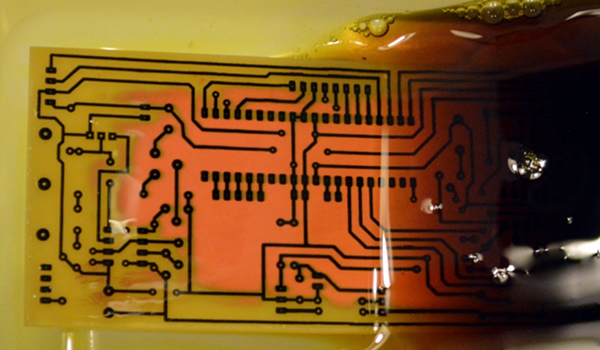
This is the continuation of a series where I create a PCB in every software suite imaginable. Last week, I took a look at KiCad, made the schematic representation for a component, and made a schematic for the standard reference PCB I’ve been using for these tutorials. Now it’s time to take that schematic, assign footprints to parts, and design a circuit board.

Continue reading “Creating A PCB In Everything: KiCad, Part 2”

Retrotechtacular: The Incredible Machine

They just don’t write promotional film scripts like they used to: “These men are design engineers. They are about to engage a new breed of computer, called Graphic 1, in a dialogue that will test the ingenuity of both men and machine.”

This video (embedded below) from Bell Labs in 1968 demonstrates the state of the art in “computer graphics” as the narrator calls it, with obvious quotation marks in his inflection. The movie ranges from circuit layout, to animations, to voice synthesis, hitting the high points of the technology at the time. The soundtrack, produced on their computers, naturally, is pure Jetsons.

Highlights are the singing “Daisy Bell” at 9:05, which inspired Stanley Kubrick to play a glitchy version of the track as Dave is pulling Hal 9000’s brains out, symbolically regressing backwards through a history of computer voice synthesis which at that point in time was the present. (Whoah!)
Continue reading “Retrotechtacular: The Incredible Machine”

Assembly Required: Subroutine Calls And The 1K Challenge

The first computer I personally owned had 256 bytes of memory. Bytes. The processor in my mouse and keyboard both have more memory than that. Lots more. Granted, 256 bytes was a bit extreme, but even the embedded systems I was building as part of my job back then generally had a small fraction of the 64K bytes of memory they could address.

Some people are probably glad they don’t have to worry about things like that anymore. Me, I kind of miss it. It was often like a puzzle trying to squeeze ten more bytes out of an EPROM to get a bug fix or a new feature put in. I though with the 1K challenge underway, I might share some of the tricks we used in those days to work around the small memory problems.

Continue reading “Assembly Required: Subroutine Calls And The 1K Challenge”

The Internet Of Tampons

At the 2016 Hackaday Superconference, Amanda Brief and Jacob McEntire gave a talk on what they’ve been working on for the past few years. It’s My.Flow, the world’s first tampon monitor capable of tracking saturation, and eliminating anxiety, leakage, and infection. It’s better than a traditional tampon, and it’s one of the rare Internet of Things things that actually makes sense.

There’s a long history of technological innovation to deal with menstruation. What began with simply sending women out of the village for a week turned into a ‘sanitary belt’ after a few thousand years. This astonishing technological advance of treating women as people led to the pad, the cup, and eventually, the disposable tampon. Now My.Flow is applying modern electrochemical technology to move the state of the art forward.

Continue reading “The Internet Of Tampons”