AVR Programming 01: Introduction

We love looking at hardcore electronics projects with a beefy microcontroller and hundreds, if not thousands, of lines of code at its center. But everyone needs to get there somehow.

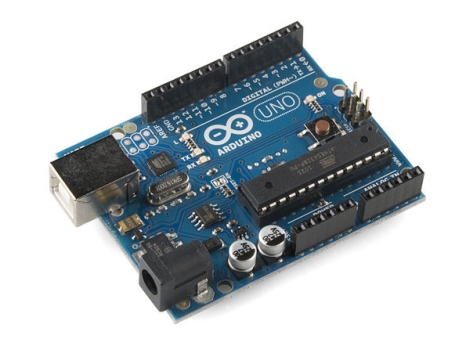
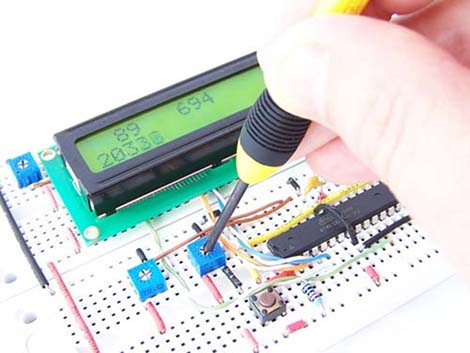
This tutorial series aims to make you comfortable programming the Atmel AVR line of microcontrollers. Whether you’ve never touched a microcontroller before, or you’ve cut your teeth with dozens of Arduino projects, this will help you get right down to the hardware and give you the confidence to build anything.

Series roadmap:

Continue reading “AVR Programming 01: Introduction”

Spy Video TRAKR: Software And First Hack

Our initial view of the Spy Video TRAKR “App BUILDR” site had us believing this would be an internet-based code editor and compiler, similar to the mbed microcontroller development tools. Delving deeper into the available resources, we’re not entirely sure that’s an accurate assessment — TRAKR may well permit or even require offline development after all. Regardless of the final plan, in the interim we have sniffed out the early documentation, libraries and standalone C compiler and have beaten it into submission for your entertainment, in order to produce our first TRAKR hack!

Continue reading “Spy Video TRAKR: Software And First Hack”

So You Want To Make A Command Line Interface

[Keba] not only asked Answeres.HackaDay.com, but also sent us an email as follows.

“Can you make a basic guide to designing a good Command Line User Interface?”

Wouldn’t you know the luck, I’m currently working on a Command Line type interface for a project of mine. While after the jump I’ll be walking through my explanation, it should be noted that the other replies to Answers.HackaDay.com are also great suggestions.

Continue reading “So You Want To Make A Command Line Interface”

How-to: Launchpad Programming With Linux

When TI released their Launchpad development board at the end of June it generated a lot of Buzz. Here’s a package that delivered a programmer, debugger, two microcontrollers, and some accessories for less than five bucks (including shipping). They even provided a choice of two software suites but only for users running Windows who don’t mind proprietary software. If you’re looking to go another way you should consider trying out the open source alternative MSPGCC. After the break we’ll take a look at getting the tool-chain up and running in a Linux environment.

Continue reading “How-to: Launchpad Programming With Linux”

Headset and microphone

Get Started With Speech Recognition

Speech recognition makes it easier for us to be lazy with our devices – or perhaps set up the coolest voice-controlled project around. After the voice controlled home automation post, we received a lot of emails asking “how can I make it recognize my voice?”. Whether your project involves a PC or an Android phone, a high-budget, or no budget at all, there is a solution out there.  Join us after the break for a complete set of instructions on setting up speech recognition, and some of the best software options out there to meet your needs.

Continue reading “Get Started With Speech Recognition”

(mini)How-To: Refill Your DTG Inks

The number one and number two things asked after presentation of our DIYDTG were…
“How does it hold up in the wash?”
and…
“How did you change out the inks?”
While we’ve explained the first several times (regular ink washes out, DTG ink gets a little lighter but survives) we can hopefully answer the second with a tutorial.

Continue reading “(mini)How-To: Refill Your DTG Inks”

How-to: DIYDTG

For those unaware, the little acronym above stands for Do-It-Yourself-Direct-To-Garment printing. In layman’s terms, printing your own shirts and designs. Commercial DTGs can cost anywhere from $5,000 to $10,000 which for the hobbyist who only wants a few shirts is ridiculous. So you would think this field of technology would be hacked to no end, but we’ve actually only seen one other fully finished and working DIYDTG. So we took it upon ourselves to build a DIYDTG as cheaply and as successfully as possible. Continue reading “How-to: DIYDTG”