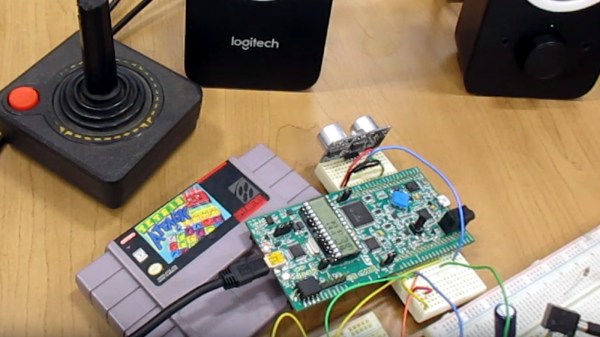
Some of us here at Hackaday are suckers for a bit of chiptune music as the backdrop for many excellent times. The authentic way to create chiptunes is of course the original hardware, but in 2019 it’s far more common to do so with an emulator on a modern computer. That computer doesn’t have to sport a high-end processor and desktop operating system though, as [Deater] shows us with his ZX spectrum chiptune player on an STM32L46G Discovery board.
The impetus for the project came he tells us while teaching students to code simple sine wave music players, having code already in the bag for emulating the classic AY-3-8910 sound chip on the Raspberry Pi and the Apple II he decided to port that to the STM32L476 dev board. An earlier version used the internal DAC, but this was refined to send I2S data to an external DAC. The code can be had from GitHub (confusingly buried among code for an LED driver), and we’ve attached a video below of it playing some chiptune goodness.
Of course, Sinclair chiptunes don’t grab all the limelight. There have been plenty of Nintendo and Sega players too. You might also recognize [Deater] from his non-chiptune work, porting Portal to the Apple ][.
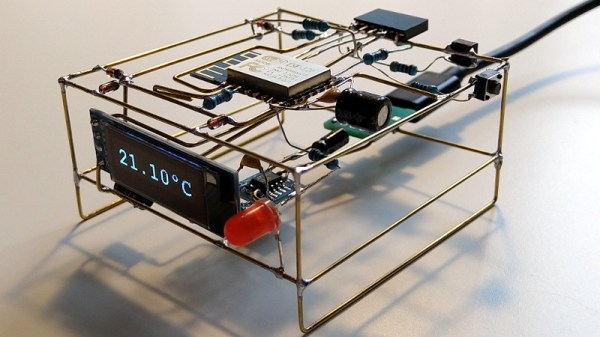
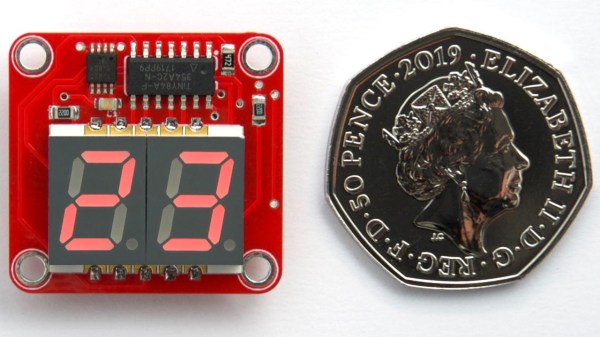
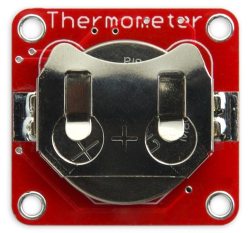 You may think that a display that flashes only once every 24 seconds might be difficult to actually read in practice, and you’d be right. [David] found that it was indeed impractical to watch the display, waiting an unknown amount of time to read some briefly-flashed surprise numbers. To solve this problem, the decimal points flash shortly before the temperature appears. This countdown alerts the viewer to an incoming display, at the cost of a virtually negligible increase to the current consumption.