AVR Controlled RGB LED Matrix Plays Tetris

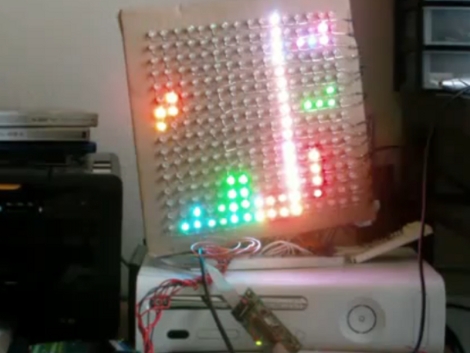
[Stan] built this LED matrix using a 16×16 grid of RGB LEDs. He built the hardware and wrote some subroutines to randomize the colors. He’s not using PWM because frame buffering is not feasible for the 1k SRAM limit of the ATmega168 he used. Instead, shift registers drive the lights which can be mixed to achieve eight different colors (including off for black) reducing the framebuffer size to just 96 bytes. After he got done with the build he realized this is sized well for a game of Tetris. We’ve seen AVR tetris, PIC Tetris, and Tetris using composite video but it’s always a pleasure to see a new display build.

After the break we’ve embedded [Stan’s] demo video, several pictures, and a schematic. He’s using many of the same principles outlined in our How to Design an LED matrix tutorial.

Continue reading “AVR Controlled RGB LED Matrix Plays Tetris” →
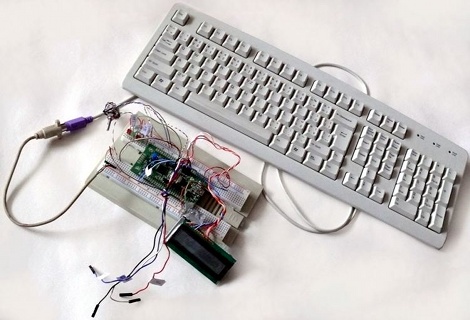
Czech Discovery Ressurects PS/2 Keyboard

Like us, you probably have piles of old PS/2 keyboards occupying strategic positions in your house and causing all sorts of trouble with the neighbours. As luck would have it, there is a way to put those lazy peripherals to work!

Our friends in the Czech Republic have successfully interfaced a PS/2 keyboard to an STM32 Discovery board (translated), and not a moment too soon—just in time for you to integrate their work into your entries for those juicy contests we told you about (the European one and the North American one).

The project page contains an in-depth walkthrough of how the PS/2 connection talks to the keyboard hardware along with source code and links, more than enough information to get started with a PS/2 keyboard hack on your Discovery application. And why stop at keyboards? Give your old PS/2 mouse a new lease on life, or even hook up your custom game controller to spice up the experience.

IM-ME Plays Music In Preparation For Gaming

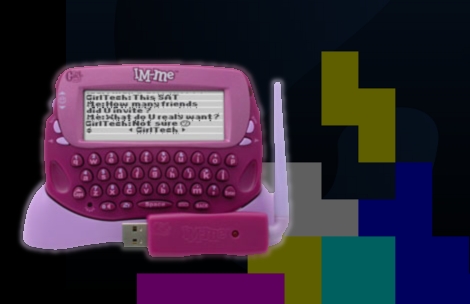
[Emmanuel Roussel] is coding a version of Tetris for the IM-ME. Before you get too excited, he hasn’t actually written the game yet, but instead started with the familiar theme music. The IM-ME has a piezo speak on board so it’s just a question of frequency and duration. [Emmanuel] developed an Open Office spread sheet that calculates each note’s frequency and the timer value needed to produce it. He then created a data type that stores a note and its duration and used an array of those structures to store the song. If you’ve ever wondered how to cleanly code music this is a wonderful example to learn from because right now the code doesn’t have anything other than that code to get in the way.

The ground work for this was established in the other hacks we’ve seen. Now we’re left wondering who will finish coding their game first. Will it be [Emmanuel’s] Tetris or [Travis’] Zombie Gotcha?

AVR Programming 03: Reading And Compiling Code

In the last installment of our tutorial series we built a simple circuit on a breadboard and programmed an ATmega168 to make it run. That proves that you know how to follow directions, but the eureka moments of doing everything yourself are on the way. This time around you will get down and dirty with the datasheet, learning where each line of the sample code came from, and give your recently installed compiler a test drive. We will:

  • Talk about bitwise operators and how they work when coding for microcontrollers
  • Discuss C code shorthand
  • Review the sample code from Part 2 and talk about what each line of code does
  • Learn to compile code

If this is the first you’ve heard about our AVR Programming series, head back to Part 1 and start from the beginning. Otherwise, take a deep breath and we’ll being after the break.

Series roadmap:

Continue reading “AVR Programming 03: Reading And Compiling Code” →

Test Beds And Jigs With Pogo Pins

Pogo pins – spring-loaded pin contacts are pretty fun to play with and even cooler when they get used in electronic devices like Adafruit and SparkFun’s test jigs. Check after the break for how these two companies have created their own production hacks. Continue reading “Test Beds And Jigs With Pogo Pins” →

How-to: Program PICs Using Linux

Arguably, Microchip’s PIC microcontrollers do not get enough posts here. One of the drawbacks for some of us is that Linux support for PICs is not very well known. The information is out there, but no one has laid out the process of going from writing C code to programming a chip. Written for Linux users that are familiar with microcontrollers, basic circuits, the C programming language, and can read a datasheet, this how-to should get you up and programming a PIC quickly with Linux.

Continue reading “How-to: Program PICs Using Linux” →

Hacking A Hack: Disassembly And Sniffing Of IM-ME Binary

It’s fun to pick apart code, but it gets more difficult when you’re talking about binaries. [Joby Taffey] opened up the secrets to one of [Travis Goodspeed’s] hacks by disassembling and sniffing the data from a Zombie Gotcha game binary.

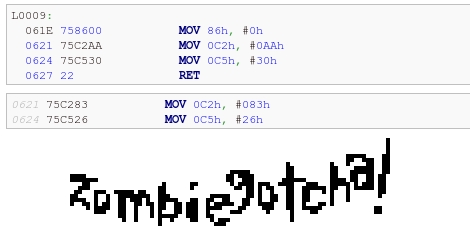
We looked in on [Travis’] work yesterday at creating a game using sprites on the IM-ME. He challenged readers to extract the 1-bit sprites from an iHex binary and that’s what got [Joby] started. He first tried to sniff the LCD data traces using a Bus Pirate but soon found the clock signal was much too fast for the device to reliably capture the signals. After looking into available source code from other IM-ME hacks [Joby] found how the SPI baud rate is set, then went to work searching for that in a disassembly of [Travis’] binary. Once found, he worked through the math necessary to slow down communication from 2.7 Mbit/s to 2400 bps and altered the binary data to match that change. This slower speed is more amenable to the Bus Pirate’s capabilities and allowed him to dump the sprite data as it was sent to the LCD screen.

[Thanks Travis]