Cascade Failures, Computer Problems, And Ohms Law: Understanding The Northeast Blackout Of 2003

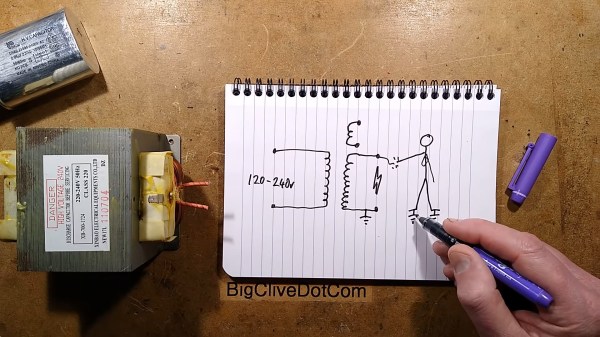
We’ve all experienced power outages of some kind, be it a breaker tripping at an inconvenient time to a storm causing a lack of separation between a tree and a power line. The impact is generally localized and rarely is there a loss of life, though it can happen. But in the video below the break, [Grady] of Practical Engineering breaks down the Northeast Blackout of 2003, the largest power failure ever experienced in North America. Power was out for days in some cases, and almost 100 deaths were attributed to the loss of electricity.

[Grady] goes into a good amount of detail regarding the monitoring systems, software simulation, and contingency planning that goes into operating a large scale power grid. The video explains how inductive loads cause reactance and how the effect exacerbated an already complex problem. Don’t know what inductive loads and reactance are? That’s okay, the video explains it quite well, and it gives an excellent basis for understanding AC electronics and even RF electronic theories surrounding inductance, capacitance, and reactance.

So, what caused the actual outage? The complex cascade failure is explained step by step, and the video is certainly worth the watch, even if you’re already familiar with the event.

It would be irresponsible to bring up the 2003 outage without talking about the Texas ERCOT outages just one year ago– an article whose comments section nearly caused a blackout at the Hackaday Data Center!

Continue reading “Cascade Failures, Computer Problems, And Ohms Law: Understanding The Northeast Blackout Of 2003”

Grocery Store Rocket Fuel: Don’t Try This At Home!

It seems like whenever the topic of rocket science comes up, the conversation quickly shifts to that of rocket fuels. As discussed in the excellent [Scott Manley] video below the break, there are many rocket fuels that can be found in some way, state, or form at your local grocery or liquor store. The video itself is a reaction to some college students in Utah who caused an evacuation when the rocket fuel they were cooking up exploded.

[Scott] himself theorizes that the fuel they were cooking was Rocket Candy, a volatile mix of sugar and potassium nitrate that is known to go Kaboom on occasion. And as it turns out, the combination might not even be legal in your area because as much as it can be used as rocket fuel, it can also be used for other things that go boom.

So, what else at your local megamart can be used to get to orbit? [Scott] talks about different kinds of alcohols, gasses, cleaners- all things that can be used as rocket fuel. He also talks about all of the solid reasons you don’t want to do this at home.

If this type of things gets your molecules excited, you might enjoy a bit we posted recently about using another grocery store staple to save Martian colonists from being held back by gravity.

Levitating With Light

The University of Pennsylvania has a team that did a little light research. Well, not light in the usual sense of that phrase. They used very strong light to levitate Mylar disks in a vacuum chamber.

Of course, it is no secret that light can exert pressure. That’s how solar sails work and some scientists have used it to work with aerosols and the like. But this appears to be the first time light lifted a large item against gravity. The team claims that their tests showed that a sunlight-powered flying vehicle might carry up to ten milligrams of payload. That doesn’t sound like much, but it’s impressive and the paper mentions that since the lift is not from aerodynamic forces, there might be applications in flying at very high altitudes.

The Mylar disks were 500 nanometers thick and had a 300 nanometer layer of carbon nanotubes beneath. The nanotubes absorb light, make the disks more rigid, and improve the Mylar’s surface-gas characteristics. The light source had a strong center beam and an even stronger ring around the center beam that causes the disk to remain over the center beam. The LED system used eight arrays, each consuming 100 watts of input power.

Preparing the disk might be difficult, but the LED power isn’t that hard. Even if you do like the researchers did and use water cooling.

How Big Is The Moon? Figure It Out Yourself

We have to confess that we occasionally send friends a link to “let me Google that for you” when they ask us something that they could have easily found online. Naturally, if someone asked us how big the moon is, we’d ask Google or another search engine. But not [Prof Matt Strassler]. He’d tell you to figure it out yourself and he would then show you how to do it.

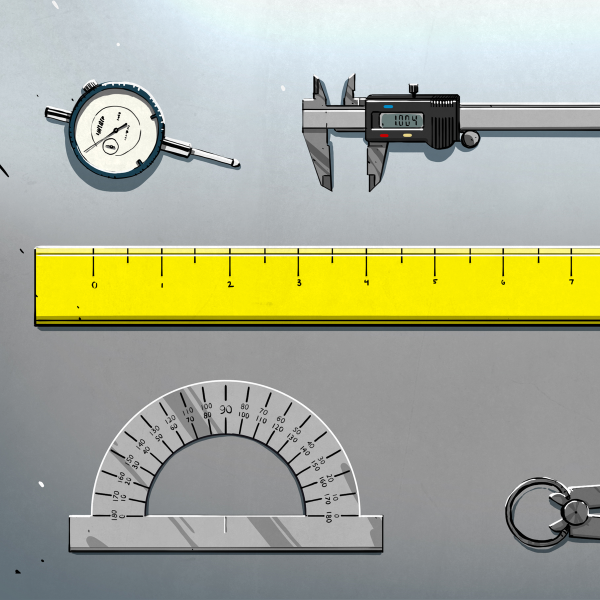
This isn’t a new question. People have been wondering about the moon since the dawn of human civilization. The ancient Greeks not only asked the question, but they worked out a pretty good answer. They knew approximately how big the Earth was and they knew the moon was far away because it is seen over a very wide area. They also knew the sun was even further away because the moon sometimes blocks the sun’s light in an eclipse. Using complex geometry and proto-trigonometry they were able to work out an approximate size of the moon. [Matt’s] method is similar but easier and relies on the moon occluding distant stars and planets.

Continue reading “How Big Is The Moon? Figure It Out Yourself”

3D Printing Livers

The University of Utrecht has a team that is successfully bioprinting “liver units” that are able to do some of the functions of a human liver and may open the door to new medical treatments. This isn’t simply printing a fake liver in a jar though, instead the technique uses optical tomography to rapidly create small structures of about 1 cc of volume in less than 20 seconds.

Apparently, one problem with printing hydrogels full of biological structures is that passing them through a nozzle tends to disturb the delicate structures.  This technique uses no nozzle or layers, which makes it useful in this situation.

Continue reading “3D Printing Livers”

The Electrifying Debate Around Where Lightning Comes From

Along with many other natural phenomena, lightning is probably familiar to most. Between its intense noise and visuals, there is also very little disagreement that getting hit by a lightning strike is a bad thing, regardless of whether you’re a fleshy human, moisture-filled plant, or conductive machine. So it’s more than a little bit strange that the underlying cause of lightning, and what makes certain clouds produce these intense voltages along ionized air molecules, is still an open scientific question.

Many of us have probably learned at some point the most popular theory about how lightning forms, namely that lightning is caused by ice particles in clouds. These ice particles interact to build up a charge, much like in a capacitor. The only issue with this theory is that this process alone will not build up a potential large enough to ionize the air between said clouds and the ground and cause the lightning strike, leaving this theory in tatters.

A recent study, using data from Earth-based radio telescopes, may now have provided fascinating details on lightning formation, and how the charge may build up sufficiently to make us Earth-based critters scurry away to safety when dark clouds draw near.

Continue reading “The Electrifying Debate Around Where Lightning Comes From”

Martian Wheel Control Algorithms Gain Traction

Imagine the scene: You’re puttering along in your vehicle when, at least an hour from the nearest help, one of your tires starts losing air. Not to worry! You’ve got a spare tire along with the tools and knowhow to change it. And if that fails, you can call roadside assistance. But what if your car isn’t a car, has metal wheels for which no spares are available, and the nearest help is 200 million miles away? You just might be a Jet Propulsion Laboratory Engineer on the Curiosity Mars Rover mission, who in 2017 was charged with creating a new driving algorithm designed to extend the life of the wheels.

High Performance Rock Crawler, Courtesy Spidertrax.com License: CC BY 3.0

You could say that the Curiosity Mars rover is the ultimate off-road vehicle, and as such it has to deal with conditions that are in some ways not that different from some locations here on Earth. Earth bound rock crawlers use long travel suspensions, specialized drivetrains, and locking differentials to keep the tires on the ground and prevent a loss of traction.

On Mars, sand and rocks dominate the landscape, and a rover must navigate around the worst of it. It’s inevitable that, just like a terrestrial off-roader, the Mars rovers will spin a tire now and then when a wheel loses traction. The Mars rovers also have a specialized drivetrain and long travel suspensions. They don’t employ differentials, though, so how are they to prevent a loss of traction and the damaging wheel spin that ensues? This where the aforementioned traction control algorithm comes in.

By controlling the rotation of the wheels with less traction, they can still contribute to the motion of the vehicle while avoiding rock rash. Be sure to check out the excellent article at JPL’s website for a full explanation of their methodology and the added benefits of uploading new traction control algorithms from 200 million miles away! No doubt the Perseverance Mars rover has also benefited from this research.

But why should NASA get to have all the fun? You can join them by 3d printing your own Mars rover and just maybe some Power Wheels derived traction control. What fun!