Lord Kelvin’s Contraption Turns Drips Into Sparks

It’s easy to think that devices which generate thousands of volts of electricity must involve relatively modern technology, but the fact is, machines capable of firing sparks through open air predate Edison’s light bulb. Which means that recreating them with modern tools, construction techniques, and part availability, is probably a lot easier than most people realize. The fascinating machine [Jay Bowles] put together for his latest Plasma Channel video is a perfect example, as it’s capable of developing 6,000 volts without any electronic components.

Now as clever as [Jay] might be, he can’t take credit for the idea on this one. That honor goes to Lord Kelvin, who came up with this particular style of electrostatic generator back in 1867. Alternately called “Kelvin water dropper” or “Lord Kelvin’s Thunderstorm”, the machine is able to produce a high voltage charge from falling water without using any moving parts.
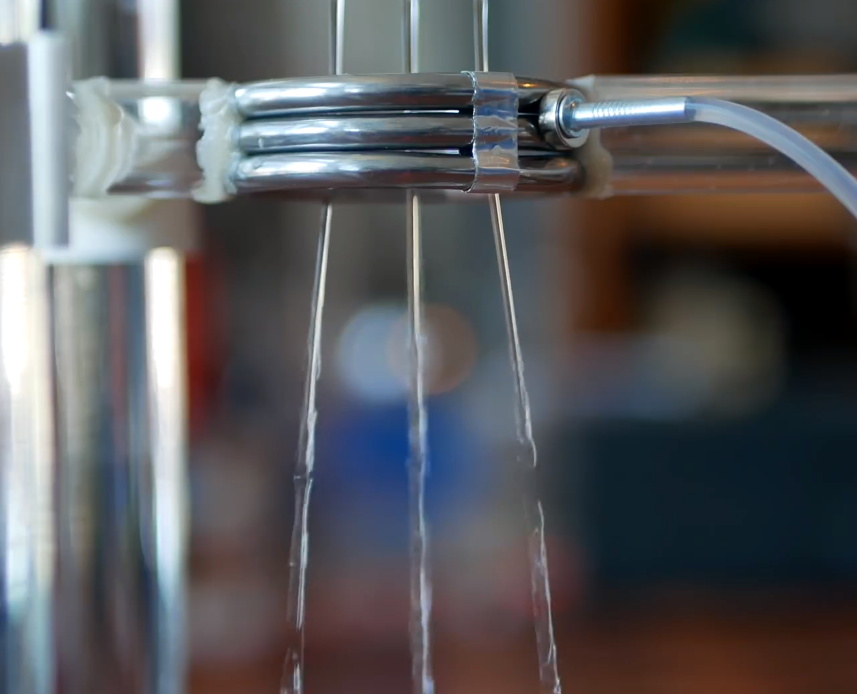
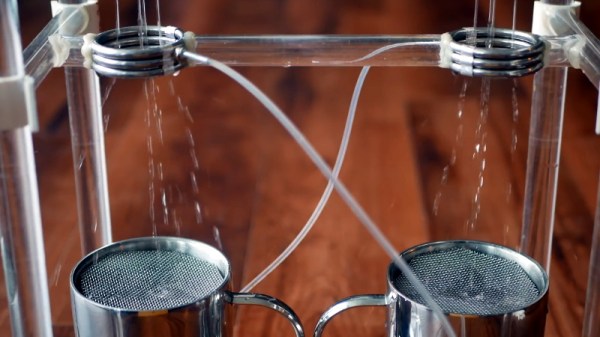
Diverging streams means a charge is building up.

Our very own [Steven Dufresne] wrote an in-depth look at how these devices operate, but the short version is that a negative and positive charge is built up in two sets of metallic inductor rings and buckets, with the stream of water itself acting as a sort of wire to carry the charge up to the overhead water reservoir. As [Jay] demonstrates the video, you’ll know things are working when the streams of water become attracted to the inductors they are passing through.

Rather than connecting a separate spark gap up to the water “receivers” on the bottom of his water dropper, [Jay] found the handles on the metal mugs he’s using worked just as well. By moving the mugs closer and farther away he can adjust the gap, and a second adjustment lets him move the vertical position of the inductors. It sounds like it takes some fiddling to get everything in position, but once it’s working, the whole thing is very impressive.

Of course if you’re looking to get serious with high voltage experiments, you’ll want to upgrade to some less whimsical equipment pretty quickly. Luckily, [Jay] has shown that putting together a reliable HV supply doesn’t need to be expensive or complicated.

Continue reading “Lord Kelvin’s Contraption Turns Drips Into Sparks”
Precise Sundial Tells Time To The Minute

We’re always a fan of an interesting or unique clock build around here, which often use intricate pieces of technology to keep time such as weights and gears, crystal oscillators, or even a global network of satellites in the case of GPS. While these are all interesting methods of timekeeping, the original method of tracking the sun is often forgotten. With this clock, the sun is the main method of keeping track of time, but unlike traditional sundials it has a number of advancements that let it keep surprisingly accurate time. (Google Translate from German)

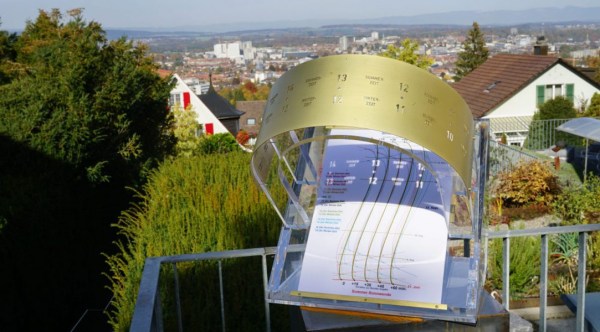
While most sundials can only show hours, this one from [leon andré], a retired physicist, has a method for displaying minutes as well. It uses pinholes instead of shadows to keep track of the position of the sun, with the pinhole casting a bright spot of sunlight onto a diagram below. The diagram keeps track of the minutes, and consists of curved lines which help account for the sun’s changing path throughout a typical year. The dial keeps track of local solar time, as any sundial would, but by rotating it along its vertical axis it can be calibrated for the timezone that it’s in regardless of its position.

As far as clock builds go, one that is completely passive like this semi-digital sundial is fairly unique, especially for its accuracy. And, when set to local solar time, it will be the most reliable method of keeping time long-term than possibly any other clock we’ve seen before, as long as it’s not too cloudy outside. On the other hand, it is possible to augment a sundial with some modern technology as well.

Thanks to [Adrian] for the tip!

Inside A 20-Watt Traveling Wave Tube Amplifier From Apollo

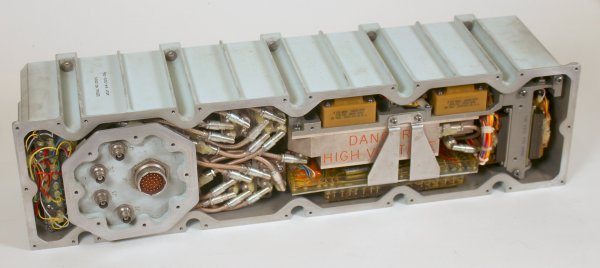
When the Apollo astronauts made their way to the Moon, their communication equipment had a transmission power of a mere 20 W, which the sensitive receivers back on Earth managed to pick up. But this isn’t just any amplifier, it’s a Traveling Wave Tube amplifier (TWT), as [Ken Shirriff] explains in a recent article.

The most fascinating thing about these TWTs isn’t just their role during the Apollo missions, but the fact that even today this type of vacuum tube is still among the most efficient and compact types of RF amplifier. As a result today’s high-tech satellites still commonly feature these devices.

As always, [Ken] entertains and enlightens us with how the TWT and the rest of the amplifier system worked.


Peeking Inside A Volcano Sensor

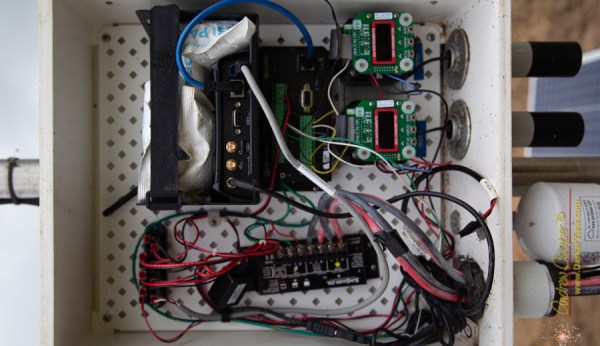
On a recent walk through the Hawaii Volcanoes National Park, [Andrew Cooper] stumbled upon an unlocked monitoring station. Being an engineer, he couldn’t resist taking a look. This station is one of a network of sulfur dioxide (SO2) monitoring stations installed around the park to keep an eye on volcanic emissions. Unsurprisingly, sulfur dioxide is unhealthy to breathe. Sensors like these keep people informed about local conditions before taking their strolls among the volcanic foothills, enjoying gorgeous vistas as [Andrew] describes it.

[Andrew] wasn’t particularly surprised at the contents of the station, since he builds similar equipment in his day job. Continuous power is provided by lead acid batteries kept charged by an array of three mis-matched solar panels. There are duplicate SO2 monitors, an air particulate meter, and a standard weather station affixed to the top. Data is logged on-site and reported up the chain by a cell-phone modem. [Andrew] wasn’t impressed with the workmanship, noting:

It appeared as if the circuits were wired by a ham-handed grad student with no sense of pride in their work.

Continue reading “Peeking Inside A Volcano Sensor”

Tetris Handheld Powered By Tritium Cell, Eventually

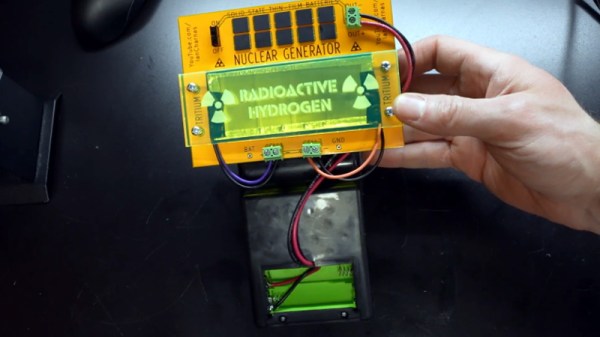
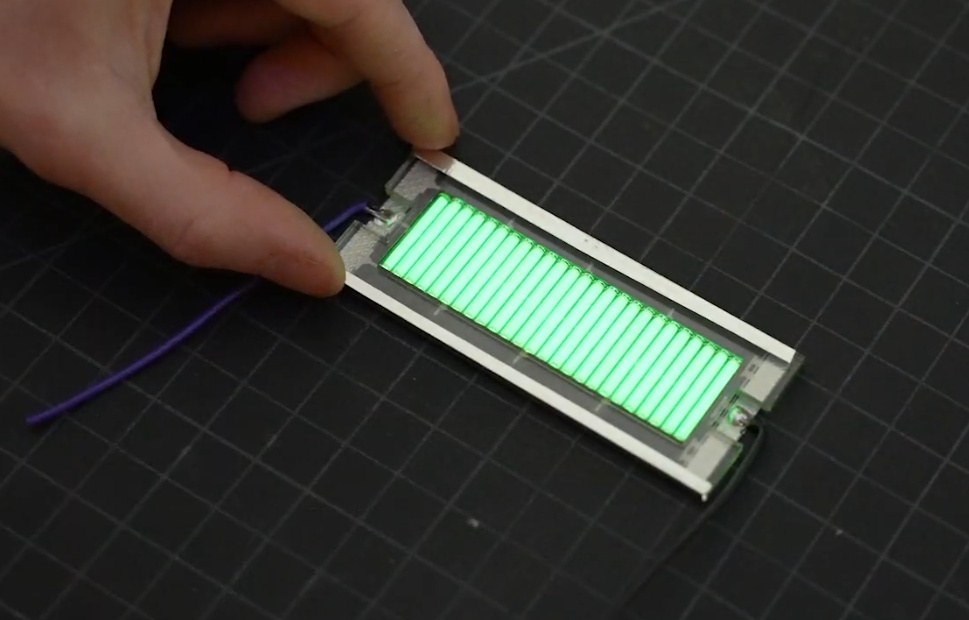
The idea of a tritium power cell is pretty straightforward: stick enough of the tiny glowing tubes to a photovoltaic panel and your DIY “nuclear battery” will generate energy for the next decade or so. Only problem is that the power produced, measured in a few microwatts, isn’t enough to do much with. But as [Ian Charnas] demonstrates in his latest video, you can eke some real-world use out of such a cell by storing up its power over a long enough period.

As with previous projects we’ve seen, [Ian] builds his cell by sandwiching an array of keychain-sized tritium tubes between two solar panels. Isolated from any outside light, power produced by the panels is the result of the weak green glow given off by the tube’s phosphorus coating as it gets bombarded with electrons. The panels are then used to charge a bank of thin-film solid state batteries, which are notable for their exceptionally low self-discharge rate.

Some quick math told [Ian] that a week of charging should build up enough of a charge to power a knock-off handheld Tetris game for about 10 minutes. Unfortunately, after waiting the prescribed amount of time, he got only a few seconds of runtime out of his hacked together power source.

His best guess is that he got a bad batch of thin-film batteries, but since he could no longer find the exact part number he used originally, he had to design a whole new PCB for the second attempt. After waiting two long months to switch the game on this time, he was able to play for nearly an hour before his homebrew nuclear energy source was depleted.

We wouldn’t consider this terribly practical from a gaming standpoint, but like the solar harvesting handheld game we covered last year, it’s an interesting demonstration of how even a minuscule amount of power can be put to work for intermittent applications. Here it’s a short bout of wonky Tetris, but the concept could just as easily be applied to an off-grid sensor.

Continue reading Tetris Handheld Powered By Tritium Cell, Eventually”

Discount Microfluidics From A $9 Spree At The Dollar Store

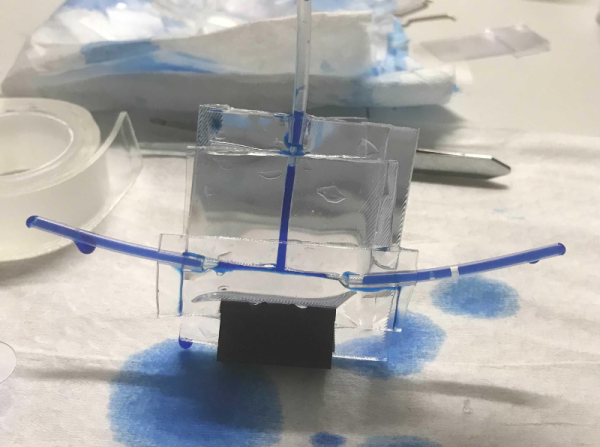
Microfluidics — working with tiny volumes of fluids in tiny channels — isn’t something you’d think would be inexpensive. Unless you read [Alexander Bissells’] post on how he created microfluidic devices using stuff from the dollar store. The channels in these devices can be much smaller than a millimeter and the fluid volumes are sometimes measured in femtoliters. At those scales, fluids don’t work like we intuitively think they will.

The parts list included gel tape, baby droppers, and some assorted containers and tools. Total price at the dollar store $9. One of the key finds in the dollar store was some small spray bottles. They weren’t important themselves, but they contain small lengths of silicone tubing and that was useful. Plastic fresnel lenses along with the tubing and gel tape worked to make “chips.” The gel tape also gets cut to make the channels. An eyedropper with some modifications makes a reasonable syringe.

We aren’t sure what you can practically do with any of these, but the T-junction looked pretty interesting. If you want some ideas on how these devices work in biology, including COVID-19 testing, check out this article. And just last week [Krishna Sanka] hosted a Hack Chat on microfluidics in biohacking, you can find the transcript on the project page. If you need a pump, this one uses 3D printer firmware to control it.

Checking Up On Earth’s Sister Planet: NASA’s Upcoming Venus Missions

Even as we bask in the knowledge that our neighboring planet Mars is currently home to a multitude of still functional landers, a triplet of rovers and with an ever-growing satellite network as well as the first ever flying drone on another planet, our other neighboring planet Venus is truly playing the wallflower, with Japan’s Akatsuki orbiter as the lone active Venusian mission right now.

That is about to change, however, with NASA having selected two new missions that will explore Venus by the end of this decade. The DAVINCI+ and VERITAS missions aim to respectively characterize Venus’ atmosphere and map its surface in unprecedented detail. This should provide us information about possible tectonic activity, as well as details about the Venusian atmosphere which so far have been sorely missing.

Despite Venus being the closest match to our planet Earth, how is it possible that we have been neglecting it for so long, and what can we expect from future missions, including and beyond these two new NASA missions?

Continue reading “Checking Up On Earth’s Sister Planet: NASA’s Upcoming Venus Missions”