Regenerative Medicine: The Promise Of Undoing The Ravages Of Time

In many ways, the human body is like any other machine in that it requires constant refueling and maintenance to keep functioning. Much of this happens without our intervention beyond us selecting what to eat that day. There are however times when due to an accident, physical illness or aging the automatic repair mechanisms of our body become overwhelmed, fail to do their task correctly, or outright fall short in repairing damage.

Most of us know that lizards can regrow tails, some starfish regenerate into as many new starfish as the pieces which they were chopped into, and axolotl can regenerate limbs and even parts of their brain. Yet humans too have an amazing regenerating ability, although for us it is mostly contained within the liver, which can regenerate even when three-quarters are removed.

In the field of regenerative medicine, the goal is to either induce regeneration in damaged tissues, or to replace damaged organs and tissues with externally grown ones, using the patient’s own genetic material. This could offer us a future in which replacement organs are always available at demand, and many types of injuries are no longer permanent, including paralysis. Continue reading “Regenerative Medicine: The Promise Of Undoing The Ravages Of Time”

An Oil Diffusion Vacuum Pump From Thrift Store Junk

It seems like creating a vacuum should be a pretty easy job, but it turns out that sucking all the air out of something is harder than it seems. A cheap vacuum pump will get you part of the way there, but to really pull a hard vacuum, you need an oil diffusion pump that costs multiple tens of thousands of dollars.

Or, you need a bunch of thrift store junk, a TIG welder, and a can of WD-40. At least that’s what [Lucas] put into his homebrew oil diffusion pump. The idea of such a contraption is to vaporize oil in a chamber such that the oil droplets entrain any remaining gas molecules toward an exhaust port. His low-budget realization of this principle involved a lot of thrift store stainless steel cookware, welded together with varying degrees of success, with liberal applications of epoxy to seal up any leaks. And an electric smores cooker for the heating element, which was a nice touch. The low-budget approach extended even to the oil for the pump; rather than shelling out for expensive specialty oil, [Lucas] distilled some from a WD-40 silicone spray lubricant.

The video below details all the travails [Lucas] encountered along the way, plus the testing process. The results were at least encouraging — the diffusion pump was pulling vacuum far in excess of what the roughing pump was capable of. He clearly still has some work to do, but getting as far as he did with the scrap heap of parts he cobbled together is pretty impressive.

[Lucas]’ goal with all this? A fusion reactor. No, not that kind. This kind. Continue reading “An Oil Diffusion Vacuum Pump From Thrift Store Junk”

Honda Ignition Coils Sing The Song Of Their People

High-voltage experimenters have been using automotive ignition coils to generate impressive sparks in the home lab for decades, and why not? They’re cheap, easily obtainable, and at the end of the day, producing sparks is literally what they’re designed to do. But that doesn’t mean there isn’t room for improvement.

In his latest Plasma Channel video [Jay Bowles] revisits this classic experiment, bringing to bear the considerable high-voltage experience he’s gained over the last several years. Building on an earlier setup that used a single Honda ignition coil, this new dual-coil version can produce up to 60,000 volts and is driven by a cleaner and more reliable circuit based on the iconic 555 timer. A pair of potentiometers on the front of the driver can adjust its square wave output from 1 to 10 kilohertz manually, while a commercial Bluetooth audio receiver tied into the 555 circuit allows the output to be modulated by simply playing audio from a paired device.

Continue reading “Honda Ignition Coils Sing The Song Of Their People”

How Do Capacitors Work?

If you are like [The Science Asylum], you might wonder how a capacitor can work since, at their core, they are nothing more than a gap filled with air or another insulator. He explains how in a recent video you can see below.

Of course, at DC, a capacitor doesn’t conduct any better than the insulator used as its dielectric. However, a DC voltage has to start sometime and when it does, it briefly looks like AC. The video explains it all in simple terms. Of course, if you are math savvy, you can probably get as much out of the normal C=dQ/dV equation.

If that doesn’t speak to you, the explanation in the video about charges will shed some light. He even shows an animation of the classic “hydraulic model”, which is helpful to develop intuition about the process.

Continue reading “How Do Capacitors Work?”

Dice Rolls From The Beginning Of Time

Generating random numbers might seem like a trivial task, that is until the numbers need to be truly random for cryptography or security reasons. When that’s the case, it turns out that these numbers are really “pseudo-random” and follow a predictable pattern. Devices that can produce truly random numbers often do it by sampling random events in the real world rather than relying on a computer to do it directly, like this machine which simulates a dice roll by looking at the cosmic microwave background radiation.

The cosmic microwave background radiation exists in the infrared at the farthest edges of the observable universe as a remnant of the big bang. It’s an excellent source of randomness, but tapping into it poses a bit of a challenge. For this build, [iSax] is using an old Soviet-era Geiger tube to detect the appropriate signal, and a Nixie tube to display the dice roll. After the device detects two particles from the Big Bang, the device measures the amount of time that passed between the detection of both particles and uses this number to calculate the dice roll.

While it takes a little bit longer to roll this dice than a traditional one since it has to wait to detect the right kind of particles, if you really need the randomness it can’t be beat. It certainly works as dice, but we can also see some use for generating truly random numbers for other applications as well. For some other sources of random inspiration be sure to check out our own [Voja Antonic]’s deep dive into truly random number generation.

Continue reading “Dice Rolls From The Beginning Of Time”

Painted Over But Not Forgotten: Restoring Lost Paintings With Radiation And Mathematics

An intrinsic property of paintings, that makes them both wonderful and very annoying, is the fact that they are physical objects. Sometimes they survive across the ages as amazing artifacts of their era, but they are also susceptible to being lost and even destroyed. Sometimes this destruction is deliberate, such as when a painting is painted over.

Artists reuse canvas all the time — painting over what was already there. Sometimes they might be coerced by a client into altering a painting, or removing entire elements from a scene. Fortunately, nowadays we have many techniques, involving x-rays and infrared radiation, that can analyze paintings to determine not only the composition of what we can see with the naked eye, but also that what lies underneath.

In some cases, we can then reconstruct what was previously hidden, returning to physical reality paintings and sketches which haven’t seen the light of day for sometimes centuries. Continue reading “Painted Over But Not Forgotten: Restoring Lost Paintings With Radiation And Mathematics”

Quantum Atomic Interferometer For Precision Motion Sensing

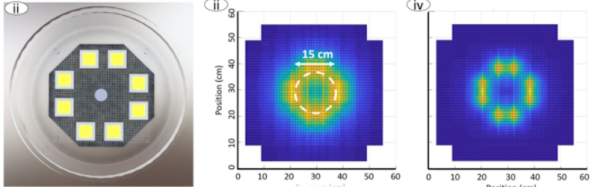
The current state of the art of embedded motion sensing is based around micro-electromechanical systems (MEMS) devices. These miracles of microfabrication use tiny silicon structures, configured to detect acceleration and rotational velocity in three dimensions. Accumulate these accelerations and rotations, and you’ve got a device that can find its orientation and track movement without any external waypoints. This is the basis of the technique of dead reckoning.

Why do we care about dead reckoning anyway? Surely GPS and related positioning systems are good enough? Above ground GPS is usually good enough, but underwater and underground this simply won’t work. Even heading indoors has a dramatic effect on the GPS signal strength, so yes, we need another way for some applications.

Right now, the current state of the art in portable sensors are MEMS devices, and you can get them for the cost of a hamburger. But if you want the ultimate in accuracy, you’ll want a quantum atomic interferometer. What that is, and how it will be possible to make one small enough to be useful, is half of the story. But first, let’s talk MEMS.

Continue reading “Quantum Atomic Interferometer For Precision Motion Sensing”