Field Guide To Shipping Containers

In the 1950s, trucking magnate Malcom McLean changed the world when he got frustrated enough with the speed of trucking and traffic to start a commercial shipping company in order to move goods up and down the eastern seaboard a little faster. Within ten years, containers were standardized, and the first international container ship set sail in 1966. The cargo? Whisky for the U.S. and guns for Europe. What was once a slow and unreliable method of moving all kinds of whatever in barrels, bags, and boxes became a streamlined operation — one that now moves millions of identical containers full of unfathomable miscellany each year.

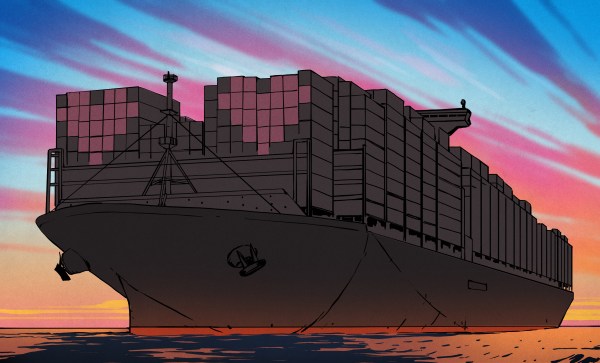
When I started writing this, there was a container ship stuck in the Suez canal that had been blocking it for days. Just like that, a vital passage became completely clogged, halting the shipping schedule of everything from oil and weapons to ESP8266 boards and high-waist jeans. The incident really highlights the fragility of the whole intermodal system and makes us wonder if anything will change.

A rainbow of dry storage containers. Image via xChange

Setting the Standard

We are all used to seeing the standard shipping container that’s either a 10′, 20′, or 40′ long box made of steel or aluminum with doors on one end. These are by far the most common type, and are probably what come to mind whenever shipping containers are mentioned.

These are called dry storage containers, and per ISO container standards, they are all 8′ wide and 8′ 6″ tall. There are also ‘high cube’ containers that are a foot taller, but otherwise share the same dimensions. Many of these containers end up as some type of housing, either as stylish studios, post-disaster survivalist shelters, or construction site offices. As the pandemic wears on, they have become so much in demand that prices have surged in the last few months.

Although Malcom McLean did not invent container shipping, the strict containerization standards that followed in his wake prevent issues during stacking, shipping, and storing, and allow any container to be handled safely at any port in the world, or load onto any rail car with ease. Every bit of the container is standardized, from the dimensions to the way the container’s information is displayed on the end. At most, the difference between any two otherwise identical containers is the number, the paint job, and maybe a few millimeters in one dimension.

Standard as they may be, these containers don’t work for every type of cargo. There are quite a few more types of shipping containers out there that serve different needs. Let’s take a look at some of them, shall we?
Continue reading “Field Guide To Shipping Containers” →

Review: What On Earth Is An Electromagnetic Radiation Tester And Why Would I Need One?

One of the joys of an itinerant existence comes in periodically being reunited with the fruits of various orders that were sent to hackerspaces or friends somewhere along the way. These anonymous parcels from afar hold an assortment of wonders, with the added element of anticipation that comes from forgetting exactly what had been ordered.

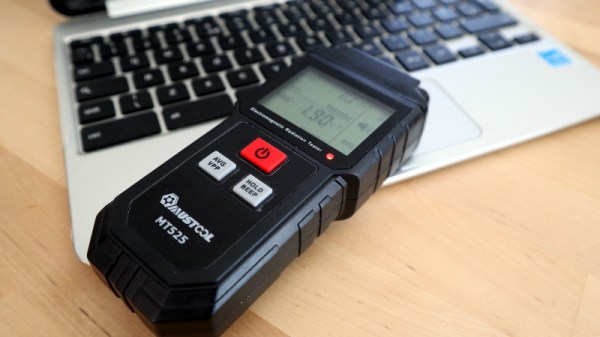
So it is with today’s subject, a Mustool MT525 electromagnetic radiation tester. At a cost not far above £10 ($13.70), this was an impulse purchase driven by curiosity; these devices claim to measure both magnetic and electric fields, but what do they really measure? My interest in these matters lies in the direction of radio, but I have never examined such an instrument. Time to subject it to the Hackaday treatment.

Continue reading “Review: What On Earth Is An Electromagnetic Radiation Tester And Why Would I Need One?” →

Mercedes Split Turbo Was A Game Changer In Formula 1

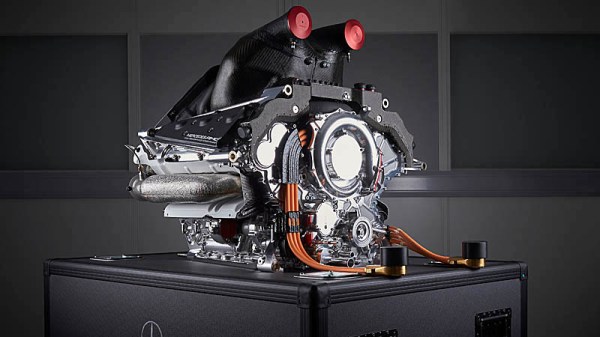
In 2014, Formula 1 switched away from V8 engines, electing instead to mandate all teams race with turbocharged V6 engines of 1.6 litres displacement, fitted with advanced energy recovery systems. The aim was to return Formula 1 to having some vague notion of relevance to modern road car technologies, with a strong focus on efficiency. This was achieved by mandating maximum fuel consumption for races, as well as placing a heavy emphasis on hybrid technology.

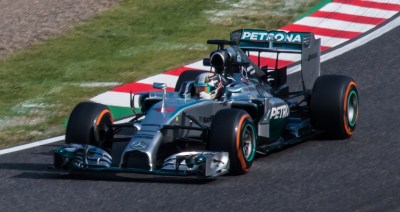
The Mercedes W05 Hybrid was the first of 7 championship-winning F1 cars from the British-based, German-funded team. It quickly showed the value of the team’s split-turbo technology.

Since then, Mercedes have dominated the field in what is now known as the turbo-hybrid era. The German team has taken home every drivers and constructors championship since, often taking home the crown well before the season is over. Much has been made of the team’s engine as a key part of this dominance, widely considered to be more powerful and efficient than the competition at all but a few select races in the last seven years, and much of the credit goes to the company’s innovative split-turbo system. Today, we’ll explore why the innovation was such a game changer in Formula 1.

Continue reading “Mercedes Split Turbo Was A Game Changer In Formula 1” →

Death Of The Turing Test In An Age Of Successful AIs

IBM has come up with an automatic debating system called Project Debater that researches a topic, presents an argument, listens to a human rebuttal and formulates its own rebuttal. But does it pass the Turing test? Or does the Turing test matter anymore?

The Turing test was first introduced in 1950, often cited as year-one for AI research. It asks, “Can machines think?”. Today we’re more interested in machines that can intelligently make restaurant recommendations, drive our car along the tedious highway to and from work, or identify the surprising looking flower we just stumbled upon. These all fit the definition of AI as a machine that can perform a task normally requiring the intelligence of a human. Though as you’ll see below, Turing’s test wasn’t even for intelligence or even for thinking, but rather to determine a test subject’s sex.

Continue reading “Death Of The Turing Test In An Age Of Successful AIs” →

Spacing Out: StarShip Explodes (Again), Passenger Space Flight, Space Bugs, Astronaut Bone, And Martian Water

This time I promise I only have a couple of stories from Elon Musk’s company. SpaceX’s latest Starship test launch ended in another explosion, proving that space hardware remains hard to get right. We’ll keep watching as they keep launching, and it can’t be long until they’ve ironed out all the problems. Meanwhile there’s brighter news from the company’s Crew Dragon, a modified version of the capsule with the forward docking ring replaced by a transparent dome is planned for launch in September with the company’s first flight carrying civilian passengers. It’s doubtless unwelcome news for Virgin Galactic, whose suborbital passenger flights are edging closer to reality with the unveiling of their first SpaceShip III craft. Finally, a Falcon 9 upper stage broke up on re-entry over the northwestern USA, giving observers on the ground a spactacular show.

Spectacular view of the Falcon 9 debris. Via Lu Jerz

Meanwhile up there in orbit there have been found on the ISS some strains of bacteria previously unknown to scientists on Earth, but it’s not yet time to panic about Mutant Bugs From Space. It seems these bacteria are of a type that is essential in the growing of plants, so it’s likely they originally hitched a ride up with one of the several plant-growing experiments that have taken place over the station’s lifetime. Staying on the ISS, astronauts visiting the station have been at the centre of a recently published study looking at loss of bone density over long periods in space. The bone experts found that bone density could still be lost despite the astronauts’ in-flight exercise programs, and concluded that exercise regimes pre-flight should be taken into account for future in-orbit exercise planning.

Further away from Earth, the ESA Mars Express satellite has been used for a multi-year study of water loss to space from the Martian atmosphere. The ESA scientists identified the seasonal mechanism that leads to the planet’s upper atmosphere having an excess of water and in particular the effect of the periodic planet-wide dust storms on accelerating water loss, but failed to account for the water that they estimate Mars must have lost over its history. From a study of water-created surface features they can estimate how much liquid the planet once had, yet the atmospheric losses fail to account for it all. Has it disappeared underground? More studies are required before we’ll have an answer.

The exciting news over the coming days will no doubt be the Ingenuity Martian helicopter, which we have seen slowly unfolding itself prior to unloading from the belly of the Perseverence rover. If all goes according to plan the little craft will be set down before the rover trundles off to a safe distance, and the historic flight will take place on April 8th. We’ll be on the edges of our seats, and no doubt you will be, too.

AI Upscaling And The Future Of Content Delivery

The rumor mill has recently been buzzing about Nintendo’s plans to introduce a new version of their extremely popular Switch console in time for the holidays. A faster CPU, more RAM, and an improved OLED display are all pretty much a given, as you’d expect for a mid-generation refresh. Those upgraded specifications will almost certainly come with an inflated price tag as well, but given the incredible demand for the current Switch, a $50 or even $100 bump is unlikely to dissuade many prospective buyers.

But according to a report from Bloomberg, the new Switch might have a bit more going on under the hood than you’d expect from the technologically conservative Nintendo. Their sources claim the new system will utilize an NVIDIA chipset capable of Deep Learning Super Sampling (DLSS), a feature which is currently only available on high-end GeForce RTX 20 and GeForce RTX 30 series GPUs. The technology, which has already been employed by several notable PC games over the last few years, uses machine learning to upscale rendered images in real-time. So rather than tasking the GPU with producing a native 4K image, the engine can render the game at a lower resolution and have DLSS make up the difference.

The current model Nintendo Switch

The implications of this technology, especially on computationally limited devices, is immense. For the Switch, which doubles as a battery powered handheld when removed from its dock, the use of DLSS could allow it to produce visuals similar to the far larger and more expensive Xbox and PlayStation systems it’s in competition with. If Nintendo and NVIDIA can prove DLSS to be viable on something as small as the Switch, we’ll likely see the technology come to future smartphones and tablets to make up for their relatively limited GPUs.

But why stop there? If artificial intelligence systems like DLSS can scale up a video game, it stands to reason the same techniques could be applied to other forms of content. Rather than saturating your Internet connection with a 16K video stream, will TVs of the future simply make the best of what they have using a machine learning algorithm trained on popular shows and movies?

Continue reading “AI Upscaling And The Future Of Content Delivery” →

Python Will Soon Support Switch Statements

Rejoice! Gone are the long chains of if…else statements, because switch statements will soon be here — sort of. What the Python gods are actually giving us are match statements. match statements are awfully similar to switch statements, but have a few really cool and unique features, which I’ll attempt to illustrate below.

Continue reading “Python Will Soon Support Switch Statements” →