The New Xbox: Just How Fast Is 12 TeraFLOPS?

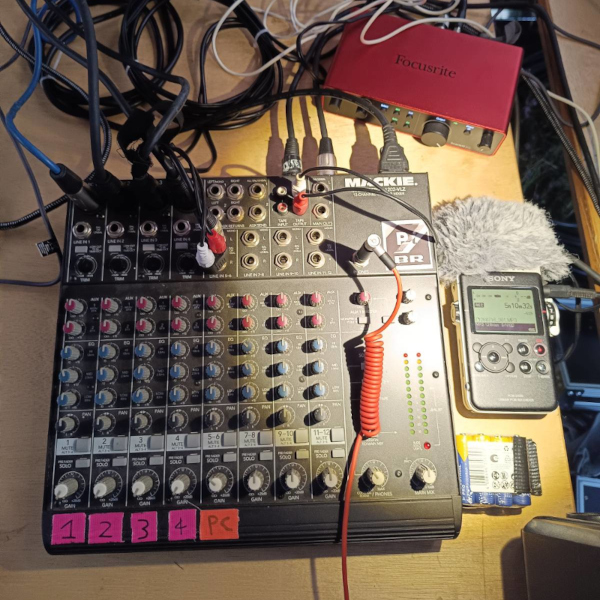
Microsoft’s new Xbox Series X, formerly known as Project Scarlet, is slated for release in the holiday period of 2020. Like any new console release, it promises better graphics, more immersive gameplay, and all manner of other superlatives in the press releases. In a sharp change from previous generations, however, suddenly everybody is talking about FLOPS. Let’s dive in and explore what this means, and what bearing it has on performance.

Continue reading “The New Xbox: Just How Fast Is 12 TeraFLOPS?”

Ask Hackaday: What Should We Be Doing During Coronavirus Lockdown?

There’s a lot of good in the world and that includes you. Humanity has a way of coming together at crucial moments and we have certainly reached that with the outbreak and spread of the novel coronavirus. At this point, most people’s daily lives have been turned upside down. We can all have an impact on how this plays out.

It’s scary, it’s real, but we will get through this. What we need to focus on now is how we can behave that will lead to the best outcomes for the largest number of people. The real question is, how can we help? If you’re stuck at home it’s easy to feel powerless to help but that’s not true. Let’s cover a few examples, then open up the discussion in the comments so we can hear what has been working for you.

Continue reading “Ask Hackaday: What Should We Be Doing During Coronavirus Lockdown?”

New Part Day: Battery-Less NFC E-Paper Display

Waveshare, known for e-ink components aimed at hobbyists among other cool parts, has recently released a very interesting addition to their product line. This is an enclosed e-ink display which gets updated over a wireless NFC connection. By that description, nothing head-turning, but the kicker is that there is no battery inside the device at all, as it harvests the energy needed from the wireless communication itself.

Just like wireless induction charging in certain smartphones, the communication waves involved in NFC can generate a small current when passing through a coil, located on this device’s PCB. Since microcontrollers and e-ink displays consume a very small amount of current compared to other components such as a backlit LCD or OLED display, this harvested passive energy is enough to allow the display to update. And because e-paper requires no power at all to retain its image, once the connection is ended, no further battery backup is needed.

The innovation here doesn’t come from Waveshare however, as in 2013 Intel had already demoed a very similar device to promising results. There’s some more details about the project, but it never left the proof of concept stage despite being awarded two best paper awards. We wonder why it hadn’t been made into a commercial product for 5 years, but we’re glad it’s finally here for us to tinker with it.

E-paper is notorious for having very low refresh rates when compared to more conventional screens, much more so when driven in this method, but there are ways to speed them up a bit. Nevertheless, even when used as designed, they’re perfectly suited for being used in clocks which are easy on the eyes without a glaring backlight.

[Thanks Steveww for the tip!]

Coronavirus And Folding@Home; More On How Your Computer Helps Medical Research

On Wednesday morning we asked the Hackaday community to donate their extra computer cycles for Coronavirus research. On Thursday morning the number of people contributing to Team Hackaday had doubled, and on Friday it had doubled again. Thank you for putting those computers to work in pursuit of drug therapies for COVID-19.

I’m writing today for two reasons, we want to keep up this trend, and also answer some of the most common questions out there. Folding@Home (FAH) is an initiative that simulates proteins associated with several diseases, searching for indicators that will help medical researchers identify treatments. These are complex problems and your efforts right now are incredibly important to finding treatments faster. FAH loads the research pipeline, generating a data set that researchers can then follow in every step of the process, from identifying which chemical compounds may be effective and how to deliver them, to testing they hypothesis and moving toward human trials.

Continue reading “Coronavirus And Folding@Home; More On How Your Computer Helps Medical Research”

This Week In Security: Working From Home Edition

As the world sits back and waits for Coronavirus to pass, the normally frantic pace of security news has slowed just a bit. Google is not exempt, and Chrome 81 has been delayed as a result. Major updates to Chrome and Chrome OS are paused indefinitely, but security updates will continue as normal. In fact, Google has verified that the security related updates will be packaged as minor updates to Chrome 80.

Chinese Viruses Masquerading as Chinese Viruses

Speaking of COVID-19, researchers at Check Point Research stumbled upon a malware campaign that takes advantage of the current health scare. A pair of malicious RTF documents were being sent to various Mongolian targets. Created with a tool called “Royal Road“, these files target a set of older Microsoft Word vulnerabilities.

This particular attack drops its payload in the Microsoft Word startup folder, waiting for the next time Word is launched to run the next stage. This is a clever strategy, as it would temporarily deflect attention from the malicious files. The final payload is a custom RAT (Remote Access Trojan) that can take screenshots, upload and download files, etc.

While the standard disclaimer about the difficulty of attribution does apply, this particular attack seems to be originating from Chinese intelligence agencies. While the Coronavirus angle is new, this campaign seems to stretch back to 2017.
Continue reading “This Week In Security: Working From Home Edition”

The Corona Clock

Schools are closed here in Germany until after Easter vacation, and that means that our almost-six-year-old son Max is staying at home with us. The good news is that my wife and I work from home anyway, so it’s not too stressful as long as he can look after himself for eight hours per day. The bad news is that there’s no way a kindergarten kid can take care of himself for such long stretches, and we don’t want to just park him in front of the boob tube. At least there’s two of us.

The new stay-at-home life has required some adjustment, but for at least the first five days (and counting) it’s working out pretty darn well. One trick: my wife came up with the idea of a visual schedule to help Max divide his day up into kindergarten-sized chunks, and then we added an LED strip behind it to turn it into a linear clock of sorts. And we did it with stuff we had lying around the house.

Granted, it’s not a super deep hacky-hack, and some of you out there could probably get it done with a handful of 555 timers. But it was quick, gets the job done, and heck, with NTP sync, it’s the most accurate kiddie clock in the world! So those of you out there who are stuck like we are, trying to balance childcare and working from home, here’s a quick project that can increase familial harmony while giving you an excuse to order more LED strips.

Continue reading “The Corona Clock”

Thousands Of Internet-Connected Satellites Above Us, What Could Possibly Go Wrong!

Our skies are full of satellites, more full than they have been, that is, because SpaceX’s Starlink and a bevvy of other soon-to-launch operators plan to fill them with thousands of small low-earth-orbit craft to blanket the Earth with satellite Internet coverage. Astronomers are horrified at such an assault on their clear skies, space-watchers are fascinated by the latest developments, and in some quarters they’re causing a bit of concern about the security risk they might present. With a lot of regrettable overuse use of the word “hacker”, the concern is that such a large number of craft in the heavens might present an irresistible target for bad actors, who would proceed to steer them into each other can cause chaos.

Invest in undersea cables, folks, the Kessler Syndrome is upon us, we’re doomed!

Continue reading “Thousands Of Internet-Connected Satellites Above Us, What Could Possibly Go Wrong!”