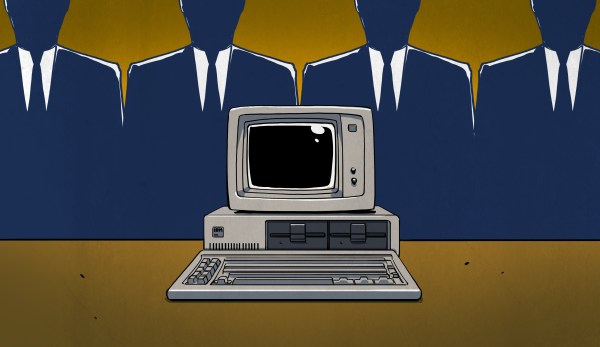
The IBM PC That Broke IBM

It was the dawn of the personal computer age, a time when Apple IIs, Tandy TRS-80s, Commodore PETs, the Atari 400 and 800, and others had made significant inroads into schools and people’s homes. But IBM, whose name was synonymous with computers, was nowhere to be seen. And yet within a few years, the IBM PC would be the dominant player.

Those of us who were around at the time cherished one of those early non-IBM computers, and as the IBM PC came out, either respected it, looked down on it, or did both. But now, unless your desktop machine is a Mac, you probably own a computer that owes its basic design to the first IBM PC.

The Slow Moving Elephant
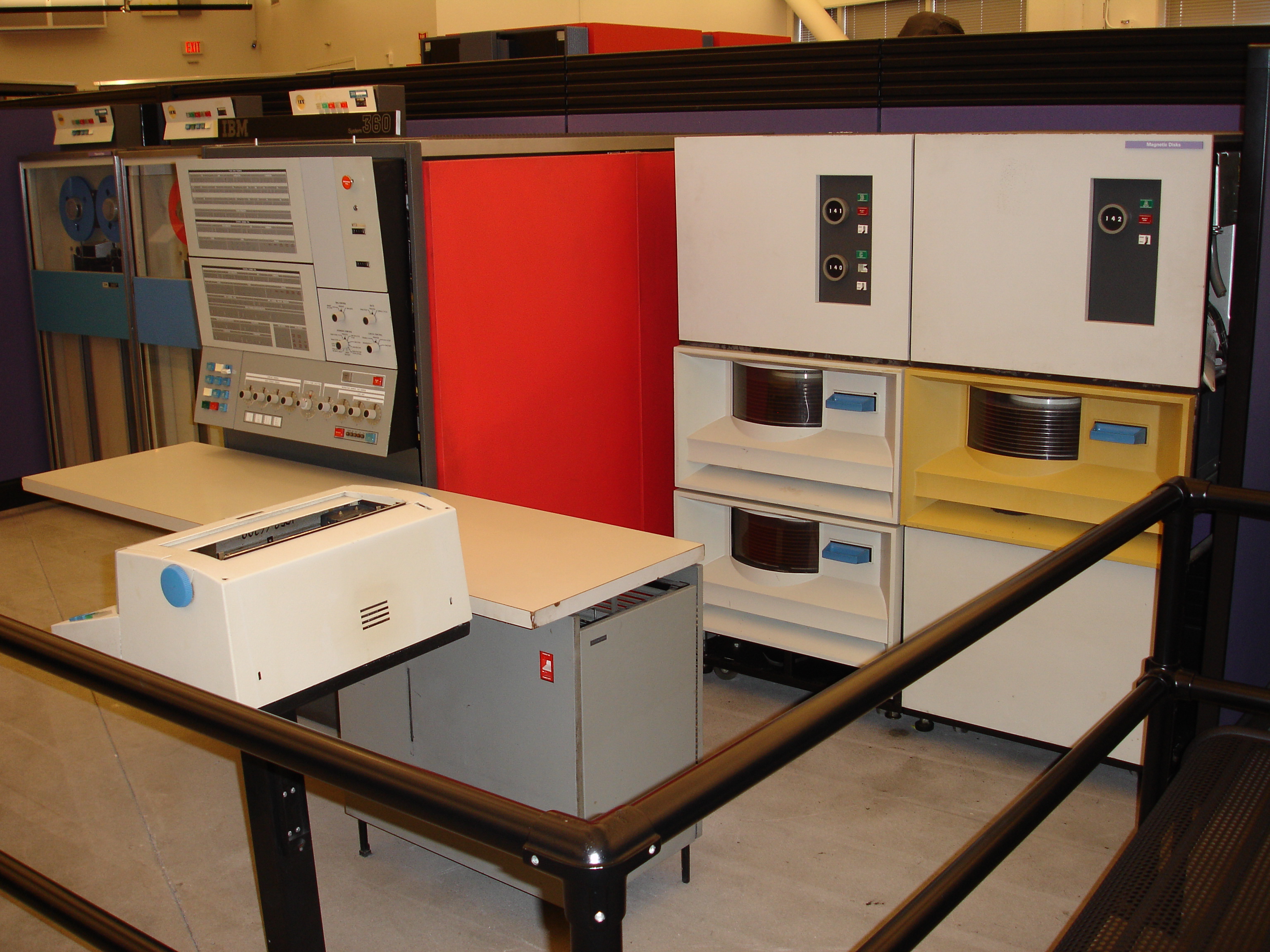
IBM System/360 Model 30 mainframe
IBM System/360 Model 30 mainframe by Dave Ross CC BY 2.0

In the 1960s and 1970s, the room-filling mainframe was the leading computing platform and the IBM System/360 held a strong position in that field. But sales in 1979 in the personal computer market were $150 million and were projected to increase 40% in 1980. That was enough for IBM to take notice. And they’d have to come up with something fast.

Fast, however, wasn’t something people felt IBM could do. Decisions were made through committees, resulting in such a slow decision process that one employee observed, “that it would take at least nine months to ship an empty box.” And one analyst famously said, “IBM bringing out a personal computer would be like teaching an elephant to tap dance.”

And yet, in just a few short years, IBM PCs dominated the personal computer market and the majority of today’s desktops can trace their design back to the first IBM PC. With even more built-in barriers which we cover below, how did the slow-moving elephant make this happen?

Continue reading “The IBM PC That Broke IBM”

Radiosondes: Getting Data From Upstairs

Ever since I first learned about radiosondes as a kid, I’ve been fascinated by them. To my young mind, the idea that weather bureaus around the world would routinely loft instrument-laden packages high into the atmosphere to measure temperature, pressure, and winds aloft seemed extravagant. And the idea that this telemetry package, having traveled halfway or more to space, could crash land in a field near my house so that I could recover it and take it apart, was an intoxicating thought.

I’ve spent a lot of time in the woods over the intervening years, but I’ve never seen a radiosonde in the wild. The closest I ever came was finding a balloon with a note saying it had been released by a bunch of schoolkids in Indiana. I was in Connecticut at the time, so that was pretty cool, but those shortsighted kids hadn’t put any electronics on their balloon, and they kind of left me hanging. So here’s a look at what radiosondes are, how they work, and what you can do to increase your chances of finding one.

Continue reading “Radiosondes: Getting Data From Upstairs”

Another Defeat Of The Intel Management Engine

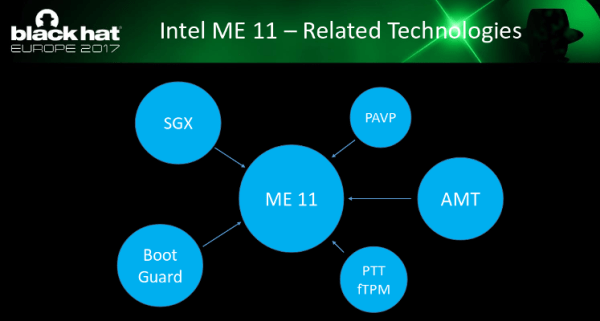
If you have a computer with an Intel processor that’s newer than about 2007, odds are high that it also contains a mystery software package known as the Intel Management Engine (ME). The ME has complete access to the computer below the operating system and can access a network, the computer’s memory, and many other parts of the computer even when the computer is powered down. If you’re thinking that this seems like an incredible security vulnerability then you’re not alone, and a team at Black Hat Europe 2017 has demonstrated yet another flaw in this black box (PDF), allowing arbitrary code execution and bypassing many of the known ME protections.

[Mark Ermolov] and [Maxim Goryachy] are the two-man team that discovered this exploit, only the second of its kind in the 12 years that the ME has been deployed. Luckily, this exploit can’t be taken advantage of (yet) unless an attacker has physical access to the device. Intel’s firmware upgrades also do not solve the problem because the patches still allow for use of older versions of the ME. [Mark] and [Maxim] speculate in their presentation that this might be fixed on the next version of the ME, but also note that these security vulnerabilities would disappear if Intel would stop shipping processors with the ME.

We won’t hold our breath on Intel doing the right thing by eliminating the ME, though. It’s only a matter of time before someone discovers a zero-day (if they haven’t already, there’s no way to know) which could cripple pretty much every computer built within the last ten years. If you’re OK with using legacy hardware, though, it is possible to eliminate the management engine and have a computer that doesn’t have crippling security vulnerabilities built into it. This post was even written from one. Good luck doing anything more resource-intensive with it, though.

My Kingdom For A Capacitor

While working on a project recently, I required a capacitor of around 1000 μF and went rummaging through my collection of parts. No luck there. At that point I’d usually go through my collection of junk electronics and computer motherboards, but I had recently gone through and tossed the stuff that had been laying around for as long as I could remember. No matter, I thought. I’ll just head over to RadioShack and…

Now, I have been accused of many things over the years, but “deep” is certainly not one of them. Yet, at this moment I had what could only be described as an existential crisis. There is no RadioShack, not in my state at least. I don’t live in an area that’s blessed with a maker “scene”, so no independent shop or even a hackerspace within reasonable driving distance of me either. I could order it online of course, but everyone’s trying to sell them in bulk and shipping will take a few days at least. A few days? Who knows where my interests will be in a few days. How can I get anything done under these conditions?

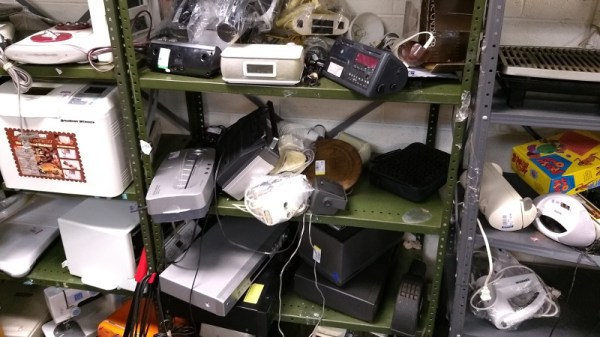
Desperate times call for desperate measures, so I got in the car and took a ride to the only place I knew where I could by electronic components for cheap: Goodwill. Continue reading “My Kingdom For A Capacitor”

Disrupting The Computer Industry Before It Existed: Rear Admiral Grace Hopper

The feature of being easier to write than assembly is often seen as the biggest advantage of high-level programming languages. The other benefit that comes with them is portability. With high-level languages, algorithms can be developed independently from the underlying hardware. This allows software to live on once the hardware becomes obsolete.

The compiler was a concept that was met with resistance when it was first introduced. This was at a time when computers were custom-built machines bearing individual names like ENIAC, UNIVAC and Mark I. A time when the global demand for computers was estimated to be around five units by the CEO of IBM. In this scenario, it took a visionary to foresee a future where the number of computers would outgrow the number of programmers and hardware would evolve so much faster than software that a compiler would make sense. One visionary was [Grace Hopper].

Continue reading “Disrupting The Computer Industry Before It Existed: Rear Admiral Grace Hopper”

The Physics Of Healing: Radiation Therapy

Few days are worse than a day when you hear the words, “I’m sorry, you have cancer.” Fear of the unknown, fear of pain, and fear of death all attend the moment when you learn the news, and nothing can prepare you for the shock of learning that your body has betrayed you. It can be difficult to know there’s something growing inside you that shouldn’t be there, and the urge to get it out can be overwhelming.

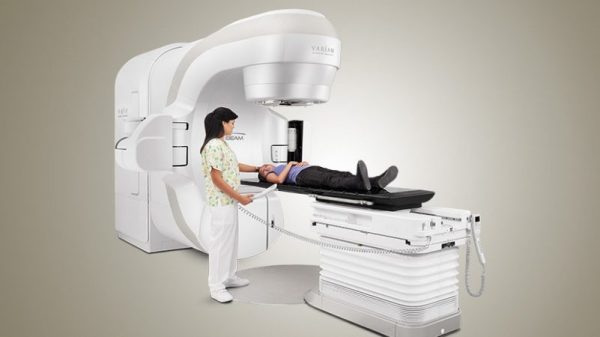
Sometimes there are surgical options, other times not. But eradicating the tumor is not always the job of a surgeon. Up to 60% of cancer patients will be candidates for some sort of radiation therapy, often in concert with surgery and chemotherapy. Radiation therapy can be confusing to some people — after all, doesn’t radiation cause cancer? But modern radiation therapy is a remarkably precise process that can selectively kill tumor cells while leaving normal tissue unharmed, and the machines we’ve built to accomplish the job are fascinating tools that combine biology and engineering to help people deal with a dreaded diagnosis.

Continue reading “The Physics Of Healing: Radiation Therapy”

Life On Contract: How Much Do I Charge?

If you’re comfortable with the technical side of becoming a consultant or contractor but are unsure what to charge for your services, you’re not alone. “How much do I charge?” is a tough question, made even tougher by the fact that discussing money can be awkward, and at times virtually taboo.

As a result it’s not uncommon for the issue to get put off because it’s outside one’s comfort zone. Technical people in particular tend to suffer from an “if you build it, they will come” mentality; we get the technical side of things all figured out and just sort of assume that the rest — customers, money, and so forth — will fall into place afterward. If you’re lucky, it will! But it’s better to do some planning.

The short and simple answer of how much to charge is a mix of “it depends” and “whatever the market bears” but of course, that’s incredibly unhelpful all by itself. It’s time to make the whole process of getting started a bit less opaque.

A stubborn determination to solve my own problems has given me plenty of opportunity to make mistakes and commit inefficiencies over the years; I’ve ended up with a process that works for me, but I also happen to think it is fairly generally applicable. Hopefully, sharing the lessons I’ve learned will help make your own process of figuring out what to charge easier, or at least make the inevitable blunders less costly.

Continue reading “Life On Contract: How Much Do I Charge?”