Watching The Watchers: The State Of Space Surveillance

By now you’ve almost certainly heard about the recent release of a high-resolution satellite image showing the aftermath of Iran’s failed attempt to launch their Safir liquid fuel rocket. The geopolitical ramifications of Iran developing this type of ballistic missile technology is certainly a newsworthy story in its own right, but in this case, there’s been far more interest in how the picture was taken. Given known variables such as the time and date of the incident and the location of the launch pad, analysts have determined it was likely taken by a classified American KH-11 satellite.

The image is certainly striking, showing a level of detail that far exceeds what’s available through any of the space observation services we as civilians have access to. Estimated to have been taken from a distance of approximately 382 km, the image appears to have a resolution of at least ten centimeters per pixel. Given that the orbit of the satellite in question dips as low as 270 km on its closest approach to the Earth’s surface, it’s likely that the maximum resolution is even higher.

Of course, there are many aspects of the KH-11 satellites that remain highly classified, especially in regards to the latest hardware revisions. But their existence and general design has been common knowledge for decades. Images taken from earlier generation KH-11 satellites were leaked or otherwise released in the 1980s and 1990s, and while the Iranian image is certainly of a higher fidelity, this is not wholly surprising given the intervening decades.

What we know far less about are the orbital surveillance assets that supersede the KH-11. The satellite that took this image, known by its designation USA 224, has been in orbit since 2011. The National Reconnaissance Office (NRO) has launched a number of newer spacecraft since then, with several more slated to be lifted into orbit between now and 2021.

So let’s take a closer look at the KH-11 series of reconnaissance satellites, and compare that to what we can piece together about the next generation or orbital espionage technology that’s already circling overhead might be capable of.

Continue reading “Watching The Watchers: The State Of Space Surveillance”
Plasma-Powered Thrusters For Your Homebrew Satellite Needs

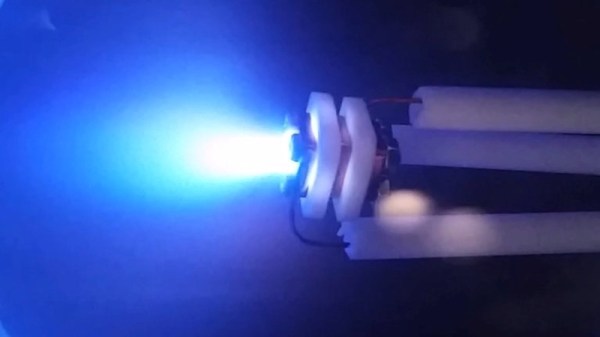
It seems as though every week we see something that clearly shows we’re living in the future. The components we routinely incorporate into our projects would have seemed like science fiction only a few short years ago, but now we buy them online and have them shipped to us for pennies. And what can say we’ve arrived in the future more than off-the-shelf plasma thrusters for the DIY microsatellite market?

Although [Michael Bretti] does tell us that he plans to sell these thrusters eventually, they’re not quite ready for the market yet. The AIS-gPPT3-1C series that’s currently under testing is designed for the micro-est of satellites, the PocketQube, a format with a unit size only 5 cm on a side – an eighth the size of a 1U CubeSat. The thrusters are solid-fueled, with blocks of Teflon, PEEK, or Ultem that are ablated by a stream of plasma. The gaseous exhaust is accelerated and shaped by a magnetic nozzle that’s integrated right into the thruster. The thruster is mounted directly to a PCB containing the high-voltage supplies and control electronics to interface with the PocketQube’s systems. The 34-gram thrusters have enough fuel for perhaps 500 firings, although that and the specifics of performance are yet to be tested.

If you have any interest at all in space engineering or propulsion systems, [Michael]’s site is worth a look. There’s a wealth of data there, and reading it will give you a great appreciation for plasma physics. We’ve been down that road a lot lately, with cold plasma, thin-film plasma deposition, and even explaining the mystery of plasmatic grapes.

Thanks to [miguekf] for the tip.

Kilopower: NASA’s Offworld Nuclear Reactor

Here on Earth, the ability to generate electricity is something we take for granted. We can count on the sun to illuminate solar panels, and the movement of air and water to spin turbines. Fossil fuels, for all their downsides, have provided cheap and reliable power for centuries. No matter where you may find yourself on this planet, there’s a way to convert its many natural resources into electrical power.

But what happens when humans first land on Mars, a world that doesn’t offer these incredible gifts? Solar panels will work for a time, but the sunlight that reaches the surface is only a fraction of what the Earth receives, and the constant accumulation of dust makes them a liability. In the wispy atmosphere, the only time the wind could potentially be harnessed would be during one of the planet’s intense storms. Put simply, Mars can’t provide the energy required for a human settlement of any appreciable size.

The situation on the Moon isn’t much better. Sunlight during the lunar day is just as plentiful as it is on Earth, but night on the Moon stretches for two dark and cold weeks. An outpost at the Moon’s South Pole would receive more light than if it were built in the equatorial areas explored during the Apollo missions, but some periods of darkness are unavoidable. With the lunar surface temperature plummeting to -173 °C (-280 °F) when the Sun goes down, a constant supply of energy is an absolute necessity for long-duration human missions to the Moon.

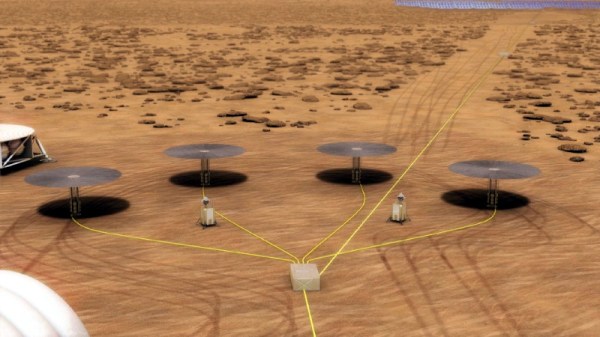
Since 2015, NASA and the United States Department of Energy have been working on the Kilopower project, which aims to develop a small, lightweight, and extremely reliable nuclear reactor that they believe will fulfill this critical role in future off-world exploration. Following a series of highly successful test runs on the prototype hardware in 2017 and 2018, the team believes the miniaturized power plant could be ready for a test flight as early as 2022. Once fully operational, this nearly complete re-imagining of the classic thermal reactor could usher in a whole new era of space exploration.

Continue reading “Kilopower: NASA’s Offworld Nuclear Reactor”

Rocket Lab Sets Their Sights On Rapid Reusability

Not so very long ago, orbital rockets simply didn’t get reused. After their propellants were expended on the journey to orbit, they petered out and fell back down into the ocean where they were obliterated on impact. Rockets were disposable because, as far as anyone could tell, building another one was cheaper and easier than trying to reuse them. The Space Shuttle had proved that reuse of a spacecraft and its booster was possible, but the promised benefits of reduced cost and higher launch cadence never materialized. If anything, the Space Shuttle was often considered proof that reusability made more sense on paper than it did in the real-world.

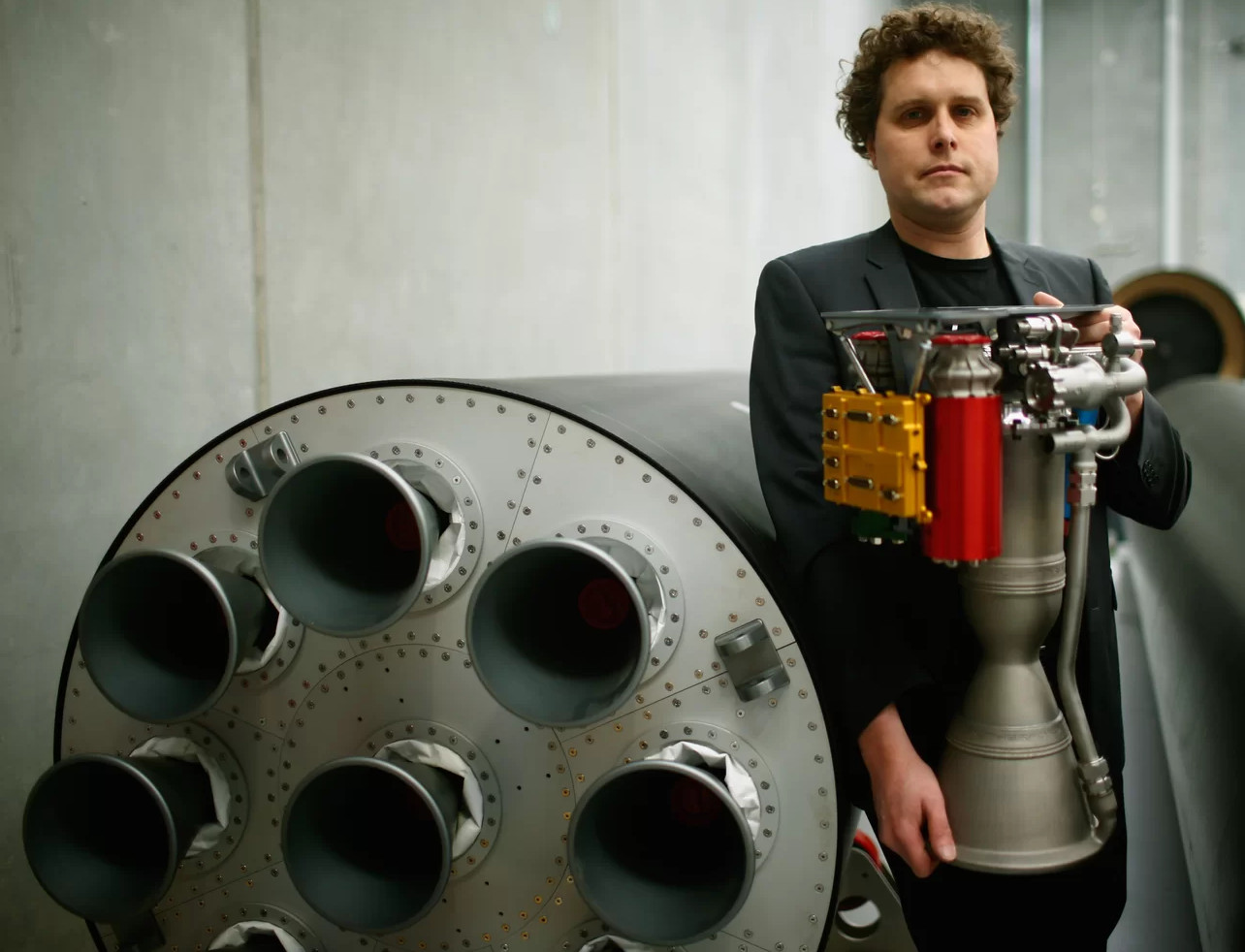
Rocket Lab CEO Peter Beck with Electron rocket

But that was before SpaceX started routinely landing and reflying the first stage of their Falcon 9 booster. Nobody outside the company really knows how much money is being saved by reuse, but there’s no denying the turn-around time from landing to reflight is getting progressively shorter. Moreover, by performing up to three flights on the same booster, SpaceX is demonstrating a launch cadence that is simply unmatched in the industry.

So it should come as no surprise to find that other launch providers are feeling the pressure to develop their own reusability programs. The latest to announce their intent to recover and eventually refly their vehicle is Rocket Lab, despite CEO Peter Beck’s admission that he was originally against the idea. He’s certainly changed his tune. With data collected over the last several flights the company now believes they have a reusability plan that’s compatible with the unique limitations of their diminutive Electron launch vehicle.

According to Beck, the goal isn’t necessarily to save money. During his presentation at the Small Satellite Conference in Utah, he explained that what they’re really going after is an increase in flight frequency. Right now they can build and fly an Electron every month, and while they eventually hope to produce a rocket a week, even a single reuse per core would have a huge impact on their annual launch capability:

If we can get these systems up on orbit quickly and reliably and frequently, we can innovate a lot more and create a lot more opportunities. So launch frequency is really the main driver for why Electron is going reusable. In time, hopefully we can obviously reduce prices as well. But the fundamental reason we’re doing this is launch frequency. Even if I can get the stage back once, I’ve effectively doubled my production ratio.

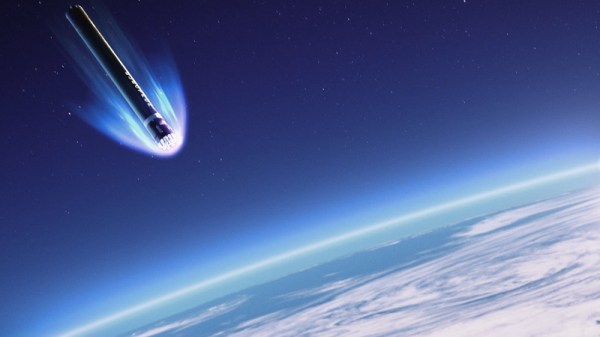
But, there’s a catch. Electron is too small to support the addition of landing legs and doesn’t have the excess propellants to use its engines during descent. Put simply, the tiny rocket is incapable of landing itself. So Rocket Lab believes the only way to recover the Electron is by snatching it out of the air before it gets to the ground.

Continue reading “Rocket Lab Sets Their Sights On Rapid Reusability”

Russian Robot To Visit Space Station

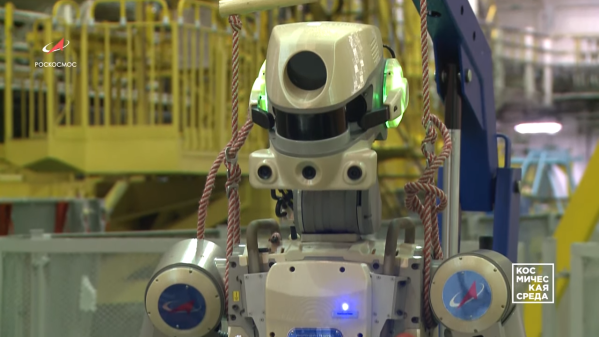
The Russians were the first to send a dog into space, the first to send a man, and the first to send a woman. However, NASA sent the first humanoid robot to the International Space Station. The Russians, though, want to send FEDOR and proclaim that while Robonaut flew as cargo, a FEDOR model — Skybot F-850 — will fly the upcoming MS-14 supply mission as crew.

Defining the term robot can be tricky, with some thinking a proper robot needs to be autonomous and others seeing robotics under human control as enough. The Russian FEDOR robot is — we think — primarily a telepresence device, but it remains an impressive technical achievement. The press release claims that it can balance itself and do other autonomous actions, but it appears that to do anything tricky probably requires an operator. You can see the robot in ground tests at about the one minute mark in the video below.

Continue reading “Russian Robot To Visit Space Station”

Fantastic Micrometeorites And Where To Find Them

Space is very much the final frontier for humanity, at least as far as our current understanding of the universe takes us. Only a handful of countries and corporations on Earth have the hardware to readily get there, and even fewer are capable of reaching orbit. For these reasons, working in this field can seem out of reach for many. Nevertheless, there’s plenty about the great expanse beyond our atmosphere that can be studied by the dedicated citizen scientist. With the right equipment and know-how, it’s even possible to capture and study micrometeorites yourself!

While you don’t see a meteor shower every day, micrometeorites are actually astoundingly common. They’re just hard to find!

For those new to the field, the terms used can be confusing. Meteoroids are small metallic or rocky objects found in outer space, up to around 1 meter in size. When these burn up upon entering the atmosphere, they are referred to as a meteor, or colloquially known as a shooting star. If part of the object survives long enough to hit the ground, this is referred to as a meteorite, and as you’d expect the smaller ones are called micrometeorites, being on the scale of 2mm or less.

Stardust Proves Hard To Find

Being tiny and having fallen from space, micrometeorites present certain challenges to those who wish to find and identify them. In spite of this, they can be found by using the right techniques and a heck of a lot of hard work.

Continue reading “Fantastic Micrometeorites And Where To Find Them”

Apollo’s PLSS And The Science Of Keeping Humans Alive In Space

Ever since humans came up with the bright idea to explore parts of the Earth which were significantly less hospitable to human life than the plains of Africa where humankind evolved, there’s been a constant pressure to better protect ourselves against the elements to keep our bodies comfortable. Those first tests of a new frontier required little more than a warm set of clothes. Over the course of millennia, challenging those frontiers became more and more difficult. In the modern age we set our sights on altitude and space, where a warm set of clothes won’t do much to protect you.

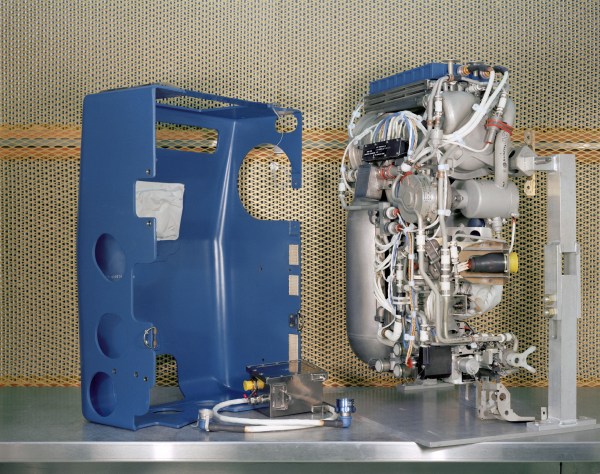
With the launch of Sputnik in 1957 and the heating up of the space race between the US and USSR, many firsts had to be accomplished with minimal time for testing and refinement. From developing 1945’s then state-of-the-art V-2 sounding rockets into something capable of launching people to the moon and beyond, to finding out what would be required to keep people alive in Earth orbit and on the Moon. Let’s take a look at what was required to make this technological marvel happen, and develop the Portable Life Support System — an essential component of those space suits that kept astronauts so comfortable they were able to crack jokes while standing on the surface of the Moon.

Continue reading “Apollo’s PLSS And The Science Of Keeping Humans Alive In Space”