Open Source Pancakes

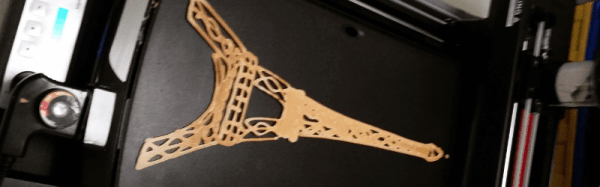
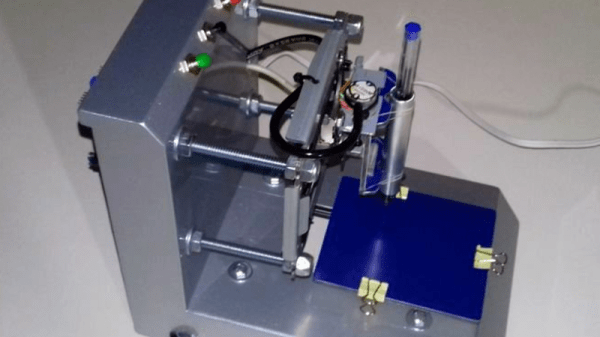
It is definitely a first world problem: What do you do when creating a custom pancake requires you to put a design on an SD card and plug it into your pancake printer? This is what was nagging at [drtorq]. Granted, since he works for a publication called “The Stack” maybe a pancake printer isn’t so surprising. [drtorq] built the custom PancakeBOT software on Linux as a start to his hacking on the flapjack creating robot.

[drtorq] promises more hacking on the printer in the future, so this is just step one. We expect the mods will be a lot like a typical 3D printer, except the heated bed is absolutely necessary on this model. The printer is more like a CNC engraver than a 3D printer since it is basically an XY carriage with a nozzle that flows batter instead of polymer.

Continue reading “Open Source Pancakes”

A Truly Classy Metal-Framed Mini CNC

We’ve seen a number of DVD- and CDROM-based small CNC machines here, but few are as simply beautiful as this one by [julioberaldi] over on Instructables (translated from Portuguese here).

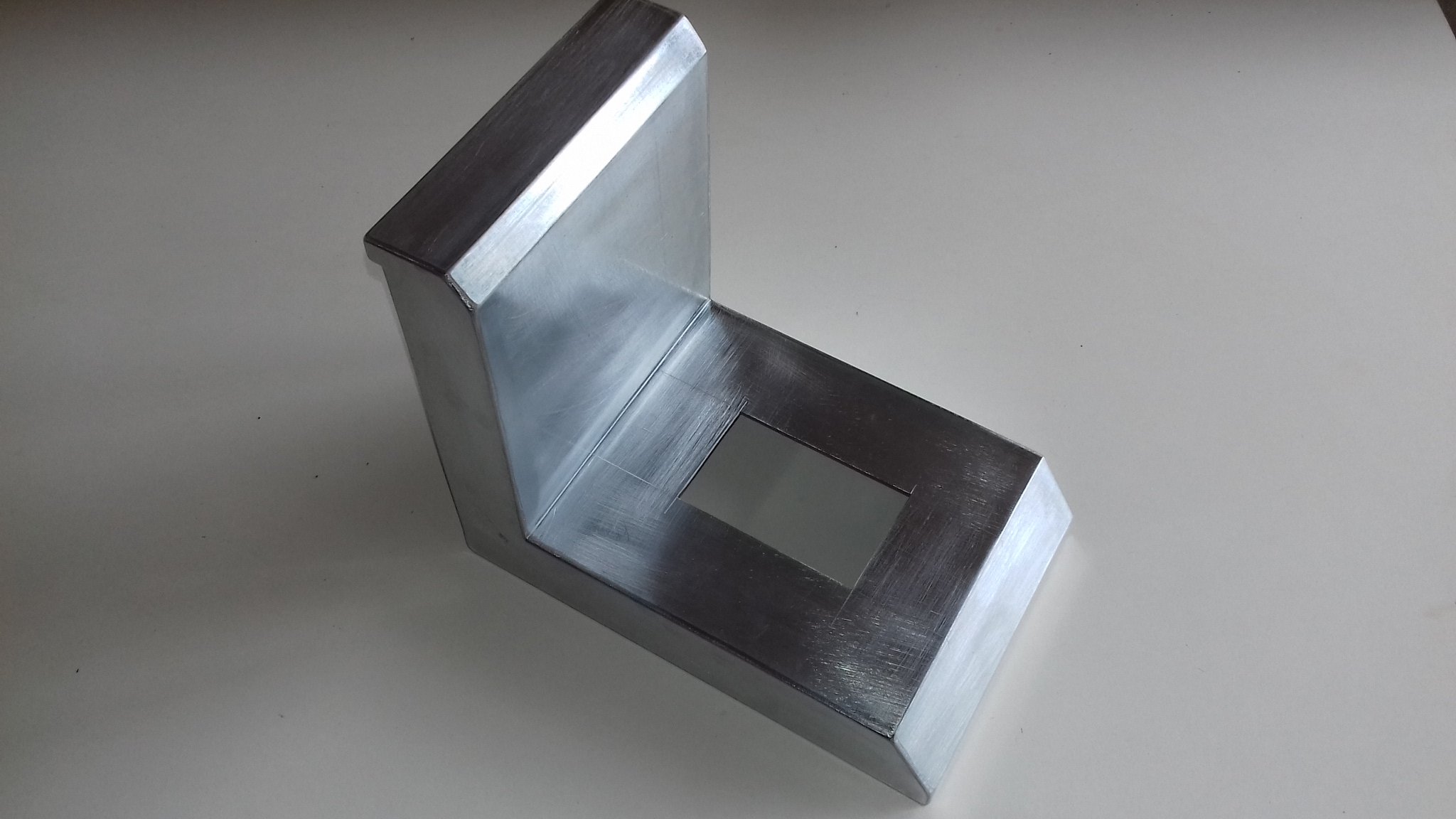
fbis2gciv0ajsdxWe’ll cut to the chase; it’s the frame. Cut from steel sheet scraps with a hacksaw, and welded or soldered together with “bar solder”. It looks like a lot of sanding, painting, and polishing went on. The result is something we’d be proud to have on our desk.

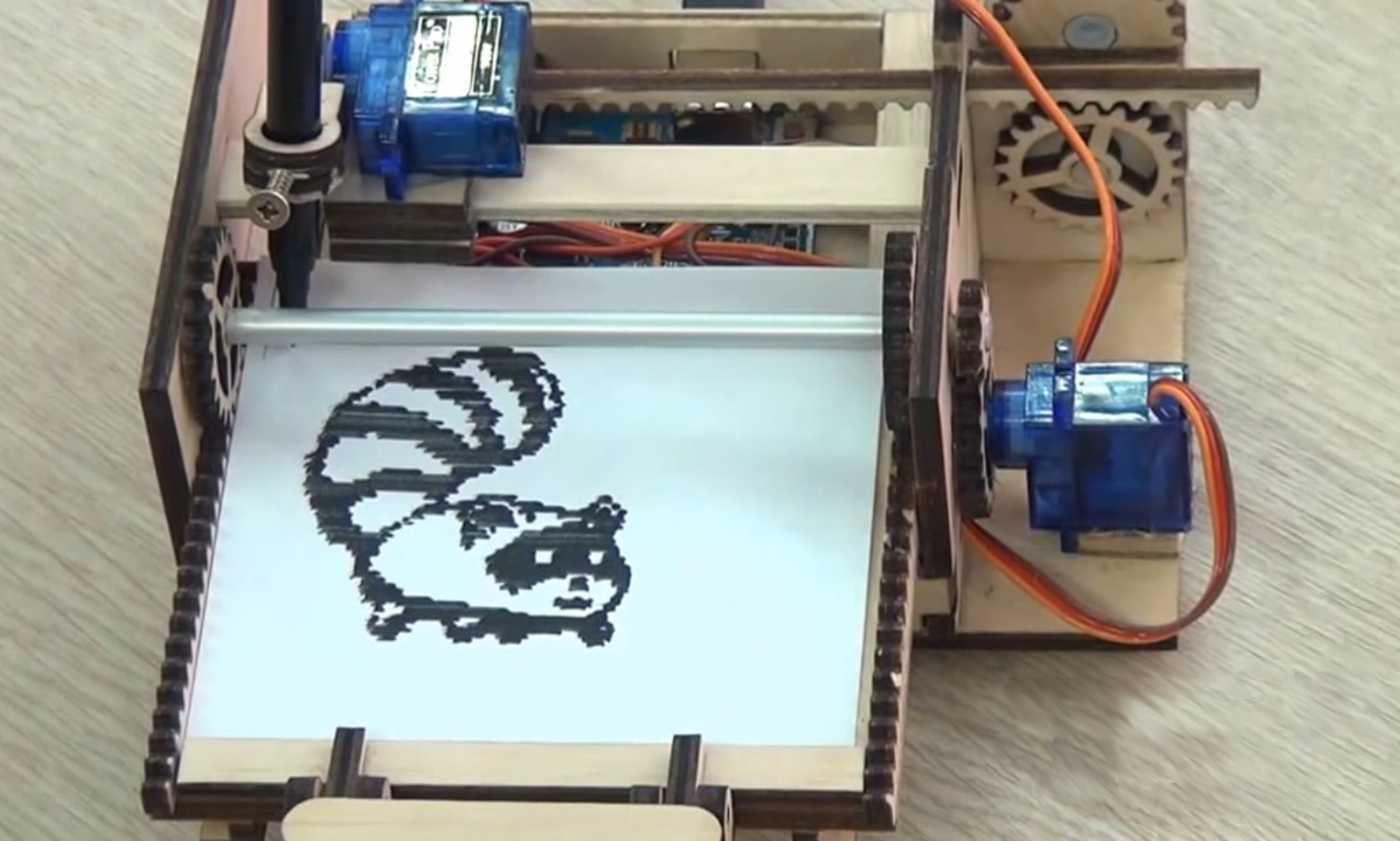
For now, it simply draws with a pen. But watch the video, embedded below, and you’ll see that it runs exceptionally smoothly. If we’re reading the Instructable right, the next step is to turn this into a CNC cutter. We can’t wait to see where the project goes from here.

Continue reading “A Truly Classy Metal-Framed Mini CNC”

An Introduction To CNC Machine Control

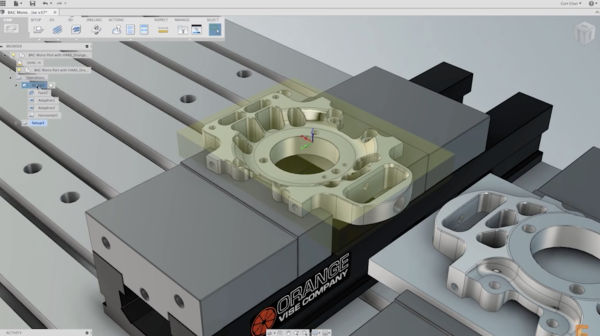
We recently gave you some tips on purchasing your first milling machine, but what we didn’t touch on was CNC (Computer Numerical Control) systems for milling machines (or other machines, like lathes). That’s because CNC is a complex topic, and it’s deserving of its own article. So, today we dive into what CNC is, how it works, and ultimately if it’s right for you as a hobbyist.

Continue reading “An Introduction To CNC Machine Control”

A Machine Shop In A Toolbox: Just Add Time

You don’t need any fancy tools. A CNC machine is nice. A 3D printer can help. Laser cutters are just great. However, when it comes to actually making something, none of this is exactly necessary. With a basic set of hand tools and a few simple power tools, most of which can be picked up for a pittance, many things of surprising complexity, precision, and quality can be made.

Not as pretty, but worked just the same.

A while back I was working on a ring light for my 3D printer. I already had a collection of LEDs, as all hackers are weak for a five-dollar assortment box. So I got on my CAD software of choice and modeled out a ring that I was going to laser cut out of plywood. It would have holes for each of the LEDs. To get a file ready for laser cutting ook around ten minutes. I started to get ready to leave the house and do the ten minute drive to the hackerspace, the ten minutes firing up and using the laser cutter (assuming it wasn’t occupied) and the drive back. It suddenly occurred to me that I was being very silly. I pulled out a sheet of plywood. Drew three circles on it with a compass and subdivided the circle. Under ten minutes of work with basic layout tools, a power drill, and a coping saw and I had the part. This was versus the 40 minutes it would have taken me to fire up the laser cutter.

Continue reading “A Machine Shop In A Toolbox: Just Add Time”

Maslow Brings The Wall Plotter Into The Woodshop

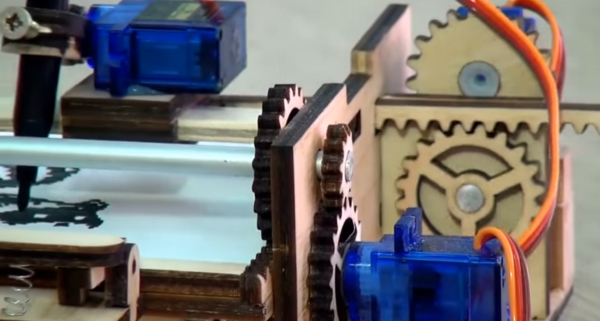
Hanging plotters, or two steppers controlling a dangling Sharpie marker on an XY plane, are nothing new to our community. But have you ever thought of trading out the Sharpie for a wood router bit and cutting through reasonably thick plywood sheets? That would give you a CNC machine capable of cutting out wood in essentially whatever dimensions you’d like, at reasonably low-cost. And that’s the idea behind [Bar]’s Maslow. It’s going to be a commercial product (we hope!), but it’s also entirely open source and indubitably DIYable.

[Bar] walks us through all of the design decisions in this video, which is a must-watch if you’re planning on building one of these yourself. Basically, [Bar] starts out like any of us would: waaaay over-engineering the thing. He starts out with a counterweight consisting of many bricks, heavy-duty roller chain, and the requisite ultra-beefy motors to haul that all around. At some point, he realized that there was actually very little sideways force placed on a sharp router bit turning very quickly. This freed up a lot of the design.

His current design only uses two bricks for counterweights, uses lighter chains, and seems to get the job done. There’s a bit of wobble in the pendulum, which he admits that he’s adjusted for in software. Motors with built-in encoders and gearing take care of positioning accurately. We haven’t dug deeply enough to see if there’s a mechanism to control the router’s plunge, which would be great to cut non-continuous lines, but first things first.

Taking the wall plotter into the woodshop is a brilliant idea, but we’re sure that there’s 99% perspiration in this design too. Thanks [Bar] for making it open! Best of luck with the Kickstarter. And thanks to [Darren] for the tip.

Making An Espresso Pot In The Machine Shop

[This Old Tony] was cleaning up his metal shop after his yearly flirtation with woodworking when he found himself hankering for a nice coffee. He was, however, completely without a coffee making apparatus. We imagine there was a hasty round of consulting with his inanimate friends [Optimus Prime] and [Stefan Gotteswinter Brush] before he decided the only logical option was to make his own.

So, he brought out two chunks of aluminum from somewhere in his shop, modeled up his plan in SolidWorks, and got to work.  It was designed to be a moka style espresso pot sized around both the size of stock he had, and three purchased parts: the gasket, funnel, and filter. The base and top were cut on a combination of lathe and mill. He had some good tips on working with deep thin walled parts. He also used his CNC to cut out some parts, like the lid and handle. The spout was interesting, as it was made by building up a glob of metal using a welder and then shaped afterward.

As usual the video is of [This Old Tony]’s exceptional quality. After quite a lot of work he rinsed out most of the metal chips and WD40, packed it with coffee, and put it on the stove. Success! It wasn’t long before the black stuff was bubbling into the top chamber ready for consumption.

Inventables Releases Improved X-Carve CNC Router

Introduced last year as an improvement on the very popular Shapeoko CNC router, the X-Carve by Inventables has grown to be a very well-respected machine in the community. It’s even better if you throw a DeWalt spindle on there, allowing you to cut almost everything that’s not steel. With a recent upgrade to the X-Carve, it’s even more capable, featuring the best mods and suggestions from the community that has grown up around this machine.

The newest iteration of the X-Carve features higher power drivers, better rigidity, and a heat sink for the spindle. That last item is an interesting bit of kit – routing takes time, and a 1¼HP motor will turn electricity into heat very effectively.

X-CarveIn addition to the 500mm square and 1000mmm square routers previously available, there’s a new, 750mm square machine available. All machines feature a new electronics box for the X-Carve, the X-Controller. This ‘brain box’ is a combined power supply, stepper driver, and motion controller built into a single box. The stepper drivers are able to supply 4A to a motor, is capable of 1/16 microstepping, and has connections for limit switches, spindle control speed, a Z probe, and outputs for vacuums or coolant systems. The underlying controller is based on grbl, making this brain box a very solid foundation for any 3-axis CNC build. The ‘brain box’ format seems to be the way the hobbyist CNC market is going, considering the whispers and rumors concerning Lulzbot selling their Taz6 brainbox independently from a 3D printer.

The new X-Carve is available now, with a fully-loaded 1000mm wide machine coming in at about $1400. That’s comparable to many other machines with the same volume, unlike the Chinese 3040 CNC machines, you don’t need to find an old laptop with a parallel port.