Fishing For AirPods With Magnets

Note to self: if you’re going to hack at 4 in the morning, have a plan to deal with the inevitable foul ups. Like being able to whip up an impromptu electromagnetic crane to retrieve an AirPod dropped out a window.

Apartment dweller [Tyler Efird]’s tale of woe began with a wee-hours 3D print in need of sanding. Leaning out his third-story window to blow off some dust, he knocked one AirPod free and gravity did the rest. With little light to search by and a flight to catch, the wayward AirPod sat at the bottom of a 10-foot shaft below his window, keeping company with a squad of spiders for two weeks. Unwilling to fork over $69 and wait a month and a half for a replacement, [Tyler] set about building a recovery device. A little magnet wire wound onto a bolt, a trashed 100-foot long Ethernet cable, and a DC bench supply were all he needed to eventually fish up the AirPod. And no spiders were harmed in the making of this hack.

Need to lift something a little heavier than an AirPod? A beefy microwave oven transformer electromagnet might be the thing for you. And confused about how magnets even work in the first place? Check out our primer on magnetism.

Continue reading “Fishing For AirPods With Magnets”

Hand-Wound Brushless Motors Revive Grounded Quad

You’re happily FPVing through the wild blue yonder, dodging and jinking through the obstacles of your favorite quadcopter racing course. You get a shade too close to a branch and suddenly the picture in your goggles gets the shakes and your bird hits the dirt. Then you smell the smoke and you know what happened – a broken blade put a motor off-balance and burned out a winding in the stator.

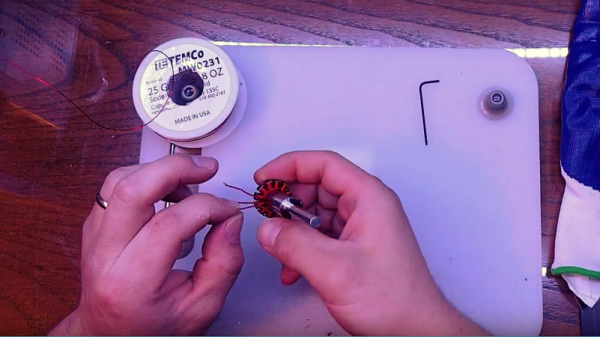
What to do? A sensible pilot might send the quad to the healing bench for a motor replacement. But [BRADtheRipper] prefers to take the opportunity to rewind his burned-out brushless motors by hand, despite the fact that new ones costs all of five bucks. There’s some madness to his method, which he demonstrates in the video below, but there’s also some justification for the effort. [Brad]’s coil transplant recipient, a 2205 racing motor, was originally wound with doubled 28AWG magnet wire of unknown provenance. He chose to rewind it with high-quality 25AWG enameled wire, giving almost the same ampacity in a single, easier to handle and less fragile conductor. Plus, by varying the number of turns on each pole of the stator, he’s able to alter the motor’s performance.

In all, there are a bunch of nice tricks in here to file away for a rainy day. If you need to get up to speed on BLDC motor basics, check out this primer. Or you may just want to start 3D printing your own BLDC motors.

Continue reading “Hand-Wound Brushless Motors Revive Grounded Quad”

Interactive Board Prompts Moves For Checkers And Chess

In terms of equipment, chess and checkers are simple games — just a handful of pieces and a checkered gameboard. The simplicity belies the underlying complexity of the games, though, and goes a long way toward explaining their popularity over the millennia.

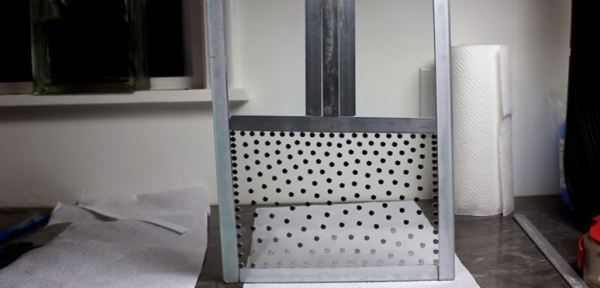
Increasing the complexity with an interactive game board for chess and checkers might seem counterintuitive, then. But [Bogdan Berg]’s project aims to not only teach checkers and chess but to make games a little more exciting and engaging. Looking a little like a tabletop version of the interactive dance floors we’ve been seeing a lot of lately, the board is built from laser-cut acrylic with plywood dividers to isolate all 64 squares. Neopixels and Hall-effect sensors are mounted to custom PCBs that stretch the length of a row and are wired to an Arduino Mega with lots of IO. Game pieces are colorful fridge magnets. [Bogdan]’s current program supports checkers and keeps track of where the pieces have been moved relative to their starting position and prompts users with possible legal moves.

[Bogdan]’s board already looks like a lot of fun in the video below, and we like the quality of the build and the unobtrusive nature of the interactivity. When he gets around to implementing chess, though, he might want something fancier than fridge magnets for game pieces.

Continue reading “Interactive Board Prompts Moves For Checkers And Chess”

Flexible Quadcopter Is Nearly Indestructible

We’ve all crashed quadcopters. It’s almost inevitable. Everything is going along fine and dandy ’till mother nature opens her big mouth a blows a nasty gust of wind right at you, pushing your quad into the side of a wall. A wall that happens to be composed of a material that is quite a bit harder than your quadcopter. “What if…” you ask yourself while picking up the pieces of you shiny new quad off the ground… “they made these things out of flexible material?”



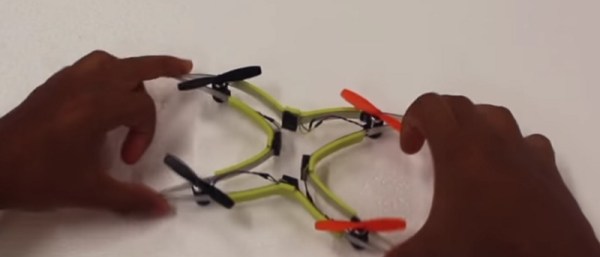
Well, it would appear someone has done just that. The crash resistant quadcopter is composed of a flexible frame (obviously) which is held rigid with magnets. So the frame works just like the frame of your average quad. Until you crash it, of course. Then it becomes flexible.

The idea came from the wing of a wasp, which you can apparently crumple without damaging it. Be sure to check out the video below of the drone showing off its flexible frame, and let us know if you’ve seen any other types of flexible frame drones in the wild.

Thanks to [JDHE] for the tip!

Continue reading “Flexible Quadcopter Is Nearly Indestructible”

Newton’s Cradle For Those Too Lazy To Procrastinate

Desk toys are perfect for when you don’t want to work. There’s a particularly old desk toy called the Newton’s cradle. If you don’t know the name, you’d still recognize the toy. It is some ball bearings suspended in midair on strings. If you pull back, say, two balls and let them swing to impact the other balls, the same number of balls on the other side will fly out. When they return, the same number will move on the other side and this repeats until friction wears it all down.

We think [JimRD] might be carried away on procrastination. You see, he not only has a Newton’s cradle, he has automated it with an Arduino. According to [Jim], this is his third attempt at doing so. You can see the current incarnation in the video, below.

Continue reading “Newton’s Cradle For Those Too Lazy To Procrastinate”

Illuminating New Take On Magnetic Switches

While there’s something to be said for dead-bug construction, hot glue, and other construction methods that simply get the job done, it’s inspiring to see other builds that are refined and intentional but that still hack together things for purposes other than their original intent. To that end, [Li Zanwen] has designed an interesting new lamp that uses magnets to turn itself on in a way that seems like a magnetic switch of sorts, but not like any we’ve ever seen before.

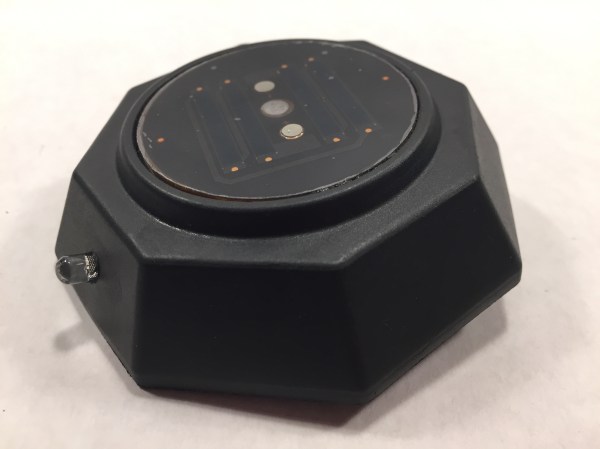
While the lamp does use a magnetic switch, it’s not a traditional switch at all. There are two magnetic balls on this lamp attached by strings. One hangs from the top of the circular lamp and the other is connected to the bottom. When this magnet is brought close to the hanging magnet, the magnetic force is enough to both levitate the lower magnet, and pull down on a switch that’s hidden inside the lamp which turns it on. The frame of the lamp is unique in itself, as the lights are arranged on the inside of the frame to illuminate the floating magnets.

While we don’t typically feature design hacks, it’s good to see interesting takes on common things. After all, you never know what’s going to inspire your next hackathon robot, or your next parts drawer build. All it takes is one spark of inspiration to get your imagination going!

Lean Thinking Helps STEM Kids Build A Tiny Windfarm

When we see a new build by [Gord] from Gord’s Garage, we never know what to expect. He seems to be pretty skilled at whatever he puts his hand to, with a great design sense and impeccable craftsmanship. You might expect him to tone it down a little for a STEM-outreach wind turbine project then, but when you get a chance to impress 28 fifth and sixth graders, you might as well go for it.

98j6zpStarting with an idea from his daughter’s teacher for wind turbines each kid could make, [Gord] applied a little lean methodology so the kids would be able to complete the build in the allotted time. The design is simple – a couple of old CDs holding vertical sections of PVC tubing to catch the breeze and spin neodymium magnets over four flat coils of magnet wire. It’s enough to light a single LED and perhaps a kid’s imagination.

As simple as the turbine is, the process of building it needed to be stripped of as much unnecessary work as possible, and [Gord] really shines here. He built jigs and fixtures galore, pre-built some assemblies, and set up well-organized workstations for each step of the build. Everything was clearly labeled, adult volunteers were trained using the video after the break, and a good time was had by all.

Sometimes the hack isn’t in the product but in the process, and [Gord] managed to hack a success out a potential disaster of disappointed kids. If getting a taste of [Gord]’s style makes you want to see more, check out his guitar fretting jig or his brake rotor mancave clock.

Continue reading “Lean Thinking Helps STEM Kids Build A Tiny Windfarm”