Microfluidics For Biohacking Hack Chat

Join us on Wednesday, July 7 at noon Pacific for the Microfluidics for Biohacking Hack Chat with Krishna Sanka!

“Microfluidics” sounds like a weird and wonderful field, but one that doesn’t touch regular life too much. But consider that each time you fire up an ink-jet printer, you’re putting microfluidics to work, as nanoliter-sized droplets of ink are spewed across space to impact your paper at exactly the right spot.

Ink-jets may be mundane, but the principles behind them are anything but. Microfluidic mechanisms have found their way into all sorts of products and processes, with perhaps the most interesting uses being leveraged to explore and exploit the microscopic realms of life. Microfluidics can be used to recreate some of the nanoscale biochemical reactions that go on in cells, and offer not only new ways to observe the biological world, but often to manipulate it. Microfluidics devices range from “DNA chips” that can rapidly screen drug candidates against thousands of targets, to devices that can rapidly screen clinical samples for exposure to toxins or pathogens.

There are a host of applications of microfluidics in biohacking, and Krishna Sanka is actively working to integrate the two fields. As an engineering graduate student, his focus is open-source, DIY microfluidics that can help biohackers up their game, and he’ll stop by the Hack Chat to run us through the basics. Come with your questions about how — and why — to build your own microfluidics devices, and find out how modern biohackers are learning to “go with the flow.”

join-hack-chatOur Hack Chats are live community events in the Hackaday.io Hack Chat group messaging. This week we’ll be sitting down on Wednesday, July 7 at 12:00 PM Pacific time. If time zones have you tied up, we have a handy time zone converter.

[Featured image: Cooksey/NIST]

Hackaday Links Column Banner

Hackaday Links: July 4, 2021

With rescue and recovery efforts at the horrific condo collapse in Florida this week still underway, we noted with interest some of the technology being employed on the site. Chief among these was a contribution of the Israeli Defense Force (IDF), whose secretive Unit 9900 unveiled a 3D imaging system to help locate victims trapped in the rubble. The pictures look very much like the 3D “extrusions” that show up on Google Maps when you zoom into a satellite view and change the angle, but they were obviously built up from very recent aerial or satellite photos that show the damage to the building. The idea is to map where parts of the building — and unfortunately, the building’s occupants — ended up in the rubble pile, allowing responders to concentrate their efforts on the areas most likely to hold victims. The technology, which was developed for precision targeting of military targets, has apparently already located several voids in the debris that weren’t obvious to rescue teams. Here’s hoping that the system pays off, and that we get to learn a little about how it works.

Radio enthusiasts, take note: your hobby may just run you afoul of authorities if you’re not careful. That seems to be the case for one Stanislav Stetsenko, a resident of Crimea who was arrested on suspicion of treason this week. Video of the arrest was posted which shows the equipment Stetsenko allegedly used to track Russian military aircraft on behalf of Ukraine: several SDR dongles, a very dusty laptop running Airspy SDR#, an ICOM IC-R6 portable communications receiver, and various maps and charts. In short, it pretty much looks like what I can see on my own desk right now. We know little of the politics around this, but it does give one pause to consider how non-technical people view those with technical hobbies.

If you could choose a superpower to suddenly have, it really would take some careful consideration. Sure, it would be handy to shoot spider webs or burst into flames, but the whole idea of some kind of goo shooting out of your wrists seems gross, and what a nuisance to have to keep buying new clothes after every burn. Maybe just teaching yourself a new sense, like echolocation, would be a better place to start. And as it turns out, it’s not only possible for humans to echolocate, but it’s actually not that hard to learn. Researchers used a group of blind and sighted people for the test, ranging in age from 21 to 79 years, and put them through a 10-week training program to learn click-based echolocation. After getting the basics of making the clicks and listening for the returns in an anechoic chamber, participants ran through a series of tasks, like size and orientation discrimination of objects, and virtual navigation. The newly minted echolocators were also allowed out into the real world to test their skills. Three months after the study, the blind participants had mostly retained their new skill, and most of them were still using it and reported that it had improved their quality of life.

As with everything else he’s involved with, Elon Musk has drawn a lot of criticism for his Starlink satellite-based internet service. The growing constellation of satellites bothers astronomers, terrestrial ISPs are worried the service will kill their business model, and the beta version of the Starlink dish has been shown to be flakey in the summer heat. But it’s on equipment cost where Musk has taken the most flak, which seems unfair as the teardowns we’ve seen clearly show that the phased-array antenna in the Starlink dish is being sold for less than it costs to build. But still, Musk is assuring the world that Starlink home terminals will get down in the $250 to $300 range soon, and that the system could have 500,000 users within a year. There were a couple of other interesting insights, such as where Musk sees Starlink relative to 5G, and how he’s positioning Starlink to provide backhaul services to cellular companies.

Well, this is embarrassing. Last week, we mentioned that certain unlucky users of an obsolete but still popular NAS device found that their data had disappeared, apparently due to malefactors accessing the device over the internet and forcing a factory reset. Since this seems like something that should require entering a password, someone took a look at the PHP script for the factory restore function and found that a developer had commented out the very lines that would have performed the authentication:

    function get($urlPath, $queryParams=null, $ouputFormat='xml'){
//        if(!authenticateAsOwner($queryParams))
//        {
//            header("HTTP/1.0 401 Unauthorized");
//            return;
//        }

It’s not clear when the PHP script was updated, but support for MyBook Live was dropped in 2015, so this could have been a really old change. Still, it was all the hacker needed to get in and wreak havoc; interestingly, the latest attack may be a reaction to a three-year-old exploit that turned many of these devices into a botnet. Could this be a case of hacker vs. hacker?


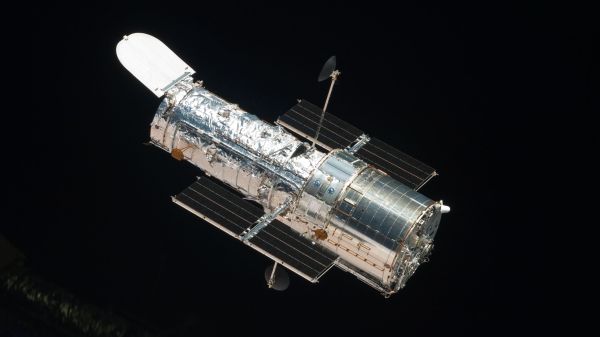
The Trouble With Hubble: Payload Computer Glitch Stops Science At The Space Observatory

The Hubble Space Telescope’s remarkably long service life and its string of astonishing contributions to astronomy belie its troubled history. Long before its launch into low Earth orbit in 1990, Hubble suffered from design conflicts, funding and budgetary pressures, and even the death of seven astronauts. Long delayed, much modified, and mistakenly sent aloft with suboptimal optics, Hubble still managed to deliver results that have literally changed our view of the universe, and is perhaps responsible for more screensaver and desktop pictures than any other single source.

But all of that changed on June 13 of this year, when Hubble suffered a computer glitch that interrupted the flow of science data from the orbiting observatory. It’s not yet clear how the current issue with Hubble is going to pan out, and what it all means for the future of this nearly irreplaceable scientific asset. We all hope for the best, of course, but while we wait to see what happens, it’s worth taking the opportunity to dive inside Hubble for a look at its engineering and what exactly has gone wrong up there.

Continue reading “The Trouble With Hubble: Payload Computer Glitch Stops Science At The Space Observatory”

Wiggling Screen And DLP Power This Volumetric POV Display

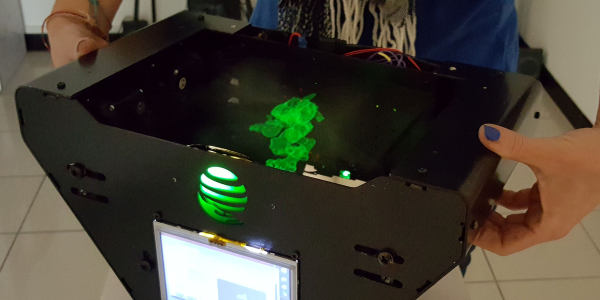
It seems like the world is ready for a true 3D display. We’ve seen them in sci-fi for decades now, with the ability to view a scene from any angle and inspect it up close. They’ve remained elusive, but that might just be changing thanks to this open-source persistence-of-vision volumetric display.

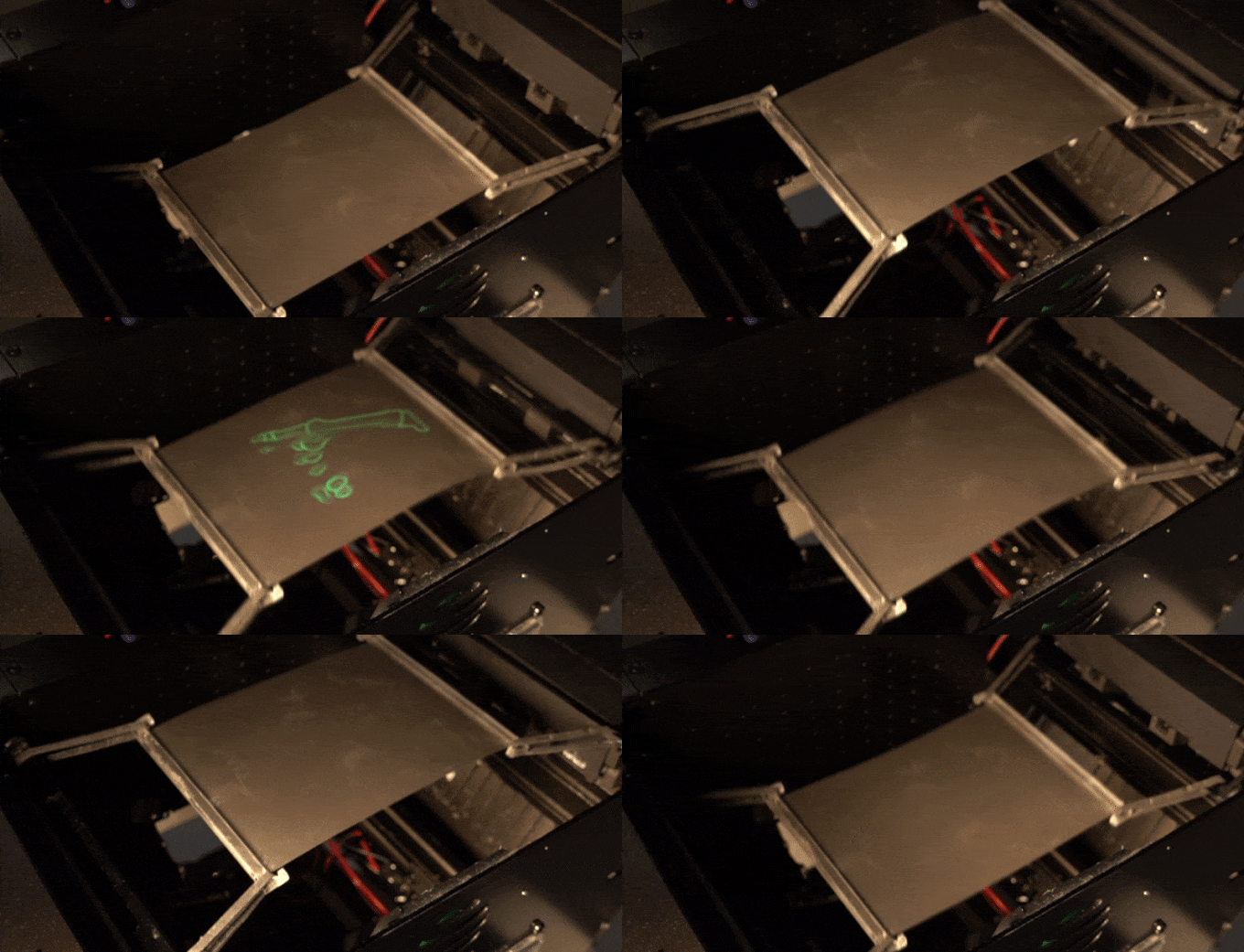
If the VVD, as it has been named by its creator [Madaeon], looks somewhat familiar, perhaps it’s because editor-in-chief [Mike Szczys] ran into it back in 2019 at Maker Faire Rome. It looks like it has progressed quite a bit since then, but the basic idea is still the same. A thin, flexible membrane, which is stretched across a frame, is attached to articulated arms. The membrane can move up and down rapidly, fast enough that a 1,000-fps high-speed camera is needed to see it move. That allows you to see the magic in action; a digital light processor (DLP) module projects slices of a 3D image onto the sheet, sending the correct image out for each vertical position of the membrane. Carefully coordinating the images creates the POV illusion of a solid image floating in space, which can be observed from any angle, requires no special glasses, and can even be viewed by groups.

With displays like this, we’re used to issuing the caveat that “it no doubt looks better in person”, but we have to say in the GIFs and videos included the VVD looks pretty darn good. We think this is a natural for inclusion in the 2021 Hackaday Prize, and we’re pleased to see that it made it to the semi-finals of the “Rethink Displays” round.

Machine-Vision Archer Makes You The Target, If You Dare

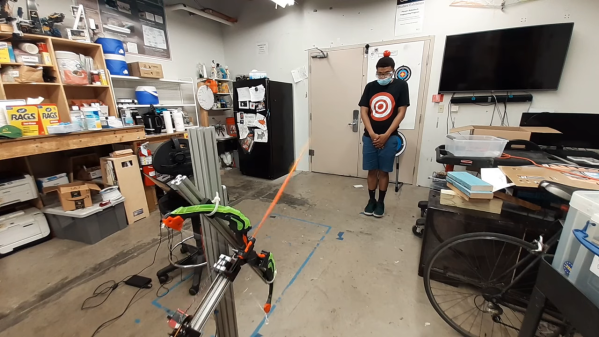
We’ll state right up front that it’s a really, really bad idea to let a robotic archer shoot an apple off of your head. You absolutely should not repeat what you’ll see in the video below, and if you do, the results are all on you.

That said, [Kamal Carter]’s build is pretty darn cool. He wisely chose to use just about the weakest bows you can get, the kind with strings that are basically big, floppy elastic bands that shoot arrows with suction-cup tips and are so harmless that they’re intended for children to play with and you just know they’re going to shoot each other the minute you turn your back no matter what you told them. Target acquisition is the job of an Intel RealSense depth camera, which was used to find targets and calculate the distance to them. An aluminum extrusion frame holds the bow and adjusts its elevation, while a long leadscrew and a servo draw and release the string.

With the running gear sorted, [Kamal] turned to high school physics for calculations such as the spring constant of the bow to determine the arrow’s initial velocity, and the ballistics formula to determine the angle needed to hit the target. And hit it he does — mostly. We’re actually surprised how many on-target shots he got. And yes, he did eventually get it to pull a [William Tell] apple trick — although we couldn’t help but notice from his, ahem, hand posture that he wasn’t exactly filled with self-confidence about where the arrow would end up.

[Kamal] says he drew inspiration both from [Mark Rober]’s dart-catching dartboard and [Shane Wighton]’s self-dunking basketball hoop for this build. We’d say his results put in him good standing with the skill-optional sports community.

Continue reading “Machine-Vision Archer Makes You The Target, If You Dare”

Just How Vulnerable To Accidental Erasure Are EPROMs Anyway?

On the scale of things worth worrying about, having to consider whether your EPROMs will be accidentally erased by some stray light in the shop is probably pretty low on the list. Still, losing irreplaceable data can make for a bad day, so it might just pay to know what your risks really are.

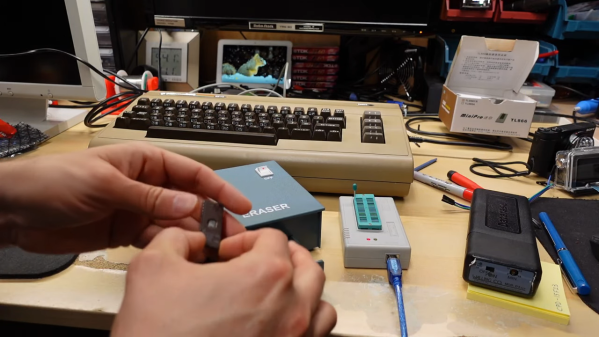
To address this question, [Adrian] set out to test just how susceptible to accidental erasure some common EPROM chips are. An EPROM, or “erasable programmable read-only memory”, is a non-volatile memory chip that can be programmed electrically and then erased optically, by exposing the die inside the chip to light at a specific wavelength, usually in a special chip erasing tool. But erasure can also happen in daylight (even if it takes a few weeks), so [Adrian] cooked up an experiment to see what the risk really is.

He exposed a selection of EPROMs with known contents to UV and checked their contents. Three of the chips had a simple paper or foil label applied, while one had its quartz window exposed to the UV. As expected, the unprotected chip was erased in just 30 minutes. The covered chips, though, all survived that onslaught, and much more — up to 780 minutes of continuous exposure.

So rest easy — it seems that even a simple paper label is enough to protect your precious retro EPROMs. It’s a good data point, and hats off to [Adrian] for taking a look at this. But now we can’t help but wonder: what would a little sunscreen applied to the quartz window do to erasability? Sounds like a fun experiment, too.

Continue reading “Just How Vulnerable To Accidental Erasure Are EPROMs Anyway?”

Garage Semiconductor Fab Gets Reactive-Ion Etching Upgrade

It’s a problem that few of us will likely ever face: once you’ve built your first homemade integrated circuit, what do you do next? If you’re [Sam Zeloof], the answer is clear: build better integrated circuits.

At least that’s [Sam]’s plan, which his new reactive-ion etching setup aims to make possible. While his Z1 dual differential amplifier chip was a huge success, the photolithography process he used to create the chip had its limitations. The chemical etching process he used is a bit fussy, and prone to undercutting of the mask if the etchant seeps underneath it. As its name implies, RIE uses a plasma of highly reactive ions to do the etching instead, resulting in finer details and opening the door to using more advanced materials.

[Sam]’s RIE rig looks like a plumber’s stainless steel nightmare, in the middle of which sits a vacuum chamber for the wafer to be etched. After evacuating the air, a small amount of fluorinated gas — either carbon tetrafluoride or the always entertaining sulfur hexafluoride — is added to the chamber. A high-voltage feedthrough provides the RF energy needed to create a plasma, which knocks fluorine ions out of the process gas. The negatively charged and extremely reactive fluorine ions are attracted to the wafer, where they attack and etch away the surfaces that aren’t protected by a photoresist layer.

It all sounds simple enough, but the video below reveals the complexity. There are a lot of details, like correctly measuring vacuum, avoiding electrocution, keeping the vacuum pump oil from exploding, and dealing with toxic waste products. Hats off to [Sam’s dad] for pitching in to safely pipe the exhaust gases through the garage door. This ties with [Huygens Optics]’s latest endeavor for the “coolest things to do with fluorine” award.

Continue reading “Garage Semiconductor Fab Gets Reactive-Ion Etching Upgrade”